















Complete Guide to Designing Your Living Room
Arranging your living room is far more than placing furniture: it is about orchestrating a living space where every movement feels natural. Between fluid circulation, defined activity zones and the highlighting of focal points, strategic thinking must precede the decorative gesture. Far from off-the-shelf solutions, the challenge lies in creating a room that breathes with your daily life. This approach invites you to lay the right foundations for transforming your living space into a functional and personal sanctuary, without ever sacrificing aesthetics for comfort.
Living room layout: these three words can evoke as much enthusiasm as apprehension. How to transform this central living space, often multifunctional, into a haven of comfort, aesthetics, and practicality? A well-arranged living room is not a matter of luck, but the result of strategic thinking that combines functionality, flow, and emotion. Whether you're starting from a blank slate or looking to reinvent an existing space, this comprehensive guide will accompany you step by step. We will cover the fundamental principles of interior decoration, current trends in living room layout, and concrete solutions for every type of space, from studio apartments to large living rooms. Get ready to discover how to create a living room that reflects you and lives at the rhythm of your daily life.
The Essential Foundations: Analyzing the Space and Defining Your Needs
Before moving the first sofa, it's crucial to lay the right foundations. This preliminary step is the key to a successful and lasting layout.
Start with a meticulous analysis of your space. Take exact measurements of the room, including ceiling height, and the position of doors, windows, and radiators. Draw a scale plan, even a rough one. This overview will save you from many mistakes.
Next, ask yourself about the very essence of your living room. Is it primarily a space for family relaxation, a place for socializing with guests, a home cinema room, or a secondary office? The current trend of the "multifunctional living room" is stronger than ever, especially since the rise of remote work. List all the activities that will take place there: reading, video games, yoga, computer work, dinners with friends...
This reflection will naturally lead you to define activity zones within the living room itself. Visualizing these zones on your plan is the first step towards a logical and fluid layout.
The Golden Rule: Creating Natural and Fluid Circulation
A living room where you bump into furniture is a poorly arranged one. Circulation is the art of allowing intuitive and unobstructed movement between different zones and access points (entrance door, kitchen, hallway).
Experts recommend planning passageways at least 60 cm wide, and ideally 90 cm for optimal comfort. The main circulation paths should avoid cutting through the heart of a conversation area, for example. The goal is to create a natural "path" around islands of furniture.
One trick is to imagine the route you take most often, such as the one between the sofa and the kitchen. This path should be direct and clear. Low furniture, like coffee tables or benches, can delineate spaces without obstructing the view or circulation, unlike tall bookcases placed in the wrong spot.
Identifying and Highlighting Focal Points
Every living room has one or more focal points: an architectural or decorative element that naturally draws the eye. It could be a fireplace, a large bay window with a view, a bookshelf wall, or even a television. The layout should be designed to highlight this focal point.
Traditionally, seating is oriented towards it. However, the trend is towards flexibility. For a fireplace, you can create an angled seating arrangement to enjoy the warmth while facilitating conversation. For a television, prioritize modular furniture or a discreet installation, like a retractable screen, so it doesn't dominate the space when turned off.
The Heart of the Living Room: Arranging Seating and the Coffee Table
The grouping of seating constitutes the soul of the living room. It defines the atmosphere, whether convivial or more formal, and determines the comfort of conversations.
The "U" or "L" shaped arrangement around a central coffee table remains a timeless classic for medium-sized spaces. It fosters interaction and creates a cozy feeling. For large living rooms, you can create several conversation islands: one around the fireplace with the main sofa, and another, more intimate one, with two armchairs and a small side table near the bookshelf.
The choice of coffee table is strategic. Its dimensions should be proportional to the sofa (about two-thirds of its length) and it should be placed at a comfortable distance from the seating (between 30 and 45 cm). Models with a lift-top or integrated storage are perfect for multifunctional living rooms. The current trend mixes materials: a solid wood top on a black metal base, or an organic shape in reconstituted stone.
Winning Strategies for Small Living Rooms and Studios
Arranging a small living room requires ingenuity. The goal is to maximize perceived space and functionality without overcrowding.
Prioritize furniture scaled to the room with clean lines. A sofa with visible legs and slim armrests will create visual lightness. The multifunctional furniture trick is key: a sofa bed for guests, coffee tables with storage or that lift to become a desk, ottomans that serve as side tables and storage.
Play with verticality! Wall shelves going up to the ceiling draw the eye upward and free up floor space. A mirror strategically placed opposite a light source will double the feeling of space. To delineate the living area in a studio, a large rug is more effective than a partition, which would weigh down the whole space.
Optimizing Large Spaces: Creating Intimacy and Rhythm
A large volume can be just as complex to arrange as a small one. The risk? An impression of emptiness, coldness, or furniture lost in the middle of nowhere.
The solution lies in creating thematic zones. Besides the main conversation area, you can imagine a "reading" zone with a cozy armchair, an arc lamp, and a small bookcase; a "game" corner with a round coffee table and benches; or a "bar" area with an elegant cabinet and two stools.
Use furniture and rugs to structure the space without partitioning it. A large sofa with its back to the rest of the room can subtly delineate the living room from the dining area. Rugs of different sizes and patterns visually anchor each zone. Large indoor plants or decorative screens are also excellent tools to break linearity and add warmth.
The Crucial Importance of Lighting: Light Scenographies
A good layout also involves well-thought-out lighting. A single ceiling light is to be avoided; it flattens volumes and creates harsh shadows.
Adopt a layered approach, combining three types of lighting for your living room. First, general lighting (ceiling light, diffuse pendant) for overall ambient light. Next, accent lighting to highlight a painting, a plant, or an architectural element (recessed spotlights, LED tracks). Finally, task or localized lighting, essential for activities (table lamp near the reading chair, floor lamp behind the sofa).
Current trends celebrate natural materials (paper, wicker, wood) for lampshades and advocate technology with smart bulbs, allowing you to adjust the intensity and color of the light (cool white for concentration, warm light for relaxation) from your smartphone.
Integrated Storage and Clever Solutions
A clutter-free living room is a calming one. Storage should not be an afterthought but integrated from the layout's conception.
Exploit all opportunities: the space under seating (sofas and benches with drawers), the height under windows (creating a storage bench), dead corners (triangular shelves). Tall and narrow furniture is valuable for storing without encroaching on floor space.
For a clean look, closed storage (swinging or sliding doors) conceals clutter. To express personality, open shelving allows you to display your books and decor items, but requires some organizational rigor. Also think about crates and baskets in wicker or fabric, perfect for storing blankets, magazines, or children's toys while adding a textural touch.
Personalization and Style: The Soul of Your Layout
A layout perfect on paper but soulless won't bring you lasting pleasure. It's at this stage that you inject your personality.
The choice of textures and materials adds depth. Mix the soft velvet of an armchair with the rough linen of a cushion, the warmth of wood with the coolness of metal, the shine of glass with the matte finish of stone. Cushions and throws are the simplest accessories to refresh the ambiance according to the seasons.
Wall art is a powerful personalization tool. A large canvas, a carefully composed photo gallery, or a sculptural mirror can become the new focal point of the living room. Don't forget living elements: green plants purify the air, bring positive energy, and structure the space with their verticality.
Current Trends in Living Room Layout
The landscape of interior decoration is constantly evolving. Here are some strong trends that can inspire your layout project.
"Quiet luxury" or discreet luxury prioritizes timeless quality, noble materials (marble, solid wood, aged leather) and a color palette of neutral and soothing tones (beiges, warm grays, off-whites). The layout is clean, with few pieces but each one carefully chosen.
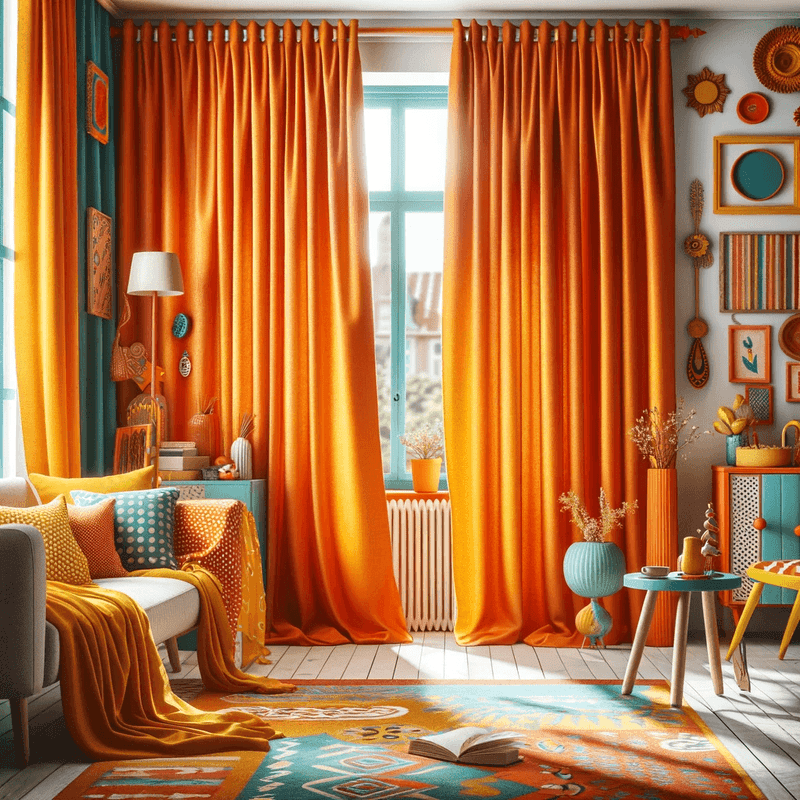
Conversely, "joyful maximalism" is making a strong comeback. It's about playing with saturated colors, bold patterns (stripes, florals, geometrics) and accumulations of collected objects. The layout can be denser, but must remain controlled to avoid visual clutter.
Finally, absolute flexibility is a growing demand. Modular furniture (sectional sofas, extendable tables, mobile seating on casters) allows you to reconfigure the space in an instant, according to the day's needs: a big party, movie night, or a remote work session.
FAQ: Answers to the Most Frequent Questions on Living Room Layout
How to arrange a living room with a French door in the middle of a wall?
This is a classic case that requires working around the obstacle. Avoid blocking access or light. Often, the solution is to place the sofa with its back to the French door, perpendicular to it, if the room's depth allows. This creates a natural separation without obstructing the view. You can also flank the French door with two identical low bookcases to create symmetry and a flattering frame. The space in front then becomes a natural circulation zone to the outside.
How far should the television be placed from the sofa?
The ideal distance depends on the screen size and resolution. An empirical rule is to multiply the screen diagonal (in inches) by 1.5 to 2.5 to get the distance in centimeters. For example, for a 55-inch TV (140 cm diagonal), a comfortable viewing distance is between 210 and 350 cm. The screen should be positioned at eye level when you are seated, to avoid neck strain.
Can you put a rug on a hardwood floor or tile?
Absolutely, and it's highly recommended! A rug anchors the living area, adds warmth, acoustic comfort, and defines the space. The basic rule: choose a rug large enough so that the feet of the main furniture (sofa, armchairs) can rest at least partially on it. For a standard seating group, a rug that extends at least 20 to 30 cm beyond each side of the sofa is ideal.
How to integrate a desk into the living room without it looking "messy"?
The trick is to conceive it as a distinct yet harmonious zone. Opt for a desk with a refined design that matches the rest of the furniture. Use a decorative screen, a bookshelf as a visual separator, or even a large curtain to hide the workspace when not in use. Rigorous cable management (with sleeves) and closed storage for equipment are essential to maintain a serene appearance.
Do you absolutely have to follow trends for a beautiful layout?
Not at all. Trends are a source of inspiration, not an obligation. The most important thing is to create a living room that matches your lifestyle, tastes, and needs. A layout based on timeless principles (good circulation, balanced proportions, layered lighting) will always be successful. You can then inject trendy touches via easy-to-change accessories (cushions, throws, wall art, small furniture), without overhauling the entire space organization.
Conclusion: Your Living Room, an Evolving Creation
Arranging a living room is a journey, not a destination. It's a process that requires reflection, observation, and sometimes a few adjustments. By starting with a fine analysis of the space and your needs, and respecting the principles of circulation and highlighting focal points, you lay solid foundations. Don't be afraid to test several arrangements before finding yours. Use boxes or chairs to simulate furniture placement before moving them physically.
A well-arranged living room is one where you feel good immediately, where every element has its place and its reason for being. It reflects your personality while being perfectly adapted to the realities of your daily life. To continue your inspiration and discover hundreds of concrete ideas on decoration, trends, and the layout of every room in your home, feel free to explore the other comprehensive guides available on ombreinterieur.fr. Your interior deserves all your attention. Among our favorites, find Rideau Court Salon. Check out our article comment bien choisir les objets de decoration pour le salon to go further. Discover our entire decor universe on Ombre Interieur.
