













Making a Room Look Longer: Optical Illusions and Decorating Tips
The proportions of a long, narrow room can be disconcerting, yet they hold unexpected decorative promise. The challenge lies in playing with visual perceptions to balance the volumes without altering the structure. Colour, lighting and layout become your allies in tricking the eye and turning that corridor into a harmonious space. You will learn to tame the lines, create focal points and unlock the full generosity of your interior. Let yourself be guided towards a transformation where every trick counts.
The feeling of narrowness in a long, narrow room, often nicknamed a "corridor" or "tube," is a common decorating challenge. Whether in an older apartment with Parisian proportions, a studio, or a poorly proportioned extension, this layout can seem restrictive. However, with a strategic approach, it is entirely possible to visually enlarge a long room, balance its proportions, and make it a space that is both functional and aesthetic. The goal is not to modify load-bearing walls, but to use optical tricks, a judicious choice of colors, lighting, furniture, and textures to trick the eye and reveal the space's full potential. This article guides you step-by-step to transform your elongated room into a harmonious and spacious cocoon.
Understanding the Psychology of Space: The Foundation of Any Transformation
Before choosing a paint color or a sofa, it is crucial to understand how our brain perceives space. A long room poses two main problems: it seems narrow in width and endless in length. The parallel vanishing lines of the long walls accentuate this tunnel effect. To visually enlarge a narrow room, you must therefore work on two axes: widen the perception of width and shorten or break the excessive length. This is achieved by creating focal points, manipulating sight lines, and intelligent zoning that structures the space without weighing it down.
The Magic of Color and Patterns: The Most Powerful Optical Tool
Paint is your number one ally. The classic rules are well established, but current trends allow for stylish interpretation.
Short Walls in Dark or Accent Colors
Contrary to the common belief that everything should be white to enlarge, a proven trick is to paint the shortest walls (at the ends of the room) in a darker, more saturated color, or with a strong-patterned wallpaper. Why? The eye is drawn to contrasts and dark colors seem to advance. By painting the short walls in a shade like midnight blue, deep green, or terracotta, you visually "bring them closer," thus shortening the perspective. The long walls, on the other hand, remain in a light, luminous shade (off-white, very pale gray, light taupe) to seem to recede.
Horizontal Stripes to Widen the Space
On long walls, avoid vertical stripes at all costs, which would accentuate the height and well-like effect. Prefer subtle horizontal lines. This can be a baseboard and cornice in a contrasting color, a frieze, or even horizontal paneling painted a tone lighter or darker than the wall. These horizontal lines guide the eye from left to right, creating an impression of widening. Current interior decor trends see a return of paneling, a perfect opportunity to apply this rule with elegance.
Gradients and Chair Rails
A bolder technique is to create a color gradient on the long walls, from darkest at the floor to lightest at the ceiling. This method, inspired by theaters, visually "raises" the ceiling and reduces the feeling of narrowness. Another option is to paint a chair rail (a horizontal band at mid-wall height) in a contrasting color. Position it slightly above the standard height to "lift" the focal point and widen the room.
Layered Lighting: Banishing Shadows and Creating Depth
Poorly thought-out lighting is the worst enemy of a long room. A single central ceiling light will create deep shadowy areas in the corners, reinforcing the tunnel effect. The solution lies in layered lighting, which combines several sources at different heights.
- Diffuse General Lighting: Opt for several ceiling light points (recessed adjustable spotlights or tracks) evenly distributed, or for a linear pendant light placed across the width of the room to create a visual pause.
- Ambient Lighting: Add wall sconces on the long walls, at mid-height. They will illuminate the wall surface, making it appear more distant, and create soft, enveloping light. Articulated arms are ideal for directing light.
- Functional and Accent Lighting: Use floor lamps behind a sofa or armchair, LED strips under shelves or behind a low piece of furniture, and directional spotlights to highlight artwork on a short wall. This play of light and shadow creates relief and depth, breaking the linearity of the space.
Intelligent Zoning: Breaking the Length to Live It Better
A long room must absolutely be divided into several functional zones to avoid resembling a circulation corridor. This zoning structures the space and gives the eye several points of interest to explore.
Creating "Rooms Within a Room"
Clearly define a relaxation area (sofa, armchairs, coffee table), a dining area (table and chairs), and possibly a workspace or reading nook. The key is to use furnishings to create these zones without obstructing the natural circulation, which should ideally run along one of the long walls.
Light Visual Dividers
Forget solid partitions. Turn to airy and translucent solutions: - An open bookshelf or see-through shelves (accessible from both sides). - A decorative screen, ideal for hiding a workspace. - A curtain of beads or light fabric suspended from the ceiling. - A sofa with its back to the passage, or a large low piece of furniture (like a console) used as a separation between the living and dining areas. These elements create a visual break while allowing light and the gaze to pass through, essential for enlarging a long room.
The Strategic Choice and Arrangement of Furniture
The selection and layout of furniture are decisive. Each piece must be considered so as not to clutter the precious width of the space.
- Prefer Low Furniture with Legs: A sofa, armchairs, and dressers with visible legs allow the floor to be seen, creating a visual continuity that enlarges the space. Low furniture, like a wide but very low coffee table, does not interrupt the horizon line.
- Follow the Shape of the Room... in Moderation: A corner sofa can be excellent for occupying the end of a room and creating a cozy nook. Similarly, a rectangular dining table placed lengthwise can work, provided it is proportionate and leaves a passage of at least 80 cm on the long side.
- Avoid the "Wall of Furniture": Do not line up all your furniture along the same long wall. This would create a central empty aisle that feels very much like a corridor. Dare to bring some furniture forward (an armchair, a console behind a sofa) to create niches and dynamism.
- Opt for Transparency and Reflections: A glass table or one with a mirrored top, chairs with thin and airy structures, glass or metal shelves: anything visually light helps declutter the space.
Floors and Ceilings: Unexpected Allies for Widening
Do not neglect these two surfaces, crucial for unifying or structuring the space.
The Floor, a Unifying Element
To visually enlarge a narrow room, it is imperative to use the same floor covering throughout the entire length. Breaks in materials (parquet in the living room, tile in the open kitchen) cut up and shrink the space. Choose: - Parquet or laminate flooring laid widthwise (perpendicular to the long walls). This direction creates powerful horizontal lines that immediately widen the perception. - Large rectangular format tiles, also laid widthwise. - A plain, light-colored carpet without a strong directional pattern.
The Ceiling, a Fifth Wall to Work On
A dark or low ceiling can crush the room. Keep it light. To accentuate the widening effect, you can: - Paint the cornice or ceiling perimeter the same color as the light long walls, blurring the boundary between wall and ceiling. - Install moldings or coffers widthwise, again guiding the eye laterally. - Use a very discreet wallpaper on the ceiling, with a micro-pattern, to add character without weighing it down.
Mirrors: The Ultimate Weapon for Spatial Expansion
The mirror is undoubtedly the most effective element for instantly doubling space. But its placement is a science.
- On a Short Wall: A large mirror (or a composition of mirrors) placed at the far end of the room, on a short wall, creates infinite depth by reflecting the space in front of it. This is the most powerful position.
- On a Long Wall: Avoid a long mirror on a long wall, unless it is very wide and placed facing a light source or a beautiful view. Prefer several mirrors of different sizes, arranged asymmetrically, to break the linearity and reflect varied angles.
- Mirrored Furniture: A console with a mirrored top, mirrored cabinet doors, or a leaning cheval mirror add reflections without taking up wall space.
- The Mirror-Facing-Window Trick: If your room has a window on a long wall, place a mirror on the opposite wall. It will reflect not only natural light but also the view to the outside, creating an additional illusion of openness.
Textiles and Accessories: The Final Touch That Structures
Curtains, rugs, and cushions have a role to play beyond simple comfort.
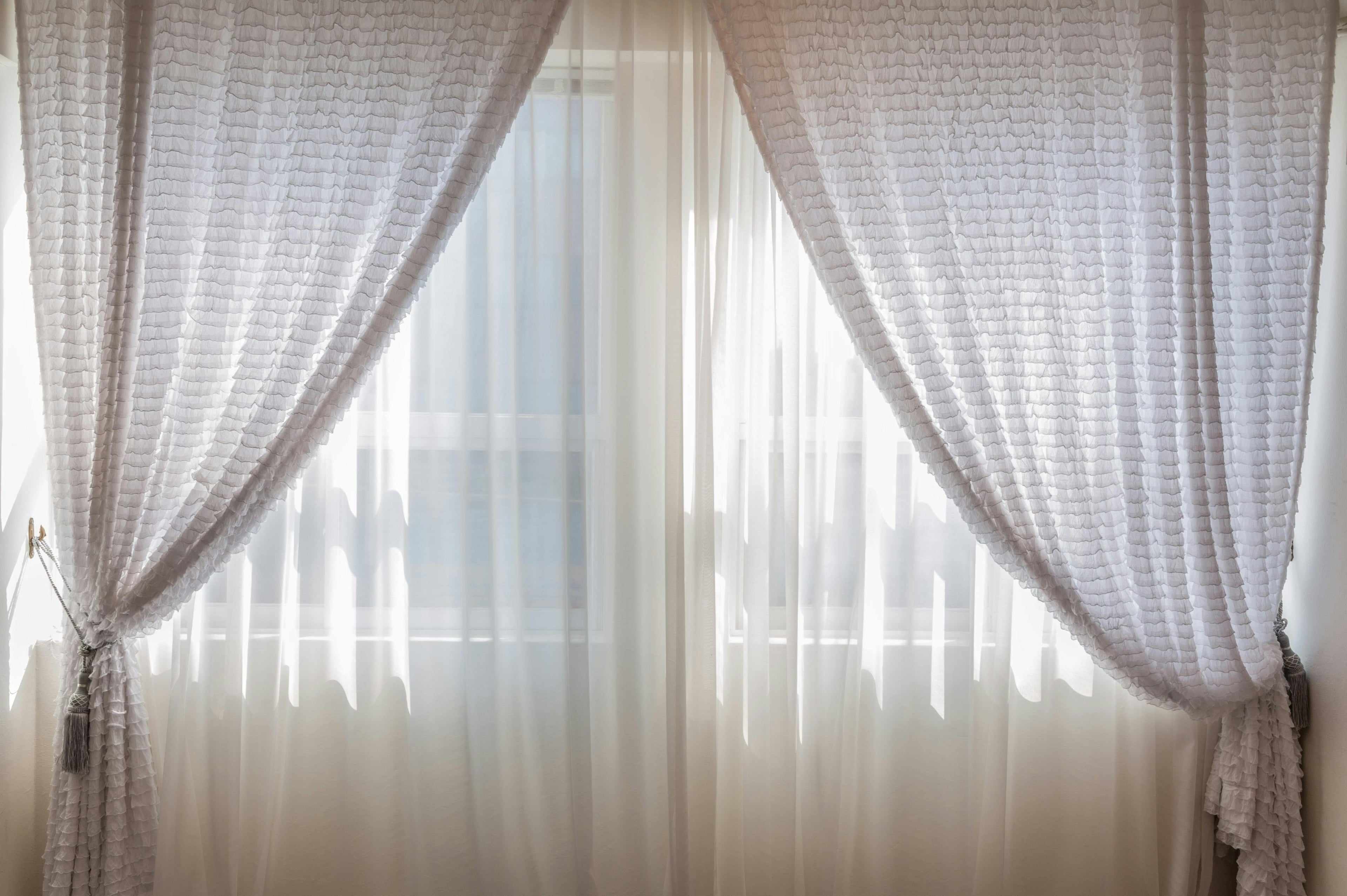
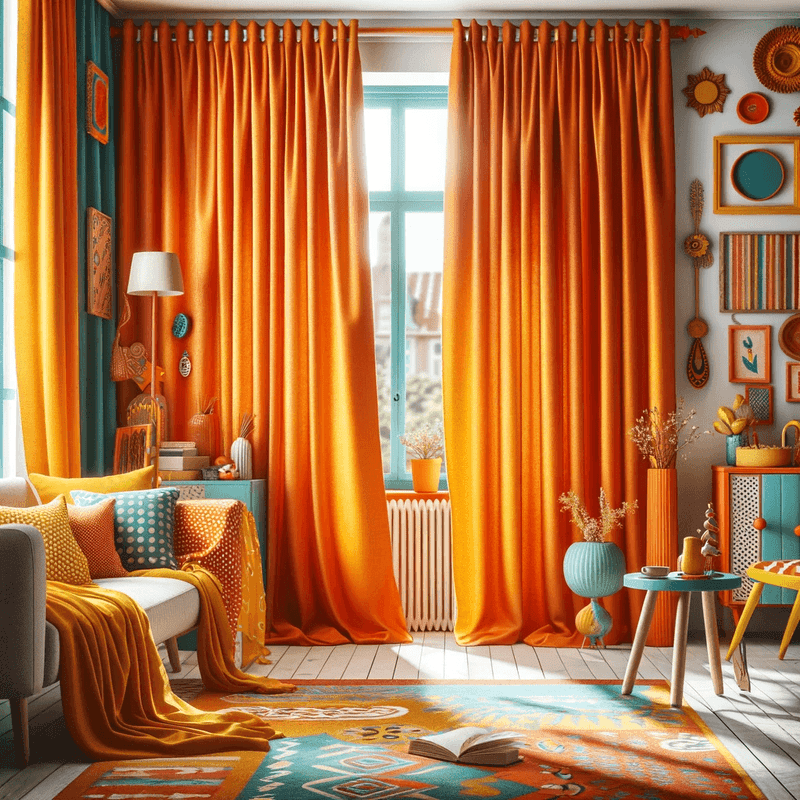
- Curtains: Install them from top to bottom, from the cornice to the floor, even if the window is small. The rod should extend well beyond the sides of the window. Choose a light fabric (linen, sheer) in a shade close to the wall color. This "enlarges" the window and draws the eye upward.
- Rugs: In a living area, use a rug wide enough so that the feet of the main furniture (sofa, armchairs) rest on it. This anchors the zone and avoids a "floating" furniture effect. For the dining room, the rug should be large enough to contain the chairs even when pulled out. Avoid small rugs that fragment the space.
- Wall Art: On long walls, prefer a gallery of pictures of varied sizes or a large horizontal piece rather than a series of aligned vertical frames. On short walls, a vertical piece or a large painting can reinforce the focal point effect.
Practical Case: Arranging a Long Living-Dining Room
Let's take the concrete example of a room 8 meters long by 3.5 meters wide. The goal is to fit a cozy living room and a dining area for 6 people.
Successful Scenario: The short walls are painted in matte forest green. The long walls and ceiling are a warm white. The light oak parquet is laid widthwise. Near the window (on a long wall), the living room is set up: a standard-size straight sofa is placed slightly forward, its back defining a passageway. Facing it, a round glass coffee table and an armchair. Behind the sofa, a narrow console serves as a visual separation and holds lamps. The dining area occupies the far end of the room: a rectangular oak table with chairs with openwork backs. A large mirror adorns the short wall behind the table. The lighting combines recessed spotlights, a linear pendant light above the table, and sconces above the console. The living room rug is large, as is the dining room rug. Result: distinct zones, fluid circulation along one wall, and an impression of space much wider than in reality.
FAQ: Your Questions About Enlarging Long Rooms
Should Deep Furniture Really Be Avoided in a Narrow Room?
Not necessarily, but it must be chosen carefully. A deep sofa can be comfortable, but it should have high legs and be paired with a very low coffee table to not block the view. Prefer a model without bulky armrests. The important thing is to maintain visual transparency at floor level.
Can Large-Pattern Wallpaper Be Used in a Long Room?
Yes, but with a precise strategy. Wallpaper with a large, complex pattern (botanical, geometric) can be fantastic on a short wall, to highlight it and bring it closer. On the other hand, on long walls, prefer very small, repetitive patterns, preferably arranged horizontally, or subtle horizontal stripes.
How to Treat a Long Room with a Door in the Middle of a Long Wall?
This is a tricky case that interrupts wall continuity. The solution is to treat this wall as a "neutral zone." Paint it the same light color as the other long walls. Use the door as an opportunity: paint it in an accent color (that of the short walls) to make it a decorative element. Arrange the furniture so that the door is not in the main circulation axis, but to the side of a zone.
Are Dark Tones Completely Forbidden?
Absolutely not! Dark, saturated colors (navy blue, emerald green, black) are very trendy and add character. The secret is to use them strategically and with contrast. A dark short wall, black lacquered bookshelves, a slate floor can create a "wow" and cozy effect, provided the rest of the room (ceiling, other walls, lighting) is very generous with light and reflections to balance it.
How to Integrate Storage Without Cluttering the Space?
Prefer built-in storage, from floor to ceiling, across the entire width of a short wall. They disappear into the architecture. Otherwise, opt for narrow and tall storage furniture (narrow bookshelves, columns of drawers) placed against the short walls. Avoid wide, low storage furniture on long walls, which "eat into" the precious width.
Conclusion: Creativity Born from Constraint
A long room is not a fate, but an opportunity to show decorative ingenuity. By systematically applying the principles of directional color, layered lighting, zoning, and airy furniture, you will radically transform the perception of your space. Enlarging a long room is a fascinating optical game where every detail counts, from the direction of the floorboards to the choice of a lamp base. Do not be afraid to experiment, create contrasts, and structure the space. Your elongated room, once mastered, can become the coziest and most personalized place in your home, defying all expectations with its balance and assertive style. To discover more inspiration and practical guides for arranging complex spaces, explore the many resources available on ombreinterieur.fr. For more tips, discover how to succeed with a Scandinavian cozy decor on the blog. Get inspired on our decoration site for your next projects.
