














Enlarge a room with curtains: tips and optical illusions
Does your living room feel cramped, with ceilings lower than you’d like? Before considering structural work, know that a simple play of fabric can transform the space. When chosen and positioned with care, curtains become powerful allies in creating a striking optical illusion. By playing with height, width and light, they reshape volumes without a single hammer blow. Here you will learn how to master these decorator’s tricks, giving your interior a sense of spaciousness and elegance, all with effortless grace.
Do you feel like your walls are closing in and your living space is desperately lacking in room? You are not alone. In urban apartments or older homes, the question of how to make a room look bigger is a major concern. Before considering costly and invasive masonry work, know that an elegant and often underestimated solution lies at your windows: curtains. Far more than just an accessory for privacy or decoration, the choice, hanging, and style of your curtains can literally transform the perception of space. This article is your complete guide to mastering this art. We will explore in detail all the tricks, from the most classic to the most innovative, to create the illusion of a more generous volume, a higher ceiling, and more abundant light. Get ready to discover how a few meters of fabric can entirely redefine your interior.
The Optical Illusion: The Science Behind the Art of Enlarging with Curtains
Understanding how our eyes and brain perceive space is the key to successfully manipulating this perception. Curtains act as illusionist tools by playing on several fundamental visual levers. The first is the vanishing line. By hanging curtains in the right way, we create continuous vertical lines that draw the eye upward, giving an impression of height.
The second lever is the reflection of light. Light, airy fabrics capture and diffuse natural light, eliminating harsh shadows that visually compartmentalize a room. Finally, the play of proportions is crucial. A poorly proportioned curtain can crush a window, while a well-designed curtain can frame it and integrate it harmoniously into the room's architecture, creating a visual continuity that expands the perceived boundaries.
These principles, used by interior designers and decorators, are not magic but an intelligent application of the psychology of perception. By mastering them, you move from being an observer to the creator of your space.
The Golden Rule: Hang High and Wide to Create Height
This is undoubtedly the most powerful and recommended technique for making a room look bigger with curtains. The classic mistake is to install the rod or rail just above the window frame. This method visually cuts the wall and shrinks the window.
The winning strategy is to fix your support halfway between the top of the window and the ceiling, or ideally, just 10-15 centimeters from the ceiling. This maximized height forces the eye to follow the vertical line of the curtain from floor to ceiling, creating a spectacular impression of ceiling height.
In the same way, you must think "wide." Place the rod well beyond the window frame on the sides. Let it extend 20 to 30 centimeters on each side. This allows the window to be fully uncovered when the curtains are open, making the window appear larger than it actually is and letting in maximum light. This trick transforms a standard window into an elegant wall opening.
Choosing the Right Length: Touching the Floor is Imperative
The length of the curtains is a detail that makes all the difference. A curtain that is too short, even by a few centimeters, "floats" awkwardly and breaks the vertical line so carefully created. For an optimal and chic effect, the curtain should skim the floor or form a very slight "pooling" (a fold of fabric resting on the floor).
This visual connection with the floor anchors the element, integrates it into the room's architecture, and extends the line without interruption. Always measure from the ring or grommet to the floor for perfect precision. This investment in custom-made or well-chosen standard-length curtains is one of the most cost-effective for the space-enhancing effect.
The Color Palette: Colors That Open Up Space
Color is a powerful ally in your quest for visual enlargement. Generally, light and neutral shades reflect light, while dark colors absorb it. To make a room look bigger, lean towards a light palette.
Whites, ecrus, very pale grays, beiges, and soft pastels (sky blue, sage green, light peach) are safe bets. They create an airy and soothing atmosphere. The current trend favors natural fabrics with organic hues, such as raw linen, washed cotton, or light burlap, which add texture without weighing down.
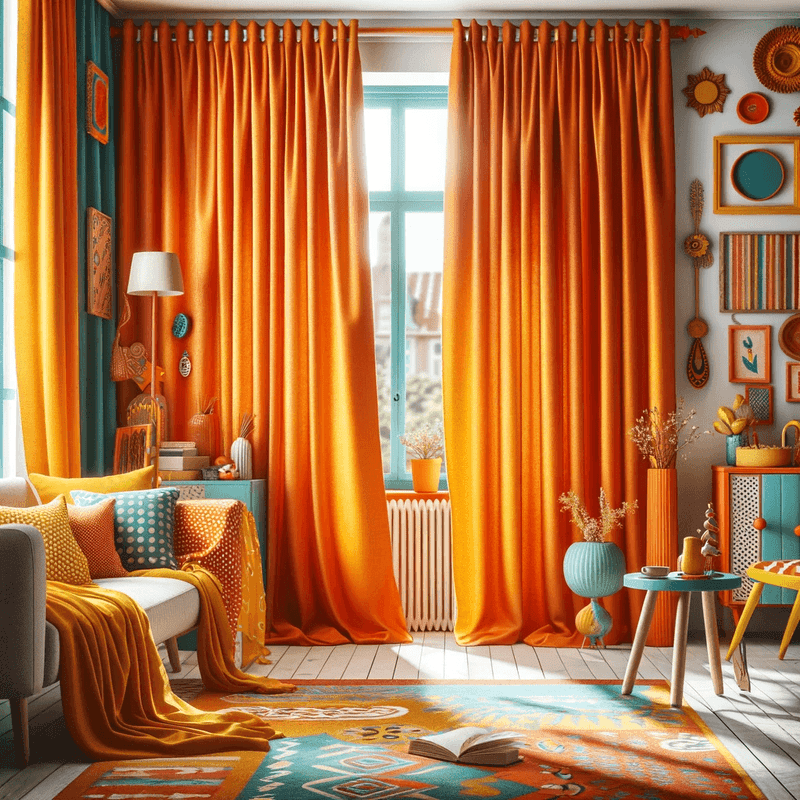
This does not mean you have to ban dark colors. Used sparingly and strategically, they can add depth. Imagine a small office or an alcove where curtains in a deep navy blue create a recessed effect, giving the illusion that the wall is receding. The trick lies in controlled contrast and balance with the rest of the decor.
The Choice of Fabric: Lightness, Transparency, and Fluidity
The material of your curtains directly influences the amount of light and the feeling of lightness. For small rooms, favor natural and light fabrics that let daylight filter through.
Linen is an undisputed champion. Its slightly wrinkled appearance and texture variations add character without opacity. Voile or organza are perfect for diffusing soft, uniform light, eliminating strong contrasts. Fine cotton like "batiste" offers beautiful fluidity.
Avoid thick, heavy, and structured fabrics like thick velvet or certain brocades in small rooms, unless you are looking for a very targeted theatrical effect or prioritizing acoustic and thermal insulation. Patterned fabrics can work, provided they are small-scale and on a light background. A discreet fine botanical or geometric pattern can add dynamism without cluttering the space.
Curtain Styles and Their Effects on Space
The way a curtain is draped and held has an immediate visual impact. Each style communicates a different ambiance and has its own virtues for enlarging.
Ring-Top or Grommet Curtains
This modern, clean style creates regular, structured folds. The rod line is visible, which can add interesting horizontality. It is perfect for a contemporary look and allows for very smooth opening and closing.
Pinch-Pleated Curtains (Pencil or Box Pleats) on a Track
This is the most classic and often the most elegant option. The pleats are sewn and held at the top, creating a neat and generous effect. When drawn, they form beautiful cascades of fabric that add vertical volume. This style is ideal for a more traditional or Scandinavian interior.
Double Curtains and Tiebacks
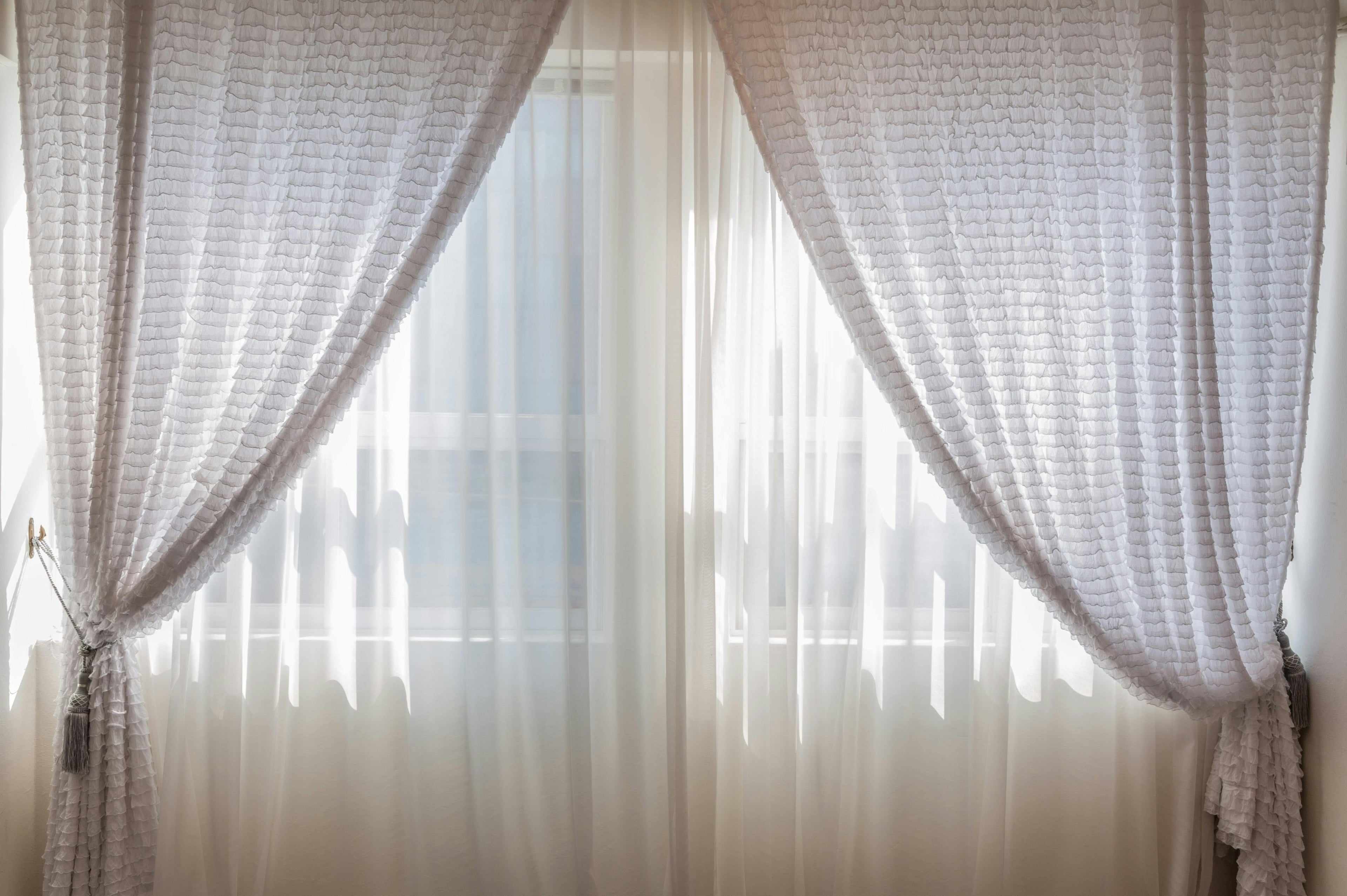
For maximum flexibility, the double curtain system (a sheer + a blackout curtain) is unbeatable. During the day, the sheer alone filters light while preserving privacy and the impression of space. In the evening, the blackout curtain is drawn for privacy. Use tiebacks or cords to hold the curtains open on the sides. This drapes the fabric in a sculptural way, creating beautiful columns of material that frame the window and visually widen the perspective.
Modern Alternatives: Blinds and Hybrids
Curtains are not the only solution. Some blinds, used alone or in combination, can also help make a room look bigger.
The Venetian blind, especially in an extra-wide version (50 mm slats or more) and in a light color, can look very architectural and clean. When raised, it disappears completely. The Roman shade in a plain, fine fabric, when rolled up, forms a neat horizontal band that can make the ceiling appear higher.
The current trend is layering. Pairing a discreet shade or roller sheer with light curtains is an excellent strategy. The blind manages basic light and privacy, while the curtains add the decorative touch, texture, and height effect. This combination offers additional visual depth.
Enlarging Without a Window: The Decorator's Trick of the Wall Curtain
A decorator's trick for rooms without windows or with blank walls is to use curtains as an architectural element. By installing a rod from floor to ceiling across the entire width of a wall and hanging beautiful linen curtains on it, you create the illusion of a large, concealed picture window.
This technique adds incredible texture, movement, and a visual break from the flat wall. It is particularly effective in bedrooms, dressing rooms, or to hide a messy storage area, while adding softness and height. Choose a plain, light fabric to maximize the effect.
The Accessories That Make the Difference: Rods, Rails, and Finishes
The support for your curtains should not be an afterthought. A thin, discreet rod, in a metallic color (matte gold, nickel, matte black) or painted the same color as the wall, blends into the decor and does not interrupt the visual line.
Rails recessed into the ceiling are the most minimalist option for a spectacular "floating curtain" effect. Hooks and rings should also be chosen carefully: transparent rings for sheers, thin metal rings for an industrial look. Every detail counts to preserve the overall fluidity.
Practical Cases: Applying the Advice Room by Room
To Enlarge a Small Living Room
Opt for double curtains. Hang a wide and high rod. Choose an immaculate white sheer and curtains in sand color or very pale gray linen. Leave them slightly open on the sides with tiebacks to create a permanent frame that widens the window.
For a Narrow Bedroom
Install floor-to-ceiling curtains on the entire wall behind the headboard. This creates a majestic alcove effect and draws the eye to the back, visually lengthening the room. Favor a soothing color like a pastel blue or aqua green.
For a Dark Kitchen or Dining Room
Light sheers or semi-transparent natural linen curtains are perfect. They preserve privacy while letting in maximum light. A very discreet vertical stripe pattern can also enhance the height effect.
FAQ: Your Questions on Curtains to Make a Room Look Bigger
Are large-patterned curtains always to be avoided in a small room?
Not necessarily, but they require boldness and precise application. A large botanical pattern on a white background, printed on a fluid fabric like cotton, can create a focal point and give the impression of a window opening onto a garden, diverting attention from the room's size. The key is to keep the rest of the decor extremely clean and monochromatic to balance.
Can you use black curtains in a small room?
Yes, provided you create a strong and controlled contrast. In a room with white walls, a light floor, and minimalist decor, matte black floor-to-ceiling curtains can create a graphic and deep effect that adds character. They act as an elegant "black hole" that seems to push the wall back. It's a risky but very trendy solution in contemporary interiors.
How do you wash white sheers without them turning yellow?
Use a mild detergent specific for whites, avoid fabric softener which can clog fibers and make the fabric opaque. Add half a glass of sodium percarbonate (or washing soda crystals) to your detergent for an ecological and effective whitening. Dry them outdoors, in the sun if possible, as UV rays are an excellent natural bleaching agent.
Are electric curtains a good idea to save space?
From a purely visual point of view, no, they don't enlarge more than a manual curtain. However, from a practical standpoint and to preserve a minimalist aesthetic, they are excellent. No bulky cords, precise opening/closing that allows you to always optimize light entry, and a rail system that is often very discreet. It's a comfort investment that serves the philosophy of an uncluttered space.
Is there a 2026 trend for curtains in small spaces?
The strong trend is towards natural and textured fabrics in their original colors (raw linen, undyed wool, ecru cotton). There is also a return of very soft ruffles and gathers, for a romantic and airy effect that softens the angles of a small room. Finally, mixing textures (a smooth sheer with a textured linen curtain) adds richness without visual overload.
Conclusion: Redefine the Boundaries of Your Interior
Making a room look bigger with curtains is much more than a decorative trick; it's a philosophy of space that favors intelligent illusion, light, and fluidity. By applying these principles – hanging high, choosing light and airy, letting them fall to the floor – you hold the keys to radically transform the perception of your home. Every window becomes an opportunity for interior architecture, every curtain a tool for sculpting light. Don't be afraid to experiment with textures and draping. The goal is to create a feeling, that of breathing, feeling good, and enjoying a space that finally seems up to your aspirations. To continue exploring decoration ideas that enhance every square meter, immerse yourself in the world of ombreinterieur.fr, your source of inspiration for magnified interiors. For more tips, discover how to arrange a bedroom with terracotta mirrors on the blog. Get inspired on our decoration site for your next projects.
