














Enlarging a room with wallpaper: patterns and tips
Looking to make a cramped room feel more spacious without embarking on major renovations? Wallpaper, often overlooked, holds surprising optical potential. By playing with patterns, colours and hanging techniques, you can literally push back the walls and invite light in. Let us guide you through the subtle art of decorative illusion: your space is simply waiting for this mural touch to reveal its full breadth, as the interplay of texture and tone breathes new depth into every corner.
Do you feel like your walls are closing in and your living space is desperately lacking air? You are not alone. In a world where square meters are precious, the art of creating the illusion of space is an essential decorating skill. While paint is often the first solution considered, wallpaper, with its incredible diversity of patterns, textures, and visual effects, is a formidably effective and underestimated ally for enlarging a room. Far from old, dark, and cluttered wallpapers, contemporary collections offer a palette of optical tools to push the visual limits of a room. This article is your complete guide to mastering this art. We will explore how patterns, colors, textures, and installation techniques can literally transform your perception of space, drawing on the latest trends and timeless principles of decoration.
The Fundamentals of Optics: How Wallpaper Creates the Illusion of Space
Before choosing a roll, it is crucial to understand how our eye and brain interpret patterns and colors. The goal is to trick the eye into perceiving depth, height, or width where there is none. Several optical mechanisms come into play.
Vertical patterns, like stripes or upward-oriented repeating motifs, naturally guide the eye from bottom to top. This upward movement creates an impression of a higher ceiling, ideal for rooms with low ceilings typical of older apartments or small bedrooms.
Conversely, horizontal patterns or wide bands tend to visually widen a narrow room. They draw the eye laterally, creating a sense of expansion. Large-scale patterns, once forbidden in small spaces, are now used strategically to create a focal point so powerful that it redefines the proportions, provided certain rules are followed.
Finally, perspective and depth of field play a key role. Wallpaper with a trompe-l'oeil landscape pattern, a deep forest, or a carefully studied color gradient can create an imaginary window, giving the impression that the wall recedes by several meters. This is the magical power of optical illusion applied to decoration.
The Palette of Possibilities: Colors and Patterns to Visually Enlarge
The choice of color is the most decisive step. An age-old rule in decoration states that light tones reflect light and enlarge, while dark tones absorb it and shrink. While this foundation is solid, the nuances are infinite.
Light and Bright Colors: The Essentials
Whites, creams, very pale grays, and soft pastels (sky blue, mint green, pale peach) are your best allies. They maximize the reflection of natural and artificial light, literally making the room "shine." Opt for matte or satin finishes rather than glossy ones, which can create distracting reflections. A wall in a uniform light tone visually erases corners, blurring the room's boundaries.
Stripes: The Art of Redirecting the Gaze
Stripes are the optical tool par excellence. To gain height, choose fine, regular vertical stripes. The effect is immediate and spectacular. To widen a hallway-like room, horizontal stripes, wider and more spaced, are ideal. The current trend dares to use stripes of varying widths or bands of contrasting colors but within the same tonal range (for example, different shades of blue), creating a dynamic effect without overwhelming the space.
Geometric and Organic Patterns
Small, repetitive geometric patterns (chevrons, diamonds, very fine polka dots) create a dynamic visual background that can enlarge the space while avoiding the monotony of a plain wall. They add rhythm without cluttering. Small or medium-scale organic patterns, like delicate foliage or stylized botanical motifs, add depth and movement, diverting attention from the room's actual dimensions.
Current Trends in "Space-Enhancing" Wallpaper
The wallpaper market has evolved, offering ever more ingenious solutions for small spaces. The 2026 trends highlight boldness and optical intelligence.
Gradients and skies are immensely popular. A gradient from floor to ceiling, from darkest to lightest, wonderfully simulates height and zenithal light. Wallpaper depicting a cloudy sky or a pastel sunset opens the room to infinity.
Architectural trompe-l'oeil is making a strong comeback. Colonnades, relief moldings, windows open onto urban or natural landscapes... These patterns create a striking depth of field, pushing the wall back by several visual meters. They are perfect for an accent wall in a living room or a windowless hallway.
Subtle relief textures (burlap, plaster, light polished concrete effect) play with light and shadow. They add character and dimension without the visual aggression of a colorful pattern, ideal for a contemporary style and minimalist look where warmth is desired without clutter.
Finally, customizable panoramic patterns and wall murals allow for the creation of an immersive environment. Imagine a bamboo forest covering the entire height of a wall, giving the impression that the room is an extension of the garden. It's a radical and extremely effective solution for square or soulless rooms.
Installation Strategies by Room Type
The installation technique is as important as the chosen pattern. The same wallpaper can have radically different effects depending on its application.
For a Narrow and Long Room (Hallway, Galley Kitchen)
The goal is to widen it and visually shorten its tunnel-like appearance. Install wallpaper with horizontal stripes or wide bands on the longest walls. You can also opt for a panoramic pattern on the far wall, creating a perspective that attracts and stops the gaze, cutting the excessive length. Avoid vertical stripes at all costs, which would accentuate the hallway effect.
For a Low-Ceilinged Room (Bedroom, Office)
Here, we want to gain height. Fine vertical stripes reign supreme. For an even more powerful effect, install the wallpaper from floor to ceiling without interruption by a border or too high a baseboard. Choose very light shades. A tip: use a vertical pattern wallpaper only on the two shortest walls, leaving the long walls in a light, solid color. This draws the eye to the perceived "width" while maintaining elevation.
For a Small and Square Room (Dressing Room, Bathroom, WC)
The risk is the "box" effect. The perfect geometry must be broken. A wallpaper with a gradient pattern (from dark to light going up) on a single wall (the far wall) creates focus and depth. A medium-scale pattern with depth (foliage, a 3D geometric pattern) on all walls can also dissolve the corners. In a wet room, prioritize quality vinyl wallpapers, resistant to humidity, in light aquatic tones.
The Art of the Accent Wall (Feature Wall)
This technique is one of the most effective for reconfiguring space. By covering a single wall with a high-character wallpaper (trompe-l'oeil, bold geometric pattern, strong color), you create a focal point that captivates the gaze. The mind no longer evaluates the overall size of the room but focuses on this decorative element. Always choose the most logical wall (the one behind the bed, sofa, or facing the entrance).
The Crucial Role of Light and Accessories
A beautiful wallpaper doesn't do everything. Its interaction with light and the rest of the decor is crucial to complete the illusion.
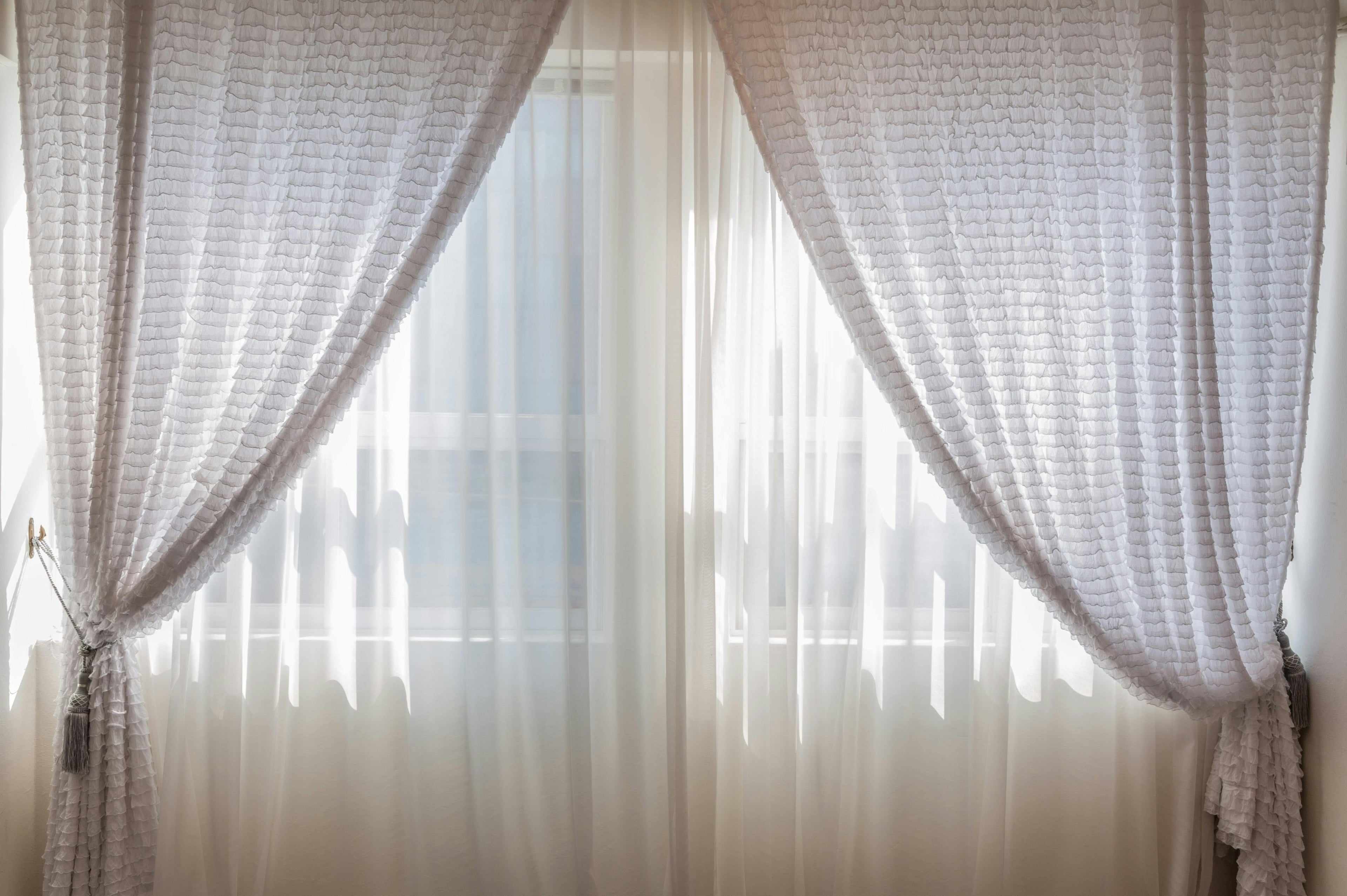
Natural light must be maximized. Avoid heavy drapes in front of windows. Prefer blinds or thin, light curtains, placed high and wide, to let in light that will reflect off your light walls or shiny patterns.
Artificial lighting must be layered. Combine soft general lighting (dimmable ceiling light) with ambient lighting that grazes the walls: directional wall sconces, LED strips concealed in niches or baseboards, floor lamps that project light towards the ceiling. A wall lit by grazing light reveals textures and enlarges the perceived space.
Mirrors are the perfect accomplices for "enlarging" wallpaper. Place a large mirror facing a light source or reflecting a beautiful wall to visually double the space and brightness. A mirror with a thin frame, or even frameless, is preferable.
Furniture must remain to scale. Choose furniture with slender legs, which allow the floor and baseboard to be seen, creating visual continuity. Low furniture in a low-ceilinged room reinforces the impression of height. Prioritize built-in storage and colors that blend with the walls.
Materials and Finishes: Choosing the Right Support
Not all wallpapers are created equal. The support influences installation, durability, and the final effect.
- Classic wallpaper (non-woven): The most traditional. It requires paste-the-wall installation and can be more difficult to handle. Ideal for printed patterns and matte finishes.
- Non-woven wallpaper: The current standard. Installation is simpler (paste on the wall), it is more resistant, and removes more easily without damaging the support. Perfect for beginners and for all types of patterns.
- Vinyl wallpaper: Featuring a PVC layer, it is washable, resistant to humidity, and very durable. Essential for kitchens, bathrooms, and high-traffic areas. Available in matte or slightly glossy versions.
- Textile or natural fiber wallpaper (seagrass, silk, linen): They bring deep and warm texture. Excellent for adding dimension without a colorful pattern, they absorb sound and improve the acoustics of a small room.
- Metallic or textured effect wallpapers (concrete, brushed metal): They subtly reflect light. Use sparingly, on an accent wall, to create light plays that enlarge the space.
Pitfalls to Absolutely Avoid
Certain mistakes can undo all your efforts and make the room appear smaller and darker.
- Overloading all four walls with a pattern that is too large and too dark: This is the most common mistake. The pattern literally crushes the room.
- Neglecting sampling: Always order large samples (at least A4 size) and stick them on the wall. Observe them at different times of the day and under your artificial lighting. A pattern that seems discreet on a small square can become oppressive on a large surface.
- Forgetting continuity: Baseboards or door frames that are too dark or too wide "break" the vertical or horizontal momentum created by the wallpaper. Paint them the same color as the wallpaper background or in a very close tone for a continuous and fluid effect.
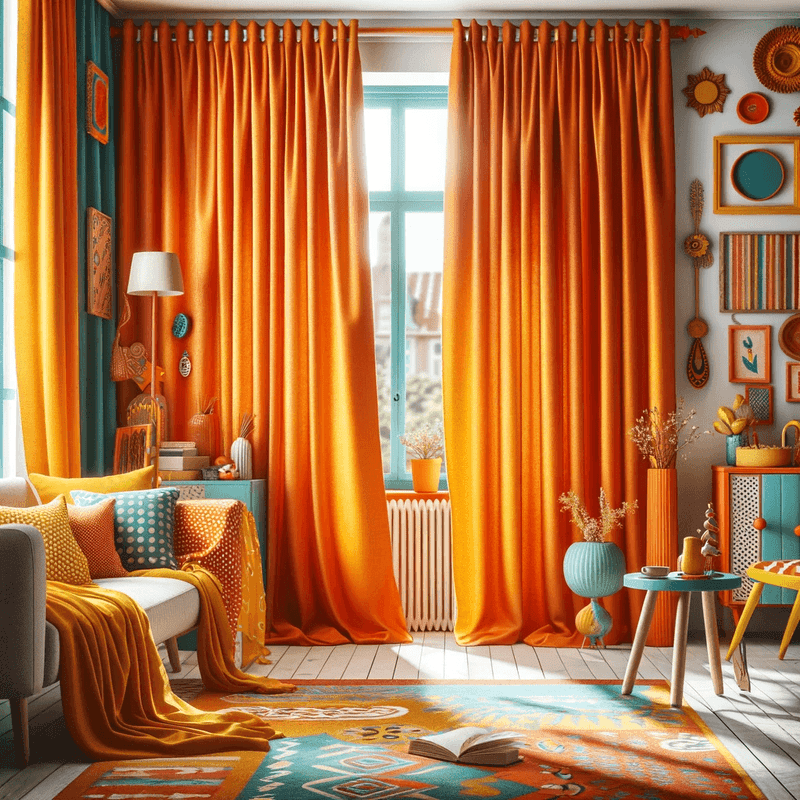
- Mixing too many patterns in a small room: If you install striped wallpaper, keep the rest of the decor (curtains, cushions, rugs) in solids or sober textures to avoid creating visual confusion.
FAQ: Your Questions About Wallpaper to Enlarge a Room
Can dark wallpaper really enlarge a room?
Contrary to popular belief, yes, but under conditions. A wall painted or wallpapered in a dark, saturated color (navy blue, forest green, anthracite) can create an effect of depth and recession, especially if it is well-lit by contrasting lights. It acts like a decorative "black hole" that dissolves boundaries. However, this technique is risky and works better in rooms already bathed in natural light or to create a very dramatic accent wall. For the majority of small, dark spaces, light tones remain the safest solution.
Are large-format floral patterns forbidden in a small living room?
Absolutely not forbidden, but their application must be strategic. A large floral or botanical pattern can be spectacular on a single wall (accent wall), creating a focal point that diverts attention from the room's size. The key is to choose a pattern whose background colors are light (white, cream, pale gray) and to leave the other walls in one of these neutral tones. Avoid dark backgrounds.
Can wallpaper be used on the ceiling to enlarge space?
This is a bold and very effective technique! Wallpapering a low ceiling with a delicate pattern (small polka dots, clouds, very light gradient) or, more radically, with a trompe-l'oeil blue or starry sky, diverts the gaze and gives the impression that the ceiling is higher. Pair it with light, solid-colored walls for an optimal result. Be sure to use suitable wallpaper and call a professional if installation at height seems complex.
How to correctly calculate the amount of wallpaper needed?
Under-calculating is a nightmare. Precisely measure the perimeter of the room (sum of the length of all walls) and the ceiling height. Divide the perimeter by the width of a roll (usually 0.53m or 0.70m). This gives you the number of strips needed. Then multiply the number of strips by the ceiling height (adding 10 cm for cuts), then divide by the length of a roll (usually 10m). Always add 1 extra roll for matching and errors, especially with patterns that require matching.
Does wallpaper go out of style faster than paint?
The perception has changed. Today, wallpaper is considered a decorative element in its own right, on par with a painting or a rug. Timeless patterns (fine stripes, textures, classic trompe-l'oeil) do not go out of style. For more trendy patterns, the advantage of non-woven wallpaper is its ease of removal. You can change the ambiance every 5 to 7 years without major renovations, making it a finally more flexible support than a complex mural painting.
Conclusion: Dare to Use Wallpaper to Free Up Your Space
Enlarging a room with wallpaper is much more than a decorating trick; it is a creative approach that engages all the senses of perception. By mastering the language of colors, the energy of patterns, and the magic of light, you hold the power to radically transform the atmosphere and proportions of your interior. Do not be afraid to experiment with samples, to dare a bold accent wall, or to play with textures. Modern wallpaper offers unprecedented freedom to personalize and enhance every square meter. To discover more inspiration, installation tutorials, and selections of wallpapers specially designed for limited spaces, immerse yourself in the universe of resources available at Ombre Intérieur. Your home deserves to breathe, and every wall is an opportunity to create the perfect illusion. Fall for Rideau Voilage Avec Motif, a real plus for your interior. Before choosing, browse how to arrange a terrace with off-white string lights. Get inspired on our decoration website for your next projects.
