















Concealing an Interior Window: Creative and Practical Solutions
An awkwardly placed or outdated interior window can disrupt a room’s harmony, but it need not be a lost cause. Before resorting to major renovations, know that clever decorative solutions can turn it into an asset. Whether you choose a built-in bookcase, a suspended artwork or a made-to-measure curtain, each option preserves natural light while reclaiming usable wall space. Let us guide you toward ideas that marry aesthetics with practicality, transforming this constraint into a deliberate design statement.
In the world of interior decoration, every wall, every nook is an opportunity for expression. But what about those openings that sometimes no longer fit our vision? An interior window, whether it overlooks a dark hallway, an adjoining room, or has simply become obsolete after renovations, can pose a real aesthetic and functional challenge. Hiding an interior window is not just about concealing it, but about transforming it into a decorative asset, preserving light and respecting the balance of the space. This article explores in depth creative, practical, and trendy solutions for integrating or concealing an interior window with elegance, turning this constraint into a full-fledged design element.
Why Hide an Interior Window? Understanding the Motivations
Before starting any work, it is essential to identify the reasons for wanting to conceal this opening. The motivations are often multiple and perfectly legitimate. The search for privacy is paramount, especially in terraced houses or apartments where a window opens directly onto a neighboring bedroom or bathroom. In this case, hiding the window becomes a necessity to preserve one's personal space.
The acoustic aspect also comes into play. A simple pane of glass is a poor sound insulator. Hiding an interior window with suitable materials can significantly reduce noise from the adjacent room, creating calmer and more serene spaces. Finally, the aesthetic reason is often the strongest. A poorly placed, outdated, or harmony-breaking window can disrupt the visual balance of a room. Transforming it allows you to regain an entire wall usable for decoration.
Evaluating Options: Permanently Seal or Hide in a Reversible Way?
The first crucial decision is to determine whether you want a permanent or reversible solution. Permanently sealing an interior window involves masonry work: removing the frame, filling the opening with concrete blocks or bricks, insulating, then plastering and painting for a perfectly smooth finish. This option is radical and irreversible without major work. It is ideal if you are certain you never want to restore the opening or natural light.
Conversely, reversible solutions for hiding an interior window offer valuable flexibility. They allow you to conceal the opening while preserving the possibility of reopening it in the future, whether for practical reasons or in case of selling the property. These methods, often more accessible in terms of budget and skills, open the door to great decorative creativity. It is on these clever solutions that we will focus.
The Wall Library: An Elegant and Functional Solution
Transforming a troublesome window into a magnificent library is one of the most accomplished ideas for hiding an interior window. This solution combines utility, aesthetics, and space saving. The principle is simple: build or install a shelf or bookcase that will completely cover the opening. Books, decorative objects, and plants will then occupy the space, creating a rich and personal focal point.
For an optimal result, several approaches exist. You can opt for adjustable floating shelves installed on either side of the window, creating a continuity effect. Another strong trend is the custom-made bookcase, built identical to the wall, with solid or glazed doors that perfectly conceal the opening. Consider integrating LED lighting inside the shelves to highlight your collections and compensate for any potential loss of light. The choice of materials, such as solid oak for a warm ambiance or white lacquer for a contemporary style, will help harmonize the whole with your decor.
Practical Tips for a Successful Bookcase
Before you start, take precise measurements of the window and wall thickness. Ensure the wall structure can support the weight of the bookcase and books. For an integrated look, paint or cover the inside of the niche formed by the window the same color as the shelves. Finally, don't hesitate to leave some empty spaces to aerate the composition and avoid an overly bulky effect.
The Artwork and Camouflage Painting
To hide an interior window in a subtle and artistic way, nothing beats a large painting or artwork. This solution is perfect for those looking for a quick, no-work, and highly decorative result. The idea is to hang a canvas, a decorative mirror, or an artistic panel with dimensions slightly larger than the window, thus completely masking it.
Current trends favor very large-format artworks that make a statement on a wall. An abstract painting with bright colors can become the center of attention in the room, diverting the eye from the hidden opening. For a more ingenious approach, you can opt for a sliding or pivoting painting, mounted on a discreet rail. This system allows access to the window if needed, while offering an aesthetic fixed solution the rest of the time. Choose a frame thick enough to create distance from the wall and avoid any "cabinet" effect.
Curtains and Sheers: Softness and Flexibility
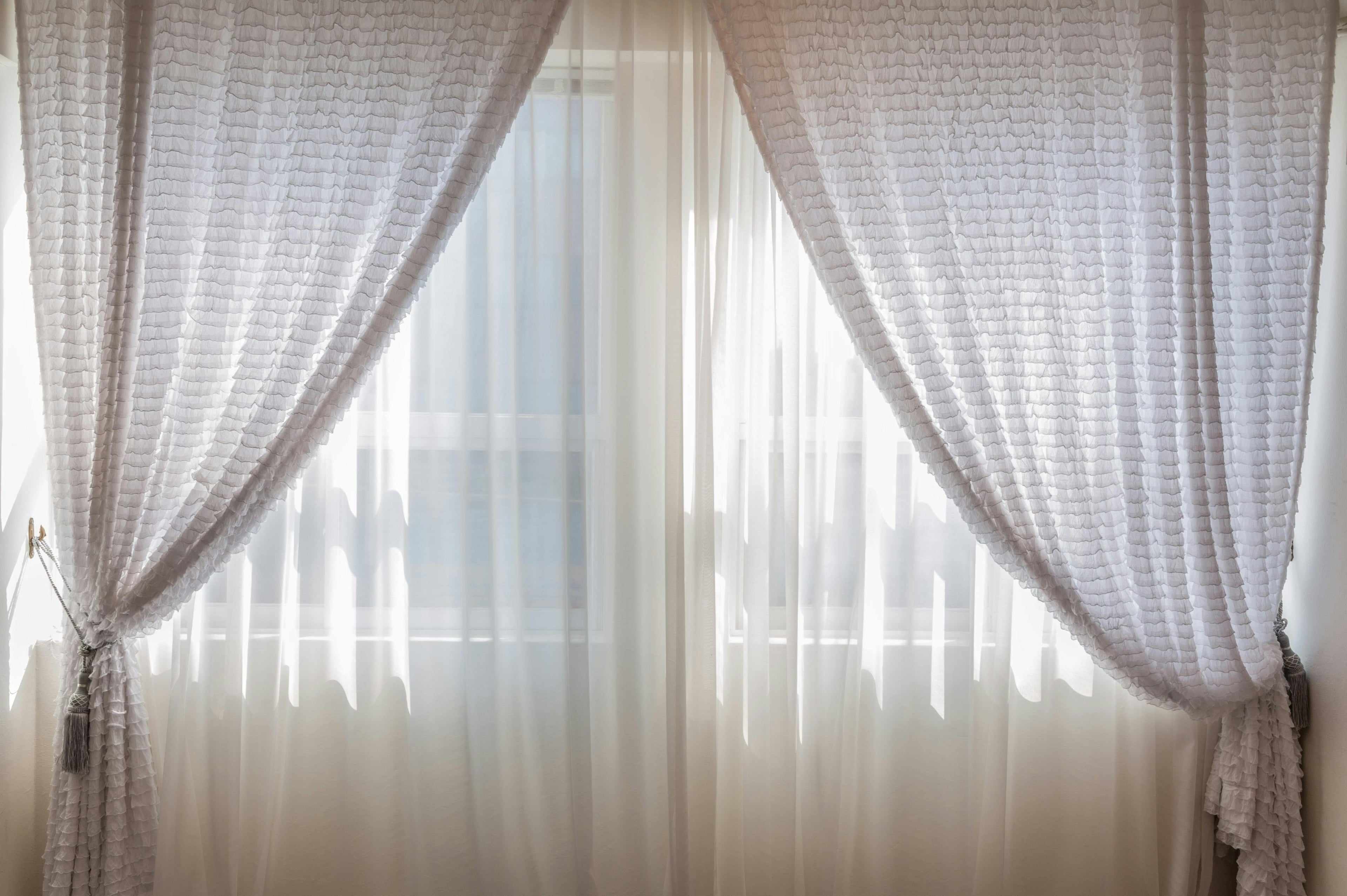
A classic but timeless solution, curtains offer a soft and flexible way to hide an interior window. They bring texture, movement, and color to a room, while allowing the opening to be revealed with a simple gesture. For an optimal effect, install a rod or rail well beyond the contours of the window, preferably from floor to ceiling. This will elongate the room and create the illusion of a large concealed bay window.
The choice of fabric is crucial. Thick velvet curtains or lined linen will be perfect for sound insulation and creating a cozy, intimate ambiance. Conversely, light sheers or transparent fabrics will block the view while letting in soft, diffused light, ideal in a hallway or entryway. Play with double curtains: an opaque layer to hide completely and a light layer for times when you want some brightness. Current trends include fabrics with botanical patterns, vertical stripes to accentuate ceiling height, or natural and earthy colors.
Decorative Panels and Removable Partitions
For a custom and architectural solution, decorative panels fixed to the wall are excellent for hiding an interior window. These can be wainscoting, grooved wood panels (shiplap style), fabric stretched on a frame, or even acoustic panels covered with fabric. These elements create a uniform and textured surface that integrates perfectly with the wall.
A very trendy technique is the installation of sliding or pivoting panels. Imagine a large panel in noble wood, like oak or walnut, sliding silently on a discreet rail to reveal the window when needed. This solution, although more technical, is of great elegance and functionality. For an industrial style, panels of perforated metal or frosted glass fixed on hinges can also do the trick, letting in filtered light while blurring shapes.
The One-Way Mirror: Optical Illusion and Brightness
The mirror is a valuable ally for visually enlarging a space and reflecting light. To hide an interior window, the one-way mirror (or spy mirror) is an ingenious and very effective solution. This type of mirror acts as a standard mirror on one side, while being transparent from the other when there is a difference in lighting.
Concretely, you fix a one-way mirror on the side of the room you want to furnish. As long as this room is brighter than the one on the other side of the window, the mirror will reflect the image of the room, completely masking the opening. If the original room is lit, one can see through. This technology, used in interrogation rooms, finds a clever domestic application to preserve privacy without sacrificing the possibility of surveillance (ideal for a child's room viewed from the living room, for example). Installation must be perfect, with careful framing for an invisible result.
Integrate the Window into a Photo Gallery or Mural
For creative minds, hiding an interior window can become an artistic project in itself. The idea is to drown the window in a larger composition, like a photo gallery or a wall mural. Hang a coherent set of frames, mirrors, and objects, varying formats and heights, ensuring that one of the elements precisely covers the window. The eye, drawn to the whole composition, will no longer distinguish the opening.
More radical and trendy, a painted mural or wallpaper can literally make the window disappear. Choose a repetitive and busy pattern, like a botanical wallpaper with large leaves or a complex geometric pattern. By continuing the pattern on the window frame and possibly on the shutters or an interior blind, you create a striking trompe-l'oeil. The window becomes an element of the decor, almost invisible. This approach requires some talent or the intervention of a professional, but the result is spectacular and unique.
Practical and Temporary Solutions
For those looking for a quick, economical, and non-invasive solution, several options exist. Interior blinds, such as Venetian blinds in aluminum or wood, Roman shades, or Japanese panels, offer excellent control of privacy and light. They are fixed directly onto the window frame or in the recess.
Adhesive window films are experiencing real growth. There is a multitude: mirror films, frosted, tinted, or with decorative patterns (stained glass, geometric). They apply directly to the glass, blocking the view while letting in light. It is an ideal rental solution. Finally, for a bohemian and warm touch, a rug or a light wall hanging fixed by a rod above the window can bring texture and color in an instant.
FAQ: Frequently Asked Questions on How to Hide an Interior Window
Is it possible to hide an interior window without losing light?
Absolutely. It is even a major concern. Several solutions preserve, or even improve, brightness. The use of mirrors (standard or one-way) reflects and diffuses light. Frosted or tinted adhesive films let through soft, uniform light. Open shelves in front of a window do not completely block light, especially if you favor light-colored materials and transparent objects. The idea is to choose a solution that filters or redirects light rather than completely obstructing it.
What is the most sound-insulating solution?
For optimal acoustic insulation when you want to hide an interior window, a combination of solutions is often necessary. Permanent sealing with masonry materials and insulation (rock wool, acoustic foam) is the most effective. As a reversible solution, a full and deep bookcase filled with books is an excellent sound absorber. To this, you can add an acoustic panel covered with fabric fixed directly on the window, or opt for very thick and heavy curtains, specially designed for sound insulation. The important thing is to create mass and thickness to block sound vibrations.
Can I place furniture in front to mask the window?
Yes, it is a very common and practical solution. A large piece of furniture like a wardrobe, sideboard, or dresser can perfectly hide an interior window. However, a few precautions are necessary. Ensure the furniture is not in direct contact with potential moisture from the glass (condensation). Leave a ventilation gap of a few centimeters. Measure the height and width well for a proportionate effect. For an integrated look, you can even fix the furniture to the wall and remove its feet so it fits perfectly with the floor. It is a solution that combines space saving and efficiency.
How to ensure airtightness and moisture protection if I seal the window?
If you opt for permanent sealing, airtightness is crucial to avoid thermal bridges, mold, and air infiltration. After removing the frame, you must carefully clean and prepare the recess. Use a suitable filling material (concrete block, insulating cellular glass brick) and perfectly seal the joints with mortar. A layer of waterproofing plaster can be applied on the exterior side of the masonry (i.e., on the side of the adjoining room, if possible). Finally, high-performance interior insulation (expanded polystyrene panels, rock wool) completed with plasterboard and careful finishing (paint with breathable paint) will ensure a clean and durable result.
Are these solutions suitable for rental properties?
Many solutions for hiding an interior window are perfectly suited to a rental property, as they are non-invasive and reversible. Favor solutions without major drilling or with reversible fixing systems (adhesive pads, tension rods). Adhesive window films, pressure-mounted blinds, large paintings simply hung, wall hangings, or furniture placed in front are excellent options. Always informing and obtaining the landlord's agreement before any modification, even minor, is a golden rule.
Conclusion: Turning a Constraint into a Decorative Strength
Hiding an interior window is much more than a simple cover-up. It is a unique opportunity to be creative, improve the acoustic and thermal comfort of your home, and affirm your decorative style. Whether you opt for the sophistication of a custom bookcase, the discreet elegance of a one-way mirror, the choreographed softness of long curtains, or the boldness of a trompe-l'oeil mural, each solution can transform an unloved opening into the most remarkable element of the room. The essential thing is to properly assess your needs (privacy, light, reversibility) and dare to propose ideas that resemble you. To discover more inspiration and practical guides for transforming every space in your interior, explore without delay the resources and articles available on ombreinterieur.fr. Our guide the psychological benefits of good window dressing helps you make the right choice. Browse our online store to see all our collections.
