















How to hide windows: practical and decorative solutions
Windows shape our rooms with light and views, yet they can also disrupt a scheme or compromise your privacy. Concealing an opening without erasing it is a subtle art, marrying function with beauty. Whether you seek a seamless wall, deeper darkness, or a rebalanced space, elegant answers exist—from opulent textiles to contemporary architectural systems. Let us guide you in turning these constraints into defining decorative assets, where every panel of fabric or sliding screen becomes a considered gesture of style.
In the world of interior decoration, windows are both a blessing and a challenge. A source of natural light and connection with the outdoors, they can sometimes disrupt the harmony of a room, create privacy issues, or simply not match the desired aesthetic. The question of how to hide windows then arises, not to eliminate them, but to integrate them intelligently and creatively. Whether you want to conceal an unappealing view, create a wall for video projection, or simply add an extra decorative touch, the solutions are numerous and often spectacular. This article explores in depth the techniques, trends, and tips to transform your openings into major assets for your decor.
Why would you want to hide a window? Practical and aesthetic reasons
Before diving into solutions, it is essential to understand the motivations. Hiding a window is not a trivial act; it responds to concrete needs. The most common reason is a lack of privacy, especially in cities where overlooking neighbors are numerous. A poorly placed window can give the feeling of being constantly watched.
The aesthetic aspect is just as important. A standard, poorly sized, or outdated window can break the balance of a carefully decorated room. Furthermore, in spaces like home theaters or bedrooms requiring total darkness, natural light becomes an enemy. Finally, certain architectural configurations create unbalanced walls where a single window seems lost; camouflaging it allows for restoring soothing symmetry and visual continuity.
Curtains and sheers: the art of light and elegant concealment
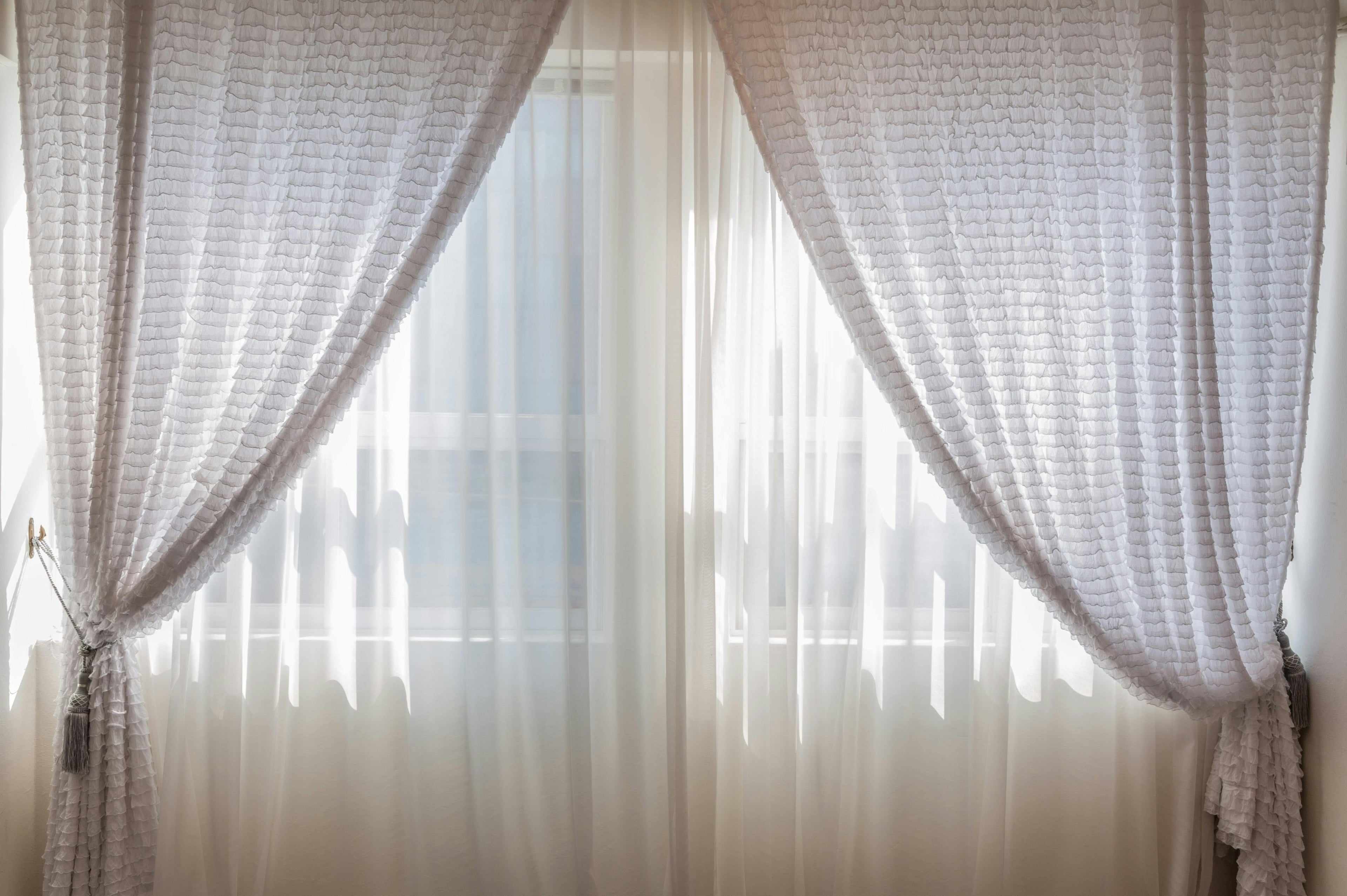
A classic but timeless solution, textiles offer incomparable flexibility. To hide a window effectively, the key lies in installation and the choice of materials. Opt for rods or tracks that extend well beyond the window frame (at least 15 to 20 cm on each side). This allows, once the curtains are drawn, to create a uniform wall panel that completely encompasses the opening.
Current trends favor fabrics with rich textures and clean lines. Double curtains, combining a light-filtering filament sheer with more opaque layers like velvet, tightly woven linen, or jacquard, allow for modulating light and privacy. For a spectacular effect, floor-to-ceiling curtains, even on a small window, create an impression of height and perfectly conceal the shape of the opening.
Installation tips for a perfect wall effect
To transform your curtains into a true textile wall, several details matter. Prefer discreet rings or gliders. The fabric color should ideally blend with that of the wall or, conversely, create a strong accent that diverts the gaze. Weighting at the bottom of the curtain ensures a perfect drape and prevents light from filtering through the bottom, essential for total darkness.
Blinds and sliding panels: modernity and technical functionality
For a more architectural and minimalist approach, blinds and sliding panels are champions of concealment. Roller blinds, especially in their black-out versions, completely disappear into their housing when raised and offer perfect coverage when lowered. Venetian blinds in aluminum or wood, although letting slats of light through, can create a uniform visual effect.
The major trend of the moment is for sliding or folding panels. Inspired by Japanese shoji, these panels in wood, stretched fabric, or composite materials slide on a rail to completely cover the window. They can be customized with patterns, acoustic fabrics, or even photographic prints, transforming the window area into a work of art or a pure design element.
The camouflage bookshelf or shelving: an ingenious and practical solution
This technique is one of the most ingenious for hiding a window in a functional way. It involves placing a bookcase, shelving, or a cabinet with cubbies in front of the opening. The trick? The furniture is not necessarily fixed to the window wall; it can be placed slightly in front, leaving a space for light to still filter through the sides if desired.
For a "disappeared window" effect, choose furniture the same color as the wall and fill the shelves with books with colorful bindings or decorative objects. The window then becomes the backdrop for a lively composition. This solution is perfect for children's rooms, offices, or living rooms, adding huge storage gain while solving the window "problem." Just make sure not to block necessary access in case of an emergency window.
The decorative screen: flexibility and immediate visual impact
Screens are experiencing a phenomenal resurgence in interior decoration. To hide a window without construction work, it's a nomadic and stylish solution. Placed in front of the opening, it creates a decorative screen that can be moved or reoriented at will. Contemporary models are works of art: laser-cut wood, printed fabrics, rattan, or pierced metal.
The major advantage is the creation of plays of shadow and light. A pierced screen will let filtered light through and draw patterns on the floor, transforming the window into a sculpted light source. It's an ideal solution for rentals or for those who like to regularly change their interior layout without any impact on the walls.
Wall coverings and trompe-l'œil: the art of illusion
For the boldest, the idea is to make the window disappear by integrating it visually into the wall. Several techniques exist. The most radical is to apply the same covering on the wall and on the shutter or blind. For example, a wallpaper with a repetitive pattern continued onto a customized roller blind literally makes the window disappear into the decor.
Trompe-l'œil painting is another artistic option. You can paint the shutters or window frame to make them seem part of a bookcase, a continuous landscape, or even transform them into a "painting" in a frame. Panoramic wallpapers or wall murals can also be used to encompass the window in a broader scene, thus diminishing its visual importance.
Vegetation as a natural screen: an urban jungle ambiance
Climbing or hanging plants offer a living and soothing way to hide a window. Indoors, you can install high shelves or wall structures above or on the sides of the window and let trailing plants like ivy, pothos, string of hearts, or ferns cascade down.
This "green cascade" creates a natural filter between inside and outside, preserves privacy while maintaining a connection with nature. It's a solution particularly suited to windows facing a blank wall or a narrow courtyard. It also improves air quality and room acoustics. Be sure to choose plants suited to the light exposure of your window.
Integrated shutters and blinds: a custom architectural solution
Refurbishing interior shutters or installing integrated blinds is a permanent and elegant solution. Contrary to popular belief, shutters are not outdated. Contemporary models, with clean lines and modern colors (anthracite gray, black, matte white, stained wood), disappear perfectly into the window reveals when open.
Once closed, they constitute a true second wall, providing sound and thermal insulation. For a total camouflage effect, paint the shutters the same color as the walls. Sliding blinds, of the Western "shoji" type, offer precise control of light and privacy and can cover large picture windows with great grace.
Solutions for home theaters and projection rooms
Here, the requirement is maximum: total darkness and often a flat surface for projection are needed. The premier solution is a motorized screen descending in front of the window. But to hide the window behind the screen permanently, a specific wall treatment is chosen.
You can build a false wall of drywall in front of the window, possibly integrating niches for speakers. This wall is then covered with projection material or painted with special screen paint. Another trick is to use a high-quality, perfectly fitted electric black-out blind and project directly onto it. The essential thing is to eliminate any light bleed around the edges by ensuring perfect overlap on the perimeters.
Camouflaging a window with artworks and mirrors
Diverting attention is a powerful decorative strategy. Hanging a large painting, a decorative mirror, or an artistic composition in front of or beside the window can be enough to lessen its impact. A wide mirror placed facing the window will reflect light and the opposite view, complicating the space and relegating the window to the background.
You can also install a rail or rod on the ceiling to hang a large artistic textile (a tapestry, a kilim) that will mask the opening. This approach adds an artisanal and unique dimension to the room. The artwork becomes the focal point, and the window is just a detail of the supporting architecture.
FAQ: The most frequent questions on how to hide windows
Is it possible to hide a window while still letting light through?
Absolutely. It's even one of the most common challenges. The preferred solutions are then light sheers, pierced screens, "vision" type blinds that only let light through, or decorative glazing (frosted or colored adhesive films). Hanging vegetation also filters light in a very pleasant way. The choice of material is crucial: favor textures that diffuse without blacking out.
How to hide a window in a bedroom for optimal sleep?
For the bedroom, total darkness is often sought. The winning combination layers several elements. First install a perfectly fitted black-out blind or roller shutter in the reveal. Complement with thick opaque curtains (velvet, lined with black-out fabric) mounted on a wide rod and falling to the floor. To eliminate side light leaks, use wall tiebacks or vertical guides.
What is the most economical solution to conceal a window?
DIY and textile solutions offer the best value for money. A frosted or decorative adhesive film applied to the glass is very inexpensive and instantly transforms the window into a luminous and private surface. Customizing an existing blind with paint or glued fabric, or even hanging a decorative sheet or blanket with clips on a simple rod are other creative and budget-friendly options.
Can you permanently seal a window to hide it?
Permanently sealing a window (by walling it up) is masonry work that must be considered. It can be considered if the window is obsolete, faces a party wall, or poses insurmountable insulation problems. However, this often requires prior notification to the town hall (modification of the facade) and can affect the property's value. It is almost always preferable to opt for reversible concealment that preserves light input and urban planning regulations.
How to integrate a window into a bookcase wall without losing light?
The trick is not to fill the space behind the window. Build or choose a bookcase that is less deep than the window reveal. This way, light can go around the furniture. You can also leave the shelves corresponding to the window empty, or place only transparent (vases, glassware) or reflective objects there. Another idea: use openwork or wire mesh shelves that let sunlight rays pass through.
Conclusion: From constraint to decorative opportunity
Hiding a window is therefore not a simple camouflage operation, but a true act of decorative creation in its own right. Whether you opt for the softness of textiles, the modernity of sliding panels, the ingenuity of a bookcase, or the poetry of a screen, each solution offers the opportunity to reinvent your space and imprint your personality on it. The window, perceived as a constraint, becomes the starting point for a strong design idea. Do not hesitate to mix techniques – a black-out blind behind long curtains, for example – to combine functionality and aesthetics. Explore the possibilities without limits and let yourself be inspired by current trends that make every architectural detail a chance to stand out. To discover more ideas and advice on arranging your interior, dive into the universe of resources available on ombreinterieur.fr. For more tips, discover how to dye black-out curtains on the blog. Find our entire decor universe on Ombre Interieur.
