














How to visually enlarge a narrow room
A narrow room can feel like a soulless corridor, where every piece of furniture encroaches on your personal space. Yet a few thoughtful choices in colour, furniture and lighting can shift perception and create a sense of airiness. The trick lies in playing with perspective without resorting to major renovations. You will learn how to turn this architectural constraint into a distinctive asset, where the eye travels freely. Let yourself be guided towards a fresh reading of your interior.
Do you feel like your walls are closing in and your living space is suffocating you? A narrow room can quickly become a decorating puzzle, an uncomfortable passageway rather than a pleasant cocoon. Yet, with the right tricks, it is entirely possible to transform this constraint into an asset and create the illusion of a more spacious, brighter, and perfectly functional area. Visually enlarging a narrow room doesn't always require costly demolition work. It's primarily a matter of optics, color psychology, and smart organization. This article is your complete guide to mastering the art of visual widening. We will explore, in detail, all the proven strategies, from color choices to furniture tricks, including strategic lighting and current trends that work in your favor. Get ready to rediscover your interior in a new, more spacious light.
Color Psychology: Your Ally for Widening Space
Color is the most powerful tool you have to alter the perception of a room. In a narrow room, the goal is to visually push back the walls and draw the eye to the farthest point.
Light and cool tones are your best friends. White, of course, but also very pale grays, icy blues, water greens, and subtle lavenders have the property of reflecting light and creating an impression of distance. A strong current trend is the use of light monochromes: painting walls, ceiling, and baseboards in the same very light hue removes visual breaks and unifies the space, making it appear larger.
But be careful, an entirely white room can seem cold and clinical. The trick lies in nuances and textures. Play with whites of different undertones (warm white, neutral white, cool white) and introduce texture: a fine plaster, a subtle textured wallpaper, or painted woodwork in the same color add depth without breaking the homogeneity.
The "Box" Painting Trick
To break the hallway effect in a very long and narrow room, a formidable technique is to paint the shortest walls (the end walls) in a darker or more intense color than the long walls. This has the effect of visually "bringing them closer," thus balancing the room's proportions and making it appear less stretched.
The Art of Strategic Furniture Arrangement
The choice and placement of your furniture are decisive. The golden rule: free up circulation paths and avoid cluttering the center of the room.
Prefer furniture with clean, light lines and raised on legs. A sofa on stilts, a coffee table with slender legs, or a slim dresser let light and the gaze pass through, creating an impression of lightness. Low furniture is also excellent because it frees up ceiling height.
Against a long wall, avoid lining up a succession of bulky furniture. Opt instead for an asymmetrical composition or a single long, low piece of furniture, like a bench or a narrow console. Place the main seating (sofa, armchairs) perpendicular to the longest wall, to naturally orient conversation and the gaze across the width of the room.
The Power of Multifunctional Furniture
In a limited space, every piece of furniture must justify its presence. Multifunctional solutions are ideal: an ottoman with integrated storage, an extendable table, a bed with storage drawers, or a fold-away desk. This allows you to reduce the number of furniture pieces and thus visual clutter.
Mirrors: The Ultimate Weapon of Optical Illusion
The mirror is undoubtedly the magical accessory for enlarging a narrow room. By reflecting light and space, it virtually doubles the surface area and creates striking depth.
For maximum effect, place a large mirror facing a source of natural light (a window) to capture and redistribute light throughout the room. A mirror the size of a painting, hung on a side wall, can also give the impression of an opening to another room.
Current trends go beyond the simple rectangular mirror. Mirrors with organic shapes (suns, moons), compositions of several mirrors of different sizes, or trumeau-style mirrors with an elaborate frame add a decorative dimension while fulfilling their enlarging function. Also think of reflective surfaces like a glass coffee table, shiny metal frames, or brass accessories.
Mastering Natural and Artificial Light
A bright room always appears larger. The goal is to maximize and diffuse light evenly.
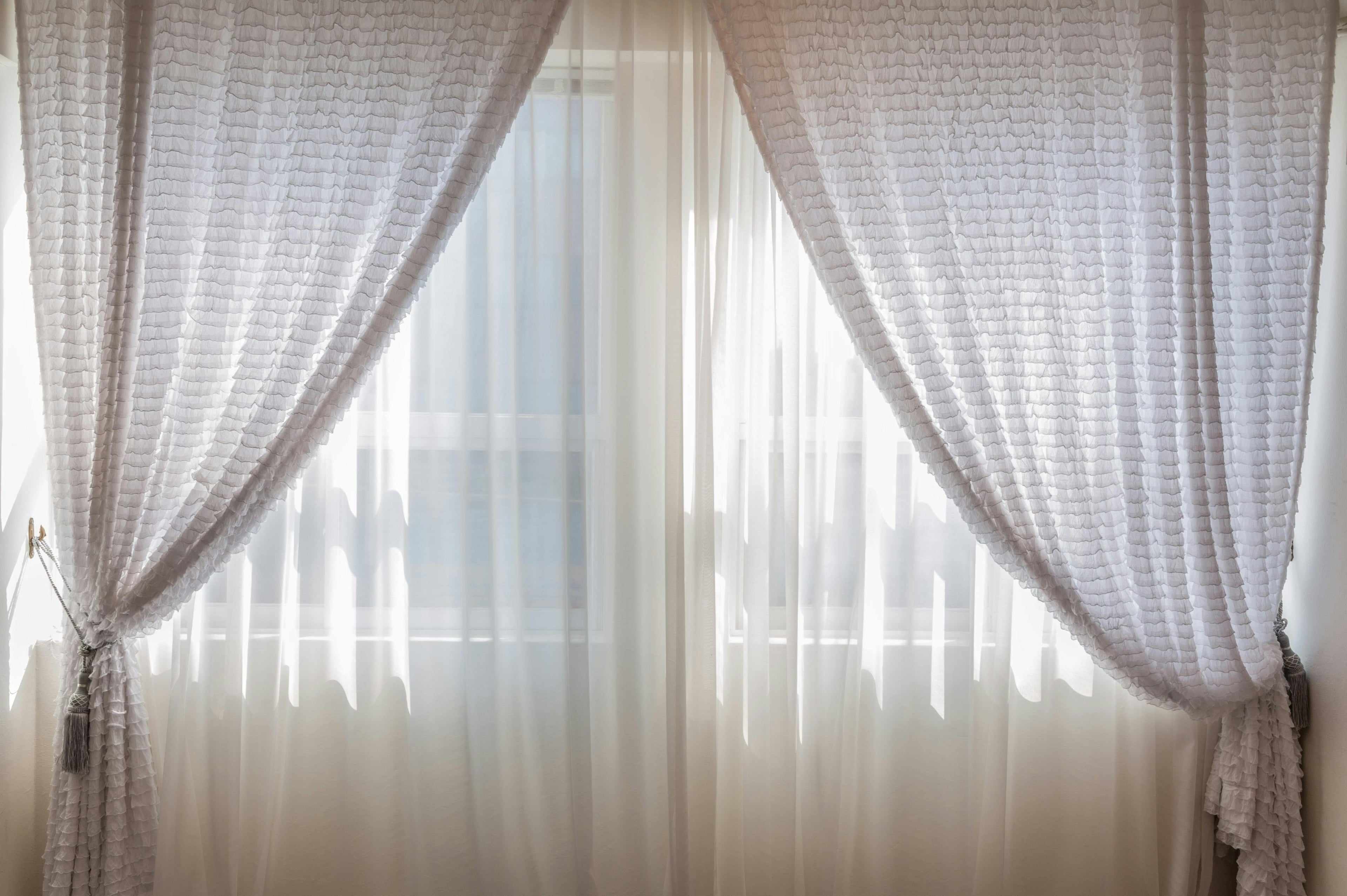
For natural light, ban heavy and opaque drapes. Opt for slatted blinds (like venetian blinds) that allow you to control light without obstructing it, fine and airy sheer curtains, or curtains on a track mounted from top to bottom and wall to wall. This installation "from ceiling to floor" and "from wall to wall" pulls the room upward and visually widens the window.
For artificial lighting, forget the single ceiling light that creates harsh shadows. Adopt multi-point lighting, known as "cluster" lighting. Combine sources at different heights: spots or pendants on the ceiling for general lighting, wall sconces for lateral ambient lighting, and floor or table lamps for task and reading lighting. This layering of light removes dark corners and gives relief to the space.
The Wise Choice of Floor Coverings
The floor is a major visual surface. To widen a narrow room, you must guide the eye across the width.
The installation of your parquet, tile, or vinyl planks is crucial. Lay the planks or tiles across the width of the room, perpendicular to the longest wall. This horizontal direction creates a strong visual line that cuts the length effect and instantly widens the space. It's a simple but extremely effective trick, often underestimated.
Prefer coverings in light tones with slightly shiny finishes (glossy laminate, polished tile) that reflect light. Avoid overly large or high-contrast patterns on the floor, which can fragment the space. A solid floor or one with a very discreet and repetitive pattern is ideal.
The Strategic Rug
If you wish to place a rug, choose it preferably in a light color and place it perpendicular to the long walls. A rug that is too small will isolate an area and shrink the room. Ideally, the feet of the main furniture (sofa, armchairs) should rest on the rug, which then serves to delineate and unify the living space without breaking it up.
Optimizing Storage for a Clear Mind
Clutter is the number one enemy of small spaces. Every object lying around captures the eye and visually shrinks the room.
The solution lies in smart and integrated storage. Take advantage of the ceiling height with tall shelves or a full wall-to-wall bookcase. Use the wasted space under seats (storage benches) or under stairs. Closed storage (wardrobes, cabinets with doors) is preferable to open shelving for a cleaner look, but if you like to display your objects, do so with extreme rigor and by respecting a certain uniformity (colors, materials).
A current trend is "invisible" or wall-integrated storage. Sliding wardrobes whose doors blend into the wall decoration (painted the same color or covered with the same wallpaper) literally make the clutter disappear.
Decorative Tricks and Accessories That Make the Difference
Details make perfection. The choice of your accessories can reinforce or ruin the sense of space.
For wall decor, prefer one large painting or a grouped composition (gallery wall) rather than several small scattered frames. Hang them at eye level to anchor the gaze. Horizontal stripes, although delicate to use, can be considered on a single accent wall to widen it, but avoid them on long walls.
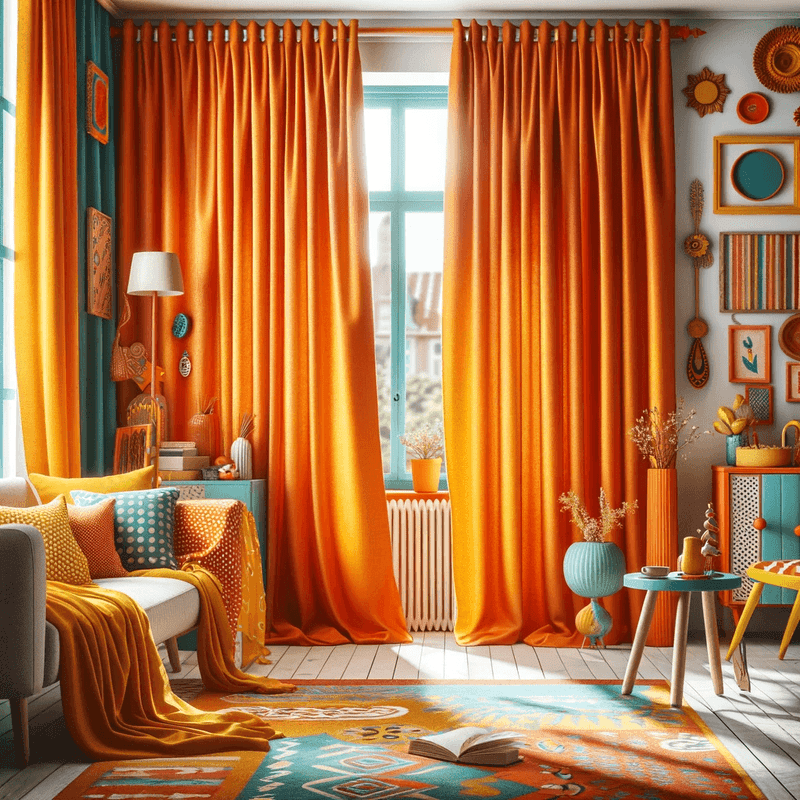
Regarding textiles, maintain a coherence of color and pattern. Cushions, throws, and curtains in tones close to those of the walls create a visual harmony that soothes the space. Small-scale geometric patterns or very discreet vertical stripes can be introduced sparingly.
Finally, don't hesitate to introduce one or two vertical elements to draw the eye upward: a large indoor plant (like a fiddle-leaf fig or a dwarf palm), a long linear pendant light, or a vertical piece of art.
Adapting Solutions Based on the Type of Narrow Room
The general principles apply everywhere, but each room has its specifics.
For a Narrow Hallway or Entryway
The goal is to make it functional and welcoming, not just a passageway. A large-format mirror is essential. A narrow bench with storage for shoes, a slim console topped with a painting, and soft wall lighting transform the space. Wallpaper with a very light pattern or a paint in a monochromatic scheme can be daring here.
For a Narrow Living-Dining Room
You need to delineate zones without partitioning them. Use furniture orientation and a rug to define the living area. A dining table against a wall, extendable, with chairs on only one side or benches, saves space. Lighting should be distinct for each zone (pendant above the table, floor lamps near the sofa).
For a Narrow Bedroom
Place the bed against the end wall, perpendicular to the long walls if possible. Replace bedside tables with wall shelves or very slim consoles. A built-in wardrobe across the entire width of a wall, with sliding mirror doors, is the optimal solution for storage and widening.
Mistakes to Absolutely Avoid in a Narrow Room
Certain practices cancel out all your efforts. Here is a non-exhaustive list:
- Using bulky and low-slung furniture that blocks the view and crushes the ceiling height.
- Fragmenting the space with too many colors or contrasting patterns on the walls and floor.
- Placing all furniture against the long walls, creating a hallway effect in the center.
- Neglecting lighting and settling for a single central light source.
- Obstructing natural light with thick, dark curtains.
- Overloading the room with accessories and decorations, creating a sense of visual clutter.
- Choosing a rug that is too small that floats in the middle of the room without connection to the furniture.
FAQ: Your Questions on Enlarging Narrow Rooms
Can you use wallpaper in a narrow room?
Absolutely, but with discernment. Avoid large, high-contrast patterns on all walls. Prefer wallpaper with a very subtle pattern, a fine vertical stripe, or a small-scale geometric pattern. A trendy trick is to use it as an accent on a single wall (the end wall) to create a focal point and "bring closer" that wall, thus balancing the room.
Are dark tones completely forbidden?
No, they can even be very effective if used strategically. A wall painted in a deep, dark color (navy blue, forest green, anthracite gray) at the end of a long room can create an illusion of depth and shortening. The important thing is to counterbalance it with generous lighting and light, reflective elements elsewhere in the room.
How to enlarge a narrow room with a low ceiling?
The strategy must combine widening and gaining height. For height, paint the ceiling pure white, use blinds or curtains mounted very high, and prefer very slender furniture. For width, apply all the tricks mentioned (flooring laid across the width, mirrors, lateral lighting). Avoid pendants that hang too low, which fragment the verticality.
Is it better to have swinging or sliding doors?
Sliding doors, especially if they are integrated into the wall (Japanese-style door) or if their panels are mirrored, are largely preferable. They do not encroach on the circulation space when open and can even contribute to the illusion of space. Traditional swinging doors consume precious corner space when open.
Are plants recommended or to be avoided?
They are highly recommended! Plants bring life and freshness. Choose varieties with a vertical and slender habit (Sansevieria, Yucca, certain varieties of Ficus) rather than trailing or overly bushy plants. Place them strategically in a corner or near a light source to create verticality without cluttering.
Conclusion: Dare to Transform Your Space
Enlarging a narrow room is an exciting style exercise that calls on creativity more than your budget. By cleverly combining a light color palette, light and well-arranged furniture, strategic mirrors, and multi-layered lighting, you can literally reprogram the perception of your space. Every detail counts, from the installation of the floor planks to the hanging height of your curtains. Don't be afraid to experiment and personalize this advice. Your interior deserves to breathe and resemble you. To discover more inspiration and practical guides on space optimization, feel free to explore the other dedicated articles on ombreinterieur.fr. Your more spacious and harmonious home awaits. Check out our article how to create a cozy atmosphere by combining curtains and bedding to go further. Visit ombreinterieur.fr to explore the entire catalog.
