














Designing a long, narrow apartment: tips and solutions
Does a long, corridor-like space feel like a constraint? Think again: this layout, far from a drawback, becomes a playground for the interior designer within you. The challenge lies in mastering perspective, zoning without walls, and optimising every metre to craft a fluid, luminous narrative. By playing with volumes, textures and visual tricks, your elongated apartment transforms into a curated sequence of living moments—both functional and beautiful. Let yourself be guided toward solutions that reimagine the space, where light filters through and each material invites touch, turning a narrow footprint into an intimate, layered home.
Furnishing a long, narrow apartment, often called a "railroad" or "shotgun" apartment, presents an exciting decorating challenge. This layout, common in Haussmannian buildings, renovated lofts, or modern studios, can feel like a tunnel if not properly planned. Yet, with a clever layout strategy, this atypical format transforms into a major asset, offering flow, brightness, and a real opportunity to create sequenced and personalized atmospheres. The key lies in the art of breaking the linearity without obstructing the space, playing with light and perspectives, and defining distinct functional zones while preserving overall coherence. This article guides you step-by-step to turn the constraints of your long apartment into creative levers, exploring layout solutions, visual tricks, color and furniture choices, as well as current trends to make it a practical and aesthetic living space.
Understanding the Specifics and Challenges of a Long, Narrow Apartment
Before diving into solutions, it's crucial to analyze the inherent characteristics of this type of dwelling. A long, narrow apartment is typically defined by a very pronounced rectangular shape, with an entrance at one end and windows at the other, or sometimes along one long side. This geometry imposes a linear circulation that can create a feeling of an endless hallway.
The main challenges are multiple. The first is uneven lighting, often concentrated at only one end, leaving distant areas in semi-darkness. The second is the difficulty in creating intimate spaces without partitioning, at the risk of obstructing light and circulation. Finally, managing the perspective is essential: how to avoid the eye traversing the space from end to end in an instant, revealing the entire layout at a glance?
But these challenges hide fantastic opportunities. The natural fluidity of the space allows for easy circulation. The absence of load-bearing walls in the center offers great freedom for reconfiguration. Finally, this layout is ideal for creating a journey, a spatial narrative, where one gradually moves from one atmosphere to another, from public to private space.
The Layout Strategy: Zoning Without Partitioning
The key word for furnishing a long apartment is intelligent zoning. It involves defining functional zones (living room, dining area, office, sleeping area) without resorting to solid walls that would isolate light and shrink the space.
Using Furniture as a Divider
Tall and low furniture can serve as natural boundaries. An open bookcase, a room divider type shelving unit, or even a sofa placed back-to-back with a console, allow for splitting the space while letting light and sight pass through. A sofa placed perpendicular to the long wall is a classic and effective solution to mark the beginning of the living room.
Playing with Levels and Light Partitions
For a more marked separation, particularly to delineate a bedroom, light partitions are ideal. Screens, openwork wooden partitions (like slats), thick curtains, or glass partitions provide intimacy without total opacity. Raising a floor on a platform for the sleeping area also creates a very effective psychological and spatial separation.
Creating a Fluid Pathway
The layout must preserve a continuous and logical circulation path. Avoid placing furniture across the natural passageway. Prioritize lateral circulation along the walls, leaving a central axis clear. Think of a pathway that naturally guides from the entrance to the living areas, then to the more private spaces.
The Art of Optical Illusion: Visual Techniques to Widen and Shorten
Decoration and material choices can radically alter the perception of space. The goal is to break the tunnel effect and create an impression of width.
Color and Pattern Games
The traditional golden rule is that light colors enlarge. This is true, but one can be more daring. One trick is to paint the long walls in a very light shade (white, cream, pale gray) and the far wall (the one with the windows or the furthest one) in a deeper or darker color. This visually "brings closer" that wall, thus shortening the perspective.
Horizontal stripes on a short wall can also give the illusion of widening it. Conversely, avoid vertical stripes on long walls, which would accentuate the height and length. Large, geometric patterns on a single accent wall can also capture the gaze and break the linearity.
Optimizing Natural and Artificial Light
Light is your best ally. To diffuse it as much as possible, use reflective surfaces. A large mirror placed opposite the main light source (window) will reflect brightness into the heart of the apartment. Furniture with lacquered finishes, glass tables, shiny metallic accessories contribute to this effect.
For artificial lighting, ban a single central ceiling light. Adopt a multi-layered and zonal lighting scheme. Recessed or track spotlights on the ceiling can illuminate specific areas. Add floor lamps for the living room, low-hanging pendants over the dining table, wall sconces for reading on the sofa, and bedside lamps in the sleeping area. This layering creates pockets of light that define spaces and eliminate shadowy areas.
Furniture Choice: Shapes, Proportions, and Multifunction
In a narrow, long space, every piece of furniture must be chosen carefully for its shape, size, and utility.
Prioritize furniture with clean lines and adapted proportions. A sofa without overly thick armrests or a two-and-a-half-seater model rather than a massive three-seater can make all the difference. Light coffee tables (like a thin top on slender legs) or oval ones avoid protruding corners in the walkway.
Multifunctional furniture is a space-saver. A bed with integrated storage drawers, a sofa bed, an extendable or drop-leaf dining table, a console that transforms into a desk... These solutions allow you to maximize every square meter without visually overloading the space.
Finally, think about visually "lightening" the furniture. Models on legs, which let you see the floor, give an impression of lightness and fluidity. Open shelving rather than full bookcases allows the gaze to pass through.
Storage Strategies for a Streamlined Space
Clutter is the number one enemy of small spaces and long apartments, as it visually consumes space and blocks circulation. Intelligent, integrated storage is non-negotiable.
Exploit the ceiling height with tall storage furniture along the long walls. Floor-to-ceiling cabinets or closets, in the same color as the wall, will blend into the decor and offer huge storage capacity without encroaching on the living space.
Use every nook and cranny. The wasted space behind a door, an alcove, or under a raised platform can be fitted with drawers or niches. Storage should be vertical and concealed as much as possible to preserve clean lines and open perspectives.
Creating Connection and Coherence: Floors, Textiles, and Decor
To unify the different zones while distinguishing them, floor coverings and textiles play a key role.
It is generally recommended to use the same floor covering throughout the entire apartment (hardwood, laminate, vinyl, or tile). This avoids visually fragmenting the space. To delineate zones, you can use large rugs. A rug in the living room, another under the dining table, and possibly a bedspread or small rug in the sleeping area. These rugs create comfortable islands without a harsh break.
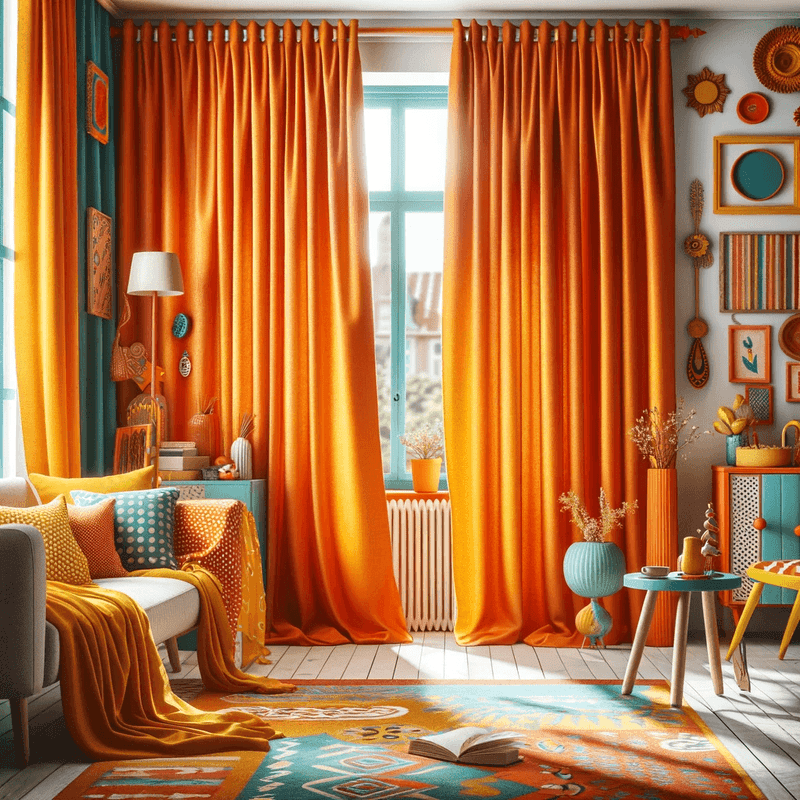
Coherence also comes from a harmonious color and material palette. Choose a dominant theme (for example, neutral and woody tones) and apply it across all zones, varying the color accents or textures. Textiles (curtains, cushions, throws) are perfect for adding variety and warmth while maintaining a common thread.
Current Trends for Long, Narrow Apartments
Current interior design trends blend perfectly with this type of configuration. The Japandi style, a fusion of Japanese and Scandinavian, advocates minimalism, pure lines, natural materials, and zen-like light, ideal for calming a long space.
Flexible and modular layout is also in vogue. Furniture on casters, sliding partitions, or screens allow reconfiguring the space according to needs, a valuable flexibility in a studio or a two-room apartment.
Finally, creating thematic corners is very popular. A reading nook with an armchair and an arc lamp, a small desk integrated into an alcove, or a yoga corner defined by a mat and plants. These personalized micro-spaces give soul to the length and make every square meter useful and pleasant.
Practical Case: Furnishing a 30m² Studio Apartment That's Long and Narrow
Let's take the concrete example of a 30m² studio, with an entrance at one end and a large window at the other. The layout could be as follows: upon entering, a wardrobe/technical compartment integrated into a tall wall cabinet. Then, the "living-dining" area with a sofa bed perpendicular to the wall, a round dining table (which breaks the right angles), and an open bookcase acting as a visual separation with the "sleeping-office" area. Behind this bookcase, a desk against the wall and a platform bed with storage drawers underneath. A large curtain on a track can isolate this area at night. The colors would be light, with a dark olive accent wall behind the bed. A large mirror opposite the window and complete zonal lighting would finish transforming this hallway into a functional and stylish cocoon.
Frequently Asked Questions on Furnishing a Long, Narrow Apartment
What is the color to absolutely avoid for the walls of a long apartment?
There is no forbidden color, but some are riskier. Very dark colors on the long walls can close in the space and accentuate the tunnel effect. If you love dark tones, reserve them for the far wall or use them as an accent on a single wall. Also avoid small, repetitive patterns on large surfaces, which can create a dizzying sensation.
How to create a bedroom in a long, narrow studio without losing light?
Several lightweight solutions exist. The most effective is to use a frosted glass partition or a glass partition, which lets light through while creating a physical separation. An alternative is a large screen or a thick sliding curtain on a ceiling track, which you only close at night. Finally, raising the sleeping area on a platform and using a room divider shelf below allows creating an intimate cocoon while letting light circulate above.
Is it better to place the dining table near the window or in the center of the apartment?
It depends on your priorities. Placing it near the window benefits from the view and natural light for meals, but can monopolize the best light source. Placing it more towards the center, perhaps behind the sofa in an open living-dining configuration, allows for better distribution of functions in the space. A round dining table in the center can also serve as a pivot and effectively break the room's linearity.
What type of sofa should I choose to not block circulation?
Opt for a sofa with dimensions proportional to the width of the room, ideally without oversized armrests. A straight sofa placed perpendicular to the long wall is often the best solution, as it defines the living area without hindering passage along the opposite wall. Models with visible legs and a low profile also add lightness.
How to give depth to an apartment where the window is on the long side?
This configuration is interesting because it lights the entire length. To create depth, play with light levels. Place rest areas (sofa, bed) near the light source, and active areas (desk, kitchen) further away. Use mirrors on the wall opposite the windows to double the perception of width. Curtains the same color as the walls, hung from ceiling to floor and very wide, can also give the illusion of a larger windowed wall.
Conclusion: From Constraint Springs Creativity
Furnishing a long, narrow apartment is a decorating adventure that requires thought but offers immense satisfaction in return. Far from being a handicap, this linear layout invites you to rethink traditional layout codes, prioritize fluidity, and exploit every detail to serve the balance of the whole. By mastering the art of zoning, manipulating light and colors with finesse, and choosing furniture that is both intelligent and aesthetic, you will transform this hallway into a succession of warm and functional atmospheres. Your apartment will become a unique place, where circulation itself is part of the living experience. To discover more inspiration and tailored advice for optimizing your space, feel free to explore the other resources and guides available on ombreinterieur.fr. Check out our article how to cut a curtain rod to go further. Browse our online store to see all our collections.
