














Decorating a room with a low ceiling: tips and decor solutions
A low ceiling is not a limitation but a design puzzle that rewards a clever hand. What might feel oppressive or dim can, with the right approach, become a refined cocoon. The goal is to trick the eye, gaining verticality without sacrificing style. Colour, lighting and furniture become your allies in reshaping the space. By playing with contrast and illusion, you can make a room breathe again while keeping it warm and elegant. Let these ideas guide you toward solutions that reinvent height.
Decorating a low-ceilinged room is a challenge faced by many homeowners, whether in an old Parisian apartment, a townhouse, or a renovated loft. The feeling of confinement and lack of light can quickly turn a potentially charming space into an unwelcoming place. However, with the right decoration and layout strategies, a low-ceilinged room can become a cozy, elegant, and perfectly functional haven. The goal is to trick the eye, create visual verticality, and optimize every square centimeter so the space can breathe. This article is your complete guide to brilliantly meeting this challenge. We will explore proven techniques, current adapted trends, and concrete decor tips to transform your low-ceilinged room into a warm and stylish asset.
Understanding the Challenges of a Low-Ceilinged Room
Before diving into solutions, it's crucial to understand why a low-ceilinged room poses a problem. The perception of space is governed by principles of balance and proportion. A low ceiling tends to visually "crush" the room, reducing the sense of volume and potentially creating an oppressive feeling. Natural light also has less space to diffuse, often creating more pronounced shadowy areas. Classic mistakes, like overly tall furniture, imposing pendant lights, or too many horizontal patterns, accentuate these flaws. Furnishing a low-ceilinged room therefore relies on a paradox to master: creating an intimate cocoon without falling into a dungeon-like feel. It's about playing with optical illusions, colors, textures, and layout to redraw the perceived boundaries of the space.
The Color Strategy: Your Number One Ally for Raising a Low Ceiling
The choice of colors is the most powerful and economical tool to radically change the perception of a room. The traditional golden rule recommends light and cool tones on the walls and ceiling to "push back" the surfaces. White, off-whites, very pale grays, and bluish or green pastels are indeed excellent choices. However, current interior decoration trends invite us to a more nuanced and bold approach.
Dare to Use Color on the Walls, Even Dark Ones
Contrary to popular belief, a dark color on the walls can enhance a low-ceilinged room, provided it's applied strategically. The trick lies in contrast. Painting the walls in a deep shade (midnight blue, forest green, anthracite gray) and the ceiling in pure white or a very light color creates a sharp break. The eye is drawn to this contrasting boundary, which can give the impression that the ceiling is higher than it actually is. This technique, often used by decorators, also adds depth and strong character to the room.
The "Receding Ceiling" Technique and Gradient Walls
Another sophisticated approach is to paint the ceiling in a color slightly lighter than that of the walls, even if the walls are already light. This subtle gradient, where the ceiling is the brightest surface, blurs the lines and softens the meeting point between the wall and ceiling. For the more daring, a vertical gradient on an accent wall (from darkest at the bottom to lightest at the top) irresistibly draws the eye upward, creating elegant verticality.
Strategic Lighting: Creating Height and Brightness
In a low-ceilinged room, lighting should not only illuminate, it should sculpt the space. You must absolutely avoid low-hanging, bulky pendant lights that will "crush" the room and fragment the visual space. Prioritize diffuse, indirect, and upward-facing lighting.
- Wall sconces and table lamps: Direct light sources towards the ceiling. Wall sconces mounted high up, directed upwards, or table lamps with a shade adjustable towards the ceiling, create a "wash" lighting effect. This light reflected off the ceiling surface illuminates it evenly, softening cast shadows and giving the impression that it is rising.
- Recessed or track spotlights: Recessed spotlights in the ceiling are perfect because they remain discreet and don't encroach on the volume. Tracks with adjustable spotlights allow you to direct light precisely, for example towards walls to highlight them and widen the space.
- Fine pendant lights: If you absolutely want a pendant light, choose a model with a linear and fine design, with a visible filament bulb or a thin metal rod. Hang it high enough so it's not in the direct line of sight when standing.
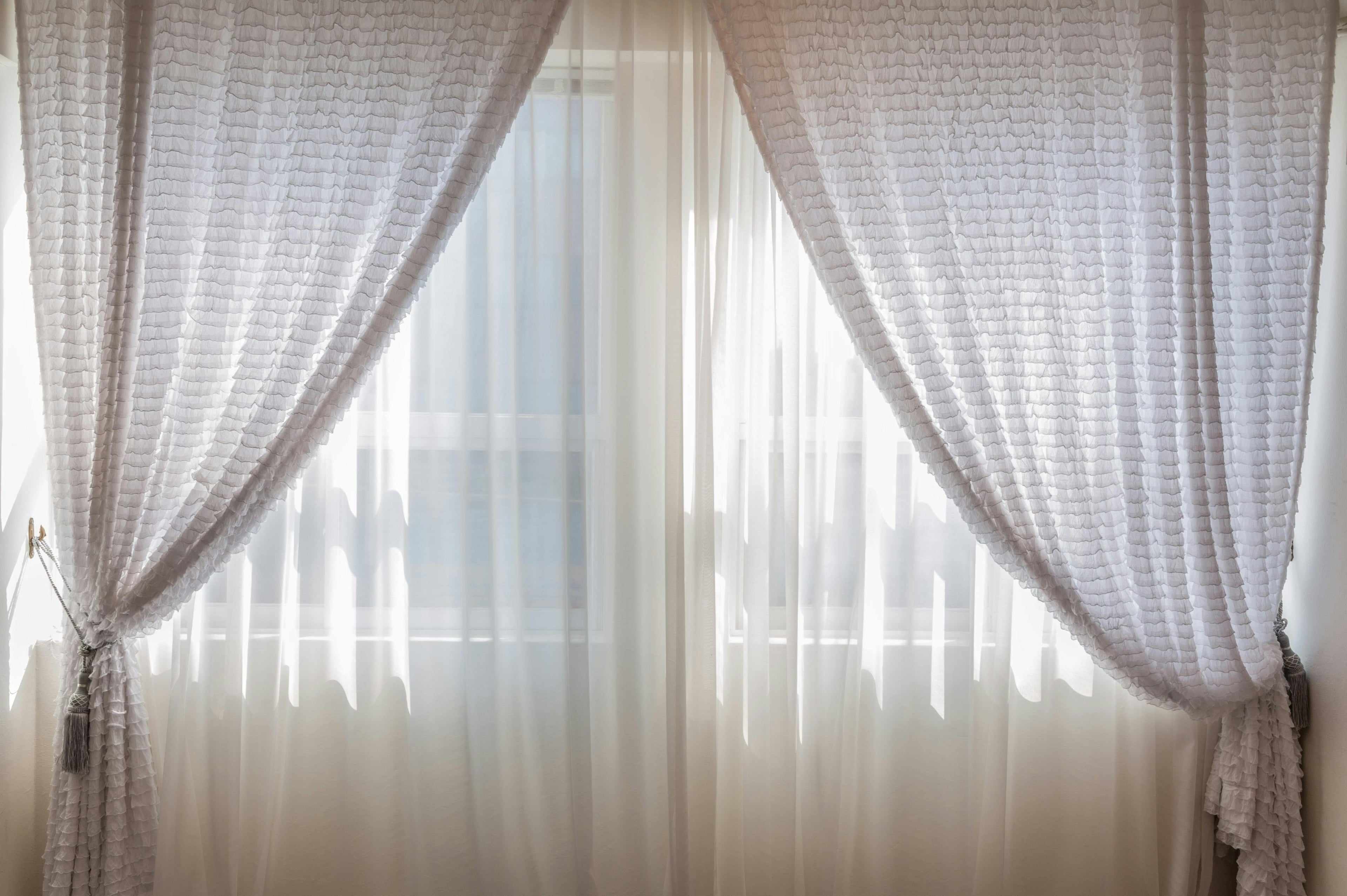
- Natural light: maximizing its impact: Use very light sheer curtains or roller blinds to let in maximum light. Place mirrors strategically opposite windows to double the light and create perspective.
Choosing and Arranging Furniture: Priority to Visual Lightness
Furniture is the structure of your room. In a low-ceilinged space, every choice must aim to lighten the perception.
Prioritize Low and Small-Sized Furniture
Opt for sofas and chairs with low backs, coffee tables rather than high consoles, and horizontal bookcases rather than vertical ones. The idea is to keep as much free space as possible between the top of the furniture and the ceiling. A sofa on thin legs, allowing the floor to be seen underneath, will also contribute to this feeling of lightness.
Play with Vertical Lines
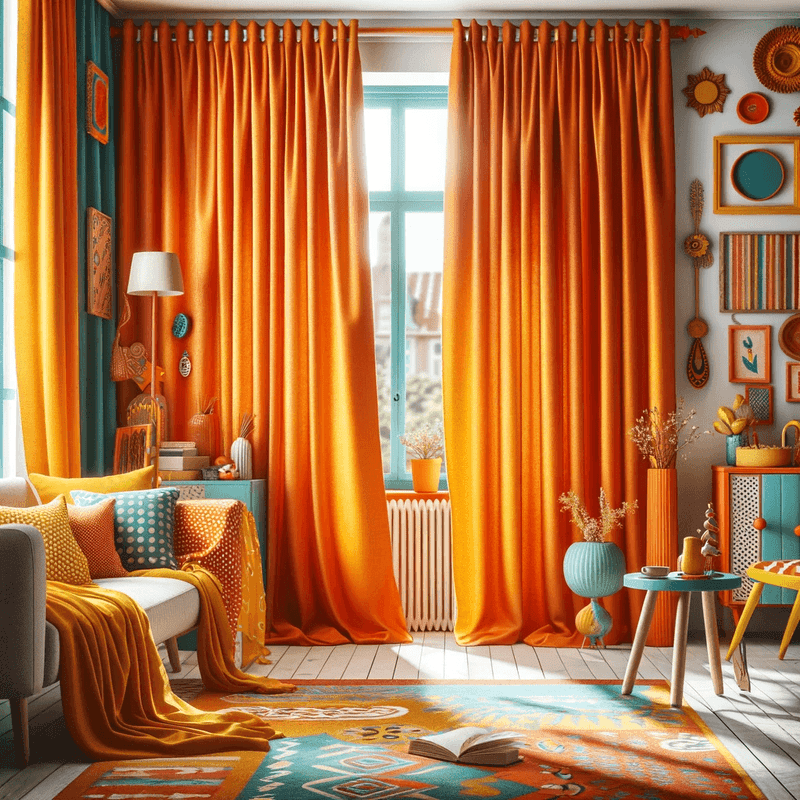
Introduce vertical elements to guide the eye upward. This could be a narrow and tall wall shelf, a portrait-format painting hung judiciously, or curtains hung from top to bottom. Hang your curtains as close to the ceiling as possible, even if they fall just above the floor. This long vertical line created by the fabric is an extremely effective optical illusion for gaining visual height.
Free Up Circulation
Avoid cluttering the center of the room. Prioritize a layout that creates fluid pathways and clears the corners. An airy circulation space gives an impression of spatial generosity, even under a low ceiling.
Floor and Wall Coverings: Patterns and Textures at the Service of Space
Patterns can be your allies or your worst enemies. The key is to orient them strategically.
- Hardwood or laminate flooring: Lay them in a herringbone or chevron pattern along the length of the room. Diagonal or longitudinal lines create a perspective that stretches the space. Avoid laying them parallel to the shortest walls.
- Rugs: Choose rugs with vertical or elongated geometric patterns. A large rug, leaving just a border of floor visible, unifies the space and visually enlarges it.
- Wallpapers and wall panels: This is where the magic happens. A wallpaper with fine vertical stripes is a foolproof classic. Current trends offer vertical botanical patterns, wide and irregular stripes, or wall murals with a vanishing point. Painted wainscoting in white, mounted at mid-height or at the top of walls, can also structure the space and draw the eye upward if its top molding is highlighted.
Decoration and Wall Art: Drawing the Eye Upward
Hanging artwork and choosing decorative elements are the final touch that consolidates the illusion.
Forget the classic rule of hanging at eye level. In a low-ceilinged room, you need to hang higher. Prioritize a large portrait format rather than several small scattered paintings. A series of frames aligned vertically along a staircase or hallway is also very effective. For shelves, fix them high up and use them to display lightweight objects (vases, small books). Leave space between objects to avoid any cluttered effect.
Structural and Architectural Solutions
If you're ready to undertake more significant work, several structural solutions can radically transform the room.
- Skylights and roof lanterns: If the configuration allows (top floor, attic), installing a skylight brings an incomparable source of zenithal light, which literally "lifts" the ceiling by creating an opening to the sky.
- Exposed painted beams: In a room with beams, don't hide them. Paint them the same color as the ceiling, or even in a lighter color. They then become a graphic element that structures the space without weighing it down.
- Niches and built-in storage: Create floor-to-ceiling built-in closets, with matte doors and no protruding handles (push system). This eliminates the visual clutter of freestanding storage furniture and creates pure, continuous lines.
Adapting Current Decor Trends to Low Ceilings
Trends like the Japandi style (Japanese-Scandinavian hybrid), with its minimalism, clean lines, and natural materials, is perfectly suited. "Cottage core" can also work with low, raw wood furniture and light fabrics. The industrial style, with its often high ceilings, must be reinterpreted: prioritize materials (metal, leather) on low forms, and use industrial lighting (track spotlights) strategically. The trend of "curves and organic shapes" is also an ally, as it breaks the rigidity of angles and softens the space.
Room by Room: Specific Layout Advice
The Low-Ceilinged Living Room
Focus on low seating, a wide, flat table, a large rug. Use a large mirror above the sofa. Prefer a wall-mounted TV to a bulky TV cabinet.
The Low-Ceilinged Bedroom
Choose a bed with a low headboard, or even without one. Bedside tables should be light and airy. Avoid canopy beds or bed canopies. A built-in wardrobe is ideal.
The Kitchen and Dining Room Under a Low Ceiling
For the kitchen, opt for tall cabinets that go up to the ceiling to avoid dust accumulation and maximize storage. A dining table with a glass or lightweight material top and chairs with an open back will be perfect.
Frequently Asked Questions (FAQ) on Furnishing a Low-Ceilinged Room
Can you use patterned wallpaper in a low-ceilinged room?
Absolutely, but the choice of pattern is crucial. Prioritize patterns with vertical repetition (stripes, botanical patterns with stems), of small to medium size. Avoid large floral or horizontal geometric patterns that "crush" the space. An accent wall with such wallpaper can even become a major asset.
What ceiling color should I choose if my walls are white?
In this case, to create the beneficial visual break, you can choose a white even purer and brighter than that of the walls (a white with a hint of blue or very cool gray), or dare a ceiling in a very soft pastel tone (glacier blue, powder pink). The important thing is that the ceiling is the lightest surface in the room.
Are mirrors really effective for enlarging a low-ceilinged room?
Yes, it's one of the most powerful tricks. A large mirror placed opposite a light source (window) reflects not only the light but also the perspective, creating an illusion of depth and additional space. To maximize the "height" effect, choose a portrait-format mirror and place it vertically.
Should all tall furniture be avoided?
Not necessarily all. A tall piece of furniture, like a bookcase or wardrobe, can be accepted if it's integrated into an alcove or if it's a very light color, even identical to the wall. The idea is that it doesn't "protrude" into the space. In that case, prefer models with smooth doors without pronounced relief.
How to choose the right light fixture for a low-ceilinged room?
The rule is simple: prioritize diffuse and upward-facing light. Choose flat ceiling lights, recessed spotlights, adjustable wall sconces directed upwards, or table lamps. If you like pendant lights, opt for linear, fine designs, and hang them higher than the norm, ensuring they don't obstruct the view across the room.
Conclusion: Your Low-Ceilinged Room, a Warm Asset
Furnishing a low-ceilinged room is not a constraint, but an opportunity to be creative and spatially intelligent. By applying these principles – strategic play of colors and light, choice of low and light furniture, use of vertical lines and elongated patterns – you will transform an architectural weakness into a major decor asset. The resulting atmosphere is often more intimate, cozy, and elegant than that of a vast, impersonal volume. Don't be afraid to experiment and personalize this advice. Your interior deserves to be both functional and reflect your personality, regardless of the ceiling height. To discover more inspiration and practical guides on furnishing all types of spaces, feel free to explore the other articles and complete dossiers available on ombreinterieur.fr. Our guide how to succeed with a Scandinavian cocooning decor helps you make the right choice. Discover our entire decor universe on Ombre Interieur.
