















Solutions for hiding a tall neighboring window
Living in the city often exposes your private moments to prying eyes, especially when a neighbouring window overlooks your space from above. How can you preserve your tranquillity without sacrificing the natural light that floods your interior or terrace? This design challenge becomes a genuine creative opportunity. From lush green screens to elegant architectural structures, solutions exist to filter the view while enhancing your living environment. Let us guide you toward the perfect balance between discretion and luminosity.
Living in a dense urban space or a terraced house often brings its share of challenges regarding privacy. One of the most common is undoubtedly the presence of a neighboring window at height that looks directly onto your garden, terrace, or worse, your living spaces. This intrusive gaze can turn a haven of peace into a constant source of discomfort, preventing you from fully enjoying your outdoor area or your interior brightness. Fortunately, hiding a neighbor's window is not an impossible mission, but rather a creative opportunity to arrange your space. It's about finding the perfect balance between preserving privacy, optimizing natural light, and of course, aesthetics. This article guides you through a comprehensive panorama of solutions, from the most classic to the most innovative, to regain your serenity while beautifying your living environment.
Understanding the Challenge: Why Hiding a Neighbor's Window is Crucial
Before diving into solutions, it's essential to clearly understand the issues. A neighboring window at height poses specific problems. Unlike a view at ground level, it offers a downward angle of view, often more difficult to block without creating a feeling of confinement. The goal is not to build a bunker, but to create a targeted visual barrier. Legal and neighborly aspects must also be considered. In France, the right to privacy is protected, but there are rules concerning distances and "direct views." A decorative solution is generally preferable to a conflict. Finally, you must assess the impact on your own space: depriving a room of light to protect yourself from a gaze is often a miscalculation. Ideal solutions filter the gaze without sacrificing brightness.
Plant Screens: The Natural and Evolving Solution
Nature offers the most beautiful and effective solutions for masking an undesirable view. A plant screen brings not only privacy but also freshness, biodiversity, and a soothing setting. To counter a neighboring window at height, you need to think in terms of volume and growth speed.
Fast-Growing Trees and Large Shrubs
For a lasting and structuring effect, plant species that will reach or exceed the height of the window in question. The choice is vast: non-running bamboo (Fargesia), cherry laurels, eleagnus, or photinia 'Red Robin' quickly form dense, evergreen hedges. For a more graphic look, a small tree like a Japanese maple, star magnolia, or an espalier fruit tree can serve as a screen while adding real aesthetic value to the garden.
Climbing Plants on Support
If ground space is limited, elevation is key. Install a sturdy support – a pergola, trellis, rigid mesh, or even tensioned cables – and let climbing plants take over. Boston ivy, spectacular in autumn, golden hop, with ultra-fast growth, or fragrant honeysuckle are perfect. For a screen that lasts all year, opt for ivy, star jasmine (Trachelospermum), or clematis armandii. This solution creates a true living wall that effectively camouflages the neighbor's window.
Architectural Structures and Openwork Fences
When a more immediate and structured solution than vegetation is needed, architectural structures come into play. The idea is not to block everything, but to create an intelligent visual filter.
Pergolas and Arbors with Reed Screens or Fabrics
A pergola attached to your house or strategically placed on your terrace is a two-in-one solution. It defines a space and blocks the downward view. For total filtering, cover the roof with reed screens, adjustable wooden slats, or an opaque fabric. For a lighter effect that preserves light, tensioned micro-perforated fabrics or contemporary patterned shade sails work wonders. They diffuse light and blur outlines, making the neighboring window much less visible from your space.
Lattice Screens, Panels, and Decorative Screens
Lattice screens, these openwork panels made of wood, metal, or composite, are the perfect allies for privacy without heaviness. Fixed to a wall, on top of an existing fence, or mounted on freestanding posts, they create a partial visual barrier that plays with light and shadows. The designs are endless: geometric patterns, oriental inspirations, clean lines… They are also available in a mobile "garden screen" version, to be moved as needed. In laser-cut metal, they become true works of art that protect from prying eyes while attracting attention.
Solutions for Windows: Smart Interior Blackout
Sometimes, the window to hide is in your own house, facing a bothersome overlook. Blackout solutions must then be chosen carefully so as not to darken the room.
Adhesive Window Films: Invisible Technology
Discreet and effective technology, adhesive films are a revolution. Applied directly to the glass, they offer a blurred or pixelated view from the outside while letting light through. From the inside, the view is perfectly clear (except for mirror films). Options are numerous: frosted film, patterned film (leaves, geometry), mirror film (which reflects the sky's image), or stained-glass effect film. It's the ideal solution for bathrooms, toilets, or ground-floor rooms, offering total privacy without altering the room's layout.
Blinds and Sheers: The Art of Layering
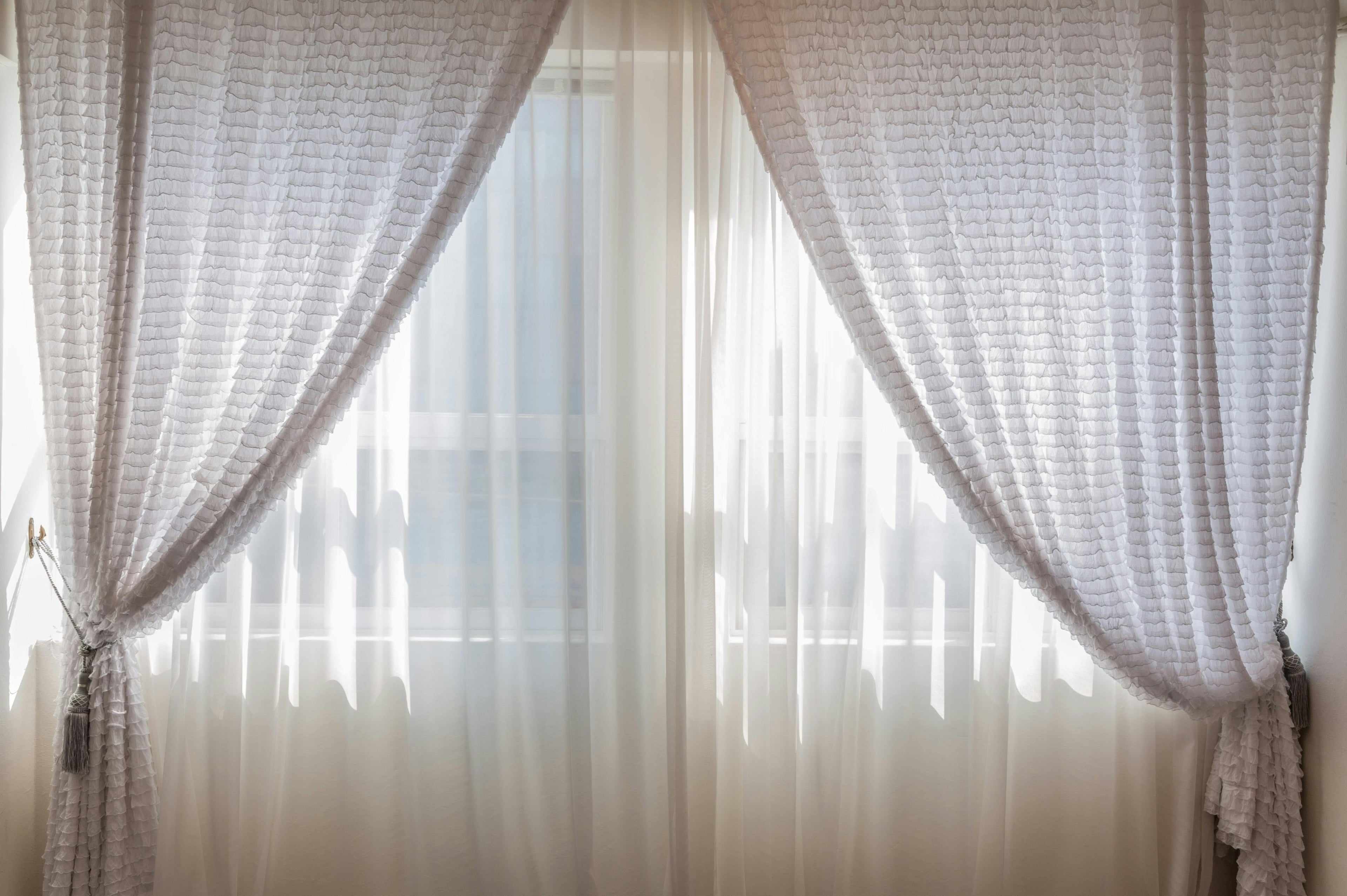
For a more traditional and adjustable solution, blinds are essential. The vertical or horizontal Venetian blind allows for millimeter-precise control of light and privacy by adjusting the slats. The Roman shade or roller blind, in fabric, adds a touch of softness. The current trend is layering textures: a very light, transparent sheer permanently in place to soften light and blur shapes, paired with a more opaque blind that is lowered only when necessary. This double layer is both aesthetic and functional for countering a neighboring window at height.
Optical Illusion and Distraction
The psychology of perception can be your best ally. Rather than hiding, you can divert the gaze and create focal points that captivate attention.
Create a Focal Point in the Garden
Naturally attract the eye to an element you control. A fountain or water feature with the soothing sound of flowing water, a modern sculpture, a tree with a sculptural shape, or a flower bed with vibrant colors (like hydrangeas or ornamental grasses) create a center of interest that relegates the neighbor's window to the background. Illuminate it with a discreet LED spotlight in the evening to amplify the effect.
Mirror Games and Reflective Elements
Used sparingly, mirrors can create fascinating spatial illusions. A large decorative mirror placed on a wall of your terrace or in the garden will reflect a pleasant part of your space (a plant, a sculpture) and divert the line of sight. Reflective decorative objects, like garden gazing balls, mobiles in polished metal, or stainless steel planters, capture and reflect light, creating a shimmer that distracts the eye from the source of discomfort.
Technical and Modern Solutions
Innovation brings its share of high-tech and adjustable solutions for managing privacy on demand.
Switchable Privacy Glass and Partitions
The pinnacle of technology: switchable privacy glass (or electrochromic glass). With a simple press of a switch or via a smartphone app, the glazing magically changes from perfectly transparent to completely opaque. While representing a significant investment, this solution is perfect for modern picture windows or verandas. More affordable, partition walls in frosted glass or translucent resin create a luminous separation that masks shapes while letting clarity through.
Retractable Privacy Screens and Motorized Exterior Blinds
For terraces and balconies, motorized exterior systems offer total flexibility. Sliding panels or blinds in solid fabric can deploy in seconds only when needed, then disappear completely to enjoy an unobstructed view. These systems, often remote-controlled, are designed to withstand the elements and integrate perfectly with contemporary architecture.
Practical and Legal Considerations Before Starting
Before installing any permanent structure, a few checks are necessary to avoid disputes.
Check your municipality's urban planning rules (Local Urban Plan) regarding fence heights, distances from the property line, and any permits required for pergolas or shelters. Even for planting, a tree that will exceed a certain height at maturity may be subject to distance rules. In case of doubt, a courteous dialogue with the concerned neighbor to present your project (without having to ask for permission) can defuse many tensions. Explain that your goal is to beautify your space while preserving your privacy, not to block their view.
FAQ: Frequently Asked Questions on How to Hide a Neighbor's Window
What is the fastest solution to hide a neighboring window at height?
The most immediate solutions are exterior blinds (like retractable reed screens), tensioned shade sails, or mobile garden screens in wood or composite. Inside, installing a blind or applying an adhesive film to the glass can be done in a day. For a fast plant solution, annual climbing plants like cup-and-saucer vine or sweet pea on a trellis offer results in a few weeks.
How to hide a window without losing natural light?
Prefer filtering solutions over opaque ones. Adhesive films that are "clear view from the inside," light sheers, openwork lattice screens, or micro-perforated fabrics let through a large part of the brightness while blurring visual details from the outside. Plants with light foliage (like some clematis) also work on this principle.
Can I freely plant very tall trees to mask an upper floor?
No, planting is regulated. As a general rule, a tree or shrub that will exceed 2 meters in height at maturity must be planted at least 2 meters from the boundary line of the neighboring property. For subjects remaining under 2 meters, the minimum distance is 0.5 meters. These distances are set by the civil code (article 671) and can be modified by local regulations or customs. It is crucial to inquire at your town hall.
Are mirror films on windows a good idea?
Reflective mirror films are effective during the day, creating a mirror effect that reflects the sky and masks the interior. However, their effect reverses at night when the interior is lit and the exterior is dark: the glass then becomes transparent from the outside. They can also cause annoying reflections or overheating. They should be used with discernment, ideally on windows not typically used at night.
How to dress a pergola for optimal filtering?
The choice depends on the desired degree of shade and privacy. For complete filtering and sun protection, adjustable wooden or aluminum slats (louvers) are ideal. For a natural style, reed or bamboo screens offer total opacity. For a light/privacy compromise, tensioned polyester or acrylic fabrics, available in various opacities and many colors, are the most versatile and aesthetic solution.
Conclusion: Towards a New Balance Between Privacy and Aesthetics
Masking a neighboring window at height is much more than a simple technical constraint; it's an invitation to rethink your space creatively. Whether you opt for the softness of a plant screen, the graphic structure of a lattice, the discreet technology of an adhesive film, or the elegance of a dressed pergola, each solution can become a major decorative asset. The essential thing is to choose based on your specific needs, sunlight exposure, your style, and of course, your budget. Stop enduring that intrusive gaze, transform it into an opportunity to create a haven that reflects you, where privacy and beauty coexist in perfect harmony. To discover more inspiration and advice on arranging your interior and exterior spaces, feel free to explore other articles on our blog at ombreinterieur.fr. Discover the product Rideau Thermique Pour Fenetre to finalize your decor. Need practical advice? Read quel rideau pour porte fenetre. Get inspired on our decoration site for your next projects.
