













Tips for making a room appear taller without renovation
Does your ceiling feel low and oppressive? Before considering costly renovations, know that perceived height can be shaped with simple visual tricks. Pale hues, strategic lighting, and vertical lines are enough to conjure the illusion of a more airy volume. By playing with optics and spatial psychology, you can transform a stifling room into a luminous, welcoming haven. Let these decorative principles guide you in restoring a sense of lift to your interior, without lifting a hammer—just a shift in perspective that breathes openness into every corner.
Do you feel like your ceiling is closing in on you? That your walls seem to be moving closer, creating a suffocating feeling in an otherwise functional room? You are not alone. One of the most common challenges in interior decoration, especially in older apartments or studios, is low ceiling height. This architectural constraint can weigh on your mood and significantly limit your design aspirations. However, there are a multitude of visual tricks and decorative solutions to make a room feel taller and create the illusion of a more airy, brighter, and infinitely more welcoming space. This art of perception, which involves psychology as much as design, can radically transform the atmosphere of a place without touching load-bearing walls. In this article, we will explore in detail all the strategies, from the simplest to the boldest, to give your volumes a lift. We will cover the power of colors and lines, the crucial impact of lighting, the strategic choice of furniture and textiles, as well as more structural ideas for those who can undertake some renovations. Get ready to see your interior in a new light, more spacious and inspiring.
The Psychology of Volume: Understanding How the Eye Perceives Space
Before diving into practical solutions, it is essential to understand the visual mechanisms we will employ. Making a room feel taller relies on principles of optics and perspective well-known to architects and decorators. The human eye is naturally guided by lines, contrasts, and focal points. By manipulating these elements, we can trick the brain into perceiving greater verticality than reality.
The first principle is that of vertical lines. Any element that rises towards the ceiling naturally draws the eye upward, creating a visual path that elongates the walls. Conversely, horizontal lines, like a border or a long low piece of furniture, tend to "flatten" the space and visually widen it, which is not our primary goal here. The second principle is lightness/brightness. A light and well-lit space always appears larger and more open. Light, especially when it comes from the ceiling or high points, visually pushes back the boundaries. Finally, the principle of visual minimalism plays a key role: the fewer elements that catch the eye at human height, the more attention is freed to rise upward. By mastering these three pillars, you hold the keys to transforming any room.
The Color Strategy: Painting to Soar
Paint is the most powerful and economical tool to radically alter the perception of a room. To create the illusion of height, one golden rule prevails: favor light colors and cool tones. White, off-whites, very pale grays, light blues, or aqua greens have the property of reflecting light and making surfaces "recede." Applied to walls and ceiling, they soften corners and create a visual continuity that blurs the boundaries.
The Technique of a Ceiling Lighter Than the Walls
A classic but devastatingly effective trick is to paint the ceiling a shade slightly lighter than that of the walls. Even if the difference is subtle (a different tone of white, for example), the eye perceives the ceiling as farther away. For maximum effect, you can even use exactly the same color on the walls and ceiling, avoiding any contrasting cornice or molding. This uniformity, sometimes called "color cocooning," makes the boundary between wall and ceiling disappear.
Vertical Stripes and Solid Colors
If you are tempted by color or pattern, lean towards vertical stripes. Painted or in the form of wallpaper, they immediately pull the gaze upward. Opt for thin stripes in close tones (for example, two shades of gray) for an elegant and non-overwhelming effect. Conversely, ban horizontal stripes, borders, and wallpapers with large, repetitive patterns at mid-height, which "cut" the wall and visually lower it.
Strategic Lighting: Drawing the Eye Upward
Poorly thought-out lighting can undo all your decorative efforts. To make a room feel taller, the goal is to create light sources at altitude and avoid light points that are too low and "crush" the space.
Prefer pendant lights, adjustable ceiling lights, or recessed spotlights directed towards the ceiling (ambient "wash-wall" lighting). Light that grazes the ceiling or illuminates a wall from top to bottom creates a sense of lift. Floor lamps (arc lamps) that direct their light flow towards the ceiling are also excellent allies. Minimize table-height lighting or low lamps, except for specific reading areas.
The ultimate trick? Integrated LEDs. A discreet LED strip hidden in a ceiling cove, on a high shelf, or behind a beam creates a continuous line of light that seems to lift the ceiling. It's a modern and very effective solution for adding visual height and a warm ambiance.
Furniture: Choosing Pieces That "Breathe"
The choice and arrangement of furniture are decisive. A massive and tall piece of furniture will immediately capture the gaze and define a low visual limit. To counter this effect, adopt a "levitating" furniture strategy.
- Low and Long Furniture: Prefer sofas, sideboards, and dressers with low height. They anchor the space without obstructing the view upward.
- Visible and Thin Legs: Choose chairs, tables, and consoles with thin, exposed legs. The visible space under the furniture allows light to circulate and gives an impression of lightness.
- Vertical and Narrow Bookcases: If you need storage, turn to bookcases that go up to the ceiling, but preferably with reduced width. Paint them the same color as the wall so they blend in.
- Avoid Furniture That Is Too Tall: Massive wardrobes that stop at 2 meters create a detrimental horizontal line. If possible, opt for built-in storage from floor to ceiling.
Textiles and Windows: Dressing the Verticality
Window dressing is a critical point often overlooked. Poorly positioned curtains can visually shorten a wall by several dozen centimeters.
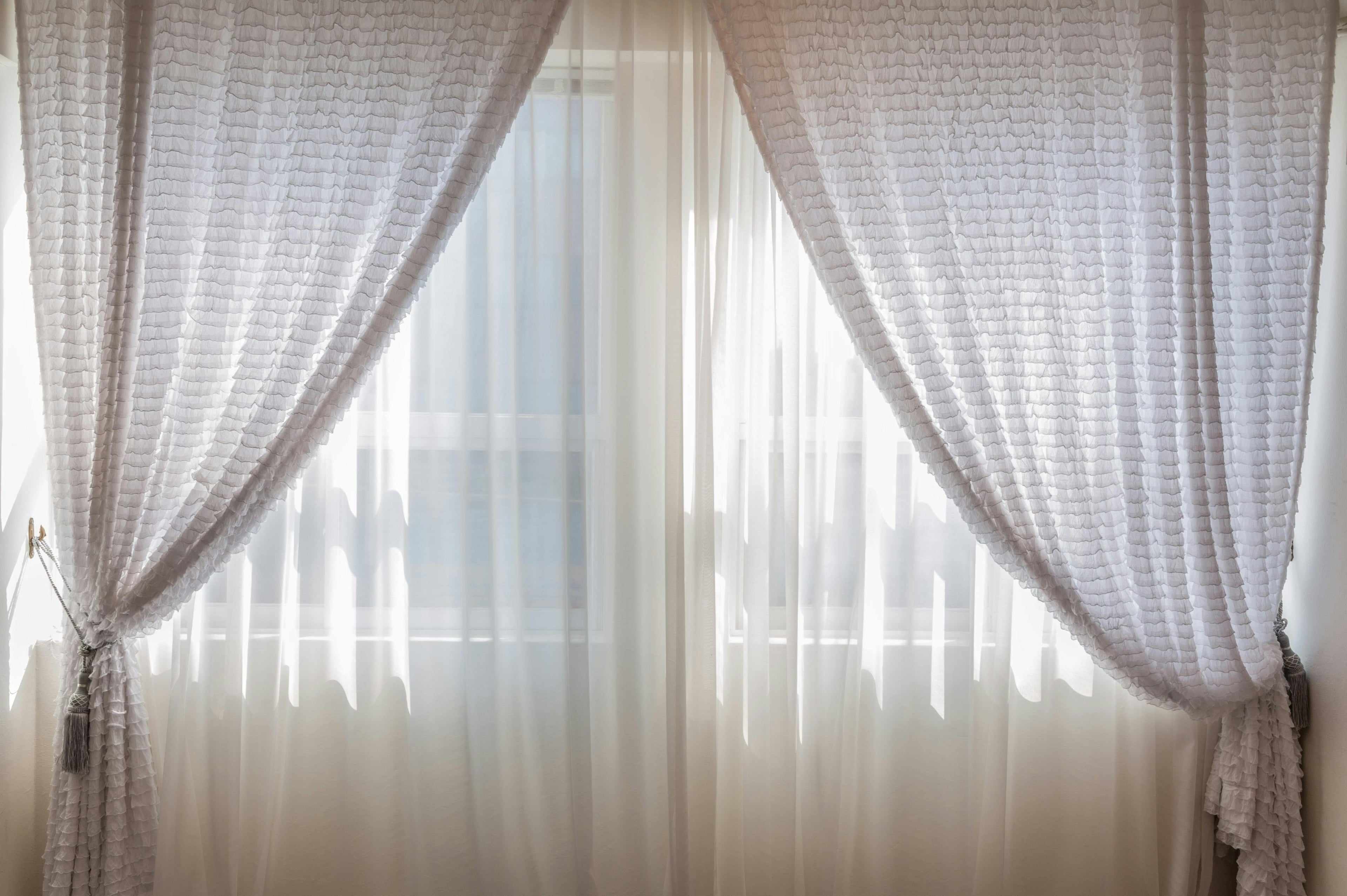
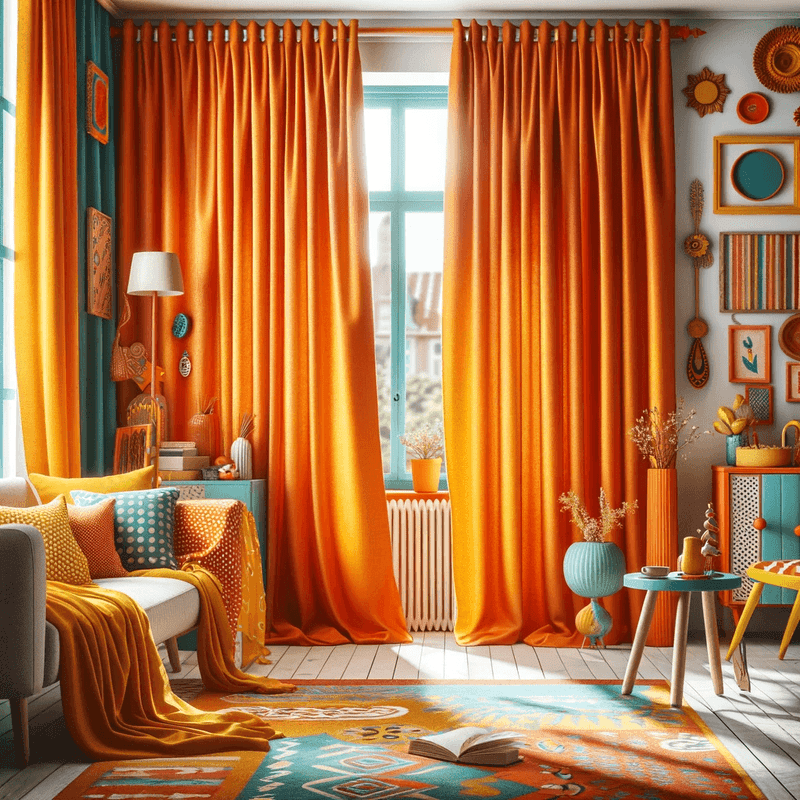
The absolute rule for making a room feel taller with curtains is as follows: hang the rod as high as possible, ideally halfway between the top of the window and the ceiling, or even right against the ceiling. Choose long curtains that touch the floor (or even form a slight "pooling"). This uninterrupted line of fabric, from ceiling to floor, creates a perfect visual column that draws the eye upward. Prefer light, solid-colored fabrics in light tones to avoid weighing down the whole.
For blinds/shades, roller or Roman models are preferable because they fold up neatly at the top of the window. Avoid horizontal Venetian blinds whose slats create... horizontal lines.
Mirrors: The Magic Weapon of Optical Illusion
The mirror is probably the most famous accessory for enlarging a space. But to gain height, it must be used strategically. A mirror placed on the floor or in a horizontal format will mainly widen the room. To accentuate verticality, choose tall and narrow mirrors, in portrait format.
Place them strategically: opposite a window to double the light and perspective, or between two windows. A mirror running from floor to ceiling (or almost) is a spectacular solution that literally doubles the perceived height. You can also create a composition of several vertical mirrors aligned for a contemporary and dynamic effect.
Art and Wall Decor: Guiding the Gaze Towards the Sky
Hanging a painting is a decorative act that has a direct impact on the perception of volume. Forget the classic single painting centered at eye level. This position stabilizes the gaze at a median level.
To encourage the eye to rise, adopt these techniques:
- Create an Artistic Vertical: Hang several works (frames, photographs, objects) in a narrow, vertical column. This decorative "vanishing line" is extremely effective.
- Prefer Portrait Formats: Choose works that are themselves taller than they are wide.
- Hang Higher: Do not hesitate to position your works higher than the conventional norm. Leave generous space between the sofa and the painting so the wall can "breathe."
- Use High Shelves: Fix thin shelves high up, near the ceiling, to display a few light objects (vases, books). This creates a line of visual interest in the upper part of the room.
Structural and Architectural Solutions (For Renovations)
If you are ready to undertake more significant work, several structural solutions can truly modify the room's physiognomy, not just its appearance.
Removing a Non-Load-Bearing Wall or a Suspended Ceiling
In some older buildings, a false ceiling has sometimes been installed for acoustic or thermal insulation reasons, or to hide ducts. Removing it, after verifying it has no structural purpose, can reveal precious tens of centimeters, exposed beams, or original moldings that add character and height.
Opting for Tall Doors
Replacing standard doors (2.10m) with custom-made doors going up to the ceiling (2.40m or more) is a radical transformation. They draw perfect vertical lines and bring immediate architectural elegance. Pair them with high wainscoting for an even more striking effect.
Creating Built-In Storage from Floor to Ceiling
As mentioned earlier, built-in storage, especially if painted the color of the wall, eliminates the visual "block" effect. They exploit all the available volume without creating a horizontal break, contributing to a smooth, continuous wall that seems to rise.
Pitfalls to Absolutely Avoid
Some common mistakes cancel out all efforts made to create height. To guarantee the success of your project, be sure to avoid these pitfalls:
- Ceiling lights or pendants that are too low: They materialize a "visual" ceiling at their own height.
- Rugs with large, horizontal patterns or small rugs that isolate an area on the floor.
- Over-decorated mid-height: Too many shelves, paintings, or objects arranged on a horizontal line cutting across the wall.
- Dark colors on the ceiling: A dark ceiling has an immediately oppressive and lowering effect.
- Bulky and opaque furniture that blocks the circulation of light and the gaze.
FAQ: Your Questions on Visual Height Enhancement
What is the most effective paint color for making a room feel taller?
Without a doubt, light and cool tones are the most effective. White remains the champion, especially "broken" whites like white nuanced with gray or very pale blue, which avoid a clinical effect. For an optimal result, use the same shade on the walls and ceiling, or a slightly lighter nuance for the ceiling. Satin and matte-effect paints are preferable as they absorb less light than flat finishes.
Do exposed beams make the ceiling appear lower?
Contrary to popular belief, no, not necessarily. It all depends on their treatment. Dark beams on a white ceiling can indeed draw the eye and materialize a low plane. On the other hand, painting the beams the same light color as the ceiling (or even in glossy white) makes them partially disappear visually. They then become an element of character without weighing down the volume. You can also equip them with directional spotlights to highlight them without making them heavy.
How to make a narrow, low-ceilinged hallway feel larger?
The hallway is the most difficult space. Apply the principles rigorously: uniform light paint on all walls and ceiling. Install directional linear lighting (LED panels on the ceiling or aligned recessed spotlights) to guide the gaze to the end. Place a mirror at the end of the hallway (portrait format) to create an infinite perspective. Avoid any bulky furniture; opt for a very narrow console with a mirror above if necessary. A floor with longitudinal planks can also help lengthen the perspective.
Can wallpaper be used in a low room?
Yes, but with extreme selectivity. Ban large patterns, dense floral or geometric patterns. The only truly recommended pattern is fine vertical stripes, in very close tones (light gray and white). Even better, opt for wallpaper with a subtle texture effect (linen, plaster) in a very light solid color. It will add texture without creating a horizontal break.
Are plants recommended or to be avoided?
They are excellent, provided you choose and position them well. Prefer climbing or trailing plants placed high up (on a very high shelf, in a hanging planter) which will create an upward movement. Plants with a vertical habit like the Sansevieria (mother-in-law's tongue) are also perfect. Avoid bushy and wide plants placed on the floor, which occupy precious horizontal volume.
Conclusion: Dare Verticality to Transform Your Interior
Making a room feel taller is an exciting exercise that blends creativity and the science of perception. As we have seen, it is not a single formula, but a subtle combination of coherent choices: a light palette, upward lighting, light furniture, and guiding lines that direct the eye toward the ceiling. Every detail counts, from the height of the curtain rod to the format of the frame on the wall. The ultimate goal is not only to impress your guests but to offer yourself a living space where you breathe better, where light circulates freely, and where the feeling of well-being is multiplied. Do not be afraid to experiment, to start with a simple coat of paint or by rearranging your lighting. The effects can be spectacular. To discover hundreds of other ideas, concrete inspirations, and complete guides to transform every square centimeter of your home, immerse yourself in the universe of resources available at Ombre Intérieur. Your interior deserves to reach new heights. Fall for Voilage Grande Hauteur, a real plus for your interior. Need practical advice? Read how to integrate a console on a modern terrace. Browse our online store to see all our collections.
