















Tips for visually enlarging a small bedroom
You know that suffocating feeling when you step into a bedroom that feels too small, every square metre pressing in on you. Yet there is no need to knock down walls to gain space. With thoughtful colour choices, carefully controlled light and clever arrangement, you can transform your room into a haven of calm that feels visually expansive. Let yourself be guided towards decorative tricks that will redraw the contours of your bedroom without any renovation work, softening the boundaries and letting the air flow freely.
You open your bedroom door and a feeling of suffocation overwhelms you. The walls seem to close in, clutter accumulates due to a lack of storage space, and the idea of making it a true haven of peace seems utopian. A bedroom that is too small is a challenge for many homes, whether it's a studio, a guest room, or a master bedroom under the eaves. Yet, with the right strategies, it is entirely possible to create the illusion of a larger, brighter, and perfectly functional space. Visually enlarging a bedroom does not require costly demolition work, but a thoughtful approach to decoration, layout, and color psychology. This article is your complete guide to transforming your small space into a bedroom that breathes, where every square centimeter is optimized for comfort and aesthetics.
Color Psychology: Your Ally for Enlarging Space
Color is the most powerful tool a decorator has. It influences our perception, our mood, and, most importantly, our sense of space. For a cramped bedroom, the choice of palette is a strategic decision.
Light and neutral tones are unanimously recognized for their light-reflecting properties and ability to create a sense of openness. White, ivory, very pale grays, and beiges are safe bets. However, the current trend goes beyond sterile all-white. We now favor warm and deep shades like off-whites, grays tinted with blue or green (sage gray, celadon gray), and rosy beiges (light terracotta), which add personality without weighing down the walls.
The Single Color (or Monochrome) Technique
To visually eliminate corners and breaks, apply the same color to the walls, ceilings, and woodwork. This visual continuity blurs the room's boundaries, making the "boxy" feeling disappear. A ceiling painted the same shade as the walls appears higher because the eye no longer stops at a dividing line.
Using Dark Colors Intelligently
Counter-intuitively, a dark color on a single wall (usually the back wall) can create depth, provided the room receives sufficient natural light. A midnight blue, a matte forest green, or an anthracite gray on the headboard wall can give the impression that it recedes. Ensure the other walls, ceiling, and textiles remain in very light tones to maintain brightness.
Optimizing Natural and Artificial Light
Light is synonymous with space. A room bathed in light immediately appears more vast and welcoming. Your mission is to maximize every ray of sunlight and intelligently supplement it with artificial lighting.
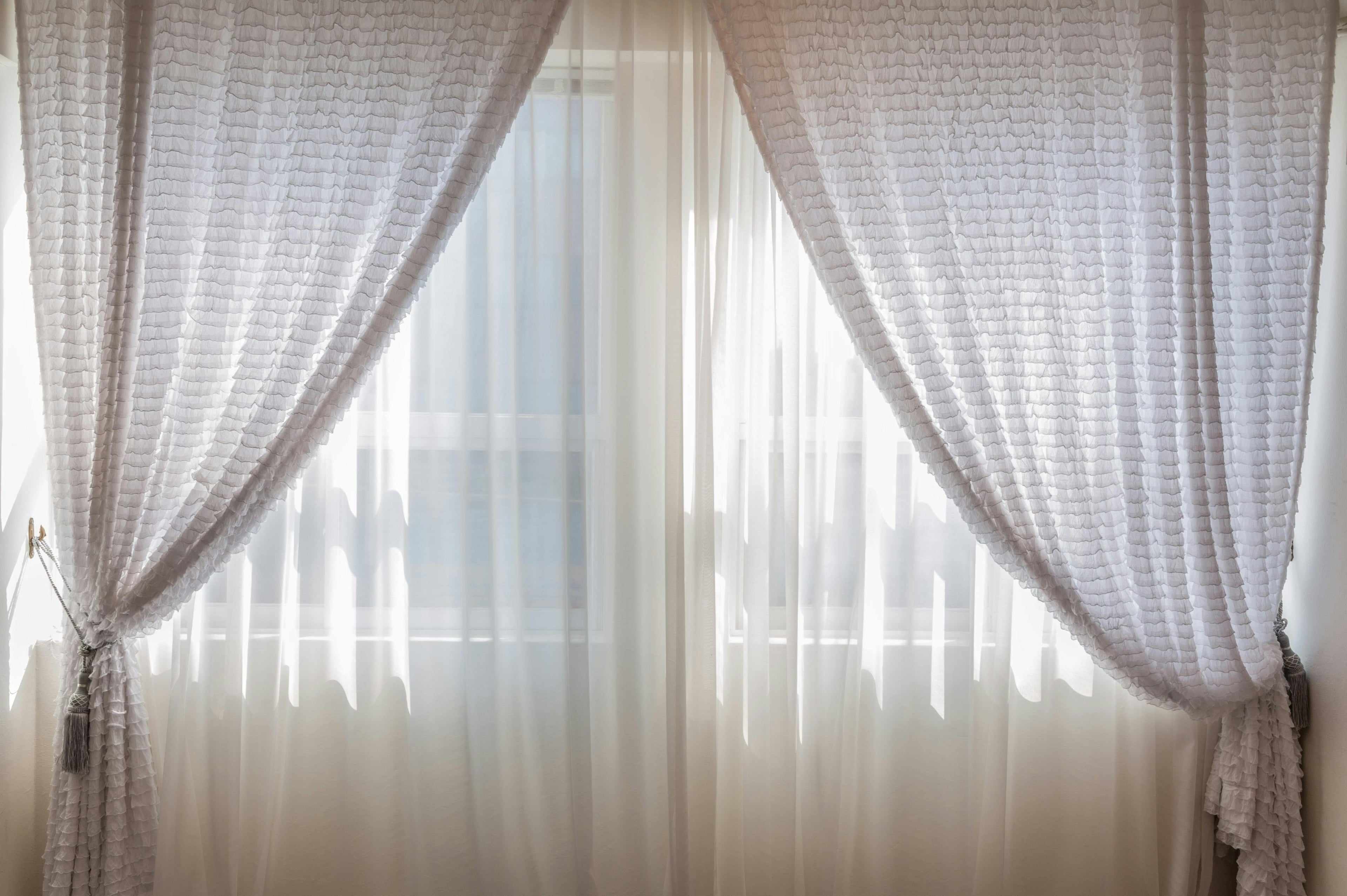
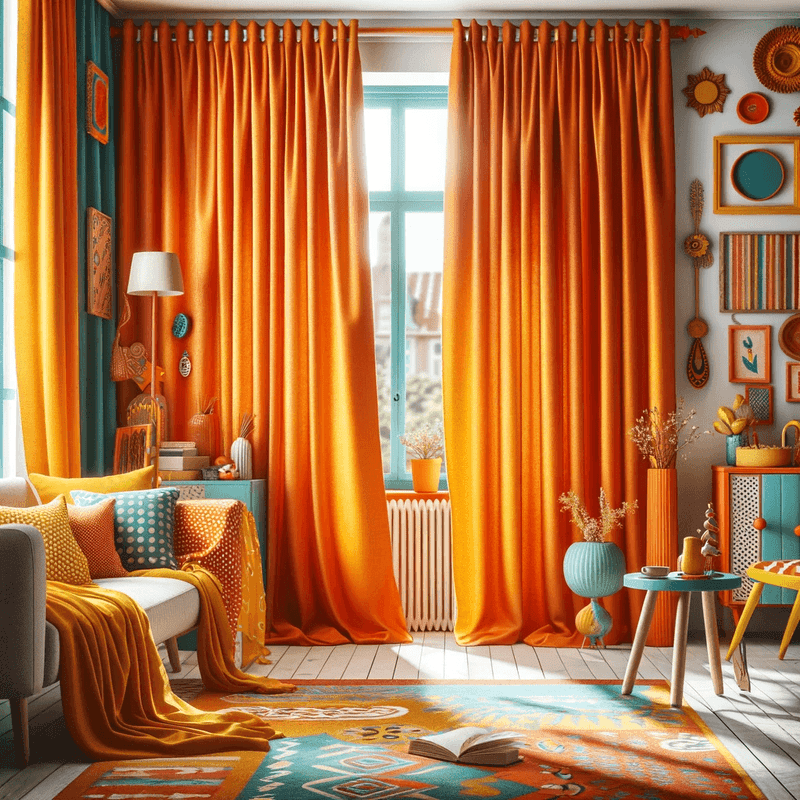
Start by decluttering the windows. Replace heavy opaque curtains with light sheer curtains, Roman shades in light fabric, or ring-top curtains that you can pull completely to the sides. The trend is for double curtains: a permanent sheer layer for light diffusion and a thicker curtain, but in a light color, for evening privacy.
For artificial lighting, forget the single ceiling light that creates harsh shadows. Adopt a multi-source lighting scheme, which is softer and more architectural:
- Ambient lighting: adjustable wall sconces, LED strips concealed behind the headboard, or a low-hanging pendant light over a bedside table.
- Task/reading lighting: adjustable-arm bedside lamps or directional spotlights integrated into a shelf.
- Accent lighting: a small recessed spotlight to highlight a painting or a plant.
Mirrors strategically placed facing a light source (window or lamp) will double its effect, projecting reflections that magically enlarge the room.
Custom and Multifunctional Furniture: The Key to Space
In a small bedroom, every piece of furniture must justify its presence. The era of bulky, standardized furniture is over. Make way for smart custom-made and multifunctional pieces.
The ideal is to opt for furniture designed specifically for the dimensions and angles of your room. A bookshelf that goes up to the ceiling, a wardrobe integrated into an alcove, or a bed with storage drawers under the mattress utilize otherwise wasted spaces. Loft beds or wall beds (like Murphy beds) are experiencing renewed interest, freeing up precious floor space for a desk or a relaxation area during the day.
Multifunctional furniture is a major asset for enlarging a bedroom functionally:
- A bedside table that is also a small dresser.
- A bench at the foot of the bed with an integrated storage chest.
- A fold-down desk that flattens against the wall.
- Modular shelves that serve as both a bookcase, a display, and a space divider.
Favor furniture with thin, exposed legs (thin metal or slender wood legs). This empty space between the floor and the furniture allows the eye to pass through and gives an impression of lightness.
The Art of Smart and Invisible Storage
Clutter is the number one enemy of small surfaces. Well-thought-out storage is storage that goes unnoticed, integrated into the room's architecture.
Exploit verticality. The walls are your largest storage surface. Install open shelves up to the ceiling for books and decorative objects. Use the often-neglected space above doors and windows to attach crates or closed storage shelves.
Think about integrated solutions. A sliding wardrobe with mirrored doors solves two problems: it offers immense storage and reflects light. Drawers integrated under the bed (raised by a box spring or an elevated frame) are perfect for bedding or off-season clothing.
Adopt the "one in, one out" principle. In a limited space, controlled minimalism is essential. Favor aesthetic storage boxes and baskets, in uniform colors, to hide small clutter and maintain visual harmony.
Optical Illusions with Patterns and Textures
Patterns, used sparingly and intelligently, can be powerful allies for structuring and enlarging space. The golden rule: favor medium to large-scale patterns and reserve them for specific elements.
A wallpaper with fine vertical stripes on a single wall (preferably the shortest one) will draw the eye upward and elongate the room. Horizontal stripes, on the other hand, can visually widen a hallway or a very narrow room.
Large-scale geometric patterns (diamonds, chevrons) on a rug or cushion can add dynamism without overwhelming. The current trend focuses on organic patterns and very subtle trompe-l'oeil wall murals, like discreet foliage or a color gradient, which create fascinating depth.
To avoid a flat "shoebox" feeling, play with textures. A cable knit throw, a curly wool rug, a velvet headboard, or linen-wrinkle cushions add sensory richness and dimension. The variety of materials (smooth wood, brushed metal, rattan, fabric) distracts the eye and positively complicates the space.
The Strategic Choice of Textiles and Flooring
The floor and textiles are important surfaces that greatly influence the perception of a room's size.
For the floor, visual continuity is ideal. Favor the same covering over the entire surface, preferably light (light oak parquet, light wood-look laminate, pale gray carpet). If you opt for a rug, choose one that is generously sized but leaves a border of floor visible all around. A small rug in the middle of the room fragments and visually shrinks it. Rugs with very discreet patterns or solid colors are preferable.
Regarding bedding, sheets and a duvet cover in a solid color, preferably light, create a calm and continuous surface. You can add personality with cushions with bolder patterns, but keep a consistent color palette. A light canopy, fixed to the ceiling and falling behind the headboard, can give an impression of height and romance, provided it is not too bulky.
Layout and Circulation: Creating a Natural Flow
The way you arrange your furniture determines how easily you move around and feel the space. The goal is to create a fluid circulation path without obstacles.
The basic rule is to free up the center of the room as much as possible. Place the bed against the wall, ideally in a corner or facing the door if space allows, but never across the natural flow. If your bedroom is very narrow, place the bed lengthwise to maximize space on each side.
Avoid blocking windows with tall furniture. Use corners to insert triangular storage furniture or a small bedside table. Leave a space of at least 60 cm around the bed and closet doors for easy circulation. Consider sliding doors for closets and adjoining bathrooms; they save the swing space required by a hinged door.
Decorative Tricks That Make All the Difference
Some details, often overlooked, can enhance the effect of an enlarged bedroom.
The mirror is the magical accessory. A large mirror (at least shoulder-height) placed facing the window is the most effective solution. But you can also opt for a composition of several small mirrors of varied shapes, or for furniture with mirrored fronts. Frameless mirrors or those with very thin frames are particularly suited to contemporary and minimalist styles.
Vegetation brings life and depth. Choose plants with vertical and graphic shapes (Sansevieria, Yucca, Ficus Lyrata) rather than trailing and invasive plants. One large plant in a beautiful pot makes more of an impact than several small ones.
For wall art, favor one large artwork or a large frame rather than a multitude of small pictures that create a "patchwork" and visually busy effect. Hang them at eye level to draw the eye horizontally.
Adapting Solutions to Your Bedroom's Shape
Not all small bedrooms are alike. The solution must adapt to the configuration.
For an attic bedroom with sloping ceilings, use the slopes to create low integrated storage. A low bed placed under the highest point of the room avoids a crushing feeling. Skylights should be left clear for light.
For a very small, square bedroom, a bed placed diagonally can sometimes energize the space and create usable corners behind it. A round rug can soften the room's right angles.
In a studio where the bedroom is not separate, use light visual separations: a bookcase open on both sides, a bead curtain, a screen, or simply a change in floor level (rug) or color to delineate the sleeping area.
Mistakes to Absolutely Avoid in a Small Bedroom
Some misguided ideas can undo all your efforts to visually enlarge your bedroom.
- Overloading the walls: Too many paintings, shelves, or posters create visual clutter.
- Choosing furniture that is too large and too numerous: A large armoire in a 9m² room is a disaster. Always measure before buying.
- Neglecting scale: Patterns that are too small (polka dots, small checks) on large surfaces can create an unpleasant "swarming" effect.
- Forgetting functionality for the sake of aesthetics: A bedroom must remain practical. Inaccessible storage or insufficient lighting will ruin your daily life.
- Using dark colors on all surfaces: Without light contrast, the room will become a cave.
FAQ: Your Questions About Enlarging a Small Bedroom
What color enlarges a bedroom the most?
There isn't one single color, but a family: light, neutral, and cool tones. White, very pale grays, and pastel blues reflect light the most. However, pure white can be cold. Prefer a warm white (tinted with yellow or pink) or a light gray for an effect that is both enlarging and cozy.
Is a large mirror really effective?
Absolutely. It's one of the most effective and simplest tricks to implement. A large mirror (like a cheval mirror) not only reflects light but also the space, creating an illusion of depth and visually doubling the room. Its placement facing a light source or an interesting perspective is key.
Can you put a rug in a very small bedroom?
Yes, provided you choose it well. It must be large enough for the feet of the main furniture (at least two-thirds of the bed) to rest on it. A small rug isolated in the middle of the room fragments it. Choose a rug in light, solid colors, or with a very discreet, large-scale pattern.
How to hide belongings in a bedroom without a closet?
Several solutions exist: a bed with integrated storage (drawers or chest), a headboard with niches, high shelves with identical storage boxes, a modular wardrobe to assemble yourself (like IKEA PAX) that you can dress with pretty curtains, or simply an elegant wall rack for day clothes, paired with a dresser.
Are rattan or cane furniture suitable?
Absolutely. Their visual transparency is a major asset. A cane chair, a rattan bedside table, or a mirror framed in this material allows the eye to pass through and does not obstruct the space. They add texture, lightness, and a touch of trendy bohemian or Mediterranean spirit.
Conclusion: From Constraint to Creativity
A bedroom that is too small is not a fate, but an opportunity to be creative and spatially intelligent. By mastering the principles of color, light, integrated storage, and strategic layout, you can transform a cramped space into a personal, functional, and aesthetically successful cocoon. Remember that the goal is not to cram everything in, but to elevate everything. Every choice, from the wall color to the shape of the bedside lamp, contributes to this benevolent optical illusion that enlarges your living space. To discover more inspiration, tutorials, and professional tips for optimizing every square centimeter of your home, explore the other dedicated articles on ombreinterieur.fr without delay. Your spacious haven of peace awaits. For more tips, discover how to use fairy lights on sand in a child's bedroom on the blog. Visit ombreinterieur.fr to explore the entire catalog.
