













Designing a 40m² living room: tips and inspiration
Forty square metres: a space that feels both expansive and intimate, where every square foot must tell a story. Furnishing a living area of this size requires a delicate balance between flow and personality. You need to consider circulation, multifunctionality and visual harmony without ever sacrificing comfort. The challenge is to create a room that breathes, where each zone finds its natural place. Let practical tips and restrained inspiration guide you in turning these square metres into an elegant, functional cocoon.
Designing a 40m² living space is an exciting challenge that lies at the intersection of optimization and creativity. This space, neither too small nor too large, offers tremendous potential to create a unique, versatile, and deeply personal living area. The key lies in thoughtful consideration of flow, multifunctionality, and aesthetic balance. A successful layout transforms these square meters into a haven that is both functional for daily life and inspiring for the spirit. In this article, we will explore in detail the strategies, current trends, and practical tips for designing a 40m² living space in a smart and elegant way, maximizing every centimeter without sacrificing style or comfort.
The Crucial Phase: Planning and Zoning the Space
Before buying the first piece of furniture, planning is the most important step. To design a 40m² living space, it is essential to understand the room's geometry, the source of light, and the natural flow of movement. Take the time to draw a scale plan, even a rough one. Identify the permanent features: the location of radiators, electrical outlets, windows, and doors.
Next, define your activity zones. In an open-plan living area, we typically distinguish: the dining area, the living area, and sometimes a workspace or a reading nook. For a 40m² room, the idea is to create a fluid, visual demarcation rather than a physical one. Use furniture orientation, large rugs, or changes in lighting levels to signal the transition from one zone to another.
The Importance of Flow
Circulation should be fluid and intuitive. Avoid at all costs blocking the natural pathways between doors. Leave a circulation corridor at least 80 cm to 1 meter wide. Think about daily routes: from the entrance to the kitchen, from the sofa to the bookshelf, from the dining table to the window. A well-thought-out plan anticipates these movements and places furniture accordingly, creating a feeling of airy space despite the multifunctionality.
Choosing Furniture: Prioritize Multifunctionality and Proportions
In a 40m² space, every piece of furniture must earn its place. The current trend is towards versatile and modular pieces. Forget bulky, massive furniture that overwhelms the space. Opt for clean lines, dual-function pieces, and appropriate proportions.
- The Sofa: Choose a two-and-a-half or three-seater model, but with slim armrests and raised legs to create visual lightness. Sofas with integrated storage under the seat are an excellent solution for linens or magazines.
- The Dining Table: An extendable table or one with leaves is ideal. For daily use, it remains compact for 2 to 4 people, and can expand to accommodate guests. Round or oval models facilitate movement around them.
- Storage: Think vertically! Tall, narrow bookcases, wall shelves that go up to the ceiling utilize unused space. Low furniture, like a long console, can define an area without obstructing it while offering storage surface.
Designer furniture with visible legs and airy lines allows light to circulate underneath, visually enlarging the room. This is a crucial point for designing a 40m² living space with elegance.
The Art of Decoration: Colors, Materials, and Light
Decoration is the binder that unifies the different zones and gives the space its soul. For a 40m² room, a consistent color palette is recommended. Current trends favor soft, natural atmospheres.
A Harmonious Color Palette
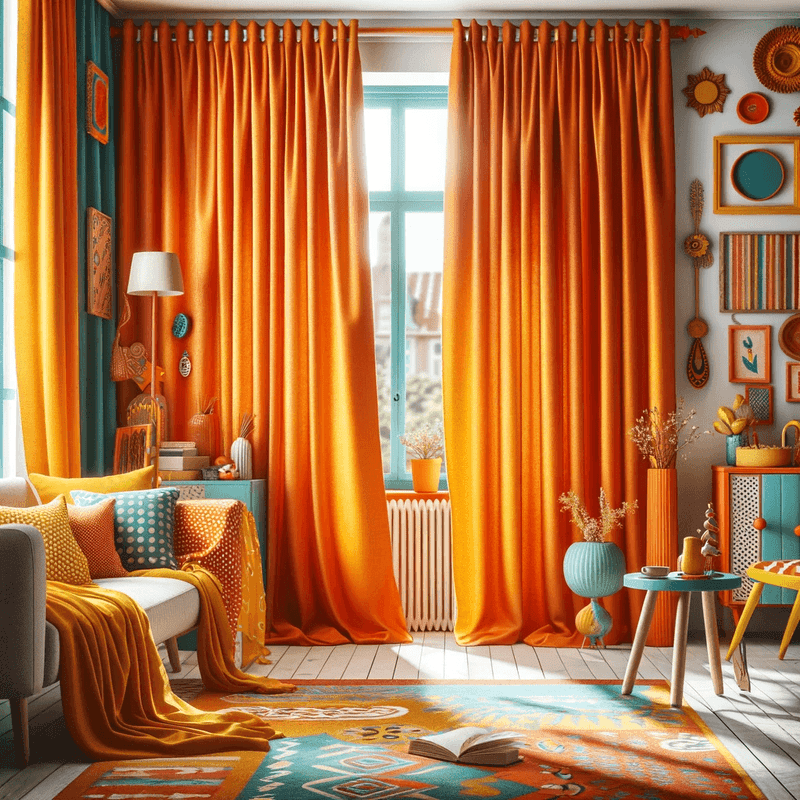
A base of light, neutral tones (off-white, very pale gray, taupe, beige) on walls and large furniture enlarges the space and acts as a backdrop. You can then introduce color and personality through accents, via accessories, an accent chair, cushions, a rug, or a piece of art. Dark, deep colors (navy blue, forest green, terracotta) can be used sparingly on an accent wall or in a specific corner to create depth.
Playing with Materials and Textures
To prevent a neutrally colored room from becoming bland, play with textures. Mix the soft velvet of a cushion, the roughness of a wicker basket, the warmth of solid wood on a table, the smooth coolness of metal on a floor lamp, and the softness of a chunky wool throw. This tactile contrast brings richness and character to your living space design.
Mastering Lighting
Well-planned lighting is transformative. Abandon the single ceiling light in the center of the room. Adopt a multi-level lighting scheme: soft general lighting (pendant lights with diffusers, adjustable recessed spotlights), ambient lighting (fairy lights, floor lamps), and functional lighting (desk lamp, reading floor lamp next to the sofa). Dimmable lamps allow you to adapt the ambiance at any time of day.
Optimization Strategies for Small Spaces
Beyond the main principles, certain specific tricks work wonders in a 40m² living space. The goal is to create the illusion of a larger, more organized space.
- Strategic Mirrors: A large mirror placed opposite a window reflects natural light and visually doubles the space. A mirror in the entryway or above a low piece of furniture also expands the perspective.
- Transparency: Glass furniture (coffee table, dining table) or acrylic pieces have the power to almost disappear visually, reducing the feeling of clutter.
- Smart Storage: Use the space under the bed (if it's a studio), decorative boxes on shelves, magazine racks on the sides of the sofa. Every item should have a designated place to avoid visual accumulation.
- Light Partitions: To define a workspace or a dressing area within the room, use a bookcase open on both sides, a Japanese screen, light curtains, or a hanging planter with climbing plants. These elements create intimacy without obstructing light.
Integrating Current Decoration Trends
To give your room a contemporary character, draw inspiration from current movements. The Japandi style, a fusion of Japanese minimalism and Scandinavian hygge, is perfect for medium-sized spaces. It advocates simplicity, natural materials, organic shapes, and a calming atmosphere.
Biophilia, or the integration of nature indoors, is more relevant than ever. It is achieved through green plants (large ones for maximum impact), materials like rattan, jute, linen, and raw wood, and a color palette inspired by earth and vegetation.
Finally, upcycling and vintage pieces bring a unique soul. A refurbished 70s dresser, a reclaimed vintage armchair become conversation pieces and avoid the pitfall of a too-sterile interior. Integrating these elements into your project to design a 40m² living space will give it personality and warmth.
Practical Case: Layout Scenarios for 40m²
Let's imagine two typical configurations to illustrate our advice.
Scenario 1: The Large Studio
In a 40m² studio, everything happens in one room. The solution lies in creating visual "rooms". Place the bed in a corner, possibly elevated on a platform with integrated storage. Use a large bookcase as a headboard and a divider from the rest of the space. The sofa can be turned towards the center of the room, with its back to the sleeping area, to create a distinct living room. A central island with stools can serve as both a dining table, a work surface, and a separation.
Scenario 2: The Open-Plan Living Room/Kitchen
Here, the kitchen is often integrated. To unify the space without mixing everything, use the same floor color (wood flooring or wood-look tile throughout). A bar with stools can mark the boundary between kitchen and living room, providing an informal dining space. Choose a kitchen cabinet color that complements the living room (e.g., lower cabinets in a dark color, upper cabinets in a light color to lighten the feel). Kitchen lighting should be warm (LED spotlights with a warm color temperature) to harmonize with the living room ambiance.
Mistakes to Absolutely Avoid
Certain errors in judgment can quickly shrink and clutter a 40m² space.
- Over-furnishing: Insisting on an L-shaped sofa, a dining table for 8, a large TV unit, and a full bookcase. Choose the essentials.
- Neglecting Circulation: Furniture too close to doors, a winding path between zones create a feeling of oppression.
- Using Small Rugs: Several small rugs fragment the space. One large rug that groups the sofa seating and armchairs unifies the living area.
- Forgetting Verticality: Leaving walls bare is a waste of storage space and decorative potential.
- Overly Cluttered Decoration: Too many accessories, frames, knick-knacks on surfaces creates visual clutter. Prioritize quality over quantity.
FAQ: Your Questions on Designing a 40m² Room
What is the best color to visually enlarge a 40m² room?
Light and neutral colors (white, very light gray, beige) are the most effective for reflecting light and giving an impression of space. However, a wall painted in a dark, saturated color at the far end of the room can create an illusion of depth and add character, provided the rest of the decoration remains light and airy.
Is a sofa and armchairs absolutely necessary in a 40m² living room?
Not necessarily. It all depends on your lifestyle. A two-and-a-half seater sofa accompanied by one or two modular ottomans can be just as comfortable and much more flexible than a fixed sofa and two imposing armchairs. Built-in benches with integrated storage are also an interesting and optimized alternative.
How to create a bedroom in a 40m² studio without a partition?
Several solutions exist: a designer screen, a large open bookcase serving as a divider, a curtain sliding on a ceiling track, or even a raised bed structure (loft bed) that frees up floor space for the living room. The choice depends on the ceiling height and your privacy preferences.
What type of storage should be prioritized to avoid cluttering the space?
Prioritize integrated and vertical storage. Tall, narrow wall cabinets, shelves up to the ceiling, furniture with doors (to hide clutter), storage chests used as coffee tables, and utilizing all nooks and crannies (space under stairs, under the bed, above doors) are the keys to discreet and effective storage.
How to properly light a large, multifunctional living room?
The golden rule is layering light sources. Combine diffuse general lighting (ceiling light or pendants), ambient lighting (fairy lights, table/floor lamps), and functional, directional lighting for each zone (reading lamp near the sofa, adjustable spotlight above the dining table, cool, intense light on the desk work surface). Use dimmers to adapt the ambiance.
Conclusion: Your 40m² Room, a Reflection of Your Art of Living
Designing a 40m² living space is much more than a simple exercise in style or optimization. It is the opportunity to create a custom-designed space, perfectly adapted to your rhythms, your needs, and your aspirations. By following the principles of intelligent zoning, choosing proportionate and multifunctional furniture, and playing with thoughtful decoration (colors, lights, textures), you will transform these square meters into a unique living area, both practical and inspiring. Don't be afraid to mix styles, experiment, and let your personality shine through. The ultimate goal is to create an interior where you feel perfectly at home, every day. To discover more inspiration and detailed advice on decoration and design, feel free to explore the other articles and comprehensive guides available on ombreinterieur.fr. To go further, try Affiches De Voyage Hivernales Uniques Decoration Murale Elegante Pour Une Ambiance Chaleureuse in your room. Before choosing, browse comment couper une tringle a rideaux. Browse our online shop to see all our collections.
