














Decorating a long room: tips and decor solutions
Turning a rectangular room into a harmonious interior demands a subtle balance of perspective and practicality, avoiding any hint of a corridor effect. You can make the most of every metre to craft distinct yet fluid atmospheres, breaking the linearity through thoughtful zoning, smooth circulation, and carefully chosen furnishings. The key lies in disrupting the straight line with strategic placement, allowing each area to breathe while maintaining a cohesive flow. Let professional insights guide you in unlocking the hidden potential of this singular layout, transforming your space into somewhere both dynamic and welcoming.
Arranging a long room, often called an "enfilade room" or "habitable corridor," represents an exciting decorating challenge. These rectangular, narrow spaces, found in Haussmannian Parisian apartments, industrial lofts, or townhouses, may seem restrictive at first glance. However, with a strategic approach, they offer a unique opportunity to create dynamic atmospheres, play with perspectives, and optimize every square centimeter. The secret lies in the art of breaking linearity, creating distinct functional zones, and using the principles of light, color, and furniture to visually widen the space. This article is your complete guide to transforming this constraint into a major asset, exploring concrete solutions, current trends, and professional tips for arranging a long room with elegance and efficiency.
Understanding the Specific Challenges of a Long Room
Before diving into solutions, it is crucial to analyze the characteristics of your space. A long room presents unique challenges that must be tamed. The main pitfall is the "corridor" or "tunnel" effect, where one feels like traversing a passageway to reach the other end. This sensation is often accentuated by a lack of natural light, especially if windows are only on one small side.
Circulation can become problematic if the central passage is cluttered, forcing one to weave between furniture. Finally, the acoustics can be reverberant, with sounds bouncing from one wall to another. Identifying these weak points – receding perspective, asymmetrical light, difficult circulation – is the first step to addressing them in a targeted and creative way. Every challenge hides an opportunity for ingenious design.
The Zoning Strategy: Breaking Linearity to Create Atmospheres
The absolute key to arranging a long room is to break its visual and functional length. Instead of a single, stretched-out space, conceive several "zones" or "scenes" that will captivate the eye and serve distinct purposes. This technique, inspired by studio and open-space layouts, completely redefines the perception of space.
For a typical living room, you could create three zones: a cozy lounge area near the main light source, a dining space in the center, and a desk or reading nook in the quietest part. The goal is for the eye not to sweep the room at once but to pause on each island, thus creating a rich and slowed-down spatial experience.
Delimiting Zones Without Partitioning
How to separate these zones without adding walls? Several subtle and effective techniques exist. Using carpets or rugs of different sizes and patterns is one of the simplest. A large shaggy rug under the sofa defines the living room, while a round jute rug under the dining table marks the dining area.
Lighting is another powerful tool. Hang a ceiling light or a set of pendants above the dining table, and use floor lamps or wall sconces to light the lounge area. Each light source creates a halo of intimacy. Finally, the furniture arrangement itself can serve as a divider. A low bookcase, turned with its back to the passage, or a sofa in a "floating" position (with its back to the room) are elegant ways to suggest a boundary.
The Art of Circulation: Freeing Up Flow and Optimizing Passage
In a narrow room, circulation must be fluid and intuitive. It is imperative to clear a main "circulation corridor," usually along one of the long walls, completely free of any obstacles. Avoid at all costs placing a sofa or coffee table across this natural path.
Favor a layout that promotes lateral movement. For example, place the sofa against a long wall and the coffee table in front, leaving generous space behind the sofa to circulate towards other zones. This configuration, called the "backbone" layout, is often the most effective. Also consider doors and openings: a piece of furniture placed too close to a swinging door will kill the functionality of the space. Always leave a minimum of 80 cm to 1 meter for main passages.
The Choice and Strategic Arrangement of Furniture
Furniture is your most powerful ally in redesigning a long room. The golden rule: prioritize verticality and visual lightness. Tall and narrow furniture, like floor-to-ceiling bookcases or wall shelves, draws the eye upward and exploits the ceiling height, thus diverting attention from the length.
Opt for seats and tables with thin, exposed legs, which let the floor be seen and create a sense of airiness. Modular furniture is perfect for these spaces, as it adapts to specific dimensions. An L-shaped modular sofa, for example, can perfectly delineate a lounge area. Don't hesitate to use dual-function furniture: a bench with storage chest in the dining area, a narrow console that serves as a desk, or an extendable table that grows only when necessary.
Pitfalls to Absolutely Avoid
Certain furniture choices can worsen the flaws of a long room. Avoid deep, bulky sofas placed across the room, which obstruct it. Ban low and long furniture (like some vintage dressers) that accentuate horizontality. Finally, resist the temptation to push all furniture against the long walls; this precisely creates that empty, impersonal central corridor effect. Dare to "float" certain elements to create dynamism.
The Magic of Colors and Materials to Correct Proportions
The color palette and choice of materials play a fundamental optical role. A proven strategy is to use a dark or intense color on the short walls (the smallest ones). These will thus appear to come closer, visually shortening the room. Conversely, painting the long walls in a light, luminous shade (white, cream, very pale gray) will make them recede and widen the space.
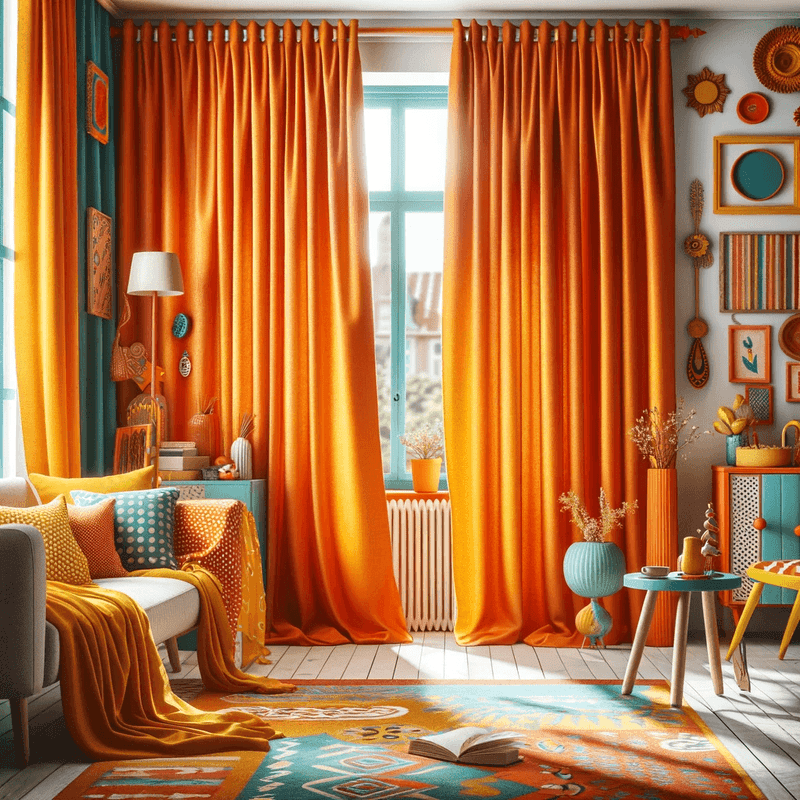
Current trends encourage boldness: a short wall in navy blue, forest green, or even matte black can create a spectacular and deep effect. For materials, vary textures to create richness without clutter. A wall in light wood (wainscoting or panels), a floor with geometric-patterned vinyl that guides the eye laterally, or fabrics with changing reflections (velvet, linen) capture and redistribute light subtly.
Mastering Natural and Artificial Light
Lighting is the number one tool to combat the tunnel effect. The goal is to create uniform, balanced light along the entire length, avoiding deep shadow areas. If natural light is one-sided, immediately compensate with generous artificial lighting at the other end of the room.
Adopt a three-level approach, essential in contemporary interior decoration. First, general lighting (ceiling light, recessed or track spots) for a homogeneous bright base. Then, ambient lighting (fairy lights, LED baseboards, table lamps) to create atmospheres. Finally, functional and accent lighting (floor lamps for reading, directional spots on a work of art) to punctuate each zone. Use mirrors strategically facing or perpendicular to windows to redirect and multiply daylight deep into the room.
Optical Illusions: Mirrors, Perspectives, and Patterns
Playing with perceptions is an art that works wonders in long rooms. The mirror is your indispensable ally. A large mirror placed on a long wall reflects the space in width, instantly doubling it. A mirror opposite a window maximizes light. For an even more sophisticated effect, consider a sliding mirror panel or a frameless mirror that seems like an extension of the wall.
Patterns must be chosen carefully. Horizontal stripes (on a rug, wallpaper) visually widen. Conversely, a very discreet vertical pattern wallpaper on a short wall can increase its height. Large-scale geometric patterns can be overwhelming; prefer medium-sized patterns or subtle textures. A little-known trick: a light path (like a series of small floor spots or an LED strip) that crosses the room diagonally or in a zigzag wonderfully breaks the overly obvious straight line.
Practical Case: Arranging a Long Living-Dining Room
Let's take a very common concrete case: a space 8 meters long by 3.5 meters wide, with a window at one end. The goal is to integrate a living room and a dining room for 6 people.
We will place the living area near the window to enjoy the light. A two-seater sofa and a loveseat will be placed in an L-shape, with their backs to the window, defining a cozy corner. A round coffee table will soften the angles. In the center of the room, we will install a round or oval dining table (avoiding the rectangular shape that follows the length) with chairs with openwork backs. A narrow sideboard against the long wall will serve as storage and support for lighting. At the opposite end, a tall, narrow wall-mounted bookcase will create a focal point and offer vertical storage space. A large rug under the dining table and another under the sofa will clearly delineate the two zones.
Current Trends for Elongated Rooms
2026 trends precisely value spaces with atypical proportions. The "Japanese" style with its minimalism, light partitions (shoji), and low furniture is perfect for not cluttering the view. "Curves and organic shapes" are also highly sought after: a sofa with rounded lines, an oval table, a sun-shaped mirror soften the austerity of the straight lines of a long room.
"Biophilia" (integration of nature) brings life: a large, bushy green plant (like a Fiddle Leaf Fig) in a dead corner or a hanging of climbing plants on a long wall adds verticality and freshness. Finally, the use of color on the ceiling (the "fifth wall") is a strong trend that allows capturing the gaze upward, diverting attention from the side walls.
FAQ: Your Questions on Arranging a Long Room
What is the worst mistake to make in a long room?
The worst mistake is to line up all the furniture along the two long walls, leaving a central void that resembles a runway. This dramatically accentuates the corridor effect and makes the space impersonal and difficult to live in. It is absolutely necessary to break this line by creating furniture groups that partially traverse the space.
Should you favor flooring in the direction of the length or the width?
Ideally, lay the parquet or choose laminate in the width direction (perpendicular to the length of the room). This visual direction immediately widens the space. If the parquet is already laid in the length direction, use large rugs oriented in the width direction to counterbalance this effect.
How to integrate storage without cluttering?
Prefer integrated and tall storage. A wardrobe or a floor-to-ceiling built-in bookcase on a short wall is ideal. Use the wasted space in height with wall shelves up to the ceiling. Opt for deep but narrow storage furniture (like 40 cm deep storage towers) placed against the long walls.
Can you really use black in a long, narrow room?
Absolutely, and it's even very trendy. The trick is to use it strategically and in a satin or matte finish to avoid harsh reflections. Paint one or two short walls in deep black to bring them closer visually. Pair it with very light, reflective surfaces (white, mirror, metal) and warm lighting for a spectacular and elegant contrast that shortens the perspective.
How to arrange several small rooms in an enfilade?
For rooms in an enfilade (like a living room, dining room, and study separated by doors), create coherence while marking a transition. Use a related color palette but with different intensities for each room. Glass interior doors or arches without doors preserve light and perspective while delimiting spaces. A continuous floor (same parquet or same tiles) throughout the enfilade unifies the whole.
Conclusion: From Constraint to Stylistic Signature
Arranging a long room is not a limitation, but an invitation to be creative and ingenious. By applying the principles of zoning, fluid circulation, strategic furniture, and optical illusions, you will transform a potentially difficult space into a dynamic, functional, and characterful interior. The essential thing is to forget the rectangular shape and think in terms of atmospheres, focal points, and living experience. Do not be afraid to experiment with colors, textures, and light. Your long room, once mastered, can become the most interesting and personal room in your home, a true signature of your decorative style.
Looking for other inspirations to optimize complex spaces, like studios, attics, or narrow entryways? Explore our collection of dedicated articles on ombreinterieur.fr, where we decipher trends and share concrete solutions for every interior decoration challenge. Share your long room projects with us on social media using the hashtag #OmbreInterieur! Among our favorites, find Rideau Occultant Long. Check out our article comment decorer une salle de bain wabi sabi avec des miroirs to go further. Get inspired on our decoration site for your next projects.
