















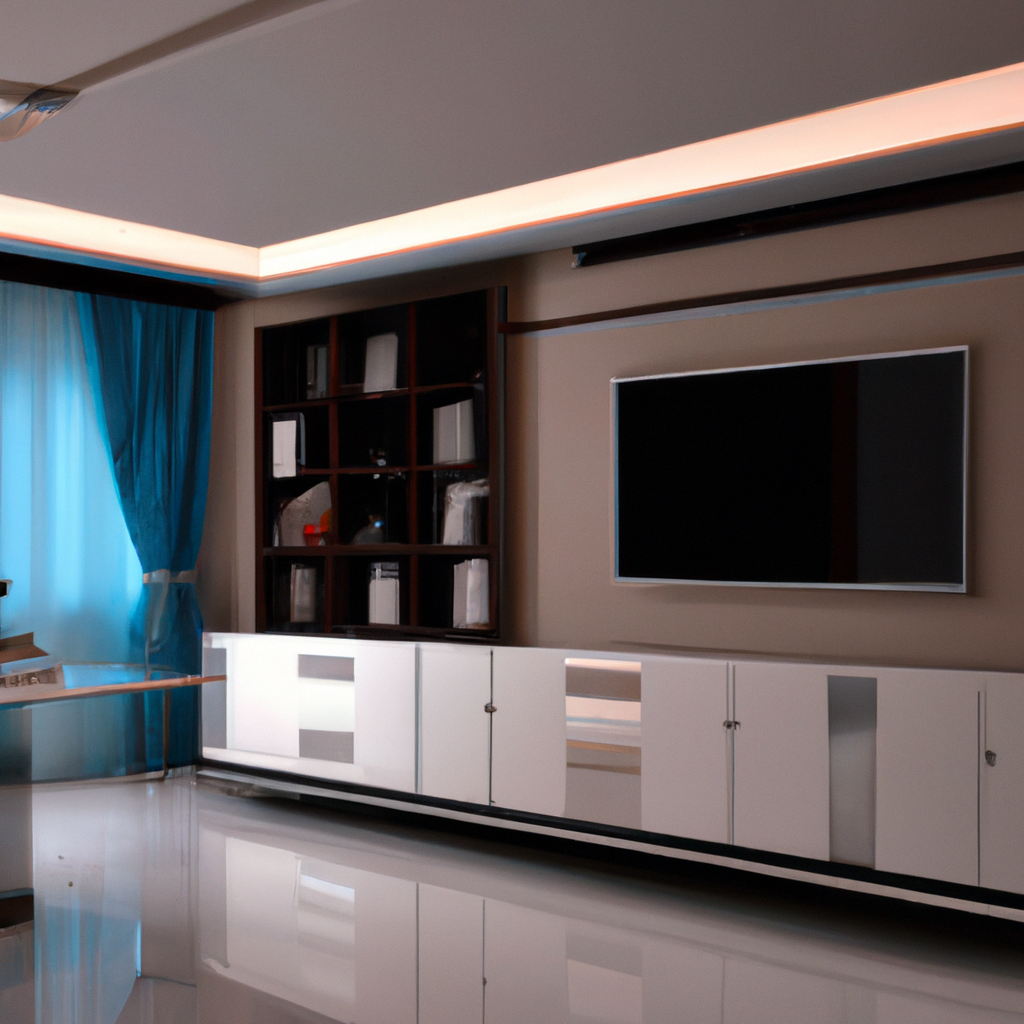
What size sideboards for a 25 m² office?
Fitting a 25-square-metre home office demands a careful balance between storage and easy movement. Your sideboard, far from being a mere utility piece, becomes the fulcrum of this equilibrium: it must offer generous capacity without ever encroaching on your working area. Choosing its dimensions is therefore a subtle art, where ergonomics and aesthetics intertwine. Let us guide you towards the proportions that will transform your professional environment into a space that feels both orderly and inspiring, where every object has its place and the room breathes with quiet purpose.
Furnishing a functional workspace requires particular attention to furniture, especially storage sideboards. In this comprehensive article, discover how to choose the ideal sideboard dimensions for a 25 m² office. We analyze the essential criteria, recommended proportions, and optimal layout solutions to create a professional environment that is both aesthetically pleasing and practical.
Optimal sideboard dimensions for a 25 m² office: the fundamentals
To effectively furnish a 25 m² office, choosing the appropriate dimensions for your storage sideboards is crucial. The balance between circulation space and storage capacity will determine the daily comfort and productivity of your professional environment.
Generally, for a 25 m² space, the total surface area dedicated to sideboards should not exceed 15-20% of the total area, i.e., approximately 3.75 to 5 m². This proportion allows for fluid circulation while providing sufficient storage.
The recommended standard dimensions for office sideboards in this space are:
- Height: between 90 and 110 cm (ideal for also serving as an auxiliary surface)
- Depth: 40 to 50 cm (sufficient without encroaching on space)
- Length: variable depending on configuration, generally between 80 and 180 cm
Adapting sideboards to your workspace configuration
The layout of your 25 m² office directly influences the choice of your sideboard dimensions. Several configurations are available depending on the shape and architectural constraints of your space.
Linear configuration
For a rectangular office, opt for a long sideboard (150-180 cm) placed against the wall furthest from the entrance. This arrangement frees up the central space and creates an elegant visual separation.
L-shaped configuration
If your office has an exploitable corner, choose two medium-sized sideboards (80-100 cm each) forming an L. This solution maximizes storage while defining functional areas.
Modular configuration
For more flexibility, consider several small sideboards (60-80 cm) that you can rearrange as your needs evolve. This approach is particularly suitable for versatile spaces.
Ergonomic criteria for choosing ideal dimensions
Ergonomics is a decisive factor in choosing the dimensions of your office sideboards. Furniture with adapted proportions promotes user comfort and prevents musculoskeletal disorders.
For optimal access to storage, follow these ergonomic principles:
- The height of the sideboards should not exceed 130 cm to allow easy access to the upper shelves
- Provide a circulation space of at least 80 cm in front of the sideboards
- Prioritize sideboards whose depth allows easy access to items stored at the back
- If the sideboard serves as a secondary work surface, its ideal height is between 72 and 76 cm
These ergonomic considerations are particularly important in a 25 m² space where every centimeter counts to create a comfortable and functional work environment.
Optimizing the storage capacity/footprint ratio
In a 25 m² office, the balance between storage capacity and footprint is essential. Well-designed sideboards maximize storage without sacrificing vital space.
To optimize this ratio, consider these solutions:
- Variable height sideboards: combine low modules (60-80 cm) and high modules (100-120 cm) to diversify storage
- Depth adapted to documents: 40 cm is sufficient for standard files, limiting floor space
- Custom-made sideboards: utilize niches and nooks with custom-sized furniture
- Stackable modules: develop vertically rather than horizontally to save floor space
A well-sized sideboard can accommodate the equivalent of 4 to 6 linear meters of documents while occupying only 0.8 m² of floor space, a particularly interesting ratio for a medium-sized office.
Recommended dimensions according to sideboard functions
The ideal dimensions of your sideboard also vary depending on its use. In a 25 m² office, furniture is often multifunctional to optimize space.
Filing sideboard
For storing documents and files:
- Minimum depth: 40 cm (compatible with suspended files)
- Recommended height: 110-120 cm
- Optimal width: 100-120 cm
Display sideboard
For displaying samples or professional items:
- Adapted depth: 35-45 cm
- Ideal height: 90-100 cm (at eye level)
- Flexible width: 80-150 cm depending on display needs
Technical sideboard
For housing computer and multimedia equipment:
- Necessary depth: 50-60 cm
- Functional height: 70-80 cm
- Adapted width: 100-120 cm
Current trends and innovative solutions for office sideboards
Workspace design is constantly evolving, influencing the dimensions and design of office sideboards. For a 25 m² space, current trends favor flexibility and multifunctionality.
Among the most relevant innovations:
- Modular sideboards: elements 40-60 cm wide combinable according to needs
- Sliding systems: sideboards 30-40 cm deep with telescopic drawers maximizing storage
- Acoustic sideboards: standard dimensions but sound-absorbing materials, ideal for open-plan offices
- Integrated solutions: built-in sideboards 180-200 cm exploiting the full ceiling height
These contemporary solutions optimize the use of sideboards in a 25 m² office while adapting to new, more collaborative and flexible working methods.
Conclusion: customize dimensions according to your specific needs
Choosing the ideal dimensions for sideboards in a 25 m² office results from a subtle balance between available space, storage needs, and ergonomics. While industry standards offer a good starting point, do not hesitate to customize these dimensions according to your specific constraints.
For optimal arrangement, consider:
- The frequency of access to different documents and materials
- The foreseeable evolution of your storage needs
- Aesthetic consistency with the rest of your furniture
- The circulation of people in the space
Ultimately, the ideal sideboard dimensions for a 25 m² office are those that allow you to work efficiently while creating a harmonious and functional environment. Do not hesitate to consult a professional space planner for a tailor-made solution perfectly adapted to your situation.
Share
