















How to Dress a Kitchen Window: Complete Guide
Between the brightness of day and the need for privacy, your kitchen window deserves a treatment equal to its demands. Steam, grease, and the desire for natural light call for a thoughtful choice, where materials are resilient and style remains cohesive. Clean-lined blinds, short curtains, or sheer voiles each transform the room’s atmosphere while easing your daily routine. Let the interplay of textures and light guide you toward the perfect balance of aesthetics and practicality, turning this window into a true decorative asset that enhances both function and feeling.
Dressing a kitchen window is much more than just a decorative choice. It is an exercise in balance between aesthetics, functionality, and resistance to the specific constraints of this room: splashes, steam, cooking odors, and the crucial need for natural light. The choice of the ideal window treatment impacts the overall atmosphere, influences the perception of space, and should make your daily life behind the stove easier. Between blinds, curtains, sheers, and hybrid solutions, the possibilities are vast and can suit all styles, from rustic to minimalist. In this comprehensive guide, we will explore in detail all the options for dressing a kitchen window, taking into account the latest trends, innovative materials, and practical requirements to make this element a major decorative asset.
Why kitchen window treatments are so specific
The kitchen is not a living room. It is a technical room where humidity, temperature variations, and greasy splashes mix. An unsuitable window treatment will quickly become a nest for dust and odors. Furthermore, the window is often the main source of light in this workspace. The goal is therefore threefold: preserve privacy without darkening the room, withstand harsh conditions, and add a stylistic touch consistent with the rest of the layout. You must also consider space: a curtain that is too long near a countertop or a sink can be dangerous and unhygienic.
Blinds: champions of functionality and modern design
Blinds are often the preferred solution for dressing a kitchen window in a practical and streamlined way. They offer precise light control, minimal bulk, and a wide variety of materials.
Venetian blinds in aluminum or wood
Timeless and highly adjustable, Venetian blinds allow you to control brightness at will by tilting the slats. In aluminum, they are lightweight, moisture-resistant, and easy to clean (a simple wipe with a damp cloth is enough). Wooden models (or wood-effect) bring natural warmth and are particularly suitable for Scandinavian or rustic kitchens. For a contemporary look, opt for extra-wide slats.
Roman or roller blinds
Elegant and very structured, Roman blinds (which raise from the bottom) create clean horizontal lines. They are perfect for French windows or windows where you want to preserve the view while protecting yourself from prying eyes. Coated or vinyl fabrics are ideal for the kitchen, as they resist stains and are easy to clean.
Roman shades and their adapted fabrics
Softer than a Roman blind, the Roman shade adds texture and a dressed-up look without the length of a curtain. Choose specific fabrics for the kitchen: synthetic fibers, stain-resistant and UV-treated fabrics, or even waterproof materials. A Roman shade with a geometric pattern can become a true focal point above the sink.
Curtains and sheers: controlled softness and lightness
Contrary to popular belief, curtains have their place in the kitchen, provided you make the right choices in terms of length, material, and installation.
Sheers: preserving privacy without sacrificing light
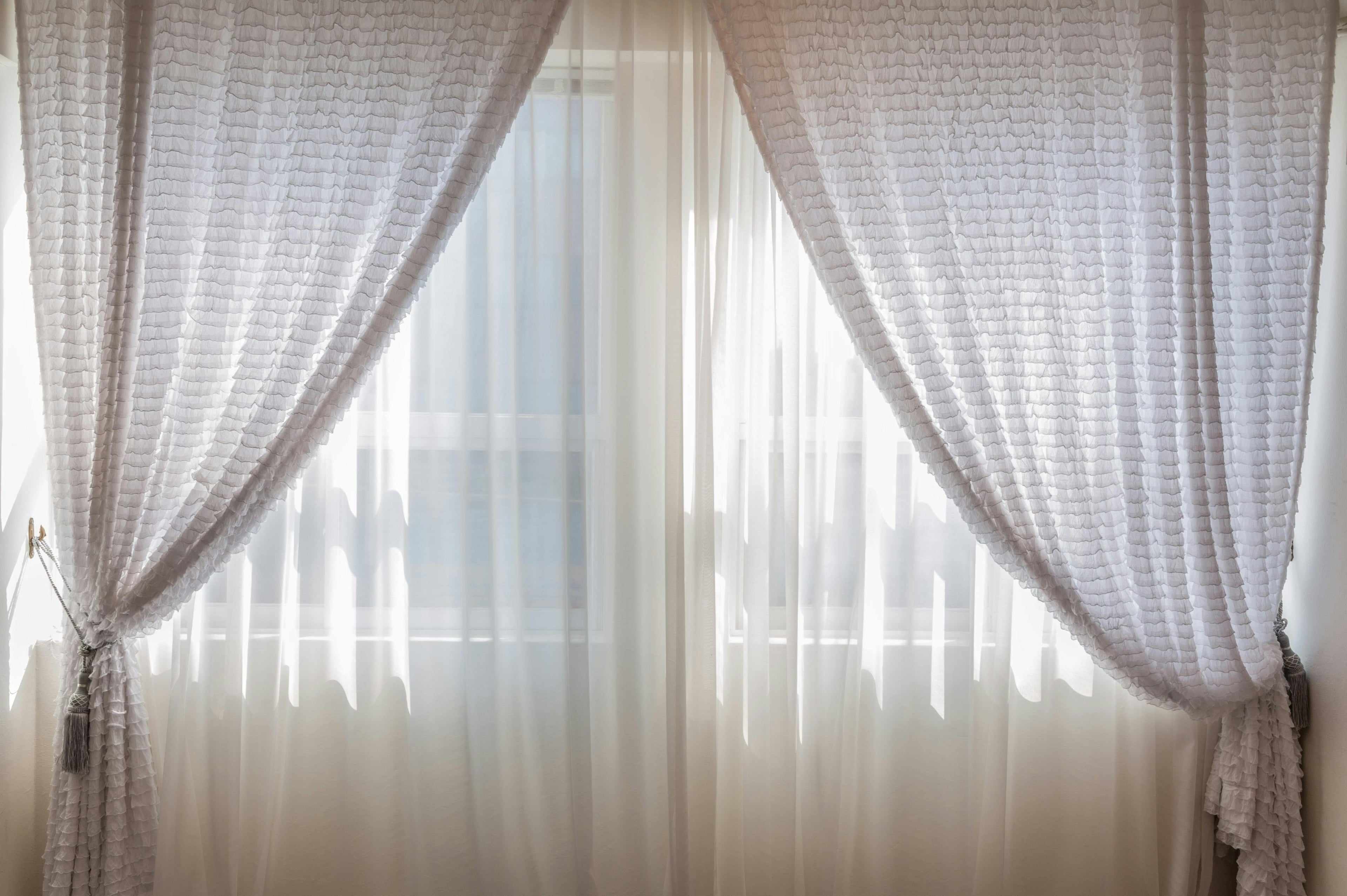
Sheers are the perfect ally for kitchens that face neighbors. They diffuse a soft, filtered light while protecting from prying eyes. For a modern look, choose sheers with clean finishes (straight hems, linen fabric) mounted on a slim rod. Avoid overly full or long sheers that trap odors and grease.
Short or "café" curtains
Typical of country or cottage kitchens, so-called "café" curtains stop at the windowsill. This length is clever because it leaves the area around the sink or countertop clear. Choose them in easy-to-wash fabrics like cotton, linen, or synthetic blends. A small check pattern or stripes add a retro and warm touch.
Curtains with rings and offset rods
To prevent the fabric from getting in the way, a trick is to install a rod much wider than the window, allowing the curtains to be fully pulled back to the sides and completely clear the window. Metal rings provide a very trendy industrial finish.
No-drill and modular solutions
For tenants or those who like to change their decor regularly, temporary solutions are ideal for dressing a kitchen window without commitment.
Decorative adhesive films and window clings
Very much in vogue, adhesive window films are a revolution. They stick directly onto the glass, are easy to install and remove, and come in an endless variety of patterns: frosted effect (sanded), geometric patterns, botanical designs, or even imitation stained glass. They preserve privacy while letting light through. This is an economical, hygienic (no fabric), and ultra-modern solution.
Tension blinds
Perfect for skylights or small openings, these blinds (often in coated fabric) are mounted simply by tension inside the frame, without drilling. They are discreet and functional.
Magnets and adhesive strips
There are now fixing kits using powerful magnets or VHB (Very High Bond) adhesive strips that allow you to attach lightweight rods or blind supports without any tools. Adhesive technology has advanced significantly, offering strong and clean hold.
The crucial choice of materials and fabrics for the kitchen
This is probably the most important point. The material must combine beauty and durability.
- Synthetic fibers (polyester, acrylic): Their great advantage is ease of maintenance. They resist mold well, do not shrink, and dry quickly. Many modern upholstery fabrics perfectly imitate the texture of linen or cotton.
- Linen and cotton: Natural and beautiful, they require more attention. Favor linen-polyester blends for greater robustness, or coated canvases. Cotton can be treated to be less prone to soiling.
- Technical fabrics: The market now offers "performance" fabrics specifically for the kitchen: stain-resistant, antibacterial, UV-resistant, and flame-retardant. They are a wise investment for a long lifespan.
- To avoid: Heavy fabrics like velvet, pure silk, or thick linings, which absorb odors and are difficult to maintain.
The importance of color and pattern
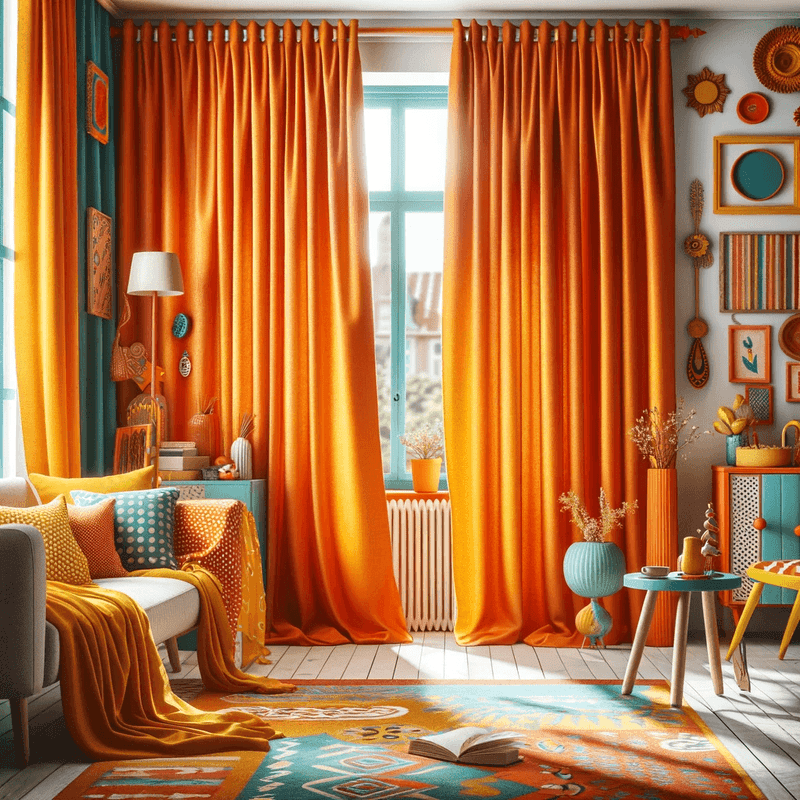
The window is an opportunity to inject personality. In an immaculate white kitchen, a Roman shade with botanical or geometric patterns will add character. In an already very colorful kitchen, a window treatment in a neutral tone (taupe, light gray, natural) will rest the eye. Current trends see the emergence of earthy colors (ochre, sage green, clay blue) and organic or graphic patterns. Remember that light colors reflect light, while dark ones absorb it and can visually shrink the space.
Optimizing space and light: decorative tips
The window treatment can also be used to correct flaws or optimize the layout.
- Visually enlarge a small window: Install the rod or track well above the frame (up to 20 cm) and let it extend significantly on the sides. When the curtains are open, the window will appear much larger.
- Create an illusion of height: Blinds or curtains mounted from top to bottom, in the same color as the wall or slightly lighter, draw the eye upward and raise the ceilings.
- Direct light: Use blinds with adjustable slats to redirect sunlight towards the ceiling (for indirect, soft lighting) or to avoid glare on the countertop.
Lighting and interaction with the window
The way you dress your window influences the quality of natural light, but also the effect of your artificial lighting in the evening. A white sheer will pleasantly diffuse the light from spotlights or pendants. Conversely, a total blackout blind will allow you to create an intimate atmosphere for dinners. Consider installing a dimmer for your main lighting to adapt the light ambiance according to the time of day and use of the room.
FAQ: Most frequently asked questions about dressing kitchen windows
What is the easiest solution to maintain?
Undoubtedly, aluminum or PVC blinds and adhesive window films. A damp microfiber cloth is enough to clean them. For fabrics, favor Roman or roller blinds in synthetic fibers, often removable and machine washable at low temperature.
Can you put long curtains in a kitchen?
Yes, but with extreme caution. Absolutely avoid them trailing near the hob or sink. Ideally, install them on a window that is not directly adjacent to a preparation area. Choose lightweight fabrics and ensure you can securely tie them back on the sides.
How to dress a kitchen window above the sink?
This is the most common and most delicate configuration. The ideal is a compact and waterproof solution: a roller blind, a Venetian blind, or a frosted adhesive film. Avoid any textile element that would hang down and be in constant contact with humidity and splashes.
What are the 2026 trends for kitchen windows?
We are seeing a return to natural materials like linen and jute (in treated versions), strong demand for motorized and connected blinds, and the use of bold accent colors (teal or terracotta blinds). Smart minimalism, with integrated and invisible solutions (like blinds between two panes of glass), is also appealing.
How to take measurements for a blind or curtain?
For a face-fix installation (on the frame), measure the exact width and height of the opening. For a top-fix installation (above the frame), measure the desired width of the blind (generally the frame plus a few centimeters on each side) and the height from the wall to the desired location. Always measure at three different points (height and width) in case the opening is not perfectly level.
Conclusion: Make your window a kitchen asset
Dressing a kitchen window is an exciting opportunity to combine design and pragmatism. Whether you opt for the technical sharpness of an aluminum blind, the textured warmth of a linen Roman shade, the poetic lightness of a sheer, or the graphic boldness of an adhesive film, each choice should serve your comfort and reflect your style. Remember that the window is the link between your interior and the exterior, a source of life and light. A successful treatment is one that is barely noticed because it integrates so perfectly into the flow of your culinary activities, while enhancing the space. To discover more inspiration and advice on furnishing every room in your home, explore the other comprehensive guides available on ombreinterieur.fr. Need practical advice? Read how to harmonize burgundy paint in a Scandinavian kitchen. Visit ombreinterieur.fr to explore the full catalog.
