















How to Dress a Roof Window: Complete Guide 2026
Beneath the eaves, zenithal light is both a gift and a challenge: unmanaged, it dazzles, overheats, or leaves you exposed. Dressing a roof window goes beyond aesthetics; it is a technical gesture for thermal comfort and privacy. Blackout blinds, softly filtering voiles, or custom-made Venetians each transform your skylight into a decorative and functional asset. You will learn to balance light control with style, turning this opening into a warm, inviting feature of your home, where the play of sun and shadow becomes a sensory delight.
Roof windows, those zenithal openings that pierce the roof structure to flood our interiors with natural light, are true architectural assets. However, knowing how to dress a roof window often presents a decorative and practical headache for homeowners and tenants alike. Between managing light, thermal and acoustic insulation, the need for privacy, and the desire to create a cohesive aesthetic ambiance, the challenges are numerous. This article is your comprehensive and up-to-date guide to transforming this structural feature into a standout element of your decor. We will explore in depth all the solutions, from custom blinds to the most inventive textile treatments, as well as essential technical considerations and 2026 trends. You will discover how to combine functionality and style to turn your skylight, sloping window, or roof lantern into a warm, refined, and energy-efficient asset.
Understanding the Stakes: Why Dressing Your Roof Window is Essential
Before diving into the catalog of possibilities, it is crucial to understand the multiple stakes involved. An undressed roof window is a source of discomfort that directly impacts your daily comfort, your sleep, and your energy bill.
Firstly, light management is completely uncontrolled. From sunrise, harsh, directional, and often glaring light can flood the room, making mornings difficult and causing unbearable reflections on screens. Secondly, the greenhouse effect in summer can make the room under the roof literally uninhabitable, with temperatures potentially rising 5 to 10°C higher than on the floor below, according to ADEME.
Conversely, in winter, this large glazed surface, if not equipped with high-performance double or triple glazing, becomes a thermal sieve, leading to significant heat loss. Finally, privacy is often compromised, especially in dense urban areas where overlooking views from taller buildings are possible. Dressing a roof window therefore meets an imperative for overall comfort: thermal, luminous, visual, and private.
The Complete Overview of Custom Technical Blinds
The market offers an extensive range of blinds specifically designed for sloping openings. Their mechanism, fixing, and materials are adapted to the verticality and constraints of the slope, offering a safe, durable, and aesthetic solution.
Blackout Blinds: The Sleep Ally
Ideal for bedrooms, children's rooms, or home cinemas, the blackout blind blocks up to 99.9% of light. It is perfect for those who work nights, for daytime naps, or for early bedtimes in summer. High-end models, often composed of several layers of coated fabric, also offer excellent thermal and acoustic insulation. The most advanced versions include side channels to eliminate any light leakage on the sides, creating total darkness.
Sheer or Screen Blinds: Gentle Light
Made from a breathable fabric of fiberglass or polyester, these blinds filter light without completely blocking it. They preserve the view of the sky while significantly reducing glare and solar heat (up to 85% of UV rays). This is the ideal solution for a home office under the roof, a living room, or an artist's studio, where you want to enjoy soft, constant natural light without its drawbacks. They bring a feeling of calm and serenity.
Venetian Blinds for Skylights: Precise Control
A reliable choice that allows millimeter-precise control of light and privacy. The tilt of the adjustable slats offers great flexibility throughout the day. Choose aluminum slats (anodized or lacquered) for a modern, industrial style that is easy to maintain, or wooden slats (basswood, an American linden) for a warm, natural ambiance offering good insulation. Extra-wide slat models (50 mm or more) are very trendy for a graphic and contemporary effect.
Pleated or Festoon Blinds: Textile Elegance
Elegant and designer, these blinds fold into an accordion shape when raised. They are available in a multitude of fabrics, colors, patterns, and opacities (from translucent to blackout), allowing total customization to match your decor. Their textile aspect adds a touch of softness and a more traditional dressing feel. Their side guide system ensures perfect folding even on large surfaces.
External Roller Blinds: The Ultimate Energy Performance
Although less common in renovation, the external blind (or awning) is the most effective solution against summer overheating. By blocking the sun's rays before they hit the glass, it significantly reduces heat gain. Often motorized and controlled by a remote control or switch, they also protect the window from the elements. Their installation is more complex and should be planned when installing the roof window or entrusted to a professional.
Creative and Adaptive Textile Solutions
While specific blinds are practical and efficient, the desire for a traditional curtain to soften the ambiance, add volume, and incorporate noble materials is understandable. Here is how to adapt these solutions with ingenuity, safety, and style.
The Headboard or Sofa Curtain: The Structured Cocoon
In a bedroom under the roof, a decorator's trick is to install a curtain rod or track on the ceiling, perpendicular to the window, at the level of the bed head. The curtain, usually in a thick, soft fabric like velvet, heavy linen, or jacquard, slides to the side and does not interfere with the window opening. It creates a true cocoon around the headboard and completely masks the window at night. A sheer curtain can be layered directly on the window for daytime.
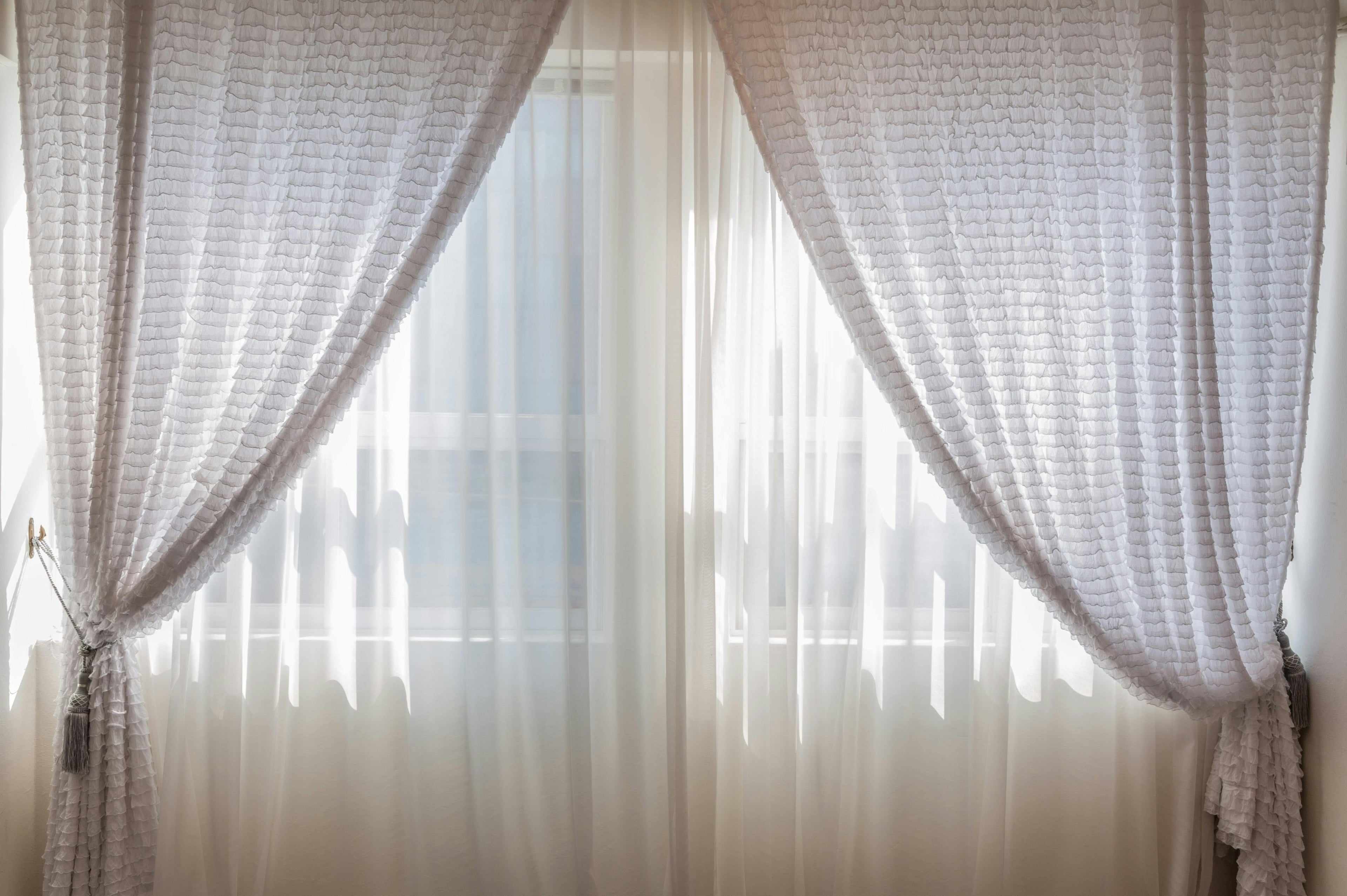
Permanent Sheer Curtains and Adhesive Films
To soften light permanently without completely sacrificing brightness and view, several options exist. Attach a fine, airy sheer curtain (chiffon, tulle) directly to the window frame using textile Velcro or thin clip-on fasteners. For a more contemporary effect, frosted, micro-perforated, or patterned adhesive films provide privacy while letting light through. They are an excellent, low-maintenance alternative.
Hangers and Tension Rods: The Flexible Solution
For a temporary, rental, or budget-friendly solution, special U-shaped hangers or an adjustable metal tension rod can be installed inside the frame. Ensure they are perfectly stable and use lightweight curtains (sheer, fine cotton) to avoid any risk of falling. This solution is perfect for testing a location or color before a custom investment.
The Removable Skylight Cover or Bag
Inspired by hotels, this solution involves creating a custom fabric cover that slips over the window like a fitted sheet, held in place by elastic or ties. Made of linen, thick cotton, or technical fabric, it is easy to remove for washing and allows for a change of decor with the seasons. Ideal for guest rooms or occasional-use spaces.
Taking Measurements: The Critical Step for a Perfect Result
To dress a roof window, the precision of measurements is the most critical step, well before choosing the color. An error of a few millimeters can render the blind or curtain unusable or cause operational problems.
Always measure the opening at three different points (top, middle, bottom) for the width, and three points for the height (left, center, right). Systematically note the smallest measurement. Clearly determine whether you want an "inside mount" (more aesthetic, integrated, and protected) or an "outside mount" (which better masks the frame, lets less light through the edges, and can hide an unattractive frame).
Take into account the direction and type of opening (pivot, hinged). Do not hesitate to use the measurement service offered by most specialized manufacturers and retailers. It is a minimal investment that guarantees a perfect result and avoids costly mistakes.
Insulation, Acoustics, and Energy Savings: The Smart Investment
A good dressing for a roof window is not just about aesthetics or privacy. It is a true tool for energy performance and acoustic comfort, often underestimated. In winter, a layer of fabric, wooden slats, or a double-walled blind creates a static insulating air pocket that reduces heat loss to the outside, limiting the sensation of a cold wall.
In summer, an external blind is the most effective, but an internal blind with high solar reflection capacity (aluminum blinds with light finishes, UV-treated and reflective fabrics) rejects a significant portion of infrared radiation. According to manufacturers, a suitable screen blind can reduce solar heat gain by over 60%. This translates into a significant reduction in air conditioning use and therefore energy costs. The dressing also helps attenuate the noise of rain, hail, or wind, which are common on a roof.
Materials, Colors, and 2026 Trends
How to harmoniously integrate your roof window into your current decor? Current trends favor simplicity, natural materials, textures, and smart, sustainable solutions.
The Japanese style and wabi-sabi, with its blinds in natural fibers like bamboo, reed, or its shoji panels in rice paper, brings serenity, soft light, and a connection to nature. The Scandinavian and "hygge" spirit, meanwhile, focuses on immaculate white blinds, light wood (oak, ash), or thick raw linen sheers to maximize the diffusion of soft, soothing light, complemented by a thick wool or corduroy velvet curtain for winter.
For an industrial loft or urban interior, metal blinds with wide slats, raw cotton canvas or gray technical fabric curtains, or even metal mesh blinds are appropriate. The "cocooning" and "grandmillennial" trend, on the other hand, encourages the use of heavy fringed curtains, colorful corduroy velvet, botanical jacquard, or chenille to create an intimate, warm, and personal atmosphere under the roof.
Innovation is also on the side of materials. Smart fabrics, with photochromic or electrochromic technology that change opacity levels on demand, are arriving on the market. Connected blinds, controllable via an app, voice assistant (Google Home, Alexa), or integrated into a home automation scenario (opening at sunrise, closing at sunset), are becoming accessible for ultimate comfort and automatic energy optimization.
Motorization and Home Automation: Comfort at Your Fingertips
For high or hard-to-reach roof windows, motorization is no longer a luxury but a true solution for comfort and safety. A motorized blind is operated with a simple press of a wall switch, remote control, or from your smartphone.
The advantages are numerous: no more step ladder needed, easy operation for all family members, the ability to program scenarios (automatic lowering at noon in summer to limit overheating), and integration into a global home automation ecosystem. Some models are even equipped with wind, rain, or sun sensors that activate the blind autonomously to protect your home. Power is often supplied by a small solar battery integrated into the blind, eliminating any need for wiring.
Pitfalls to Absolutely Avoid
Certain mistakes, often made due to lack of knowledge, can ruin your project, your investment, or even pose a risk. Here they are to avoid at all costs.
- Neglecting the opening direction and mechanism: Carefully check whether your window opens from the top, bottom, center pivot, or hinged. The blind or curtain must never hinder its operation, locking in the open position, or interfere with the handle.
- Choosing materials that are too heavy or unsuitable: For frame mounts or tension systems, weight is limited. Opt for lightweight textiles or systems designed for verticality. Avoid heavy double curtains on simple tension rods.
- Forgetting maintenance and durability: A roof window is more exposed to dust, UV rays (which fade fabrics), and condensation. Choose washable materials (removable fabric covers), easily dusted (wood, aluminum), or treated against UV and mold.
- Sacrificing safety, especially with children: Ensure the fixing system is perfectly adapted and that operating cords (for manual blinds) are out of reach of young children. Preferably opt for cordless systems (crank, telescopic rod) or motorized ones.
- Insisting on a standard blind for a non-standard window: Roof windows often have specific dimensions. A standard large-surface blind may not fit. Custom-made, although sometimes more expensive, is often the only viable and aesthetic solution.
Budget and Planning: How Much to Invest?
The cost to dress a roof window varies considerably depending on the solution, size, technology, and quality of materials. It is important to plan this investment.
For an entry-level specific blind (e.g., screen or simple blackout roller), expect between €150 and €300 including tax, excluding installation. A quality mid-range Venetian or pleated custom blind generally ranges from €300 to €600. High-end blinds (solid wood, integrated motorization, premium technical fabrics) can easily reach €800 to €1500 per window.
DIY textile solutions (curtains, sheers) often represent the smallest budget (€50 to €200), especially if you make them yourself. Do not forget to budget for installation if you do not do it yourself (between €50 and €150 per blind on average). Consider this purchase as a long-term investment that improves your comfort and can reduce your energy costs.
FAQ: Answers to Your Most Frequent Questions
Can I install a standard awning blind on a roof window?
No, absolutely not. An awning blind is designed for a vertical facade. Its rolling mechanism, support arm, and fabric are not at all suited for a sloped installation. Gravity, wind, and rain would make this installation dangerous and ineffective. You must choose a blind specifically designed for roof windows, whose guiding and rolling system is engineered for the slope.
How to dress a roof window without drilling, for a tenant?
Several non-invasive solutions exist. Look for pressure-mounted blinds that wedge into the window frame using a spring system. Some pleated blind models use a high-tack adhesive Velcro strip (like 3M) stuck to the frame. Adjustable tension rods are also an option, provided you carefully check their stability and only use very lightweight curtains. Finally, adhesive window films are 100% drill-free.
Internal or external blind, which to choose for thermal optimization?
From a purely technical standpoint, the external blind (usually an awning or roller blind) is the most effective for summer thermal regulation because it blocks the sun's rays before they pass through the glass, thus avoiding the greenhouse effect. However, its installation is more complex, costly, and not always possible in renovation. The internal blind is more accessible, easier to maintain, and offers a wide aesthetic choice. For maximum year-round energy optimization, the ideal is to combine an external blind for summer and an insulating blackout internal blind for winter.
Can I motorize my roof window blind after installation?
Absolutely. Most manufacturers offer retrofit motorization kits designed to fit their existing manual blinds. These kits typically include a tubular motor that replaces the manual winding axle, a remote control, and sometimes a solar sensor. Installation can be done by a competent DIYer or a professional. It is an excellent way to modernize a blind without replacing everything.
What is the most durable and low-maintenance solution?
Blinds with anodized or lacquered aluminum slats are extremely durable and only require occasional dusting with a damp cloth. Quality wooden blinds (basswood) are also very resistant but may require occasional oil treatment. On the textile side, coated technical fabrics (for blackout or screen blinds) are treated against UV and stains, and are often removable for machine washing. Avoid delicate fabrics (silk, untreated cotton) which degrade quickly in direct sunlight.
Conclusion: Make Your Roof Window a Unique and Comfortable Decorative Asset
Dressing a roof window is much more than a simple practical or aesthetic matter. It is an opportunity to sculpt natural light to your liking, reinforce the cozy and intimate character of your interior, assert your personal style, and achieve substantial energy savings. By combining high-performance technical solutions – blackout, sheer, Venetian, or pleated blinds – with more traditional and creative textile tricks, you can meet all your needs: deep and restorative sleep, optimal work comfort, a convivial and warm ambiance, or enhanced thermal and acoustic insulation.
Remember that the key to success lies in a global reflection that incorporates surgical measurement taking, the window's opening direction, your lifestyle, and the dominant style of your room. Whether you opt for the clean simplicity of a screen blind, the organic warmth of a wooden blind, the silent technology of connected motorization, or the romantic charm of a floating sheer curtain, your roof window will become the luminous, elegant, and intelligent focal point you deserve. To discover more inspiration, product comparisons, and expert advice on fitting out spaces under the roof and optimizing natural light, explore without delay the other comprehensive guides available on ombreinterieur.fr. Check out our article how to achieve a Scandinavian cocooning decor to go further. Get inspired on our decoration website for your upcoming projects.
