













How to Arrange Cushions: Expert Decor Guide
Arranging cushions on a sofa or bed is a decorative art far more subtle than it seems. Behind this everyday gesture lie principles of composition, colour harmony and interplay of textures that can transform a room’s atmosphere. You have likely hesitated between a chaotic pile and overly rigid symmetry. This subject invites you to explore the essential rules for styling cushions with confidence, blending visual balance with sensory comfort. Let yourself be guided towards a mastery that will unlock the full potential of your interior.
Cushions, those seemingly innocuous accessories, are in reality the secret allies of a successful and personalized interior decoration. Much more than a simple comfort element, they are the finishing touch that transforms a space, infusing it with character, warmth, and style. But how do you arrange cushions to achieve a harmonious and elegant result, rather than a cluttered pile? The answer goes far beyond simply placing them on a sofa. It is a true art, blending design principles, color psychology, and a sense of composition. This article is your ultimate guide to mastering this art and learning how to arrange, match, and style your cushions like a professional decorator, exploring current trends and offering practical advice for every room in your home.
The Fundamentals: Understanding the Role of Cushions in Decor
Before diving into arrangement techniques, it is essential to grasp the full extent of the decorative power of a cushion. It is not just an accessory; it is a design tool in its own right. Its primary role is to provide an invitation to comfort and relaxation. A sofa or bed without cushions often appears austere and uninviting.
Next, cushions are key elements for injecting color and pattern into a room without commitment. They allow you to test a trendy shade, introduce a bold print, or create focal points. They also serve to create texture and depth. A mix of velvet, linen, wool, or embroidery adds a rich sensory dimension to your space.
Finally, from a purely aesthetic standpoint, they help balance and structure a seating or resting area. They can correct the proportions of a large sofa, define zones in an open-plan room, or add a reassuring touch of symmetry. Understanding these roles is the first step in learning how to arrange cushions intentionally and effectively.
The Golden Rule of Odd Numbers and Size Hierarchy
One of the first questions that arises is: how many cushions should you use? The most common and often most visually satisfying rule is that of odd numbers: 3, 5, or 7 cushions on a standard sofa. This natural asymmetry creates a dynamic balance and avoids a too rigid and static impression.
However, this rule is not absolute. For a very structured and symmetrical look, an even number (like 2 or 4) can work perfectly, especially on corner sofas or beds. The key lies in the hierarchy of sizes and shapes. Do not choose all your cushions in the same dimension.
For a successful composition, play with variety. Start with the largest cushions (square 50x50 cm or 60x60 cm) placed at the back, against the seat. Then add medium-sized cushions (square 40x40 cm or rectangular 35x50 cm), and finish with the smallest or most original ones (round cushions, bolster cushions, cylinder shapes) in front. This layering immediately creates depth and visual interest.
Example Composition on a 3-Seater Sofa
For a standard-sized sofa, a composition of 5 cushions is often ideal. Imagine: two large square cushions (60x60) in each corner, at the back. In front of them, two medium-sized cushions (50x50 or 40x40). And finally, a smaller cushion, of a different shape (a round or long rectangle) in the center. This arrangement naturally guides the eye and structures the space.
The Alchemy of Colors and Patterns: How to Match Cushions
This is where the magic happens and your personality shines through. Mastering the matching of colors and patterns is what distinguishes a polished decor from a simple pile. The first and safest approach is to start from the existing palette of your room. Identify the dominant colors of your sofa, walls, rug, or a piece of art.
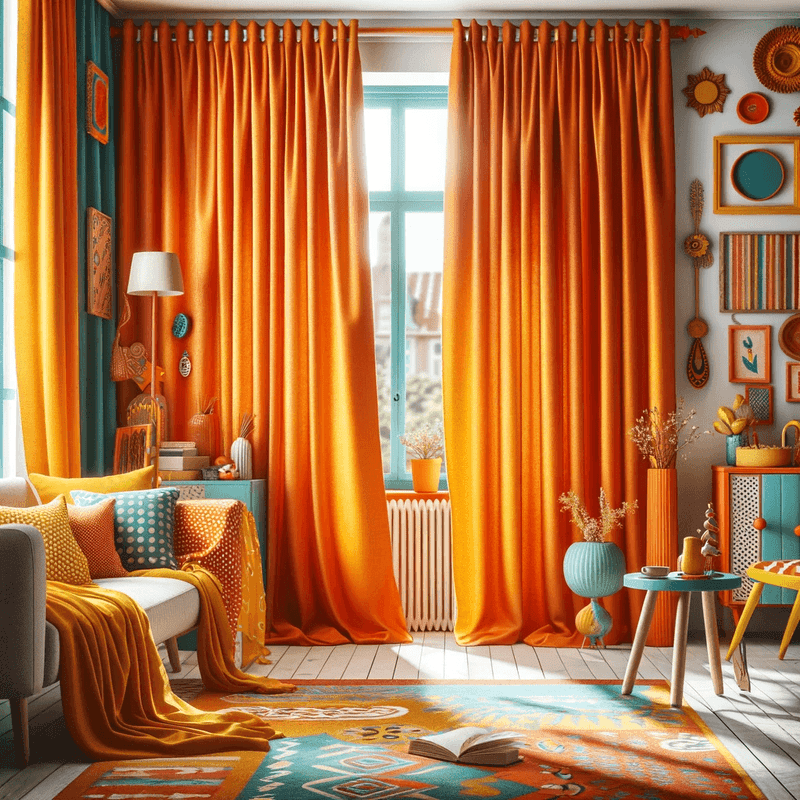
You can then choose cushions in complementary tones to create contrast, or in analogous shades (different hues of the same family) for a softer, monochromatic effect. The current trend favors earthy and natural palettes (terracotta, sage green, warm beige, ochres) mixed with touches of black for structure, or conversely, vivid contrasts between neutrals and a single saturated color like electric blue or bright red.
Regarding patterns, the essential rule is mixing scales. Always combine:
- A large pattern (wide stripes, large floral or geometric motifs).
- A medium pattern (small checks, polka dots, ethnic motifs).
- A solid textured piece (corduroy velvet, wrinkled linen, bouclé fabric).
Do not be afraid to mix styles: a tribal pattern can perfectly coexist with a nautical stripe and a solid velvet, provided they share one or two common colors. The eye needs these reference points to perceive the whole as coherent.
The Power of Texture: Creating Tactile Interest
Texture is the often-underestimated element that makes all the difference between a flat decor and an immersive one. How to arrange cushions so they are irresistible? By appealing to the sense of touch. Current trends celebrate natural, artisanal, and sensory materials.
Think about incorporating cushions in linen for its rustic, breathable look, woven cotton for its durability, or velvet for a touch of luxury and absolute softness. "Bouclé," "ribbed," or "cannelé" textures are also very popular, adding relief even on solid colors.
For maximum effect, combine at least three different textures in your arrangement. For example, a solid linen cushion, another in patterned velvet, and a third in knitted wool or embroidered cotton. This diversity creates visual and tactile richness that makes the space instantly warmer and more inviting.
Arrangement by Room: Techniques Adapted to Each Space
The way to arrange cushions varies significantly depending on the room and furniture involved. Here is a practical room-by-room guide.
On the Living Room Sofa
This is the main stage. Beyond the odd number rule, consider function. On a large corner sofa, you can create two distinct zones with groups of cushions. Always leave space to sit comfortably without having to move a mountain of accessories. A professional tip: gently pinch the center of square cushions to give them a more dynamic and lively shape, with "ears" on the sides.
On the Bed and in the Bedroom
Here, the composition is often more symmetrical and generous, evoking the idea of luxury and a hotel. For a double bed, start with the large sleeping pillows against the headboard. Layer two medium-sized square cushions (50x50) in front of them. On the front line, add a row of narrower, longer cushions (35x50 cm called "European") or round cushions. The trend is towards coordinated bedding sets with duvet covers and pillowcases matching the decorative cushions, creating a polished and cohesive look.
On an Armchair or Bench
For an armchair, one or two cushions are usually enough. Choose a format that complements the shape of the seat: a square or rectangular cushion for a straight-backed chair, a smaller cushion or a round one for a rocking chair. On a bench or window seat, align cushions of similar size for a graphic and orderly effect, or alternate sizes for a more relaxed look.
Current Trends to Follow (or Bypass)
The world of decoration is constantly evolving. In 2026, several trends influence how to arrange cushions. There is a strong attraction to organic and sculptural shapes, such as pebble-shaped, wave-shaped, or rounded-corner cushions, which soften the lines of an interior.
Maximalist and bold prints are also on the rise. Think large floral motifs inspired by the Baroque era, colorful stripes, or complex geometric patterns. They work perfectly in contrast with a neutral background.
Finally, personalization and craftsmanship are more valued than ever. Hand-embroidered cushions, unique patterns from small creators, or vintage fabrics give soul to your interior. In terms of colors, shades of green (sage, olive, mint) remain very popular, as do black and white combinations for a timeless graphic effect.
Frequent Mistakes to Absolutely Avoid
Even with the best intentions, certain faux pas can ruin the desired effect. Here are the pitfalls to avoid when learning how to arrange cushions.
- Overloading: Too many cushions kill comfort and aesthetics. You should be able to sit down without a major relocation effort.
- Total uniformity: All cushions identical in size, color, and texture create a flat and lifeless effect.
- Ignoring the scale of the room: Very small cushions on a huge sectional sofa will look lost, and vice versa.
- Neglecting maintenance: Wrinkled, misshapen, or stained cushions will ruin the polished ambiance you are trying to create. Opt for washable covers.
- Forgetting comfort: A purely decorative cushion that is too hard or poorly padded will always be relegated to a corner. Find a balance between aesthetics and feel.
FAQ: Your Questions on Cushion Arrangement
How many cushions should I put on a 2-seater sofa?
For a two-seater sofa, a composition of 3 cushions is often ideal. You can opt for two medium-sized square cushions (50x50 cm) in the corners and a rectangular or original-shaped cushion in the center. This provides enough decoration without encroaching on seating space.
Should I match the cushions to the sofa or the rug?
There is no absolute rule, but a good practice is to create a visual link with several elements in the room. Your cushions can pick up a secondary color from the rug, harmonize with the curtains, or contrast with the sofa color. The important thing is that they do not seem to have "arrived by chance." A cushion can bridge two color zones in the room.
How can I refresh my decor with cushions without changing everything?
Cushions are the perfect solution for a seasonal makeover or simply a fresh look. Just change the covers! Introduce fresher colors and light patterns (linen, white cotton, blue stripes) for summer, and opt for thicker textures and warm colors (burgundy, mustard, velvet) for winter. It is economical and radically effective.
Can I mix cushion shapes?
Absolutely, and it is even recommended! Mixing shapes (squares, rectangles, rounds, cylinders, round cushions) is a strong trend. It breaks monotony and adds a playful, contemporary note to your arrangement. Just ensure that the fabrics or colors create unity between these different shapes.
How do I choose the filling for a decorative cushion?
The choice of filling impacts the shape and feel. For back cushions on a sofa, a feather and down filling (or a blend) offers incomparable softness and a "draped" look, but requires regular fluffing. Synthetic fibers (polyester balls) are hypoallergenic, hold their shape, and are firmer, ideal for cushions that need to maintain a defined structure. For a floor cushion, opt for a very dense and firm filling.
Conclusion: The Art of the Finishing Touch
Knowing how to arrange cushions is much more than a simple matter of placement. It is an expression of your sensibility, a lesson in balance, and an opportunity to renew your interior at minimal cost. By mastering the principles of number, scale, color harmony, and texture mixing, you hold the keys to transforming any space. Do not be afraid to experiment, move, swap, and layer. Cushions are the perfect playmates for decoration. Let yourself be guided by your instinct and the desire to create a home that reflects you, a space where every detail, down to the last cushion, tells a story and invites relaxation.
To continue exploring the infinite universe of interior decoration and discover more expert tips to enhance your home, dive into the world of Ombre Intérieur. Our blog is full of ideas, practical guides, and inspiration for every room and every style. Your decorative adventure is just beginning. Discover the product Thick Velvet Non-Slip Sofa Cover for Cushions to finalize your decor. For more tips, discover how to decorate a bohemian living room with cushions on the blog. Find our entire decor universe at Ombre Interieur.
