













Curtain Decorating Tips: A Complete Guide to a Successful Project
Choosing a curtain is far more than a matter of fabric: it is a defining gesture for the atmosphere of your home. Between the pitfalls of measuring, the range of materials and the variety of hanging systems, the project can quickly feel overwhelming. Yet a few key principles will help you avoid mistakes and unlock the full potential of your windows. Let yourself be guided in transforming each room into a space that is both elegant and functional, where light and style are balanced with precision.
Curtains are much more than just a piece of fabric hanging from a rod. They are the guardians of privacy, the regulators of light, the amplifiers of acoustics, and, above all, major decorative elements capable of radically transforming the atmosphere of a room. Yet, choosing, hanging, and arranging curtains often feels like a puzzle. Between lengths, fabrics, hanging systems, and trends, it's easy to get lost. This article is your ultimate guide, detailing all the curtain decor tips to avoid common mistakes and ensure your project is a success. We will explore every aspect, from taking measurements to the art of layering, including current trends like textured sheers or original finishes.
The Perfect Measurement: The First and Most Crucial Curtain Decor Tip
A measurement error is irreparable and ruins the desired effect. Before even thinking about fabric, start with the tape measure. The golden rule is simple: to create an impression of height and elegance, you need to cheat with the dimensions.
Never fix your rod or rail flush with the window frame. For a theatrical effect and a room that appears taller, install your support halfway between the top of the opening and the ceiling, or even just 5 to 10 cm from the latter. Regarding width, the rod should generously extend beyond each side of the window (15 to 30 cm). This allows the curtains, once open, to completely clear the window and let in maximum light.
Length is a decisive aesthetic choice. Forget the curtain that just grazes the windowsill, except in the kitchen or bathroom for practical reasons. For a modern and clean look, opt for the curtain that falls just to the floor, skimming it by a centimeter. For a more romantic, bohemian, or luxurious effect, the puddling curtain is back. It extends 10 to 30 cm onto the floor, creating a lovely puddle. This curtain decor tip requires a fluid fabric and regular maintenance, but the effect is spectacular.
Choosing the Ideal Fabric: Between Function, Light, and Aesthetics
The choice of textile is the soul of your curtain. It influences light diffusion, thermal and acoustic insulation, and of course the overall style.
Sheers and Light Fabrics: Creating Softness and Filtering Light
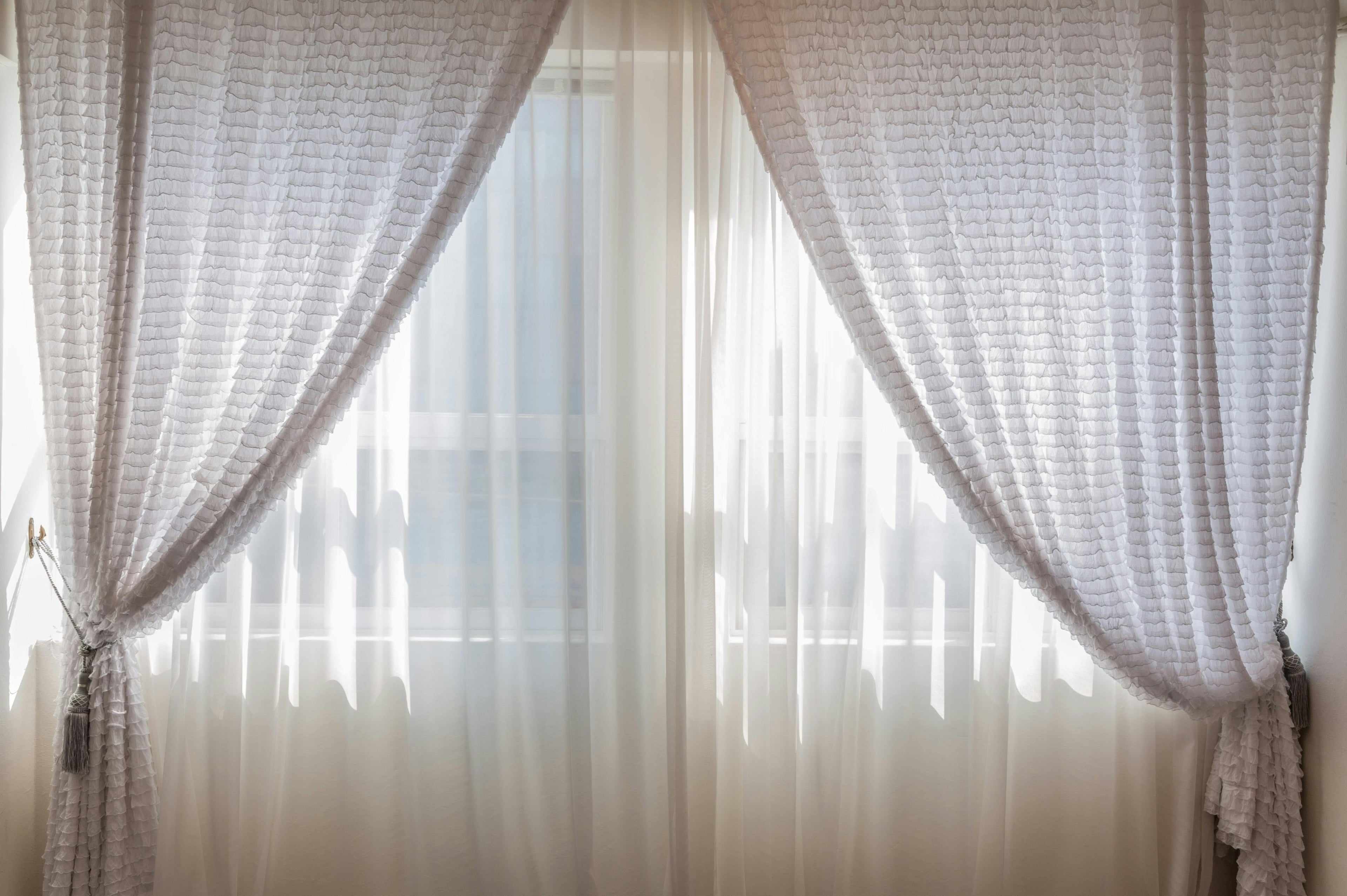
Essential for successful curtain decor, sheers in linen, cotton, fine polyester, or viscose diffuse soft light and preserve privacy without darkening. Current trends favor textures: raw linen with natural irregularities, embroidered sheer with subtle patterns, or textured tulle. They are perfect alone in rooms where maximum brightness is desired, or as an underlayer beneath thicker curtains.
Thick and Opaque Fabrics: For Privacy and Comfort
For the bedroom or home cinema living room, opacity is key. Velvet, very trendy, offers exceptional sound and thermal insulation and sumptuous zenithal light. Heavy cotton, jacquard, or linen blends also provide good blackout. A clever curtain decor tip: line a curtain with a blackout fabric for perfect sleep.
Patterned Fabrics: Dare to Add Personality
A patterned curtain can be the focal point of a room. The trend is towards large botanical motifs, vertical stripes to accentuate height, or stylized geometric patterns. The trick is to balance them with a more subdued rest of the decor. If the pattern is very prominent on the curtain, choose solid-colored furniture and walls.
Hanging Systems: The Curtain Decor Tip That Changes Everything
The way a curtain is hung greatly influences its final look. It's a detail that makes all the difference.
Sliding rings on a metal rod (black, brass, or copper) offer an industrial or modern Scandinavian look. They allow for smooth gliding and are very trendy. Grommet headings create regular, structured folds for a more contemporary effect. The grommet diameter should be in harmony with the rod size.
For a more classic, romantic, or formal style, pleated headings are essential. Pencil pleats (thin and straight) or pinch pleats (wider and rounded) give body and fullness to the fabric. They often require custom-made curtains. Finally, don't forget decorative tiebacks and hooks which can themselves become an ornamental element, especially if you choose to tie the curtain to the side.
Layering: The Ultimate Expertise in Curtain Decor
Layering is interior designers' technique for adding depth, texture, and light flexibility. This curtain decor tip involves combining several types of curtains on the same window.
The winning combination: a sheer fixed directly to the window frame (with a thin rod or tension wire), then a pair of thick curtains on a wider and higher rod. This allows you to play with light all day: the sheer alone for light privacy, the thick curtains drawn for the evening or a nap.
For an even richer effect, you can add a valance or a swag at the top. More subdued, the current trend is sheer-curtaining: layering two sheers of slightly different textures or colors for a subtle and ethereal play of transparency.
Colors and Prints: Playing with Space and Mood
The color of your curtains is a powerful lever to enlarge, warm, or soothe a room.
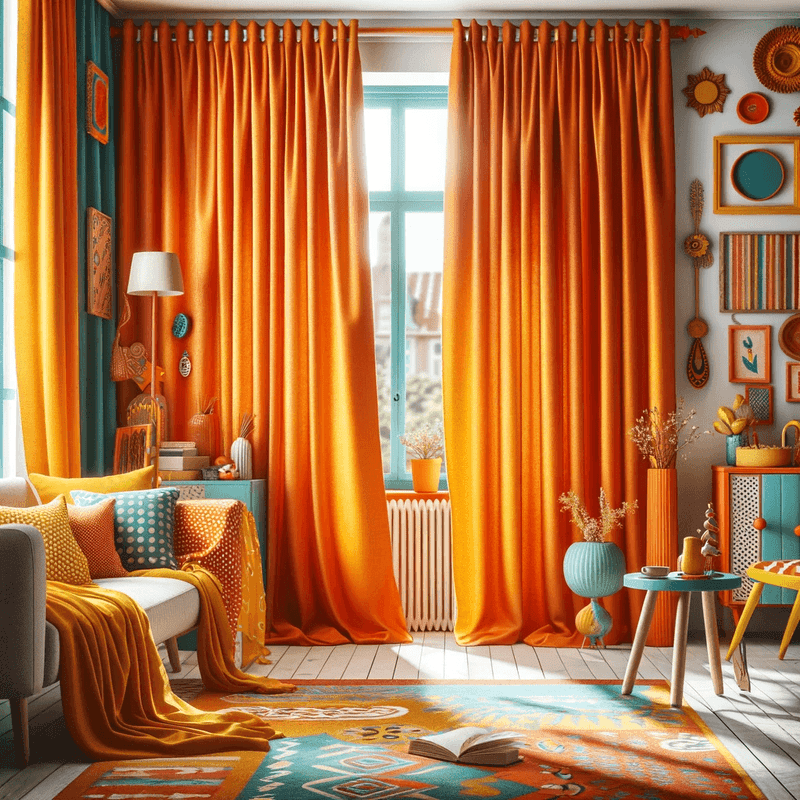
To visually enlarge a small room, the curtain decor tip is to choose a color close to that of the walls. A white or cream curtain on a white wall will create elegant continuity and fluidify the space. Conversely, a colored curtain in a contrasting or dark shade (navy blue, deep green, terracotta) on a light wall will draw the eye and can anchor a room that is too neutral.
Prints require boldness. A curtain with vertical stripes will accentuate ceiling height. A large-scale floral motif will bring a touch of indoor garden, very current. The important thing is to echo this motif elsewhere in the room, via a cushion, a vase, or a work of art, to create harmony.
Accessorizing and Tying: The Finishing Touches That Make the Difference
A curtain is not meant to always be drawn. The way you hold it open is a decorative opportunity.
Tiebacks (or holdbacks) are both functional and aesthetic. In metal (brass, matte black, copper), wood, or even braided rope, they allow you to drape the curtain elegantly to the side. For a casual look, a simple knot or a fabric strap wrapped around the curtain panel are charming curtain decor tips. You can also use large decorative clips or ribbons.
Beyond tiebacks, think about pom-poms, fringes, or tassels sewn at the bottom or sides of curtains to add a touch of craftsmanship and movement. These details are particularly effective on solid fabrics to enrich them visually.
Adapting the Curtain to Each Room: Room-by-Room Advice
Each space in the home has its own requirements for light, privacy, and style.
In the living room, prioritize elegance and modularity. The sheer + thick curtain layering is ideal. Noble fabrics like linen, velvet, or wool are perfect. This is the room where you can afford a puddling curtain for a dramatic effect.
In the bedroom, blackout is paramount. Opt for opaque and heavy fabrics, possibly lined. Soothing shades (gray-blues, sage greens, soft terracotta) or neutral tones are preferable. A practical curtain decor tip: café curtains (that lift) to clear the view in the morning without having to tie them back.
In the kitchen and bathroom, resistance to moisture and ease of maintenance are key. Polyester, coated cotton, or synthetic canvases are perfect. Prefer short lengths (to the sill) or Roman shades which are less bulky. In the bathroom, a thick sheer or a linen curtain preserves privacy while letting light through.
Current Curtain Trends
Interior decoration evolves, and curtains follow the movement. Here's what's most current.
Linen in all its forms is king. Its natural, irregular, and breathable appearance perfectly matches the search for authenticity and connection with nature. From natural linen to linen dyed in earthy tones, it adapts to all styles.
Raw finishes and visible hems are in vogue. We embrace the contrasting hem, the visible topstitching, even the frayed edge for an artist's studio look. This is a curtain decor tip that adds character and a touch of informality.
Natural and organic colors are replacing cold neutrals. Terracottas, ochres, moss greens, and clay blues are everywhere. They bring warmth and serenity.
Finally, the curtain as a room divider is a strong trend, especially in large volumes or studios. A large heavy linen curtain can delimit a sleeping area or a workspace in a flexible and poetic way.
FAQ: The Most Frequent Questions About Curtain Decor Tips
What is the ideal height to hang my curtains?
To create an illusion of ceiling height, hang your rod as high as possible, ideally 15-20 cm from the ceiling or halfway between the top of the window and the ceiling. Never flush with the opening. This is the simplest and most effective tip for a professional look.
Should I prefer short or long curtains?
Except for practical reasons (kitchen, bathroom), long curtains are almost always more aesthetic. A curtain that grazes the floor ("kiss" length) offers a modern look, while a curtain that puddles 10 to 20 cm ("puddle" length) brings luxury and romance. Always measure from the top of the rod to the desired point on the floor.
How to choose the necessary fabric width?
For a full and elegant curtain, even when closed, the total fabric width should be at least 1.5 to 2 times the width of your rod. For a more generous effect and more beautiful folds, you can go up to 2.5 times. A curtain that is too narrow will look skimpy and let strips of light through the sides.
Can I mix different curtain patterns in the same room?
Yes, but with a golden rule: balance. If you have a curtain with a large floral motif on one window, the other could be with thin stripes or solid. Link them with a common color palette. Avoid two large competing patterns that will create visual confusion.
How to maintain and wash my curtains?
Always check the care label. Synthetic sheers can often be machine washed on cold. Noble fabrics like linen or velvet may require dry cleaning. Remember to dust your curtains regularly with the brush attachment of your vacuum to avoid dust buildup. A curtain decor tip for linen: a light steam ironing restores its natural beauty without flattening it.
Conclusion: Dare to Personalize Your Interior with Curtains
Curtains are one of the last large-scale textile elements in our interior, offering a unique canvas to express our style. They require attention to detail – measurements, fabric, hanging, layering – but the effort is well worth it. By applying these curtain decor tips, you will move from a simple window covering to a full-fledged design element that structures the space, models the light, and dresses your home with personality. Don't be afraid to experiment with textures, puddling lengths, or original tiebacks. To discover more inspiration and practical guides to transform every corner of your home, explore without delay the many resources available on ombreinterieur.fr. Your interior deserves this spectacular finish. Check out our article which curtain for a French door to go further. Browse our online store to see all our collections.
Share
