














Enlarge a dark room: lighting and decor tips
A dark room is not merely a technical challenge; it reshapes how you perceive space and comfort. Without altering a single wall, you can redefine its volumes through a delicate interplay of light and colour. This illusionist’s game, where every reflection and hue matters, lifts the atmosphere, releasing the room from its heaviness. Let these insights guide you in unlocking your interior’s full potential, achieving a result that feels both luminous and serene. Each subtle shift in tone or gleam of surface becomes a quiet invitation to breathe more freely within your own home.
A dark room can weigh on the mood and create a feeling of suffocation, but it also holds incredible potential for transformation. The challenge is not just to bring in light, but to create an optical illusion that redefines the volume and atmosphere. Visually enlarging a dark room is an art that blends decoration strategy, technical choices, and color psychology. It's not about knocking down walls, but about using clever tricks to maximize light reflection, optimize space, and create visual fluidity. In this article, we will explore in detail all the methods, from the most classic to the most innovative, to transform your confined space into a haven of light and apparent grandeur.
Understanding the causes of darkness to act more effectively
Before starting any work or purchases, an accurate diagnosis is essential. A room can be dark for several reasons, often combined. Exposure is the main factor: a north-facing orientation, in France, receives soft but low-intensity light, especially in winter. The presence of external obstacles like a tree too close, a party wall, or a neighboring building can significantly reduce the supply of natural light.
Inside, the layout also plays a role. Windows that are too small, a room in a row without direct access to the outside, or a low ceiling height contribute to the cave-like effect. Finally, existing decorative choices – dark colors, bulky furniture, heavy fabrics – can absorb residual light and worsen the situation. Identifying the origin of the problem will allow you to choose the most effective and targeted solutions.
The liberating power of white and light tones
This is the absolute golden rule for enlarging a dark room. Light colors, and particularly white, have a very high albedo (reflective power). They reflect up to 80% of the light they receive, unlike dark colors which absorb it. Opting for a light palette on the walls, ceiling, and floors creates a homogeneous light box where shadows are softened and spatial boundaries become blurred.
Vary the shades to avoid coldness
A trap to avoid is creating a sterile and cold environment with pure white. The current trend favors warm whites and off-white shades. Think of whites tinted with beige, very pale gray (cloud gray), pastel blue, or water green. These hues preserve the reflective power while adding a touch of character and warmth. For the floor, a whitewashed parquet, a light carpet, or cement tiles in sand or milk tones will work wonders.
Create depth with a color accent
Contrary to popular belief, a touch of stronger color can serve the cause. Placed on the back wall in a rectangular room, a dark but saturated color (navy blue, deep green) can create a receding effect, making the wall appear further away than it is. This technique, used sparingly, energizes the space without darkening it.
Lighting strategies: creating light layers
In a dark room, a single central ceiling light creates harsh shadows and flat lighting. The key is layering multiple sources; this is called layered lighting. This approach models the space, making it more interesting and, above all, larger.
- General (ambient) lighting: Prioritize ceiling lights with wide diffusion or tracks with adjustable spotlights to cover the room uniformly. LEDs with a warm color temperature (2700K to 3000K) are ideal for welcoming light.
- Accent (task) lighting: These sources illuminate specific areas like a countertop, a reading nook, or a painting. Floor lamps, wall sconces, and directed recessed spotlights are perfect. They draw the eye and create points of light that animate the space.
- Ambient (decorative) lighting: This is the magical touch. A string of lights behind a piece of furniture, LED strips under a shelf, candles, or a Himalayan salt lamp add depth and a feeling of a luminous cocoon, visually expanding the boundaries.
Optimizing natural light: a game of reflection
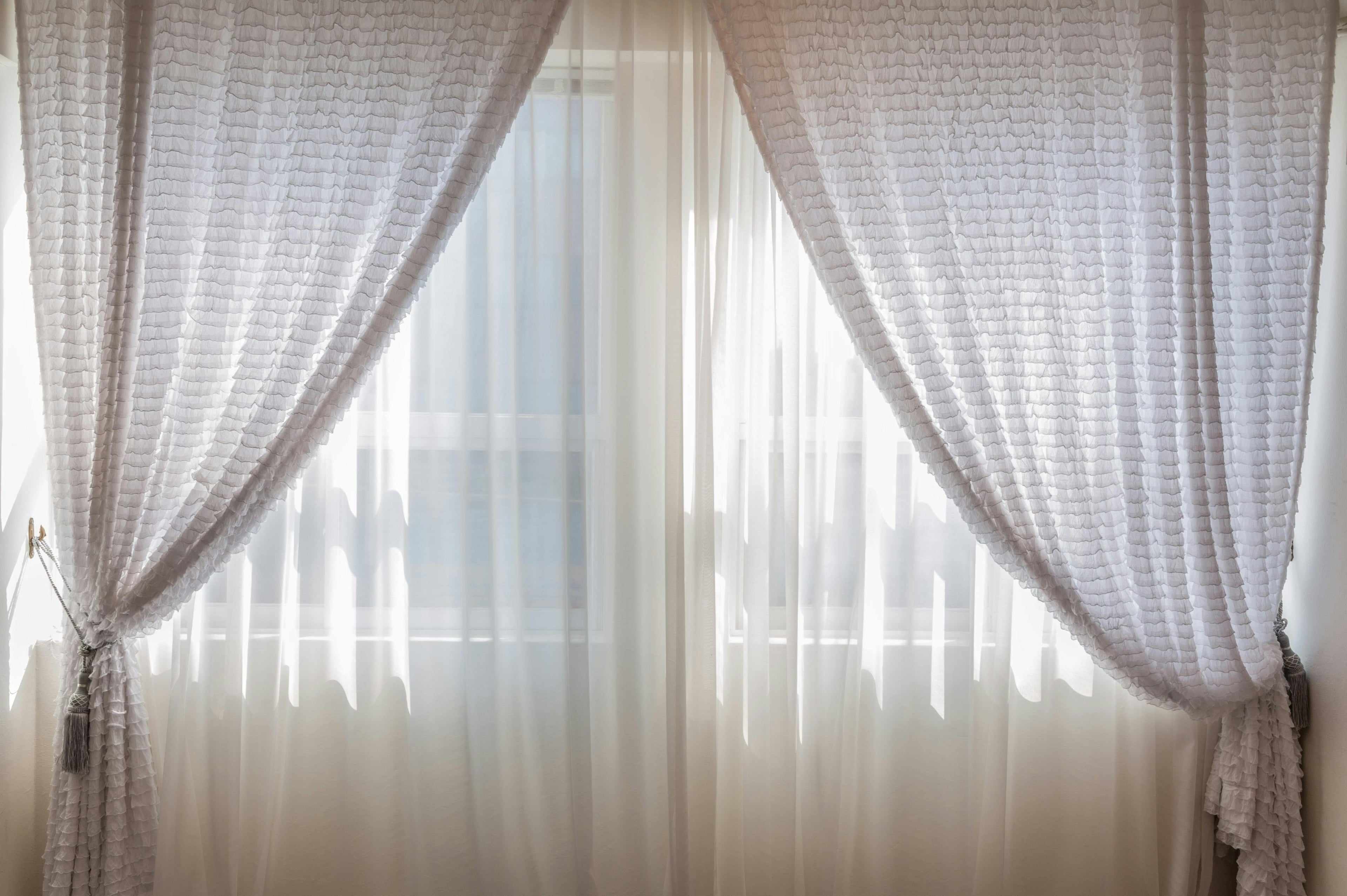
Maximizing every ray of sunlight is crucial. Start by completely clearing the windows. Replace thick curtains with light sheers, Roman shades in light fabric, or adjustable slat roller blinds that let light in while preserving privacy.
Use reflective surfaces strategically. A large mirror placed facing or perpendicular to a window will literally double the amount of natural light and the view to the outside, creating a spectacular illusion of openness. Furniture with lacquered or glass fronts, accessories in glass, polished metal (chrome, brass), or white marble also contribute to this light diffusion.
Finally, don't forget the glazed surfaces of doors. Replacing a solid door with a glazed door or adding a glazed transom above an entrance door allows light to circulate between rooms, unifying the space.
Furniture selection and arrangement: lighten to enlarge
In a dark room, every piece of furniture counts. The goal is to create an impression of lightness and fluidity.
- Prioritize furniture on legs: Sofas, beds, and dressers with visible legs let you see the floor and create a visual continuity that enlarges the space.
- Opt for clean lines and light materials: Avoid bulky furniture in dark wood. Prefer fine lines, materials like glass (coffee table), light rattan, or metal. The trend for furniture in transparent or translucent "shells" is perfect for this.
- Play with proportions and multifunctionality: A two-seater sofa instead of a three-seater, an extendable table, built-in floor-to-ceiling storage for a clean "wall" effect... Multifunctional furniture (bed with storage drawers, convertible table) reduces clutter.
- Free up corners and pathways: Leaving free space around furniture, especially near windows, is essential. An airy circulation gives an immediate feeling of grandeur.
Floor and ceiling coverings: extending perspectives
The floor and ceiling are the fifth and sixth walls of a room. Their treatments can literally raise the ceiling or lengthen the room.
For the floor, continuity is ideal. The same light covering in several adjacent rooms removes visual breaks and unifies the space. Parquet strips or laminate planks laid in the direction of the room's length guide the eye and lengthen it. Large-format tiles (60x60cm or more) with thin grout lines reduce fracture lines and create a more homogeneous surface.
For the ceiling, matte white is essential to reflect as much light from the lamps as possible. A clever trick: paint the moldings or cornice the same light color as the ceiling. This erases the sharp boundary between the wall and ceiling, making the latter appear higher. Avoid pendant lights that hang too low and crush the space.
The art of decoration: accessorizing with restraint and intelligence
Decorative overload is the enemy of small, dark rooms. Adopt a minimalist and curated philosophy.
Choose a few high-quality accessories rather than a multitude of small trinkets that create visual clutter. Prioritize reflective or luminous objects: a crystal vase, a metal frame, a zinc planter. Artworks with thin frames and light or bright colors can attract the eye and serve as a focal point without weighing things down.
Green plants are excellent allies. Their vitality contrasts with the darkness and adds a touch of freshness. Opt for varieties tolerant of low light like Sansevieria (mother-in-law's tongue), Pothos, or Zamioculcas, and display them in light-colored pots to enhance the luminous effect.
Architectural solutions and impactful renovations
If you are ready to undertake more significant work, certain transformations have a radical impact.
Opening a borrowed light window or a fanlight in a load-bearing wall (with an architect's approval) allows light from an adjacent, brighter room to enter. Installing a glass roof or an entirely glazed interior door separates spaces without blocking light.
For rooms under the roof, adding one or more skylights (Velux) is an extremely effective solution, bringing abundant and diffuse zenithal light. Finally, in some cases, creating an opening onto a hallway or enlarging an existing window (while respecting regulations) can completely change the game.
Current trends: innovations in the service of light
Interior decoration is evolving with ever more ingenious solutions. Phosphorescent paint or mirror-effect paint for ceilings is an emerging trend that allows for subtly capturing and releasing light. Wallpapers with very large patterns and pale colors can, unlike small patterns, enlarge the space.
Smart lighting management systems (home automation) allow you to program lighting scenarios that adapt to the time of day, maximizing comfort and the impression of space. The use of innovative materials like translucent resins for partitions or countertops diffuses light spectacularly.
FAQ: Your questions about enlarging dark rooms
Can a dark room be painted a dark color?
Yes, but with a very precise strategy. It is possible to use a dark, saturated color on a single wall (accent wall) to create depth, provided the other walls, ceiling, and floor are extremely light and the lighting is abundant. This is a technique for experienced decorators, best reserved for rooms whose architecture already has some character.
What type of curtains should I choose to not block light?
Roller blinds or Roman shades in a fine, opaque technical fabric are excellent. Otherwise, opt for double curtains: a permanent white sheer that filters light without obstructing it, paired with thicker curtains that you only draw at night. Choose light shades and light fabrics like linen, cotton, or viscose.
Are mirrors really effective? Where to place them?
Absolutely. They are the most powerful tool for optical illusion. Place a large mirror facing the main light source (the window) to reflect it. A mirror in a dark corner can also brighten it. To enlarge, a mirror covering the entire height of a wall gives an impression of double space. Avoid small mirrors scattered around which fragment the reflection.
How to light a narrow, windowless hallway?
Use linear lighting on the ceiling (integrated LED strips) to guide the eye. Wall sconces at mid-height, oriented upwards or downwards, create a grazing light effect that enlarges the walls. Mirrors facing each other at each end create an infinite visual effect. Choose very light colors and a glossy floor.
Are artificial plants a good option in a dark room?
They can be a stopgap to add a touch of greenery, but they don't offer the air-purifying benefits of real plants. If you choose them, opt for high-end silk models that are very realistic, and place them near an artificial light source to prevent them from looking dull and sad.
Conclusion: From cave to luminous cocoon
Enlarging a dark room is a holistic process that engages all the senses and all elements of decoration. It's not just a matter of white paint, but a symphony where color, light, furniture, and textures play in perfect harmony to deceive the eye and the mind. By applying these tips consistently – from the coat of paint to the last LED bulb – you will radically transform the ambiance of your interior. The goal is achieved when the room no longer "feels" small or dark, but presents itself as a soothing, welcoming, and generous space. To discover more inspiration and practical guides to reveal the potential of every square meter, explore without delay the many resources available on ombreinterieur.fr. Before choosing, browse how to fix a curtain rod on a wardrobe. Discover our entire decor universe on Ombre Interieur.
