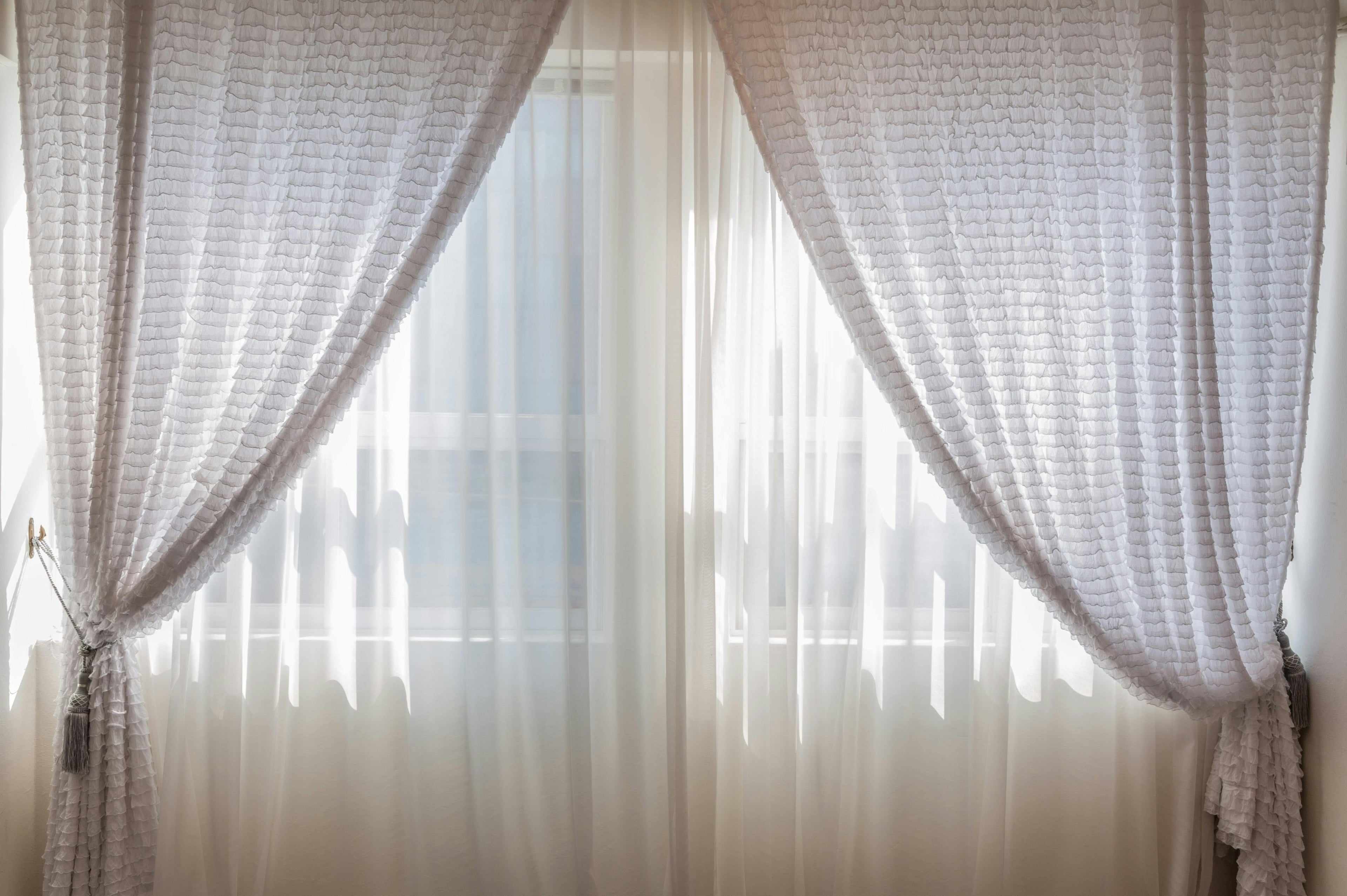
Fire-resistant curtains are essential safety elements in many public establishments (ERP), offices, hotels, and even some homes. Far more than simple decorative items, they act as a passive barrier against the spread of flames and smoke. However, like any textile, they accumulate dust, dirt, and odors over time. Cleaning them raises a crucial question: how to proceed without altering their fire-retardant properties, guaranteed by specific treatments and strict safety standards? Cleaning fire-resistant curtains requires a methodical and informed approach, as a mistake can render them ineffective in the event of a fire, with potentially dramatic consequences. This article guides you step by step, from preliminary precautions to suitable cleaning methods, including regular maintenance, to preserve both their aesthetics and, above all, their protective function. Understanding the Specific Nature of Fire-Resistant Curtains
Before considering cleaning, it is imperative to understand what makes these curtains so special. They are not simply made from a "magic" fire-resistant fiber. Their ability to slow the spread of flames most often comes from a fire-retardant treatment applied to a base fabric (polyester, fiberglass, cotton). This chemical treatment, which complies with standards such as NF EN 13773 or M1 in France, can be sensitive to aggressive cleaning methods.
Some high-end models are designed with inherently fire-resistant fibers, such as certain polyamides or wool, but these remain a minority. In all cases, the care label and the manufacturer's technical data sheet are your primary allies. They indicate the recommended cleaning method to avoid voiding the warranty and safety certifications. Ignoring these instructions means risking washing away, quite literally, the properties that make this curtain a safety device. Reading the Label and Consulting Manufacturer Data: A Non-Negotiable Step
This step is the cornerstone of the entire process. Never skip it. The care label, usually sewn on the back or side of the curtain, provides universal pictograms (washing, drying, ironing). For a fire-resistant curtain, it may also contain specific text mentions such as "Dry clean only" or "Do not use fabric softener."
Beyond the label, consult the technical documentation provided at the time of purchase. If you have lost it, contact the manufacturer or supplier, providing them with the product reference. They can confirm the authorized cleaning method. This precaution is especially important in a professional setting where compliance with fire safety standards is subject to regular inspections. A poorly cleaned curtain may be considered non-compliant during an inspection. Key Pictograms to Decipher
The circle: Indicates professional dry cleaning. A circle with a letter inside specifies the type of solvent allowed.
The basin with a hand: Gentle hand wash, generally at low temperature (30°C or 40°C max).
The basin with a number: Machine wash possible at the indicated temperature.
The crossed-out triangle: Prohibition on using bleach or any chlorinated agent.
The iron with dots: Allowed ironing temperature (one dot for low, two for medium, three for high).
Dusting and Regular Maintenance: The First Line of Defense
Regular, non-invasive maintenance helps space out deep cleanings, thus limiting wear on the fabric and treatment. For fire-resistant curtains fixed in place, the safest method is vacuuming. Use the soft brush attachment of your vacuum cleaner and gently pass it over both sides of the curtain, without vigorous rubbing.
For stubborn dust, a gentle shake outdoors can be effective. The idea is to remove dry particles before they become embedded. Absolutely avoid carpet beaters or any blunt object that could damage the fibers. This simple maintenance, carried out monthly or quarterly depending on the environment (proximity to a street, kitchen...), preserves the freshness of the curtains and reduces allergens. Professional Dry Cleaning: The Safest Option for Most Models
For the vast majority of treated fire-resistant curtains, professional dry cleaning at a dry cleaner is the recommended, even mandatory, method. Why? Because professionals use specific solvents (such as perchloroethylene or milder hydrocarbon solvents) and controlled cycles that clean deeply without immersing the fabric in water.
Immersion in water, especially hot water, and the mechanical agitation of a domestic washing machine are the main enemies of surface-applied fire-retardant treatments. They can partially or completely leach them out. When entrusting your curtains to a professional, explicitly state their fire-resistant nature. A competent dry cleaner will adapt their process and may, in some cases, perform a re-treatment after cleaning to restore protection, although this comes at an additional cost. Hand Washing: A Possible Alternative Under Strict Conditions
Some manufacturers allow a very gentle hand wash, particularly for curtains made of natural fire-resistant fibers or for localized soiling. This method requires great care. Prepare a basin of lukewarm water (never above 30°C) and use a mild, neutral detergent, such as pure Marseille soap or a special detergent for delicate fabrics. Absolutely avoid fabric softeners, perfumed detergents, or those containing aggressive bleaching agents.
Immerse the curtain and gently agitate the water with your hands to work in the soap. Do not rub, wring, or brush the fabric. Let it soak briefly (5 to 10 minutes maximum), then rinse thoroughly with clean lukewarm water until no more suds remain. Rinsing is crucial to remove any detergent residue that could attract dust later. Natural Drying: Patience is a Virtue
After hand washing (or even after dry cleaning where the curtain may be slightly damp), drying is a critical phase. Never use a tumble dryer. Intense heat and harsh agitation are harmful to both the fibers and the treatment. Hang the curtain on a drying rack in the open air, away from direct sunlight which could fade the colors.
Ensure it is spread out evenly, without deep folds, so it dries uniformly and avoids marks. If space is limited, you can hang it on its rod, but check that dripping won't cause a problem. Drying flat on a clean, dry surface, turning it regularly, is also an excellent option. Patience is key: natural drying can take 24 to 48 hours. Ironing and Re-Hanging
Once perfectly dry, the curtain may have creases. Ironing is possible if the label allows it. Always use an iron set to the lowest temperature suitable for the fabric (usually the "synthetic" or "silk" setting). It is highly recommended to use a pressing cloth (a fine cotton fabric) between the iron and the curtain to avoid direct contact and any risk of burning or shine.
Iron gently on the reverse side of the curtain. For hanging creases, it is often simpler and more effective to hang the curtain in place and let the weight of the fabric do the work over a few days. Once re-hung, check its proper operation (sliding on the rod, alignment) so it can fulfill its role as a fire barrier without hindrance if needed. Dealing with Specific Stains on a Fire-Resistant Curtain
In case of a localized stain (coffee splash, grease mark...), act quickly but cautiously. The principle is to avoid wetting or treating a large area unnecessarily. Start by gently blotting the excess without rubbing. Then test any product on a discreet corner of the curtain (e.g., near the hem) to check it doesn't discolor the fabric.
For a water-based stain, use a cloth dampened with lukewarm water and mild neutral soap. Dab from the outside towards the inside of the stain. For a grease stain, a little talc or Sommières earth applied in a thick layer can absorb the grease before localized cleaning. In all cases, avoid powerful commercial stain removers without the manufacturer's advice. If the stain persists, it is wiser to opt for professional dry cleaning, informing the cleaner. Verifying Fire-Retardant Properties After Cleaning
This question is paramount, especially in a regulated context. Unfortunately, there is no reliable home test. The only way to ensure the fire-retardant treatment is intact is to use a certified laboratory, which is costly and rarely done for a single plain curtain. Therefore, scrupulously following the manufacturer's instructions is your best guarantee.
In a professional setting, some cleaning service providers specializing in technical textiles may offer this check. Failing that, be extremely vigilant for signs after cleaning: has the fabric changed texture, become rougher or softer? Are there visible detergent residues? These signs may indicate alteration. If in serious doubt about the curtain's effectiveness after cleaning, replacing it is the most responsible option for people's safety. FAQ: Most Frequent Questions About Cleaning Fire-Resistant Curtains Can I wash my fire-resistant curtains in a washing machine?
In the vast majority of cases, the answer is no. The washing machine, even on a delicate cycle, combines immersion, mechanical agitation, temperature, and detergents that are very harsh on fire-retardant treatments. The label must absolutely be consulted. If it shows the machine wash pictogram, follow the instructions to the letter (temperature, low spin). But this authorization remains very rare. If the label is silent, consider machine washing prohibited. How often should I clean my fire-resistant curtains?
There is no universal rule, but maintenance adapted to the context. Regular dusting (every 1 to 3 months) is recommended. Deep cleaning (dry or hand wash) should only be done in case of visible soiling, stains, or odors, or every 2 to 3 years for normal use. In a dusty, smoky, or greasy environment (near a professional kitchen), the frequency will need to be increased. Are steam cleaning products suitable?
Steam cleaners are generally not recommended for treated fire-resistant curtains. Very hot steam can penetrate the fibers and potentially degrade the chemical treatment. Additionally, intense and prolonged humidity can promote mold growth on the fabric or the wall behind the curtain. It is best to stick to the methods recommended by the manufacturer. What if I have lost the care label?
Do not take risks. Your first step should be to contact the manufacturer or retailer. With the model reference or a photo of the fabric, they can often provide you with the instructions again. If this is impossible, opt for the gentlest and safest method: professional dry cleaning, informing the cleaner of the presumed fire-resistant nature of the curtain. This is the option with the least risk of irreversible alteration. Does cleaning void the warranty and certifications?
Yes, if it is not carried out according to the manufacturer's specifications. Safety certifications (NF, CE, etc.) are granted for a product maintained under specific usage and care conditions. Non-compliant cleaning can invalidate these certifications and any associated warranty. In a professional setting, this can also lead to non-compliance during fire safety inspections. Conclusion: Thoughtful Maintenance for Preserved Safety
Cleaning fire-resistant curtains is an operation that goes far beyond simple housekeeping. It is a maintenance act that involves the safety of property and people. The key lies in caution, following instructions, and prioritizing gentle methods. Professional dry cleaning remains the gold standard for preserving the integrity of the fire-retardant treatment. Regular vacuuming and prompt treatment of localized stains help space out these heavy cleanings. If in persistent doubt, do not hesitate to consult a specialist or consider replacing the curtain. Interior decoration must balance aesthetics and safety, and maintaining your technical textiles is an essential pillar. To discover more expert advice on designing and maintaining a beautiful and safe interior, explore the other resources available on ombreinterieur.fr without delay. Check out our article how to de-wrinkle blackout curtains to go further. Get inspired on our decoration website for your future projects.