














How to place a runner rug in the bathroom?
Long and narrow, a hallway runner might seem destined for the entrance alone. Yet slipped into your bathroom, it becomes a key ally for comfort and safety. Dampness demands precise choices: quick-drying fibres, a non-slip backing, and a placement that sidesteps puddles. This piece invites you to rethink how such a textile performs in a wet room, blending practical know-how with a deliberate decorative stance. The result is a simple gesture that softens your daily routine, adding both warmth and quiet style underfoot.
A runner rug brings style and comfort to your bathroom. Positioning it correctly is essential to combine aesthetics and functionality in this humid space. Discover our expert tips for choosing and perfectly installing your runner rug in the bathroom, transforming this everyday space into a pleasant and safe area.
How to choose the right runner rug for your bathroom?
Selecting the ideal runner rug for your bathroom begins with analyzing several essential criteria. Dimensions are paramount: precisely measure the available space between your sanitary fixtures to determine the optimal length and width.
The material is a determining factor in a humid environment like the bathroom. Prioritize options such as:
- Non-slip treated cotton, absorbent and easy to maintain
- Quick-drying polyester or microfibers
- Natural bamboo, moisture-resistant and antibacterial
- Vinyl or PVC, completely waterproof and ultra-resistant
The rug's thickness directly influences your comfort. A model around 1.5 to 2 cm thick offers a good compromise between softness and practicality, while drying quickly enough after use.
The best positions to install a runner rug in the bathroom
The strategic placement of your runner rug in the bathroom determines its effectiveness and longevity. Several configurations are available depending on the layout of your washroom.
Along the bathtub
Place the rug parallel to your bathtub, about 5-10 cm from the edge. This arrangement allows you to comfortably place your feet when getting out of the bath while preventing the rug from being constantly wet by splashes.
In front of the shower
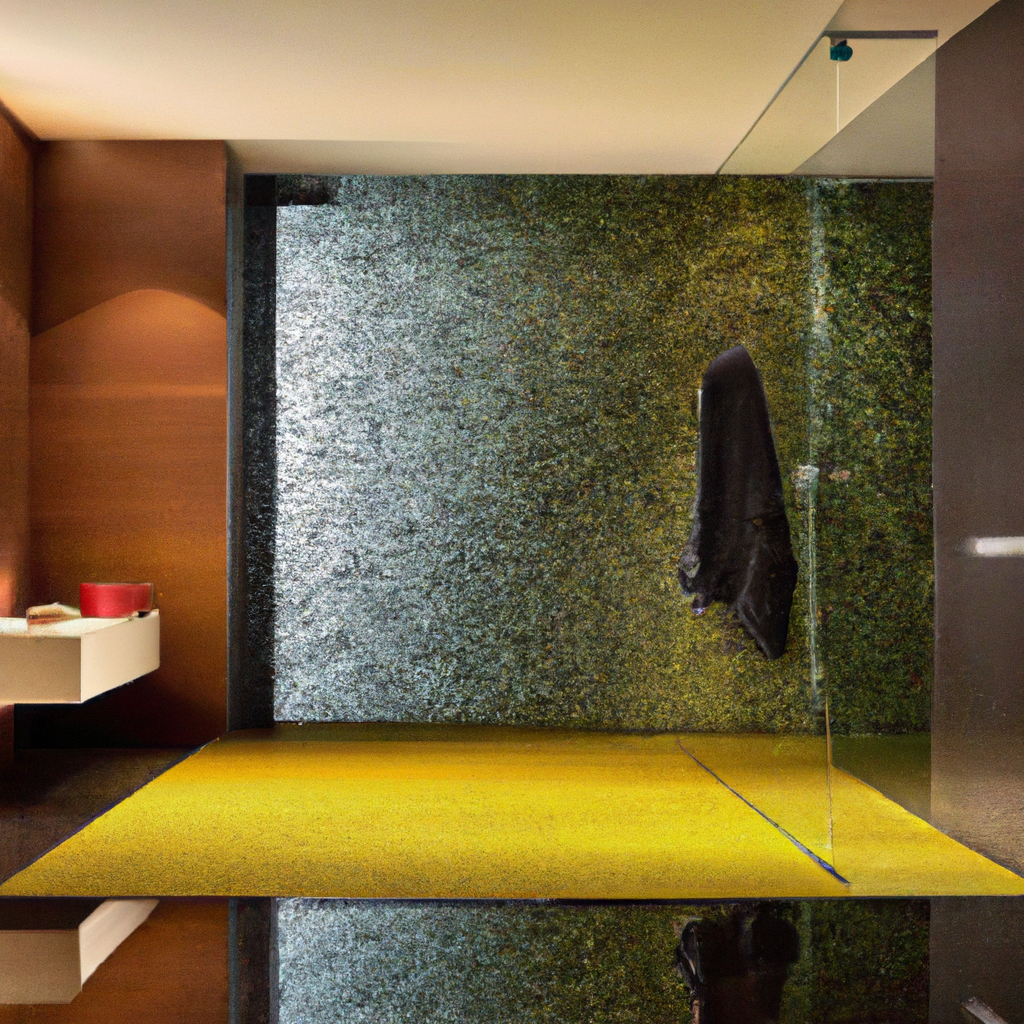
For a shower cabin or tray, position the rug perpendicularly to the opening, leaving a 5 cm gap. This configuration effectively absorbs water droplets while providing a comfortable surface to dry yourself.
In the central space
In spacious bathrooms, a runner rug can span the central area, visually connecting different elements (sink, shower, bathtub) while creating a practical and aesthetic pathway.
Installation techniques for a secure runner rug
Safety is paramount when installing a rug in a bathroom. Humidity increases the risk of slipping, especially for elderly people or children.
To ensure optimal attachment of your runner rug:
- Use a special non-slip underlay, cut to exact dimensions
- Opt for special bathroom double-sided adhesive tapes on the edges
- Choose models with integrated non-slip latex or rubber backing
- Install self-adhesive silicone pads under the corners and in the center
Regularly check the adhesion of your rug, especially after cleaning. A rug that starts to slip must be secured again immediately.
Matching your runner rug with bathroom decor
The visual harmony between your rug and the rest of your bathroom greatly contributes to creating a coherent and pleasant atmosphere. Several decorative approaches are possible.
Controlled contrast can energize the space: a rug in warm tones (terracotta, ochre, burgundy) brings warmth to a bathroom with cold tiles (white, grey, blue). Conversely, a rug in fresh hues (duck blue, sage green, pearl grey) balances intensely colored walls.
Coordination with existing textiles creates a soothing visual continuity. Match your rug with towels, shower curtains, or textile accessories for a harmonious and sophisticated effect.
Also consider the overall style of your bathroom:
- Contemporary bathroom: geometric rug with clean lines
- Nature ambiance: botanical patterns or natural materials
- Scandinavian style: minimalist rug in neutral tones
- Mediterranean decor: cement tile patterns or vibrant colors
Maintenance and durability of a bathroom runner rug
Regular maintenance of your runner rug is essential to preserve its appearance and properties in the humid environment of the bathroom. Appropriate cleaning significantly extends its lifespan.
Establish a weekly maintenance routine:
- Shake your rug outdoors to remove dust and debris
- Vacuum it on a gentle setting to remove embedded particles
- Allow it to dry completely after each shower, ideally suspended
For monthly deep cleaning, check the care label. Most bathroom rugs are machine washable at 30°C with a mild detergent. Avoid fabric softener, which reduces the absorbent properties of the fibers.
For non-machine washable rugs, hand washing with a solution of warm water and mild soap, followed by thorough rinsing, maintains their freshness. Always dry them flat to prevent deformation.
Alternatives and creative solutions for small bathrooms
Restricted spaces require adapted solutions to harmoniously integrate a runner rug without obstructing circulation.
In a narrow bathroom, opt for a thin and compact rug, strategically positioned in the most used area. A 50x120 cm model generally offers a good compromise between comfort and limited bulk.
Consider these creative alternatives:
- Modular rugs to assemble according to your needs
- Slatted floor tiles in wood or bamboo, space-saving and quick-drying
- Self-adhesive carpet tiles, to be placed only in strategic locations
- Foldable bath mats, to be stored after use
The use of well-placed mirrors and lighting around your runner rug can create an illusion of space and highlight this decorative element, even in a small bathroom.
Current trends in runner rugs for bathrooms
The latest trends in bathroom runner rugs combine contemporary aesthetics, advanced functionality, and ecological concerns.
Innovative materials are gaining popularity: ultra-absorbent diatomite rugs, memory foam models for exceptional comfort, or recycled fibers made from transformed plastic bottles.
In terms of design, several trends stand out:
- Minimalist geometric patterns in neutral tones
- Subtle gradients and watercolor effects evoking water
- Terrazzo inspiration with colorful speckles on a neutral background
- Three-dimensional textures creating plays of shadow and light
Multifunctional rugs integrating antibacterial, anti-mold, or even heated properties represent the future of this essential accessory in our contemporary bathrooms.
Share
