














Designing a long, narrow room: tips and advice
Does a long, narrow room feel impossible to tame? Yet this layout challenge holds rare decorative potential, provided you master its proportions. By playing with perspective, the rhythm of your furniture, and subtle divisions, you can transform this constraint into a striking asset. The goal is to create distinct zones without walls, ensuring fluid movement and visual harmony. Let yourself be guided towards solutions that turn your space into somewhere both functional and warmly inviting, where every inch feels intentional and the eye is drawn naturally from one area to the next.
Arranging a long, narrow room, whether it's a hallway, a rectangular living room, or an enfilade bedroom, presents an exciting decorating challenge. These spaces, often perceived as constraining, actually hold incredible potential when you know how to play with their proportions. The goal is not to fight against this elongated shape, but rather to embrace it and turn it into an asset: to create a fluid flow, intelligently split the space to accommodate several functions, and trick the eye for perfect balance. This comprehensive guide reveals all the strategies, from the broad principles of layout to the most subtle decorative tricks, to transform your long room into an interior that is both functional, aesthetic, and deeply welcoming.
Understanding the Dynamics of a Long Room: Challenges and Opportunities
Before moving the first piece of furniture, it is crucial to analyze the space. A long room has specific characteristics. The main risk is the "hallway" or "bowling alley" effect, where you feel like you're walking through a tunnel to reach the other end. Light can be unevenly distributed, leaving dark areas. The acoustics can also be particular, with reverberations.
But these challenges hide tremendous opportunities. A long room allows for a clear separation of living areas without physically partitioning them. It offers the possibility to create a journey, a narrative within your interior. By playing with perspectives, colors, and lighting, you can sculpt the space and give it a much richer dimension than a square room.
The Golden Rule: Break the Length to Create Rhythm
The fundamental strategy for arranging a long, narrow room is to break the visual vanishing line. It's not about putting up a wall, but about installing points of interest that capture the gaze laterally.
Create Distinct Functional Zones
Mentally divide your room into several virtual "rooms." In a large living room, this could be: a cozy conversation area near the fireplace, a dining or library area in the center, and a workspace or relaxation area at the other end. Each zone should have its own identity while conversing with the others.
Use Furniture as a Divider
A sofa with its back to the middle of the room, a low bookcase, a large screen, or a console with plants create a visual and physical separation without obstructing light. Double-sided furniture, like back-to-back benches or open shelves on both sides, are perfect for this use.
Strategic Furniture Layout: Winning Schemes
The classic mistake is to line up all the furniture along the long walls. This accentuates the hallway effect. On the contrary, you must dare to bring furniture closer to the center to create intimacy.
- The "L" or "U" Scheme: Arrange your sofa and armchairs at an angle or in a horseshoe shape, perpendicular to the long wall. This anchors a living area and creates an inward-facing conversation space.
- Perpendicular Placement: Orient the main furniture elements (sofa, bed, desk) perpendicular to the longest wall. This naturally divides the space.
- Central Islands: A large area rug, a coffee table, or an ottoman in the center of the room serve as a rallying point and draw the eye towards the middle.
- Mastered Symmetry: Create symmetrical pairs (two armchairs, two nightstands, two identical dressers) on either side of a central axis. This brings balance and solemnity.
The Art of Circulation: Designing Fluid Pathways
In a long room, circulation is paramount. You must avoid having the main passageway cut through the middle of each living area, which would be a source of discomfort.
Imagine "paths" at least 70-80 cm wide. These circulation routes should go around the living areas, ideally along the walls or passing between two furniture islands. Leave generous space around doors and openings. The goal is to be able to cross the room without having to weave between furniture or interrupt a conversation.
The Power of Colors and Materials: Playing with Perceptions
The color palette and choice of materials are your most powerful allies for shaping the space.
The Short and Long Walls Strategy
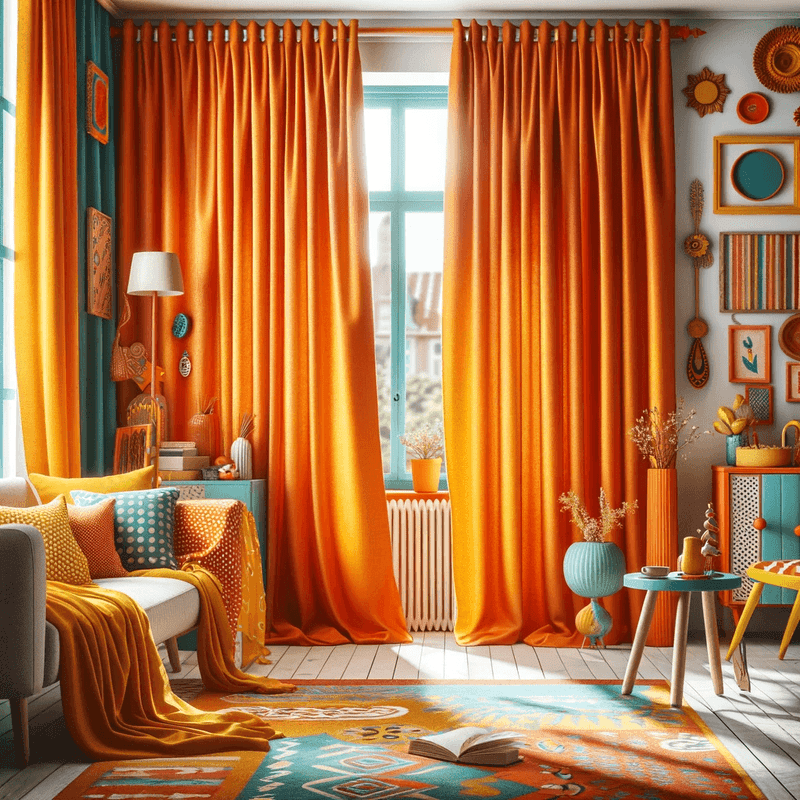
A proven technique is to paint the end walls (the short walls) in a dark, warm, or intense color. These so-called "advancing" colors have the optical illusion of bringing the wall closer, thus visually shortening the room. Conversely, the long walls can be kept in light, cool tones (white, pale gray, very light blue), so-called "receding" colors, which push them away and widen the space.
Create Focal Points
Use an accent color or a wallpaper with a pattern on a single wall (preferably a short wall) to create a focal point that stops the gaze. Vertical geometric patterns on a long wall accentuate height, while horizontal patterns can, when used sparingly, widen a narrow room.
The Play of Materials and Textures
Vary textures to add depth: a wool rug with a loop pile, velvet cushions, a raw wood wall, shiny metals. This tactile diversity slows down the gaze and enriches the perception of space.
Layered Lighting: The Key to a Balanced Ambiance
A single ceiling light in the center of the room is the worst enemy of a long room. It creates shadowy areas and reinforces the tunnel effect. Adopt the three-level lighting method.
- General Lighting (Ambient): Opt for several ceiling light points (adjustable spotlights, aligned pendants) or use wall sconces to diffuse soft, uniform light.
- Accent Lighting (Task): Light each functional zone independently. A reading lamp near the armchair, a ceiling light above the dining table, a desk lamp. This creates "pools" of light that define the zones.
- Ambiance Lighting (Decorative): String lights, LED strip lights along baseboards, candles, or floor lamps add warm, intimate light, ideal for softening the length and creating cozy corners.
The Choice and Placement of Textiles and Rugs
Rugs are magical tools for delineating spaces. In a long room, use several rugs of different sizes for each zone (a large one under the sofa, a round one under the dining table...). Avoid a single, narrow rug that would run the entire length.
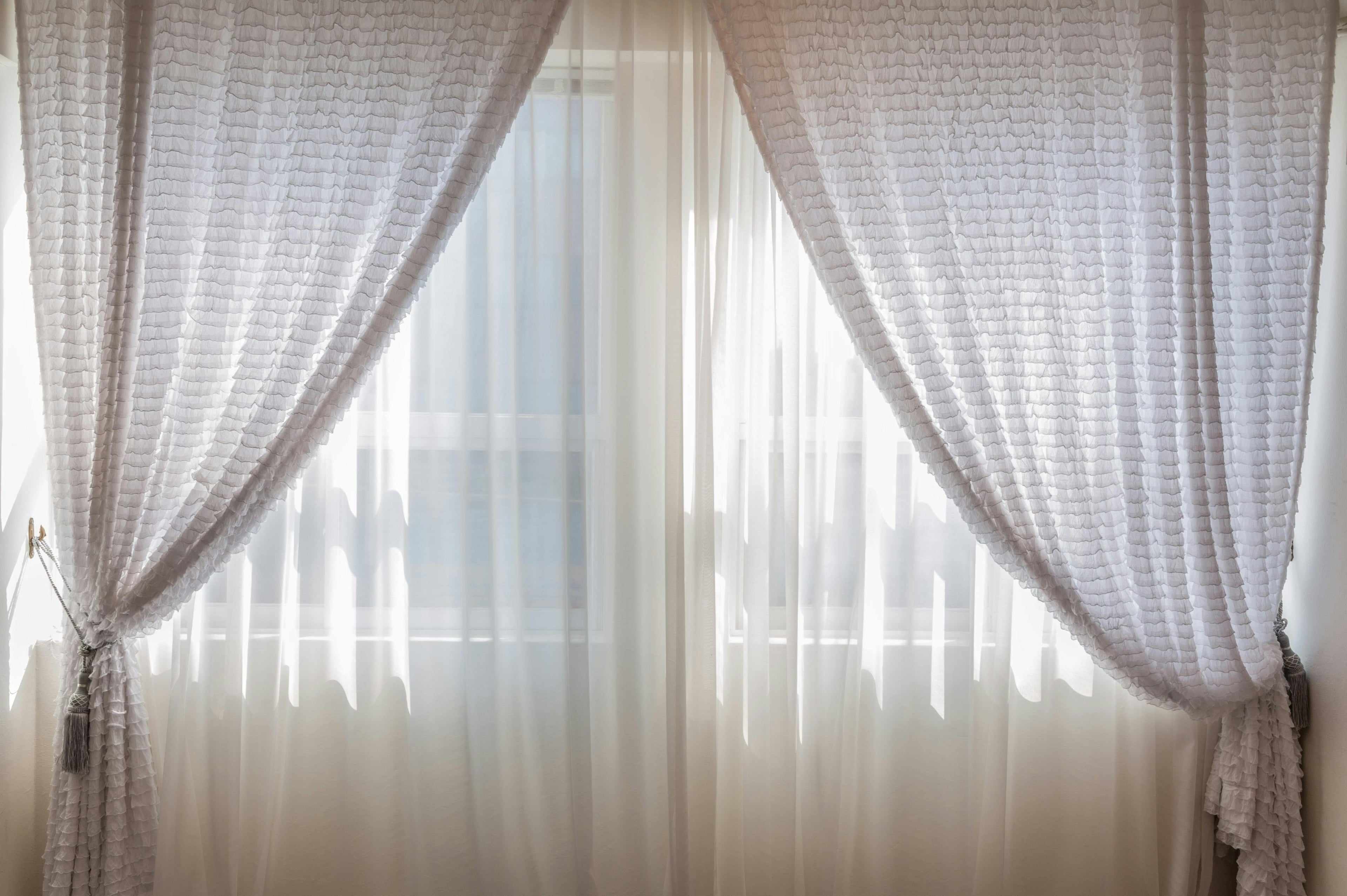
For windows, favor curtains hung high, right under the cornice, and falling to the floor. This visually increases the height of the room. Curtains placed across the entire width of a long wall, even if they only cover one window, can also give the illusion of a wider wall.
Optimizing Storage: Keeping it Light
Clutter weighs down and narrows a space. Storage in a long room must be smart and discreet.
Prefer low and long storage furniture (like storage benches or consoles with drawers) rather than tall, bulky cabinets that would block the perspective. Use height in moderation: open shelves going up to the ceiling on a short wall can be spectacular without cluttering. Light colors for large storage furniture help them blend into the walls.
The Impact of Mirrors and Artwork
A large mirror strategically placed is the best trick to enlarge and brighten a long room. Place it on a wall perpendicular to a natural light source (window) to reflect the light as much as possible. A mirror on a short wall gives an impression of infinite depth.
For artwork, avoid a gallery of small frames aligned along the entire length of a wall. Favor grouped compositions (gallery wall) on a section of wall, or a single large-format piece on a short wall to create a powerful visual stopping point.
Practical Cases: Arranging a Long Living Room, Bedroom, or Kitchen
The Long Living-Dining Room
Anchor the sofa perpendicular to the long wall, facing the fireplace or television. Behind the sofa, install a console that will serve as a separation with the dining area. For the latter, a rectangular table placed along the axis of the room or a round table to break the angles. Use two distinct rugs and two different lighting plans.
The Long Bedroom
Place the bed on the shortest wall, with the headboard against the wall. This frees up circulation space on the side. Create a dressing area or a small sitting area (armchair, coffee table) at the far end of the room, delineated by a rug and soft lighting. A low bookcase at the head of the bed can also serve as a soft separation.
The Corridor Kitchen
Opt for a "double line" layout (cabinets facing each other on the two long walls) or an "L" shape. Countertops and appliances should be distributed ergonomically. A central island can be a miracle solution to add countertop space and seating, while breaking the linearity. Light colors on walls and upper cabinets are essential.
FAQ: Your Questions on Arranging a Long Room
Should you absolutely avoid placing the sofa on the long wall?
Not necessarily. If your room is wide enough, a sofa on a long wall can work, provided you counterbalance it with armchairs or a bookcase placed perpendicularly opposite, to create a conversation space that "cuts" across the room. The important thing is not to leave a large empty space in the center.
What is the best color to enlarge a narrow, long room?
Light, neutral, and cool tones (off-white, very pale gray, ice blue) on the long walls give an impression of widening. Reserve more saturated colors, patterned wallpapers, or dark materials for the short walls, to visually bring them closer and balance the proportions.
How to handle multiple windows on a single long wall?
Treat them as a unified element. Install curtains across the entire length of the wall, even between the windows, to create a large visual bay window. Choose light sheer curtains to diffuse light throughout the room and avoid individual blinds that fragment the space.
Can you use horizontal striped patterns?
Yes, but with extreme caution. A thin horizontal stripe on a short wall can widen it. On a long wall, it risks accentuating the hallway effect. Prefer discreet vertical stripes to gain height, or use large-scale patterns (botanical, geometric) that distract the eye from the room's shape.
Is laying flooring in the direction of the length a mistake?
Traditionally, floorboards are laid in the direction of the length to accentuate the perspective. If you wish to soften this effect, you can opt for a perpendicular layout (across the long wall) or a herringbone pattern, which breaks the linearity and visually widens the space.
Conclusion: From Constraint to Signature
Successfully arranging a long, narrow room relies on a subtle balance between division and unity, between breaking the gaze and fluidity of circulation. By applying these principles – creating zones, placing furniture perpendicularly, playing with colors and layered lighting – you will transform what seemed like a difficulty into the very signature of your interior. A well-thought-out long room offers a journey, an experience, and a unique spatial richness. Don't be afraid to experiment, to move furniture around, and to listen to the sensations the space gives you. To discover more inspiration and practical guides on arranging specific spaces, explore without delay the many resources available on ombreinterieur.fr, your ally in creating an interior that reflects you. Check out our article how to install a curtain rod on a wardrobe to go further. Visit ombreinterieur.fr to explore the entire catalog.
