














Low ceiling decor tips: turning a constraint into an asset
A low ceiling may feel like a limitation, yet this architectural quirk holds unexpected potential for your home. Through clever optical illusions, colour choices and lighting, you can turn what seems a drawback into a charming asset, crafting an atmosphere that feels both spacious and deeply inviting. The aim is to rebalance the volumes so your eye lifts and the room breathes. Let us guide you toward ingenious solutions that make your low ceiling the starting point for a decor that is uniquely stylish.
Living under a low ceiling can sometimes feel suffocating, as if the walls are closing in. This architectural feature, common in older apartments, converted attics, or townhouses, is often seen as a major constraint. However, with the right low ceiling decor tips, this weakness can be transformed into a charming asset, creating intimate, cozy, and incredibly stylish spaces. The key lies in optical illusions and strategic choices that draw the eye upward and towards horizontality. This article is your complete guide to transforming a perceived limited volume into an interior that looks spacious and deeply welcoming. We will explore in detail painting techniques, strategic lighting, furniture selection, textiles, and accessories, so your low ceiling becomes the starting point for ingenious and trendy decor.
Understanding the Challenges of a Low Ceiling: The Psychology of Space
Before diving into solutions, it's crucial to understand why a low ceiling affects our perception. The human eye tends to measure a room's height by comparing vertical elements (doors, windows, furniture) to the ceiling line. When the latter is low, the scale seems off. The goal of decor tips for low ceilings is not to make it physically disappear, but to rebalance this perception. It's about creating vanishing lines, visually stretching the space, and diverting attention. Current trends, like the "cozy" style or snug atmospheres, even play in favor of rooms with modest height, enhancing their intimate and protective character. So, see this constraint as an opportunity to create unique decor, far from standardized volumes.
The Power of Paint: Vertical Lines and Light Colors
Paint is your most powerful and economical ally. It directly affects the perception of volume. The golden rule for a low ceiling is to visually lighten it.
Opt for a White or Very Light Ceiling
Painting the ceiling a glossy or satin white is an essential base. The glossy finish reflects more light, creating an impression of depth. Avoid dark colors or even pastel tones on the ceiling, which would have the effect of "weighing down" the room. For walls, favor light and cool shades (off-white, very pale gray, glacier blue, aqua green), which visually recede. A powerful trick is to use the same light color on the walls and ceiling, removing the demarcation line that accentuates the low limit. This technique, highly prized in contemporary decoration, blurs boundaries and gives a feeling of unity and expansion.
Create Vertical Lines with Paint
To guide the eye upward, nothing beats vertical stripes. You can paint subtle stripes, or opt for a more architectural effect with painted wall panels in a tonal scheme. A strong current trend is "vertical gradient" or "ombre" painting, where a dark color at the floor gradually lightens towards the ceiling. This sophisticated technique requires some know-how but its elevating effect is spectacular. Another idea: paint door frames and baseboards the same light color as the walls, to erase horizontal interruptions.
Strategic Lighting: Directing the Gaze and Creating Height
Poor lighting can crush a room, while well-thought-out lighting opens it up. The idea is to create light sources at different levels, avoiding overly low pendants that fragment the space.
Favor Recessed Spotlights and High Wall Sconces
Recessed spotlights in the ceiling (or on a track) are ideal because they illuminate without cluttering the volume. Distribute them evenly to avoid shadowy areas. Wall sconces positioned high on the walls are also perfect. Choose models with a vertical design and direct the light towards the ceiling. This "wash lighting" technique illuminates the ceiling surface and makes it appear higher and more ethereal. Floor lamps, like arc lamps or slender models, also allow you to create light points at eye level, diverting attention from the ceiling.
Avoid Massive Chandeliers and Pendants
Forget chandeliers with pendants or wide globes hanging in the middle of the room. If you absolutely want a pendant light, opt for a flat and horizontal model (tray style), very trendy in Scandinavian design, or for a thin and graphic wire pendant. The rule is simple: the more discreet and close to the ceiling the fixture is, the better. Ultra-flat ceiling lights are also an excellent modern alternative.
Furniture Selection: Low, Slender, and on Legs
Furniture is the centerpiece of your strategy. Poorly chosen furniture can obstruct the space and accentuate the problem.
Opt for Low Furniture with a Horizontal Profile
For a room with a low ceiling, favor low sofas and beds, wide dressers rather than tall ones, and coffee tables with thin tops. This "low-profile" furniture frees up air between its top and the ceiling, creating a precious band of visual space. The Japanese style or mid-century modern, with its clean lines and modest heights, is perfectly suited. Avoid tall and massive wardrobes; prefer storage systems integrated into alcoves or wall cabinets painted the same color as the wall, so they blend into the decor.
Choose Furniture on Legs and with Vertical Lines
The visibility of the floor is a key factor in the impression of space. Choose furniture on thin and tall legs (sofa on legs, dresser on stilts). This clear space underneath allows light to circulate and gives an impression of lightness. Similarly, favor furniture that incorporates vertical lines in its design, like a narrow and tall bookcase, or a vertical mirror. These elements structure the space upwards.
Mirrors: The Ultimate Weapon of Optical Illusion
The mirror is a magical tool for visually enlarging a room. But its placement is crucial.
Install a large vertical mirror on a wall perpendicular to the window. It will reflect not only natural light but also the perspective of the room, creating additional depth. A mirror placed from floor to ceiling (or almost) is extremely effective in giving the illusion of a double height. Mirrors with thin frames, or even frameless ones, are to be favored. Avoid small mirrors scattered about or frames that are too wide, which weigh down the walls. A current trend is the use of mirrors with original shapes (sun, waves) which, through their graphic design, attract the eye and contribute to the decor while fulfilling their functional role.
Textiles and Flooring: Stretching the Space
From the floor to the windows, every textile should contribute to the elevating effect.
Favor Vertical Blinds and Curtains
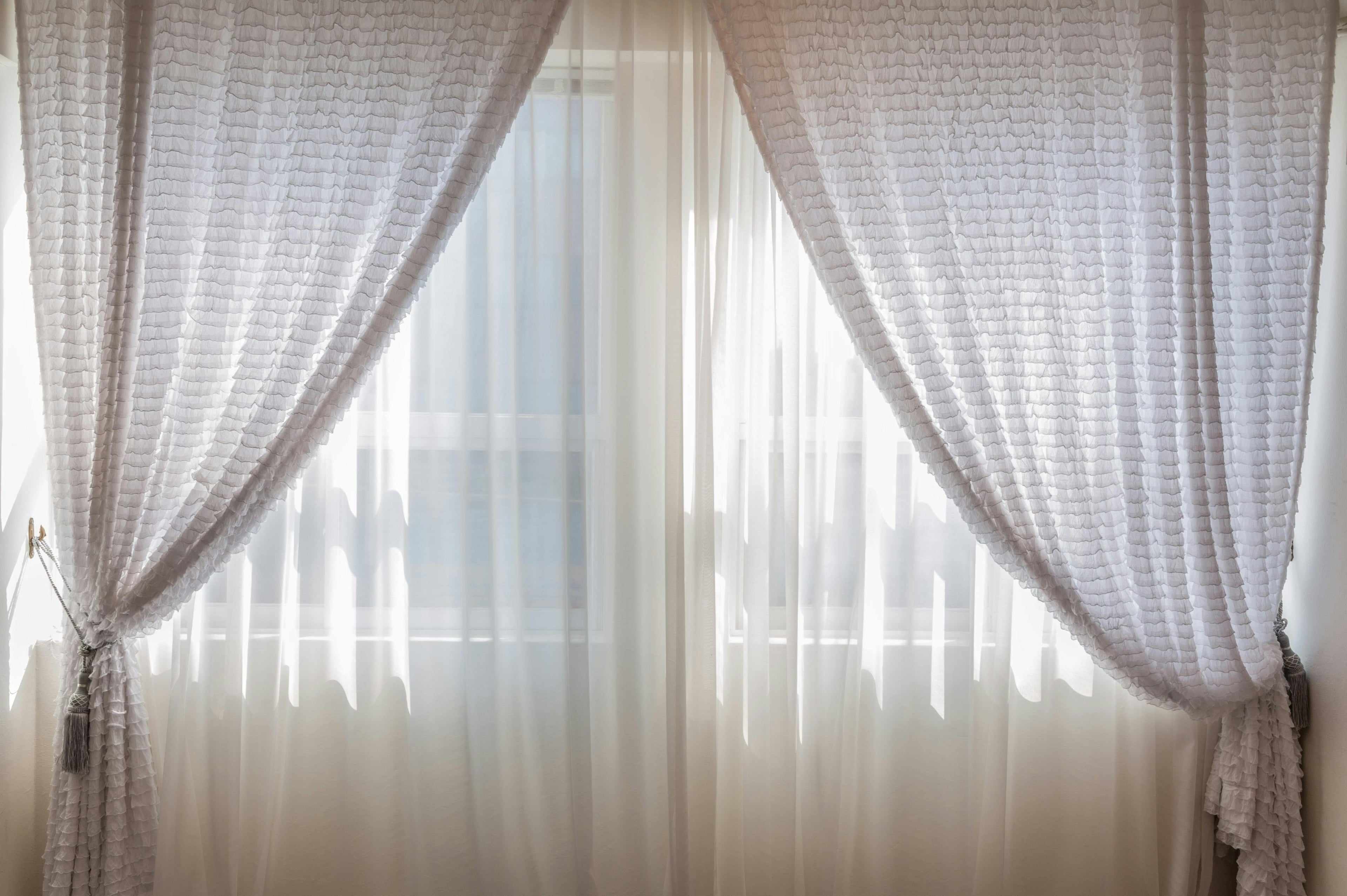
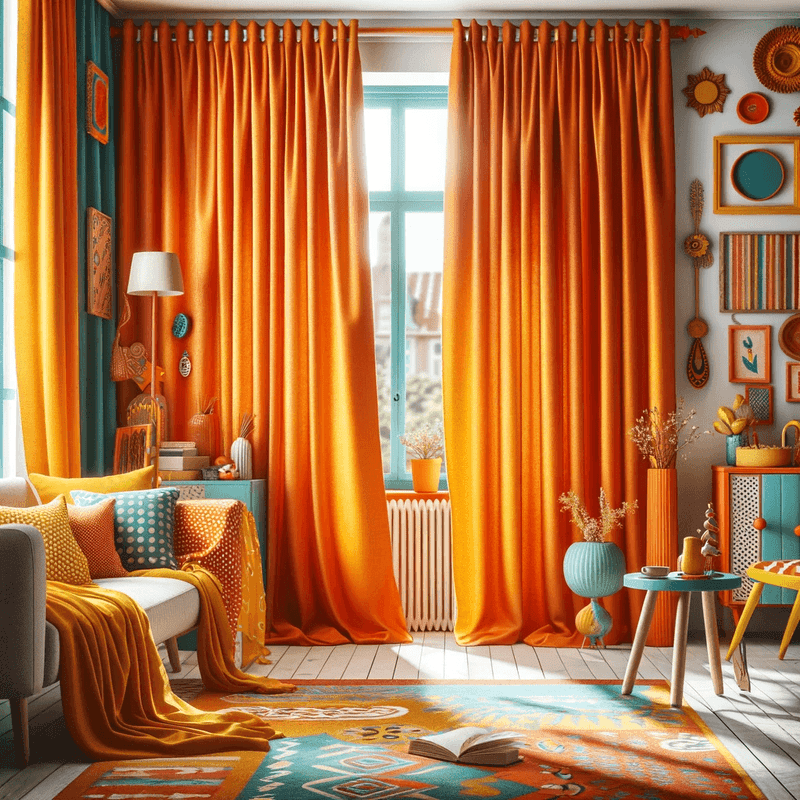
Forget short and stocky curtains. To enlarge a window and by extension the room, install your rods or tracks as high as possible, right under the cornice, and choose long curtains that fall to the floor. Curtains with subtle vertical stripes or solid colors, in a light material like linen, amplify this effect. Vertical blinds or Venetian blinds whose slats can be oriented are also excellent choices because they create clean vertical lines.
Choose Flooring with Elongated Patterns
For the floor, the goal is to create vanishing lines. Parquet laid in a herringbone pattern, especially if the planks are long and narrow, naturally guides the eye along the length of the room. A large rug with linear patterns or horizontal stripes can also help to visually widen the space. Avoid carpets with small, tight patterns, or round rugs that are too small, which fragment the floor.
Art and Accessories: Mind the Height and Simplicity
Wall decor and accessories are the finishing touch. An overloaded wall will crush the room.
Hang your paintings and artworks in a vertical format or create a vertical composition with several frames. Place the center of your composition at eye level, but don't hesitate to go quite high on the wall. Leave space between the works and favor thin frames. For shelves, install them high up rather than in the middle of the wall, and choose thin and long models. For accessories, focus on quality rather than quantity. A few slender vases, a green plant with vertical growth (like a sansevieria or a fiddle-leaf fig) on a stand, will help energize the space upwards without cluttering it.
Bad Ideas to Absolutely Avoid
Some solutions seem logical but produce the opposite effect. Avoid painting a dark ceiling to "make it disappear": in a low room, this creates an oppressive ceiling effect. Wide, horizontal moldings and cornices accentuate the low limit; if you have them, paint them the same color as the ceiling. Exposed beams, if they are dark, can fragment the space; paint them white to integrate them. Finally, don't overload the floor with too much furniture or rugs: floor visibility equals space.
FAQ: Your Questions on Low Ceiling Decor
What paint color is absolutely to be avoided for the walls of a room with a low ceiling?
Dark and warm colors (burgundy red, brown, dark orange) are the riskiest. They tend to visually "advance" and shrink the walls. If you love dark tones, reserve them for a single wall (the one farthest from the entrance) ensuring it is perfectly lit, and keep the other walls and ceiling very light.
Can you install a partition or a room divider in a room with a low ceiling?
Yes, but with extreme caution. Avoid solid partitions that cut off light and perspective. Favor openwork dividers (open shelves, thin screens, light curtains) or low furniture that serves as a boundary without obstructing the view. The idea is to preserve the fluidity of the space.
Are wallpapers a good idea?
Yes, provided you choose them well. A wallpaper with fine vertical stripes is a very effective classic. Small-scale, repetitive patterns (discreet botanical motifs, small dots) can also work if they are on a light background. On the other hand, avoid large, horizontal patterns or checks, which crush the room.
How to arrange a studio apartment with a low ceiling?
In a studio, fluidity is key. Use uniform flooring throughout the space. Delineate areas (rest, dining, work) with rugs of different textures but harmonious tones, and with lighting (bedside lamp, pendant over the table). Opt for a low sofa bed and integrated storage for maximum visual clarity.
Are plants recommended?
Absolutely, but choose plants with a vertical or trailing habit, and place them high up. A hanging planter with trailing plants (ivy, pothos) near a window draws the eye upward. A tall columnar cactus or a slender indoor palm adds life without cluttering the floor space.
Conclusion: Make Your Low Ceiling a Unique Decor Asset
Decorating a room with a low ceiling is not a limitation, but an invitation to be creative and ingenious. By applying these low ceiling decor tips, you will transform a perceived constraint into an intimate, warm, and decidedly stylish setting. Remember the fundamentals: lighten with color, elevate with light, elongate with furniture, and create illusion with mirrors. Every choice, from the flooring to the frame hung on the wall, should contribute to this impression of space and height. Your interior will gain personality and comfort. To discover more inspiration for arranging complex spaces and hundreds of decor ideas, feel free to explore the other articles and complete guides available on ombreinterieur.fr. Your home deserves to be a reflection of you, whatever its volume. Our Cosy Deco Curtains integrate perfectly into this style. Our guide what size mirror for the art deco hallway helps you make the right choice. Browse our online store to see all our collections.
Share
