















Tips to visually enlarge a room
Dreaming of a larger bedroom without embarking on major renovations? Optical illusion becomes your ally in transforming a compact space into a serene haven. Pale hues, thoughtful lighting and pared-back furniture are the keys to a subtle metamorphosis that invites relaxation. By playing with reflections and perspectives, your room gains both breadth and luminosity. Let these gentle strategies guide you as you rediscover your interior in a new light, where every detail contributes to a heightened sense of space, from the soft diffusion of morning sun to the quiet rhythm of shadows across a wall.
Feeling cramped in your bedroom? Do the walls seem to be closing in and space is lacking to breathe? Rest assured, there are a multitude of decorating tricks to visually enlarge a bedroom without touching the walls. Whether you have a small studio, a modest guest room, or a main room with awkward proportions, optical illusion is your best ally. This article is your complete guide to transforming a cramped bedroom into a spacious and bright haven of peace. We will explore, in detail, color strategies, the art of lighting, furniture choices, the tricks of mirrors and textiles, and many other techniques to create an impression of amplified space. Get ready to rediscover your interior in a new light, larger and more welcoming.
The Power of Light and Unified Colors
The first golden rule for visually enlarging a bedroom lies in the chromatic choice. Light colors, and particularly white, have the physical property of reflecting light. Unlike dark shades which absorb it, they create an impression of openness and immensity.
Opt for a monochromatic palette or very close shades on the walls, ceiling, and baseboards. This visual continuity removes the breaking points that compartmentalize the space. A white ceiling on colored walls can, by contrast, seem lower, thus reducing the ceiling height.
The Nuances That Make the Difference
Don't limit yourself to pure white. Off-whites, very pale grays, subtle beiges, or soft pastels (lavender blue, sage green, pale peach) add warmth without sacrificing brightness. The current trend favors "cocooning" atmospheres even in small spaces, thanks to these enveloping yet light hues.
To add depth, play with textures rather than contrasting colors. A lime-plastered wall, subtle textured wallpaper, or painted woodwork in the same tone create relief without enclosing the room.
Strategic Lighting: Banishing Shadowy Areas
A poorly lit room always appears smaller and sadder. To visually enlarge a bedroom, light must be abundant, soft, and multidirectional. The goal is to eliminate dark corners that "shorten" the walls visually.
Favor several light sources at different heights: a diffuse ceiling light (avoid aggressive direct spotlights), wall sconces to light up corners, floor lamps for ambient lighting, and bedside lamps. Articulated-arm floor lamps are perfect for directing light exactly where you need it.
Color Temperature, an Underestimated Ally
Choose warm white light bulbs (between 2700K and 3000K) for a welcoming ambiance. Lights that are too cold (cool white) can create a clinical and sterile atmosphere, not conducive to relaxation. Dimmable LEDs offer perfect flexibility to adapt the light intensity to the time of day.
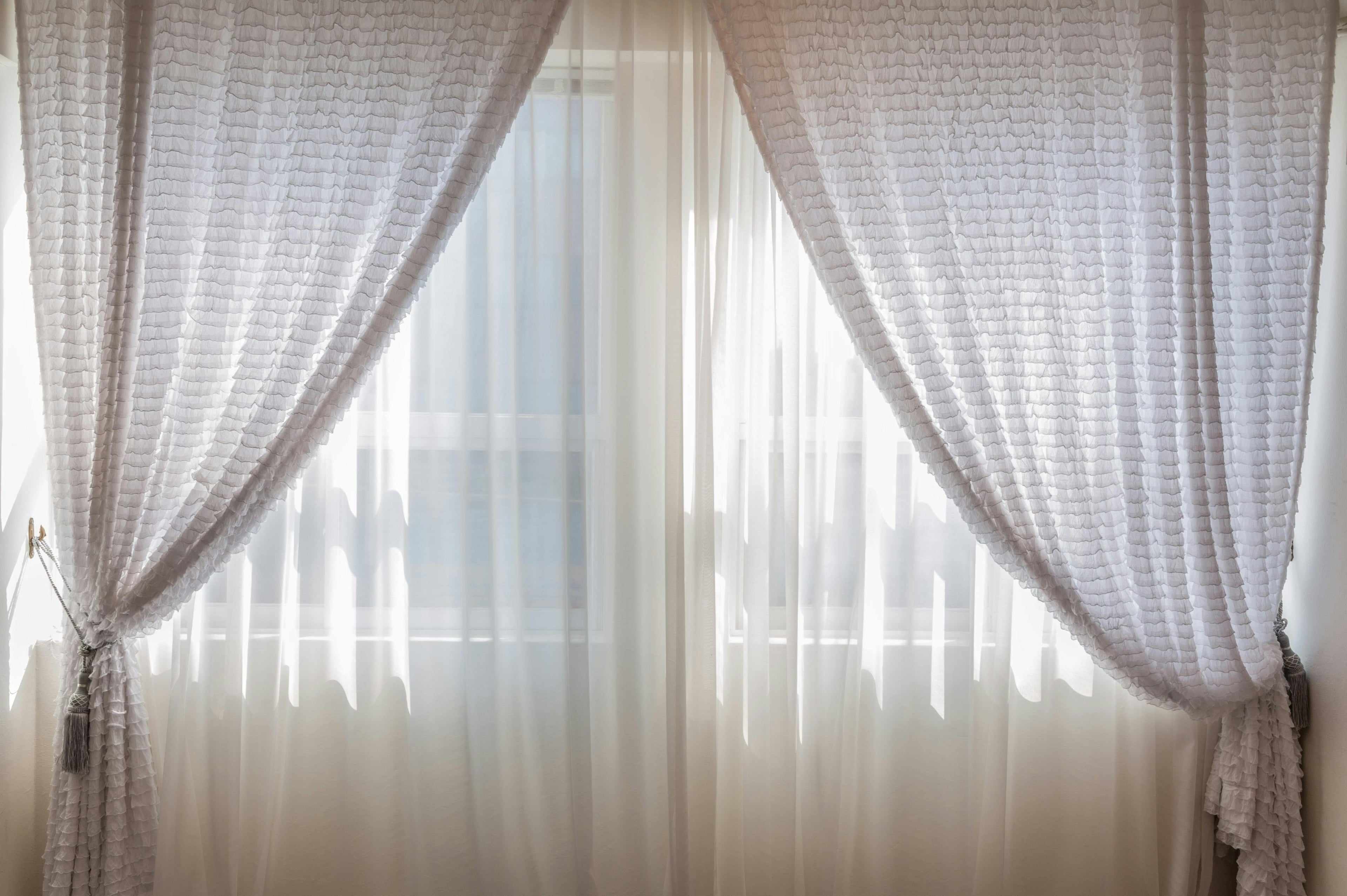
Don't forget natural light! Keep your windows clear and use light sheer curtains rather than thick, opaque curtains that block the entry of daylight, essential for giving amplitude to the space.
Custom Furniture with Clean Lines
The choice and arrangement of furniture are decisive. In a small bedroom, every piece of furniture must be justified and optimized. The trend is towards multifunctional furniture and clean lines that "breathe".
Prefer furniture with thin and elevated legs. The visible space between the floor and the bottom of the furniture creates visual continuity and lightens the mass. A bed with a visible-legged base will always appear less bulky than a bed with a massive storage chest sitting on the floor.
- The Platform Bed: A model without a bulky headboard, it frees up visual space on the wall.
- Floating or Thin-Stemmed Nightstands: They advantageously replace heavy furniture.
- The Dresser Rather Than the Wardrobe: If possible, favor a low and long dresser. It offers significant storage volume without obstructing the height of the room.
- Built-in Storage: The ideal is to use alcoves or create floor-to-ceiling built-in closets, painted the same color as the walls. They thus blend into the decor.
The Sacred Art of Mirrors and Reflective Surfaces
The mirror is undoubtedly the magical accessory to visually enlarge a bedroom. By reflecting light and space, it doubles the room in an illusory way. But its placement is a science.
Place a large mirror facing a natural light source (window) to capture and redistribute daylight throughout the room. A mirror placed perpendicular to a window will also have a remarkable enlarging effect.
Dare to use oversized formats: a mirror that rises almost from floor to ceiling creates an impression of an additional door or window. Mirrors with a thin frame, or even frameless, are to be preferred for a more contemporary and integrated effect.
Beyond Mirrors: Other Reflections
Incorporate other reflective surfaces: a glass nightstand, a crystal chandelier, metallic accessories (brass, chrome), or even a painting with a shiny gold frame. These touches subtly capture and disperse light, contributing to the opening effect.
The Strategy of Smart and Concealed Storage
Clutter is the number one enemy of small spaces. Every object left lying around reduces the available surface area visually. A bedroom appears larger when it is streamlined and well-organized.
Adopt a philosophy of vertical storage. Use the ceiling height with open shelves going all the way up, slender bookcases, or over-the-door clothing racks. Under-bed storage (integrated drawers or flat storage boxes) is an essential solution for seasonal linen or rarely used items.
- Decorative Boxes and Baskets: Standardize your open storage with identical boxes (in wicker, rigid cardboard) for an orderly and aesthetic look.
- The Murphy Bed: A radical solution for studios, it frees up floor space during the day.
- Declutter Regularly: The rule of "one item in, one item out" is valuable for maintaining an impression of space.
Unifying Textiles and Floor Coverings
The treatment of the floor and windows plays a key role in the perception of space. A continuous and light floor "stretches" the room.
Favor a uniform floor covering over the entire surface of the bedroom. A light-colored carpet in one piece, wide-plank flooring laid in the lengthwise direction of the room, or large rectangular-format tiles create guiding lines that direct the gaze and lengthen the space.
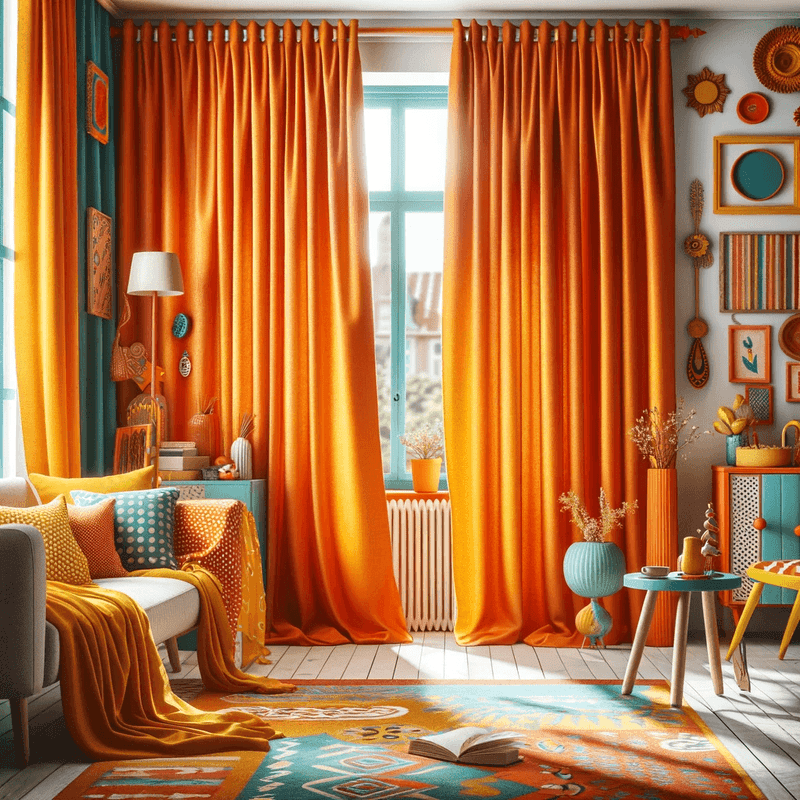
For windows, hang your curtains or blinds as high as possible, just under the cornice, and let them fall to the floor. This simple trick gives the illusion of a larger window and therefore a higher ceiling. Choose light and fluid fabrics like linen, voile, or cotton.
The Trick of Vertical Lines and Ceiling Height
Directing the gaze upward is a proven technique to elevate a room. Any vertical element attracts the eye towards the ceiling, creating an impression of volume.
Use wallpapers with very fine vertical stripes (be careful, stripes that are too wide can have the opposite effect). Tall and narrow bookcases, shaker-style paneled doors, or even simple wainscoting painted white can create this effect.
To accentuate the height, paint the ceiling moldings and door frames the same light color as the walls. Avoid pendant ceiling lights that hang too low and "break" the verticality; opt for flat or semi-recessed models.
Minimalist Decor and the Power of Empty Space
In a small bedroom, less is definitely more. A streamlined and carefully selected decor allows the space to breathe and the eye to rest.
Choose a few medium-sized artworks rather than a multitude of small frames that create visual clutter. Hang them at eye level to maintain a soothing horizontal line. Leave some "empty" wall areas; they are essential for giving an impression of space.
For accessories, favor quality over quantity. A beautiful vase, a sculptural lamp, or a rug with subtle patterns are enough to personalize the space without cluttering it. A rug of appropriate size (ideally, the feet of the main furniture should rest on it) anchors the space without fragmenting it.
Mistakes to Absolutely Avoid
Certain practices cancel out all the efforts made to visually enlarge a bedroom. Here is a crucial summary:
- Oversized and Too Many Pieces of Furniture: They obstruct circulation and crush the room.
- Dark Colors on the Walls: Unless perfectly mastered (a single accent wall, for example), they close in the space.
- A Single, Central Light Source: It leaves corners in shadow and flattens the room.
- Small Patterns on Large Surfaces: Wallpaper with small floral patterns can create a feeling of clutter and "stagnation". Prefer large, spaced-out patterns, or solids.
- Neglecting Circulation: Leave at least 60 cm of passage around the bed and furniture. A cluttered space always appears smaller.
FAQ: Your Questions on Visually Enlarging a Bedroom
What is the color that enlarges a bedroom the most?
White and all very reflective light colors (off-white, very pale gray, ice blue) are the most effective. However, the real trick lies in uniformity: painting the walls, ceiling, and baseboards the same light hue removes boundaries and maximizes the expansion effect.
Is a mirror facing the bed a good idea?
It depends on the configuration. If the mirror reflects a window or a light source, the effect can be excellent. However, simply reflecting the bed or a wall may not add much. The ideal is to position the mirror to capture the brightest or deepest part of the room to create perspective.
Are black furniture pieces forbidden in a small bedroom?
Not necessarily, but they must be used sparingly and strategically. A single black piece of furniture, with very fine and clean lines, can serve as a graphic element and visual anchor without weighing down the space. Avoid, on the other hand, complete sets of dark and massive furniture.
How to enlarge a bedroom with a low ceiling?
The goal is to attract the gaze vertically. Use tall and narrow storage, curtains from floor to ceiling, and paint the walls and ceiling the same light color to blur the boundary between them. Choose a low bed and avoid canopy beds or hanging lights that descend too low.
Are rugs recommended in a small bedroom?
Yes, provided they are chosen well. A rug that is too small "shrinks" the room visually. Opt for a rug large enough so that the feet of the bed and nightstands rest on it. Discreet patterns and light colors or tones matching your floor are to be preferred for harmonious continuity.
Conclusion: Your Spacious Bedroom Awaits
Visually enlarging a bedroom is an exercise in style and optimization that relies more on the psychology of perception than on construction. By mastering the levers of color, light, furniture, and reflections, you can radically transform the atmosphere of your sleeping space. It's not about throwing everything away, but about rethinking, organizing, and illuminating. Start by decluttering, paint your walls a unifying light shade, and introduce a strategic mirror. You will be amazed by the result. To discover more inspirations and precise advice on arranging small spaces, feel free to explore the other dedicated articles on ombreinterieur.fr. Your spacious, bright, and soothing bedroom is within reach. Before choosing, browse how to decorate a vintage bedroom with diffusers. Visit ombreinterieur.fr to explore the entire catalog.
