















How to divide a room in two: solutions and tips
Does your living room need a desk nook, your open-plan space a discreet guest area, or do you simply wish to reimagine the volumes within your home? Far from the notion of a dark, permanent wall, dividing a room in two has become a strategic and creative decorative gesture. From fixed structures to lightweight partitions, each choice shapes the light, privacy and flexibility of your daily life. Before you begin, let yourself be guided in turning this constraint into an opportunity that reinvents your living space.
Do you dream of creating a workspace in your living room, isolating a guest room in a large living area, or simply redefining the layout of your interior for more functionality and privacy? The question of how to divide a room in two then arises, opening up a field of possibilities far broader than a simple drywall partition. Today, partitioning is no longer synonymous with darkening or weighing down a space. Modern solutions prioritize light, flexibility, and aesthetics, turning a constraint into a decorative opportunity. This article guides you through all the methods, from the most permanent to the most reversible, to divide your space with intelligence and style.
Whether you are a tenant looking for a non-invasive solution or a homeowner ready for more structural work, there is a multitude of options. We will explore in detail fixed partitions, lightweight separations, zoning tricks without construction, and current trends like living walls or glass partitions. The goal is to provide you with all the keys to make an informed decision, taking into account acoustics, natural light, budget, and of course, the desired effect on your interior decor.
Why Partition a Room? Analyze Your Needs Before Starting
Before choosing your technique, it is crucial to precisely define the objective of this division. A partition installed on a whim can distort the space. Ask yourself the right questions: Is it about creating total privacy (for a bedroom) or simply visually delimiting two zones (a dining area from a lounge area)? Is the issue of soundproofing paramount, for example for a home office or a child's room? Do you need to preserve or redistribute natural light?
The answers to these questions will radically guide your choice. A simple open bookshelf will create a light visual separation, while a plasterboard partition with integrated insulation will be necessary to dampen noise. Also consider the frequency of use of the created space. An occasional guest room can be delimited by a curtain or a sliding panel, freeing up the space the rest of the time.
Fixed Partitions: The Permanent and Insulating Solution
For a definitive and high-performance division, fixed partitions remain the benchmark. They offer true privacy and excellent performance, particularly acoustically.
The Plasterboard Partition (BA13): The Most Common
Drywall, or plasterboard, is the king of materials for quickly erecting a new wall. Mounted on a metal frame, it can be single (for a simple separation), double with an air gap (for better insulation), or even filled with mineral wool for sound and thermal insulation. Its advantages are numerous: a perfectly smooth surface ready to paint, the possibility of integrating electrical outlets and switches, and relative ease of installation for a skilled DIYer. It is the ideal solution for dividing a room in two in a lasting way, such as transforming a large studio into a one-bedroom apartment.
Brick Partitions (Plaster, Glass, Cellular)
For a more authentic character or superior performance, lightweight masonry materials are excellent. Plaster bricks, lightweight and insulating, are perfect for interior separations. Glass bricks, on the other hand, are experiencing a meteoric resurgence. They allow partitioning while letting light filter through, creating magical plays of shadow and reflection. Ideal between a kitchen and a living room, they preserve brightness while clearly delimiting spaces. Plaster block partitions (like Fermacell) offer great solidity, good acoustic inertia, and appreciable fire resistance.
Mobile and Lightweight Separations: Flexibility and Lightness
Are you a tenant, or do you like to regularly change the layout of your interior? Mobile and reversible solutions are made for you. They provide an elegant and flexible answer to the question of how to divide a room without heavy construction.
Sliding Panels and Partitions
True elements of interior architecture, sliding panels transform the space in an instant. Whether made of solid wood, lacquered, or with inserts of fabric or glass, they glide on a discreet rail to open or close a room on demand. Perfect for isolating a bedroom at night in a studio, or hiding a messy office when guests arrive. Models with frosted glass panels preserve maximum brightness.
Curtains and Sheers
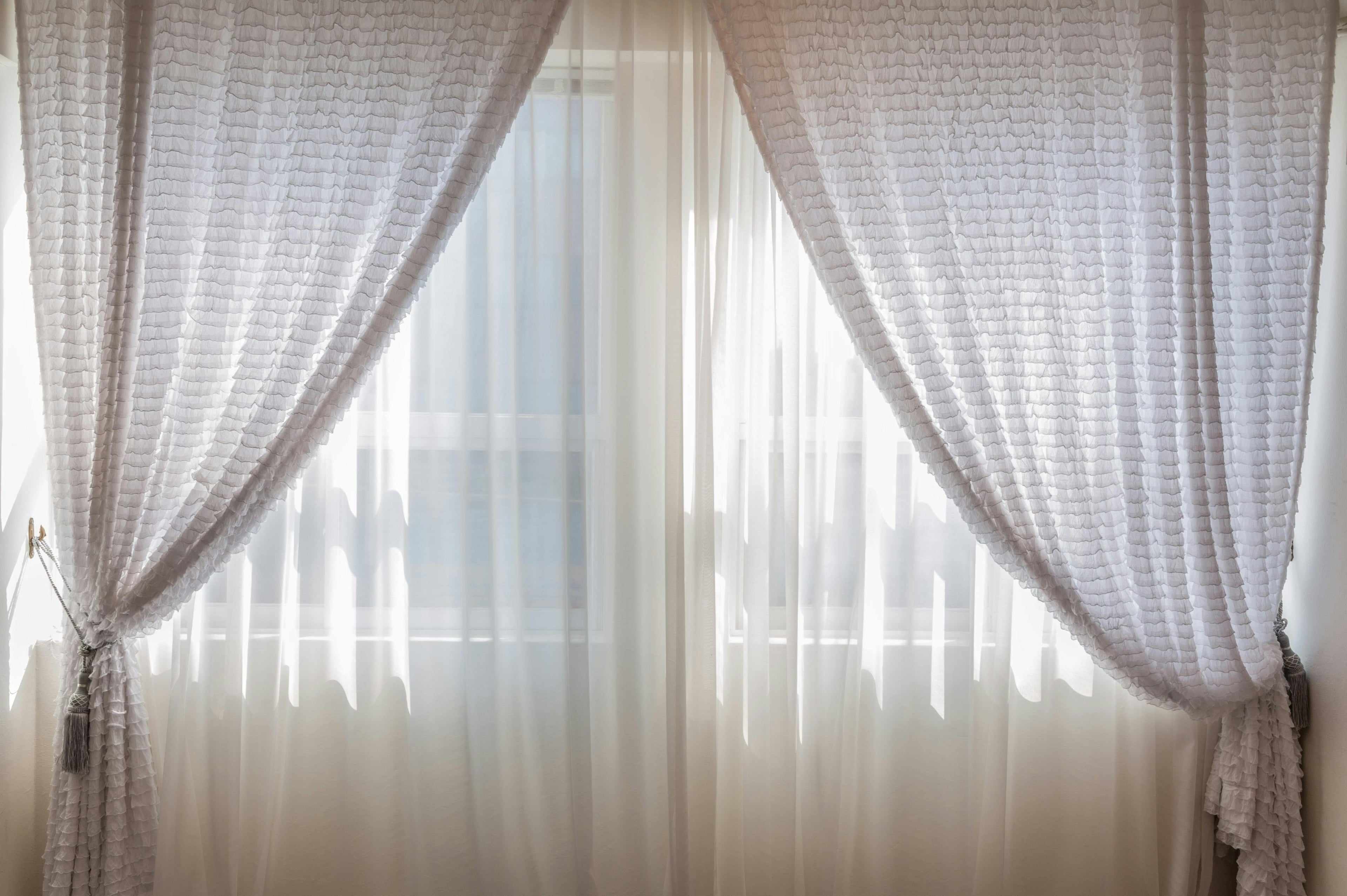
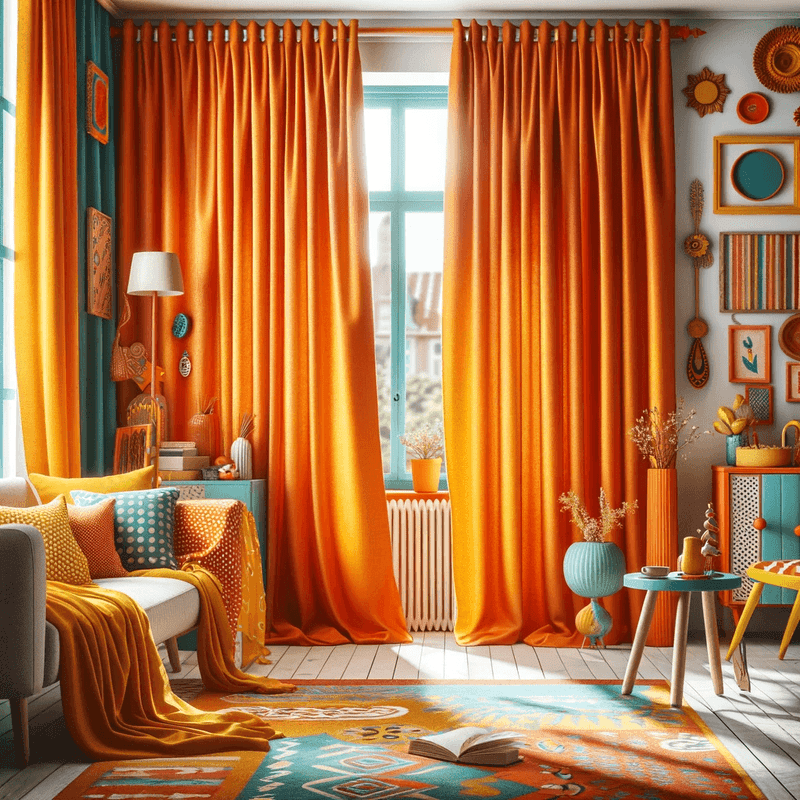
The most economical and poetic solution, the curtain is a partition for a moment. A rail on the ceiling, a beautiful thick fabric (velvet, linen, wool) for privacy and acoustics, or a light sheer for a simple visual delimitation, and the job is done. This trick is particularly trendy for creating a cozy alcove around a bed or delimiting a dressing room. The effect is soft, graphic, and completely reversible.
Japanese Screens or Louvered Panels
Inspired by traditional shoji, these partitions composed of several panels linked together bring a touch of purity and zen. Their adjustable louvers allow for fine modulation of privacy and light. In wood, PVC, or aluminum, they adapt to all styles, from Scandinavian to contemporary.
Partitioning with Furniture: Clever and Functional
Why build a wall when a piece of furniture can do the job? This approach is doubly winning: it creates a separation and offers valuable storage space.
Open bookshelves or design shelves are the queens of this category. Placing them perpendicular to a wall, they split the space without visually obstructing it. The displayed objects, books, and plants contribute to the decoration. For more privacy, opt for a bookcase with doors or drawers on one side. Large low furniture like a long console or back-to-back sofas can also serve as a natural boundary between a living room and a dining room, while remaining convivial.
Tall storage units like wardrobes or dressing rooms become true functional walls. This is an ideal solution to create an entryway in a studio or isolate a bedroom corner. Choose models with finished backs on both sides for an aesthetic result from both sides of the partition.
Living and Natural Partitions: A Trend That Breathes
Bringing nature indoors is a major trend, and it also applies to space separations. A living wall or a wall of plants creates a living, soothing, and extraordinarily decorative separation. It improves air quality and room acoustics. Several options exist: a modular structure with potted plants, an integrated irrigation system for a stabilized living wall (less maintenance), or simply a series of large aligned potted plants (like tree ferns or monstera).
Partitions made of natural wood (slats, lattice, branches) follow the same spirit. A separation with spaced wooden slats, like a privacy screen, filters light and creates shadow plays while letting air circulate. It's a warm and textured solution, perfect for Scandinavian, Japanese, or bohemian atmospheres.
Preserving Light: Transparent and Translucent Partitions
The main pitfall of a partition is cutting off light. Fortunately, luminous solutions literally exist. Glass is your ally. An entire panel of tempered (safety) glass or a large fixed glass wall creates a clear separation without any opacity. For more privacy, frosted, sandblasted, or patterned glass lets light through while blurring shapes. Mixed partitions, combining a solid base (in wood or painted) and a top glazed section, are also very elegant and common in open kitchens.
Materials like cellular polycarbonate (a rigid and lightweight plastic) or cellular glass offer modern alternatives, sometimes more economical than traditional glass, with a slightly diffused effect. Finally, pierced partitions, in laser-cut metal or worked wood, play with solids and voids to create a graphic and airy separation.
Technical and Regulatory Aspects Not to Overlook
Partitioning a room is not just a question of aesthetics. Several technical points are crucial for a successful and secure project.
Acoustics: If noise is a criterion, a simple shelf or curtain will not suffice. Opt for double partitions with a staggered frame and insulating fill (rock wool, glass wool). Sliding doors must have quality peripheral seals.
Networks: Planning for the passage of electrical conduits, outlets, and switches is essential in a fixed partition. Also consider heating: a new partition can disrupt the circulation of hot air. An additional radiator or an independent heating system (convector, fan heater) in the new room may be necessary.
Load-bearing: A heavy fixed partition (in brick, plaster blocks) must rest on a slab capable of supporting it. On an upper floor, it is prudent to check the orientation of the joists and to place the partition perpendicular to them, or directly above a load-bearing beam.
Regulations: In a condominium, work modifying the interior layout may require authorization. Check with the building management. For rentals, the landlord's written agreement is essential for any permanent modification.
Inspirations and Current Trends for Partitioning with Style
The modern partition aims to be design and multifunctional. Here are some spotted trends for an up-to-date separation.
- Curved Partitions: Farewell to right angles! Organic shapes and rounded walls bring softness and fluidity, breaking the rigidity of spaces. A curve to delimit a lounge corner has a spectacular effect.
- "All-in-One" Partitions: True functional sculptures, they integrate seating, storage, shelves, and even a hearth (ethanol wood stove) into their thickness. An ultra-design central element.
- Mixing Materials: Combining wood and glass, metal and fabric, or brick and polycarbonate creates contrast and richness. A warm wooden base topped with a glazed section brings balance and character.
- Colors and Finishes: Dare to use color on your partition! A separation wall is the perfect place to test a deep blue, a sage green, or a terracotta pink without invading the entire space. Textured effects (stucco, tadelakt, effect paint) transform the partition into a work of art.
FAQ: Your Questions on How to Partition a Room
What is the cheapest solution to divide a room?
The most economical solutions are non-constructive. A thick curtain on a rail, a bookshelf or shelf you already own, or an alignment of large potted plants. For a fixed solution, a simple plasterboard (BA13) partition installed yourself remains very affordable in materials.
How to partition without losing natural light?
Prefer translucent or pierced materials. Glass bricks, glazed partitions (clear or frosted glass), separations with spaced wooden slats, or polycarbonate panels are perfect. Also position the partition so as not to obstruct the main window, leaving a visual passage to the light source.
Can you partition a room yourself?
Yes, for several solutions. Installing a plasterboard partition on a metal frame is within reach of a well-equipped DIYer. Installing a sliding panel on a rail, setting up a bookcase, or fixing a curtain are also achievable projects on your own. However, masonry partitions (bricks) or complex electrical installations may require a professional's intervention to ensure solidity and safety.
How to ensure good soundproofing with a partition?
Aim for a "mass-spring-mass" partition. The ideal is a double staggered metal frame, filled with an absorbent material like mineral wool (rock or glass) with a minimum thickness of 10 cm, and covered with two layers of plasterboard on each side. Carefully sealing all perimeters with acoustic sealant is also essential to avoid sound bridges.
Does a room divider require a building permit?
For interior work that does not modify the load-bearing structure (walls, floors) or the facade of the dwelling, a building permit is generally not required in France. However, if you are in a condominium, it is very often mandatory to submit your project to the building management for approval. For tenants, the landlord's written agreement is a legal obligation before any work, even minor.
Conclusion: Find the Partition That Suits You
Dividing a room in two is much more than a simple construction act; it is an opportunity to rethink your living space, increase its comfort and functionality, and inject a dose of personality. Whether you opt for the mineral purity of a glass brick wall, the organic warmth of a wooden separation, the flexibility of a curtain, or the ingenuity of a bookshelf-wall, the essential thing is that this new boundary meets your daily needs and inspires you.
Take the time to plan well, considering all parameters: light, sound, circulation, regulations, and of course, aesthetics. Do not hesitate to mix solutions for a unique result. To continue finding inspiration and expert advice to transform every corner of your home, explore without delay the many resources and ideas available on ombreinterieur.fr. Your ideal interior is just waiting for you to take shape. Take a look at the Room Divider Curtain collection for more inspiration. Discover the product Unique Winter Travel Posters Elegant Wall Art for a Warm Ambiance to finalize your decor. Our guide how to cut a curtain rod helps you make the right choice. Visit ombreinterieur.fr to explore the entire catalog.
