















How to Make Dutch Pleat Curtains: Complete Guide
Behind the seemingly intricate structure of fluted curtains lies a craft you can easily master at home. This timeless classic, both sculptural and refined, frames your windows with rare elegance. Far from being reserved for professionals, this sewing project lets you perfect a precise technique for a result worthy of the finest interiors. By following the key steps, you will bring unique verticality and volume to your room. Let yourself be guided toward creating this exceptional window dressing.
In the world of interior decoration, certain elements transcend trends to establish themselves as timeless classics. Curtains with flamenco pleats are undoubtedly among them. A synonym for elegance, structure, and refinement, this style of pleating brings an architectural and luxurious dimension to any window. But beyond its aesthetic appeal, the flamenco pleat is often perceived as a mystery, a complex technique reserved for professionals. Think again. With the right instructions, a little patience, and a dose of precision, creating your own flamenco pleat curtains is a project within reach of any sewing and decor enthusiast. This article is your complete guide to mastering this art, from understanding its unique characteristics to step-by-step execution, including choosing trendy fabrics and integrating it perfectly into your home.
What is a flamenco pleat? The anatomy of a classic
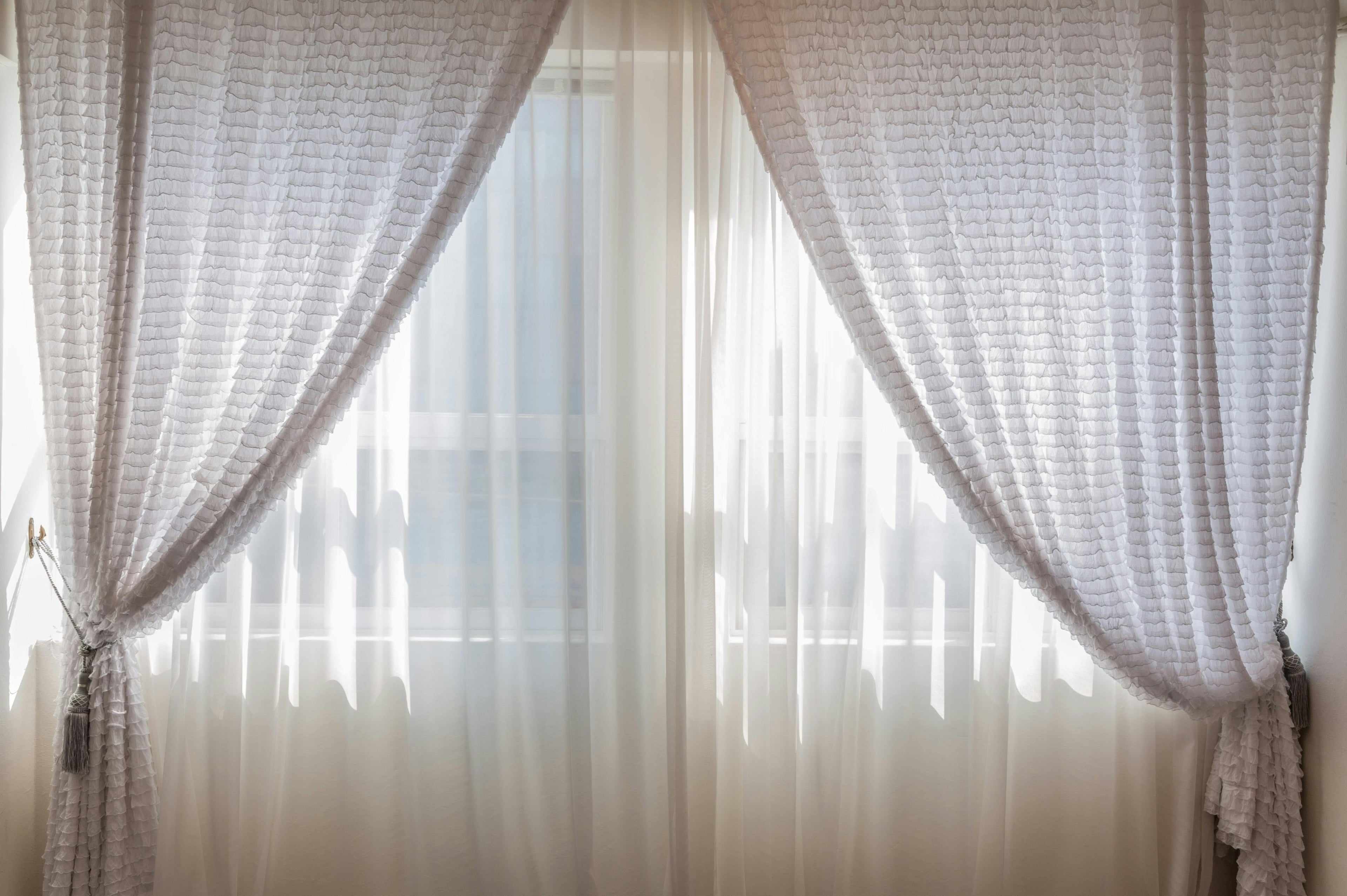
The flamenco pleat, sometimes called the French pleat, is immediately distinguished by its structured and regular silhouette. Unlike simple pinch pleats that fall linearly, the flamenco pleat forms a succession of inverted "S" pleats, creating a sculptural and deep draped effect. Each pleat is composed of three attachment points on the rod, giving it its characteristic volume and impeccable hold.
Visually, it offers a sophisticated play of light and shadow that adds texture and depth to a room. Historically associated with classic and opulent interiors, it has evolved to adapt to contemporary styles, particularly through the choice of lighter fabrics or solid colors. Its main functional advantage, beyond its aesthetics, is its ability to close perfectly without leaving gaps between panels, thus offering excellent light blocking.
Why choose flamenco pleat curtains for your home?
Opting for flamenco pleat curtains is much more than a simple decorative choice; it is an investment in the ambiance and functionality of your space. Firstly, they bring incomparable verticality and height, ideal for enhancing low ceilings or structuring a large bay window. Their clean and orderly line is perfectly suited to minimalist interiors where one seeks rigor without coldness.
From a practical standpoint, their permanent pleat system, once in place, requires almost no maintenance. You will no longer have to rework the pleats after each wash as with standard curtains. They glide with remarkable fluidity on the rod, thanks to special hooks. Finally, they allow perfect light control, able to be opened wide for a theatrical effect or closed for total privacy.
Undeniable aesthetic and functional advantages
The advantages are numerous. Aesthetically, they create an elegant focal point, frame the view, and dress the window like a work of art. Functionally, their thickness and density often offer better insulating properties (thermal and acoustic) than simple pleated curtains. For rooms like the bedroom or home cinema, this aspect is a major asset.
Essential materials for making your flamenco curtains
The success of your project depends on preparation and choosing the right materials. Do not skimp on quality, as it will guarantee the hold and longevity of your flamenco pleat curtains. Here is the exhaustive list of what you will need.
- The fabric: This is the key element. Choose fabrics with body and good hold such as linen, thick cotton, velvet, gabardine, or certain blends with wool. Avoid overly fluid fabrics like light silk or chiffon, which will not hold the pleat structure.
- The lining: Absolutely essential. It adds weight, improves pleat hold, protects the main fabric from the sun, and enhances insulation. A thermobonded lining is ideal.
- The pleating tape (or pleater tape): This is the secret to perfect pleats. It is a strip of reinforced fabric, equipped with drawstrings and spaced pockets for inserting hooks. Choose a tape suitable for the desired pleat depth (generally, a spacing of 10 cm between pockets).
- Curtain hooks for pleats: Specific hooks, often made of hard plastic, that slide into the pockets of the pleating tape. They then clip onto the rings or gliders of your rod.
- The appropriate rod: A sturdy rod, preferably with gliders (track) or with mobile rings. Cable rods can also work if they are robust enough.
- Sewing tools: Sewing machine, matching threads, pins, quality scissors, tape measure, tailor's chalk, and a large work surface.
Calculating the fabric quantity: the key to success
This is the most crucial and often the most intimidating step. A miscalculation and your curtains will be too short, too narrow, or have poorly proportioned pleats. For flamenco pleat curtains, the principle is to use a generous fabric width to create the volume of the pleats.
The general rule is to use a multiplying coefficient of the finished width of your curtain. For a generous and traditional flamenco pleat, multiply the rod width by 2.5 to 3. For example, for a window 200 cm wide, the finished width of the curtain (once sewn) should be 200 cm. You will therefore need 200 cm x 2.5 = 500 cm of fabric width. If your fabric is 140 cm wide, you will need: 500 / 140 = 3.57, so 4 fabric panels.
For the height, add to the desired height (from the top of the rod to the floor or windowsill): the top hem (for the rod pocket, about 4 cm), the height of the pleating tape (usually 10 cm), and the bottom hem (usually 10-15 cm). Always allow a little extra for adjustments.
Fabric and color trends for modern flamenco pleats
Forget the dusty image of heavy burgundy velvet curtains. Today, flamenco pleat curtains are being reinvented with contemporary materials and palettes. The trend is towards natural and texture. Linen, in all its forms (raw, blended, slightly wrinkled), is the great favorite. It provides body while remaining light and plays beautifully with light, perfect for a minimalist Scandinavian style or a bohemian chic interior.
Corduroy or quilted velvets are making a strong comeback, adding a tactile and cozy touch, ideal for living rooms and bedrooms. Color-wise, deep neutrals (taupe, anthracite grey, navy blue) create a dramatic and modern effect. Earth tones (ochre, terracotta, sage green) harmonize with biophilic interiors. For a bold touch, a flamenco pleat in a large geometric print or vertical stripe can be spectacular, provided you perfectly master pattern alignment.
Step by step: making your flamenco pleat curtains
Now let's move on to the practical realization. Follow these steps methodically for a professional result.
1. Cutting and assembling the panels
Cut your main fabric and lining panels to the calculated dimensions, ensuring pattern alignment if necessary. Assemble the main fabric panels edge to edge with straight seams to obtain the required total width. Do the same with the lining. Press the seams carefully.
2. Creating the fabric-lining "sandwich"
Place the main fabric wrong side up. Place the lining on top, right sides together (the "good" sides facing each other). Pin and sew the sides and top, leaving the bottom open. Turn the assembly right side out. You now have a lined curtain with neat edges. Press thoroughly for a very clean edge.
3. Attaching the pleating tape
This is the decisive step for forming your flamenco pleats. On the wrong side of the curtain, at the top, fold and press a first fabric margin (about 2 cm) inward. Position the pleating tape on this margin, aligning its top edge with the curtain's edge. The cords should be on the bottom side of the tape. Pin and sew the tape in place by making two parallel stitching lines: one at the top and one at the bottom of the tape, being careful not to sew over the cords.
4. Forming the pleats and inserting the hooks
Temporarily hang the curtain on a support. Gently but firmly pull the cords of the pleating tape, starting from the center towards the ends. The fabric will gather and form pleats. Distribute them evenly until you achieve the desired finished width. Tie the cords securely. Then insert a hook into each pocket of the pleating tape. The hooks for the center and edges are often different (clip-on or eyelet); refer to your rod's instructions.
5. Finishing: the bottom hem
Once the pleats are formed, adjust the final height of the curtain by letting it hang for a few days to stretch. Make a simple but wide hem (10-15 cm) at the bottom of the curtain, sewing by hand for an invisible finish or by machine with a blind stitch if your machine has that function.
Hanging and adjusting your curtains for a perfect look
Hang the hooks on the rings or gliders of the rod. Let the curtains hang for at least 48 to 72 hours. This phase is crucial: the weight of the fabric will refine the drape and slightly soften the pleats for a natural and fluid effect. After this period, manually adjust the spacing and regularity of the pleats. The goal is for them to be symmetrical and of uniform depth across the entire width.
For a truly professional effect, some use light basting threads to temporarily maintain the shape of the pleats at the bottom during this "resting" period. Once the curtains are in place, open and close them several times to ensure they glide smoothly and the pleats reform well.
Maintaining your flamenco pleat curtains
Maintenance is simple thanks to the permanent structure of the pleats. Regular dusting with a vacuum cleaner and a soft brush is recommended. For washing, it is best to use a professional upholstery textile cleaner, especially for delicate or heavy fabrics like velvet. If you decide to wash at home, carefully remove the hooks and pleating tape if possible (some are permanently sewn).
Wash by hand or in the machine on a delicate cold cycle. Never wring out strongly. Rehang the damp curtains on their rod to dry in place, allowing the pleats to reform naturally under their own weight. Iron only if necessary, on the wrong side and with a protective cloth, avoiding the already structured pleat area.
FAQ: Answers to common questions about flamenco pleat curtains
Are flamenco pleat curtains suitable for all rooms?
Absolutely. Their versatility is their strength. In a living room, they bring formality; in a bedroom, they create a cocooning and blackout ambiance; in a dining room, they establish a refined atmosphere. The key lies in the choice of fabric: light linen for a kitchen or conservatory, velvet for a living room, thick cotton for an office.
Can flamenco pleats be made without pleating tape?
Technically, it is possible to create pleats fixed manually with sewing stitches, but the result will not be as regular, durable, or easy to handle. The pleating tape with its cords is specifically designed for this type of pleat, allowing precise adjustment and long-term hold. It is strongly discouraged to do without it for a true "flamenco" look.
What is the difference between a flamenco pleat and a pinch pleat?
The pinch pleat is a simple fold of fabric sewn at the top, creating soft ripples. It uses less fabric (coefficient of 1.8 to 2) and is more informal. The flamenco pleat is a three-point construction, more structured, sculptural, and formal, using more fabric (coefficient 2.5 to 3) to create its characteristic "S" volume.
Can I adapt this technique to a curved bay window?
Yes, but this requires a suitable curved rod and great precision in calculating the width. The principle of the pleating tape remains the same, but you may need to space the hooks differently on the curved section to follow the rod's movement. This is a project for an advanced level.
How much time should I plan for this project?
For a first curtain, plan for a full day of work, not including drying time and "resting" time once hung. The calculation, cutting, and preparation phase is the longest. The sewing itself is quite quick once you understand the mechanism of the pleating tape.
Inspirations: Integrating flamenco pleats into your decor style
Flamenco pleat curtains are not exclusive to the classic style. Imagine them in an industrial loft, in raw ecru linen, contrasting with the coldness of concrete. In a minimalist interior, they bring the texture and warmth sometimes missing, in a solid, deep color. For a Japanese-inspired style, use a simple, sober cotton fabric to create pure, clean lines.
In a bohemian decor, dare an ethnic print or patterned fabric, but keep the strict cut for a perfect balance between freedom and structure. The winning combination of the moment? Beige linen flamenco pleat curtains with a contrasting lining (ochre or olive green) that subtly reveals itself when opened.
Mastering the making of flamenco pleat curtains is a rewarding skill that permanently transforms your home. It allows you to create quality custom-made curtains, perfectly suited to your windows and style. Beyond the savings made, it is the pride of having infused this touch of architectural elegance into your house with your own hands. Do not be afraid to get started, meticulously prepare each step, and let yourself be guided by the desire to create a unique element. To discover other window treatment techniques, tutorials on choosing fabrics, or ideas for style combinations, continue your exploration on ombreinterieur.fr, your source of inspiration for an interior that reflects you. Need practical advice? Read how to make a curtain hem. Visit ombreinterieur.fr to explore the full catalog.
