














How to Make Custom Curtains: Complete Guide
Choosing ready-made curtains often means settling for approximate sizes and a look that never quite dresses your room. A made-to-measure approach, by contrast, gives you a flawless fit and complete creative freedom. From fabric selection to precise measurements, every detail matters if you want to turn your windows into true decorative assets. This guide walks you through the essential steps for crafting elegant, long-lasting curtains that suit your world. Let yourself be led towards a creation that bears your own signature.
In the world of interior decoration, curtains play a far more strategic role than simple sheers. They are the guardians of privacy, the regulators of natural light, the amplifiers of acoustics and, above all, the centerpieces that complete a room's identity. Yet, finding standard curtains that perfectly match the uniqueness of your windows, meet your precise blackout needs, and harmonize with your desired ambiance often feels like an uphill battle. This is where the custom-made solution comes into play, offering absolute personalization. Making your own custom curtains is not reserved for seasoned seamstresses; it is an accessible project that combines creativity with great satisfaction. This article guides you step by step, from crucial measurements to final installation, exploring current trends and revealing all the secrets to creating curtains that will dress your windows with elegance and precision.
Why choose custom curtains? The decisive advantages
Before diving into taking measurements and choosing fabric, it is essential to understand how customization surpasses off-the-shelf purchases. The first reason is obviously the perfect fit. A bay window, an old French door, a skylight, or a dormer require specific dimensions that standard models cannot fill without leaving unsightly side gaps or an approximate drop.
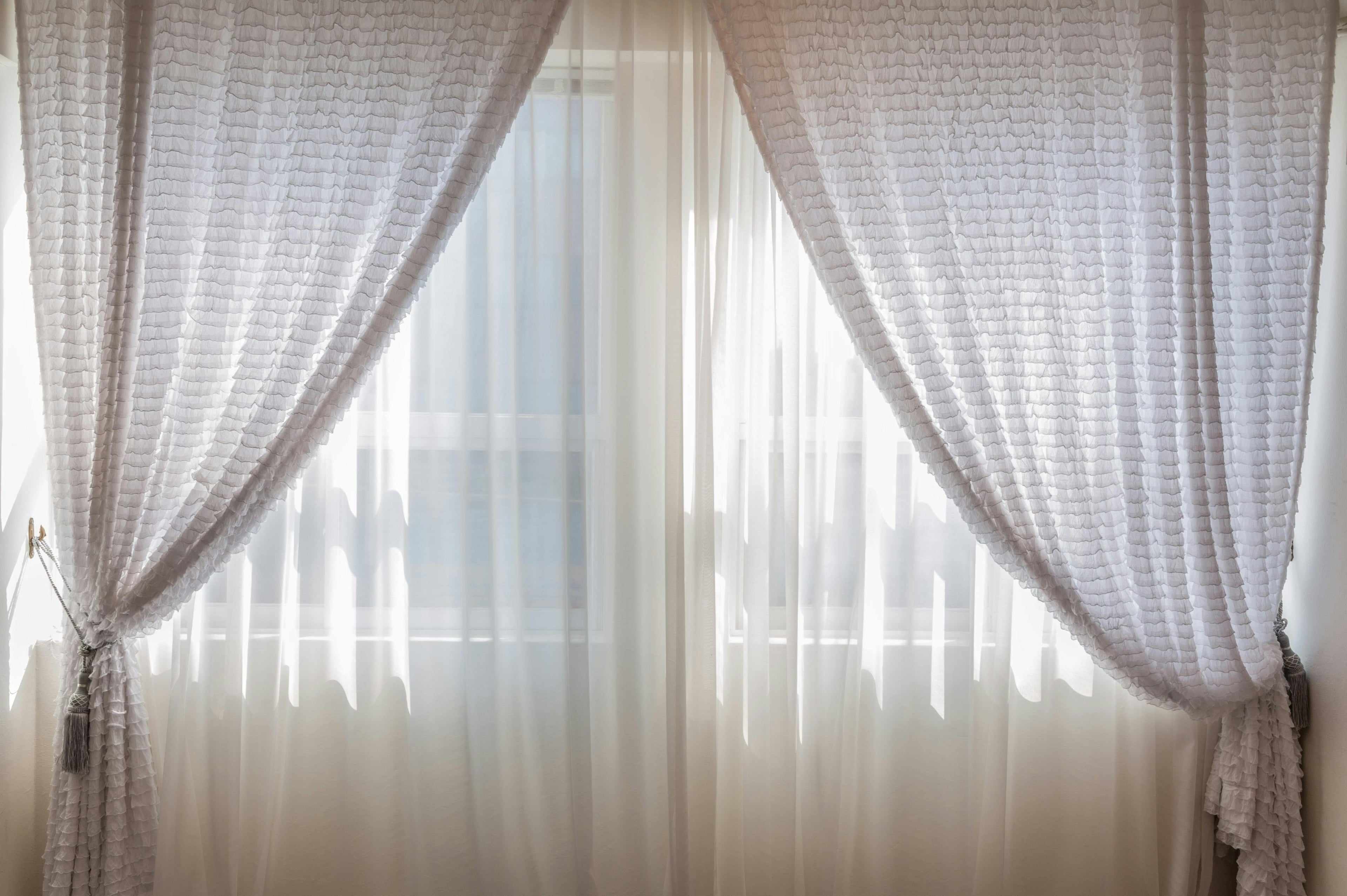
Next, custom-made offers you total control over aesthetics. You decide the length (floor-length, slightly floating, or pooling), the width, the density of pleats, the type of hem, and of course, the fabric. This freedom allows you to create a custom visual effect: very full curtains for a theatrical and luxurious feel, or straighter ones for a sleek contemporary style.
Finally, it is often a more durable and high-quality solution. By choosing a good quality fabric yourself (linen, thick cotton, velvet, thermal lining), you invest in a decorative element that will withstand time and washing, unlike many ready-to-hang products with fragile finishes.
The fundamental step: taking measurements with watchmaker precision
The success of your custom curtains relies entirely on the accuracy of the measurements. An error of a few centimeters can ruin the desired effect. Take your time and equip yourself with a rigid metal tape measure.
Height and length: defining the drop
The length of the curtain depends on the desired effect and the placement of the rod or track.
- Floor-length: This is the most elegant and contemporary option. Measure from the ring (or hook) to the floor. Subtract 0.5 cm to prevent the fabric from brushing.
- Slightly floating: The curtain skims the floor by 1 to 2 cm. A relaxed and warm effect, ideal for bohemian or Scandinavian interiors.
- Pooling (or "broken"): The curtain extends 10 to 30 cm onto the floor, creating a luxurious, traditional puddle effect. Perfect for formal rooms or large volumes.
- Window sill: The curtain stops just below the window sill. Practical for kitchens or behind furniture.
Width: calculating the necessary fullness
The width of the fabric does not correspond to the width of your window. For curtains that close properly and form beautiful pleats, you need fullness. The general rule is to plan a fabric width equal to 1.5 to 2.5 times the width of the rod.
For example, for a 2-meter wide rod, you will need between 3 and 5 meters of total fabric width (i.e., 1.5 to 2.5 meters per curtain if you have two). A ratio of 2x is an excellent standard for generous pleats and a nice look when they are open.
The heart of the project: choosing the ideal fabric for your curtains
The choice of textile is both an aesthetic and functional decision. Current trends favor natural materials and textures.
Trendy materials and their properties
- Linen: A must-have, it brings a noble texture, beautiful drape, and a lively appearance. It filters light superbly, creating a soft, subdued ambiance. Ideal for a natural, Mediterranean, or Japanese style.
- Cotton and thick cotton (like cotton canvas): Versatile and easy to care for, they suit many styles. Light cotton canvas is perfect for sheers, while thick cotton offers good blackout.
- Velvet: Making a strong comeback, it brings warmth, acoustic privacy, and discreet luxury. An excellent thermal insulator, it is perfect for living rooms and bedrooms. Choose it in deep tones (bottle green, mustard, navy blue) for a cocooning effect.
- Natural fiber blends: Linen-cotton, wool-cotton. These fabrics combine the advantages of different materials for a structured drape and good durability.
The crucial importance of lining
Neglecting the lining is a common mistake. It is not optional for quality curtains. A thermal lining (like Molton) protects the main fabric from UV rays, improves insulation (cold and heat), ensures total blackout, and gives body and hold to the curtain for an impeccable drape.
Finishes that make the difference: hems and curtain headings
The finishing details transform a simple fabric panel into a professional curtain.
Types of hems
The bottom hem must be heavy enough to ensure a beautiful drape. A double hem (the fabric is folded over itself twice) of 8 to 10 cm is standard. For very light fabrics, you can insert a hem weight, a lead strip hidden in the hem, to weigh down and stabilize the curtain.
Hanging systems (curtain headings)
The choice depends on your rod and the desired style.
- Grommets: A reinforced fabric band with metal eyelets. Modern and industrial style. Requires separate rings.
- Rod pocket (or curtain track): A tunnel into which you slide the rod directly. Very clean and minimalist effect.
- Tab top (or tabs): Fabric bands sewn at regular intervals to slide onto the rod. Classic and discreet style.
- Pleating tape: Prefabricated tapes with drawstrings to form regular pleats (box pleats, pencil pleats). This is the simplest solution for achieving a professional, structured look without major technical difficulty.
Sewing step by step: techniques and tips for a pro result
Even with a basic sewing machine, you can achieve clean, strong seams.
Fabric preparation: pre-shrinking and cutting straight
Before any cutting, it is essential to pre-shrink the fabric. Wash and dry it according to its instructions so it shrinks before sewing. Iron it carefully. To cut straight, follow the fabric grain or use a ruler and tailor's chalk.
The order of sewing operations
- Side hems: Start with the sides. Fold 1 cm to the wrong side first, press. Fold a second time 2 cm, press, and stitch all the way down.
- The curtain heading: This is the most technical step. If using pleating tape, simply sew it to the top of the wrong side of the curtain, leaving the cords protruding. For a tab top, form a top hem wide enough to pass the rod through and sew vertical bands at regular intervals.
- The bottom hem: Proceed as for the side hems, but with a larger width (8-10 cm). For a perfect finish, hand-sew the hem with an invisible stitch (slip stitch) after an initial machine stitch.
Decorative integration: harmonizing curtains with the room
Your custom curtains must dialogue with the rest of the decor.
Playing with lengths and layering
The trend is towards mixing textures and transparencies. Layer a fine linen sheer on the window, with heavier opaque curtains on the sides. For bedrooms, you can opt for a blackout blind (roller or roman) and decorative curtains, combining functionality and aesthetics.
Colors and patterns
Curtains can either blend into the decor (neutral tones matching the walls to enlarge the space) or create a focal point (contrasting color, graphic or floral pattern). Discreet vertical stripes elongate the room. Botanical patterns are very popular for adding a touch of nature.
Essential accessories: rods, poles, and rings
The support should not be an afterthought. A beautiful rod is the jewelry of your window.
Current trends see the return of metal poles with brushed brass, matte black or steel finishes, often slim and discreet. Tension cable rods suit minimalist interiors. For a more classic style, wooden poles with decorative finials remain unbeatable.
Choose rings that harmonize with the rod. Opt for silent gliding rings. Allow approximately one ring every 10-15 cm for uniform pleating.
Maintenance and lifespan: preserving the beauty of your creations
Custom curtains require appropriate care to last for years.
Regular vacuuming with the soft brush attachment removes dust. For washing, always refer to the fabric's instructions. As a general rule, a cold wash on a delicate cycle, without spin, is recommended. Air dry, preferably in the shade to prevent color fading. Iron the curtain while still slightly damp on the wrong side, paying particular attention to the hems.
For delicate or very large fabrics, professional dry cleaning may be the safest solution.
FAQ: Answers to your questions about custom curtains
What budget should I plan for making custom curtains myself?
The cost varies greatly depending on the chosen fabric. Expect between €15 and €50 per linear meter for a quality fabric (linen, velvet, lined thick cotton). Add to this the cost of lining (€5-15/m), pleating tape (€5-15/curtain), and the rod (€20-100). For a standard window, a budget of €150 to €400 for two curtains is realistic. This often remains competitive compared to professional custom-made, with the added pride of being handmade.
Can I make custom curtains without a sewing machine?
Yes, it is possible but more limited. For lightweight fabrics (sheers), you can use fusible textile bonding web for hems. Some pleating tapes are also fusible. However, the strength and durability will be less than with sewing. For heavy or frequently used curtains, a sewing machine is highly recommended.
How do I calculate the exact amount of fabric needed?
The formula is: (Finished height + Top hem + Bottom hem) x Number of widths needed. Remember to add 10 to 15 cm in height for the top hem (depending on the system) and 16 to 20 cm for the bottom hem (double hem of 8-10 cm). For the width, divide the total fabric width needed (rod width x fullness factor) by the width of the chosen fabric roll (often 140 or 150 cm). Round up to get the number of "panels" to sew together.
What is the current trend for curtain length?
The dominant trend is clearly floor-length or slightly floating curtains. This length gives an impression of ceiling height, modernity, and elegance. Pooling or "broken" curtains are more associated with classic or very bohemian styles. Avoid at all costs curtains that are too short and "float" above the floor, an effect that tends to shorten the window and the room.
Is lining absolutely necessary?
For curtains in a bedroom, living room, or any room where good blackout, thermal/acoustic insulation, and fabric protection from the sun are desired, lining is strongly advised, even essential. For a sheer in a dining room or kitchen, it can be omitted if a transparent effect is desired.
Conclusion: Dare to go custom, reveal your interior
Making your own custom curtains is much more than a simple sewing activity. It is an act of creation that allows you to imprint your personality on your interior, solve specific layout problems, and achieve a result of a quality often unmatched in stores. By mastering the key steps – precise measurements, wise choice of fabric and finishes, careful sewing – you give yourself the opportunity to radically transform the ambiance of a room. Don't be afraid to get started: begin with a simple window, choose a fabric that inspires you, and let yourself be guided by the desire to create a living space perfectly adapted to your needs and taste. To discover more inspiration and technical advice on customizing your home, explore the other comprehensive guides available on ombreinterieur.fr. Before choosing, browse custom curtains with Ombre Interieur create the perfect ambiance for your home. Find our entire decor universe on Ombre Interieur.
