
















How to Create a Home Office Corner in a Bedroom: Complete Guide
Blending the realm of rest with that of productivity in a single room is a subtle art. You want to carve out a workspace in your bedroom without disturbing the peace of your sanctuary? The challenge is considerable: establishing a mental and visual boundary between sleep and work, while making the most of every square metre. This delicate balance hinges on thoughtful choices of placement, furniture and lighting that turn a simple corner into a functional yet calming area. Let us guide you toward solutions that honour your daily rhythm.
Integrating a desk area into a bedroom is an increasingly common challenge, whether you are a student, a remote worker, or simply looking for a dedicated space for creativity or administration. This need to reconcile rest and productivity within the same sanctuary requires careful thought in terms of layout and decoration. It is not simply a matter of placing a table against a wall, but of creating a functional, ergonomic, and aesthetic space that promotes concentration without encroaching on the peaceful atmosphere of the bedroom. This article guides you step by step to transform a corner of your room into an inspiring and perfectly integrated desk, exploring current trends, clever solutions for small spaces, and the golden rules of ergonomics.
The Art of Delineation: Creating a Psychological Boundary
The first step, and perhaps the most crucial, is to establish a clear separation between the work area and the relaxation area. This boundary does not need to be physical, but it must be perceptible to your mind. Without it, professional stress can contaminate your rest zone, and bedroom distractions can harm your productivity.
Several zoning techniques are available to you. Using a room divider screen is an elegant and modular solution. Opt for a model in lightweight fabric, cane, or openwork wood to avoid weighing down the space. A bookcase or an open shelving unit acting as a divider is another excellent option. It defines the desk area while offering valuable storage for books and supplies.
For a more subtle delineation, play with floor coverings. A distinctive desk rug, with geometric patterns or a different texture, visually anchors the workspace. Light is also a powerful tool. A dedicated ceiling light or pendant light above the desk, different from the general bedroom lighting, instantly creates a bubble of concentration.
Strategic Choice of Location
Where should you install your desk area in the bedroom? The answer depends on the configuration of your room, the available light, and your privacy needs. The ideal is to find a place that minimizes distractions and maximizes comfort.
The space under the window is often preferred to benefit from maximum natural light, essential for reducing eye strain. However, ensure the light comes from the side (left for right-handed people, right for left-handed people) to avoid reflections on the screen. A corner of the room can also be a perfect location, creating a reassuring cocoon and limiting visual disturbances.
For narrow bedrooms, the space along a wall, ideally facing the bed or perpendicular to it, is the most obvious solution. Avoid placing your desk directly in line with the bed at all costs. The sight of the computer from your bedding can hinder your ability to disconnect in the evening. Also consider the proximity of electrical outlets and the possibility of running cables discreetly.
Solutions for Small Bedrooms
In a small space, every square centimeter counts. Fold-away desks are your best allies. A wall-mounted folding desk unfolds when you need it and disappears completely the rest of the time. Drop-leaf models, which open like a shutter, are also very effective. Another ingenious option: the desk integrated into a piece of furniture. Some dressers or headboards are designed with a sliding or fold-down surface, offering an instant work surface without permanent floor occupation.
Essential Equipment: Between Ergonomics and Aesthetics
The choice of furniture is the cornerstone of your desk area. Always prioritize long-term comfort and health. An ergonomic office chair is a crucial investment. Look for a model with adjustable lumbar support, height-adjustable seat, and armrests. If the style of a classic office chair doesn't match your decor, many dining chairs or even bar stools with a backrest and cushion can work, provided you check their height relative to your table.
The desk or work surface must have a minimum depth of 60 cm to comfortably accommodate a laptop and an external monitor. The current trend is towards natural and warm materials: solid oak, walnut, or plywood with a noble finish. For a more industrial look, a polished concrete or metal top on steel legs is very trendy. Don't forget cable management: a perforated top or an integrated cable guide system is a detail that makes all the difference.
Lighting: The Key to Concentration and Comfort
Good lighting is non-negotiable for an effective desk area. It must combine several sources to avoid glare and eye strain. Natural light remains the best, but it must be supplemented in the evening or on gray days.
Invest in a quality desk lamp. Articulated arm models are perfect because they allow you to direct the light exactly where you need it, without illuminating the screen. Choose LED bulbs with neutral white light (between 4000 and 4500 Kelvin), which is close to daylight and promotes alertness. As a complement, a softer ambient light source, such as a dimmable pendant light or ceiling light, helps balance the brightness throughout the room and creates a more pleasant atmosphere at the end of the day.
Optimizing Storage and Organization
A cluttered desk leads to a cluttered mind. In a bedroom, where space is often limited, impeccable organization is vital to maintain the serenity of the place. The golden rule: maximize vertical storage.
Install wall shelves above the desk to store books, files, and decorative items. Matching storage boxes (wicker, rigid cardboard, or fabric) on these shelves maintain a tidy appearance. On the desk itself, use desk organizers: pencil holders, magazine racks, drawer sets. For cables, sleeves or cable management boxes are essential.
Also consider integrated solutions. A desk with built-in drawers or filing cabinets is ideal for hiding computer equipment and papers. A pegboard fixed to the wall is a trend that is both practical and decorative, allowing you to hang baskets, small shelves, and accessories, thus freeing up the entire surface of the desk top.
Harmonizing Styles: Decorative Coherence Between Desk and Bedroom
So that your desk area doesn't look like an afterthought, it must harmoniously dialogue with the rest of the bedroom decor. This requires coherence in colors, materials, and the overall atmosphere.
If your bedroom is in neutral, calming tones (beige, gray, white), bring a touch of color or texture to the desk via the chair, a rug, or accessories. Conversely, if the bedroom is already very colorful, opt for a desk and storage in sober materials to create balance. The current trend of the "soft workspace" favors curves, soft materials (velvet, wool), and pastel or earth color palettes to soften the work area and blend it into a bedroom ambiance.
Don't hesitate to personalize your space with inspiring decoration: a painting or poster you love, a green plant, a framed photograph. These elements create a motivating environment, but be careful not to overload the space to keep a clear mind.
Current Trends for the Desk in the Bedroom
The landscape of remote work and home study has evolved trends. There is a clear movement towards softer, more hybrid spaces that are more respectful of well-being.
Biophilic design, which integrates nature indoors, is major. Introduce green plants on your desk (like a sansevieria or a pothos, which are undemanding) or nearby. Natural materials like rattan, jute, and raw wood are also very present. Another strong trend: "cocooning" desks. The aim is to create a cozy and protective nest with soft lighting, plush textiles (a throw on the chair), and organic shapes.
Modularity is also key. Adaptable and transformable furniture that can evolve with our needs is very popular. Finally, discreet technology is a priority: everything is done to hide screens, chargers, and cables when the desk is not in use, in order to restore the peaceful appearance of a bedroom.
FAQ: Answers to Your Questions About the Desk Area in the Bedroom
How to hide a desk in a small bedroom?
Several solutions exist for an invisible desk. The wall-mounted fold-away desk is the champion of discretion. You can also opt for a dual-function piece of furniture, like a dresser on which a sliding surface rests, or an extra-large nightstand that serves as a bedside table in the evening and a desk during the day. Vertical storage (shelves) allows you to completely free up the floor.
What is the best orientation for a desk facing a window?
The perfect orientation is to have the window to the side, never directly in front of or behind you. If the window is in front of you, outside light will create unbearable reflections on your screen. If it is behind you, you will work in your own shadow and be dazzled by direct light when looking ahead. A side window provides uniform and pleasant lighting.
How to prevent cables from ruining the decoration?
Cable management is paramount. Use ties or cable clips to group wires together. Run them through concealing sleeves or tubes fixed to the wall or behind the furniture. Invest in a power strip that you can attach under the desk top, out of sight. A pass-through hole in the desk top allows only the necessary cables to come up in an organized manner.
Can you create a desk area in a shared bedroom?
Yes, but it requires even more rigorous organization. The ideal is to create two distinct zones, perhaps on either side of the bed or in two opposite corners of the room. Use dividers like tall bookcases or curtains to create visual and sound privacy. Individual, more compact desks and active noise-cancelling headphones are then valuable allies.
Which plants to choose for a desk in the bedroom?
Choose plants that tolerate moderate light and improve air quality. Pothos (Scindapsus) is hardy and purifying. Sansevieria (snake plant) thrives with little light and water. Zamioculcas (ZZ plant) is also very resilient. Avoid fragrant flowering plants in the bedroom, which could disturb some people's sleep.
Conclusion: Your Productive Sanctuary Awaits
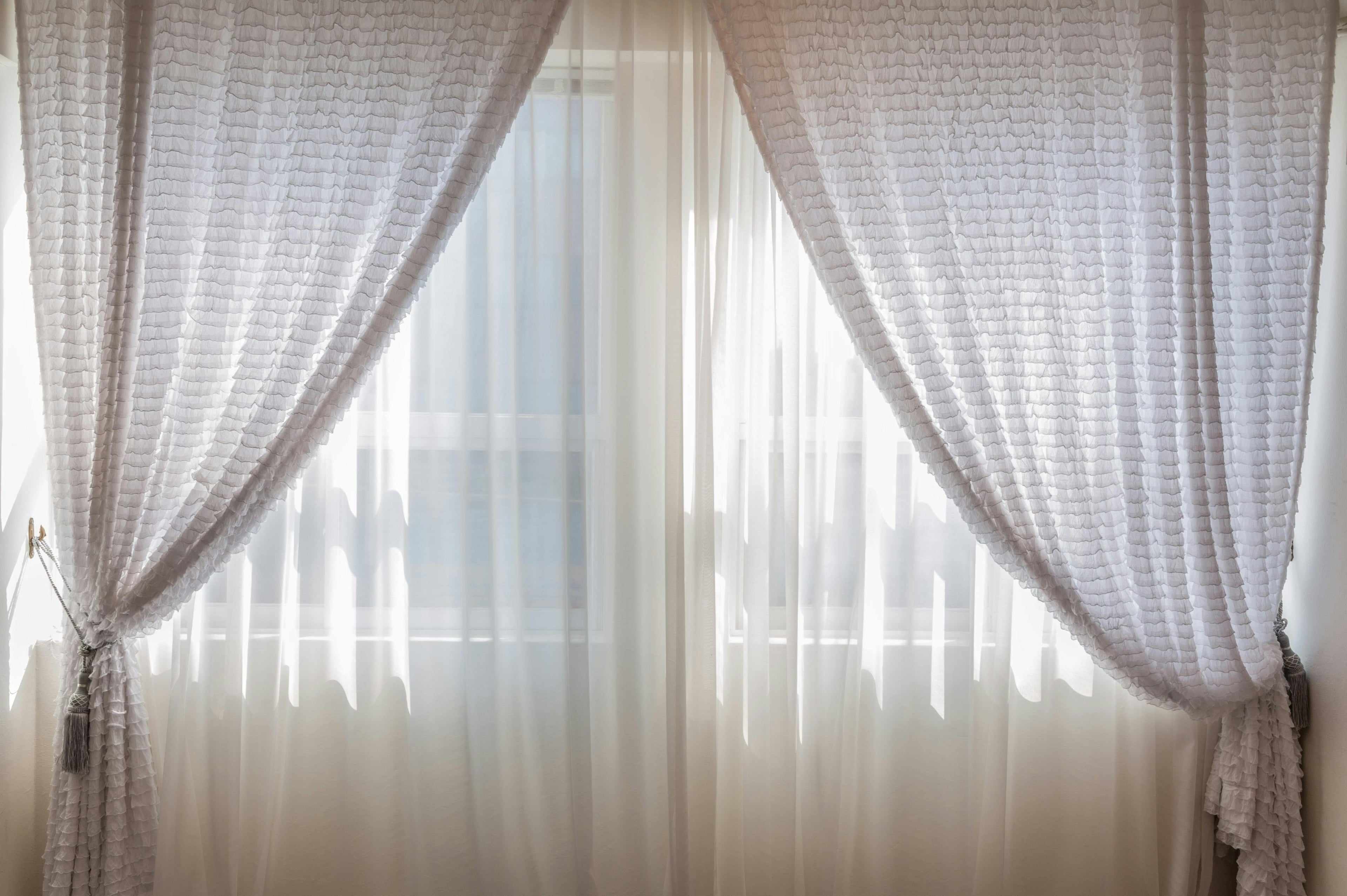
Creating a desk area in a bedroom is much more than a practical arrangement; it is an exercise in balance between productivity and serenity, between functionality and aesthetics. By following these principles of zoning, strategic location choice, ergonomics, and decorative harmonization, you will succeed in designing a space that reflects you and supports your ambitions, without compromising the quality of your rest. Whether you have a large loft or a small studio, solutions exist to integrate a discreet and efficient desk. The ultimate goal is to create an environment where it is good to work, concentrate, and create, while being able to symbolically close the door on this space once the day is over. To discover more inspiration and advice on interior design, feel free to explore the other resources available on ombreinterieur.fr. Our Bedroom Sheer Curtain integrates perfectly with this style. For more tips, discover how to use pearl gray cushions in a child's bedroom on the blog. Get inspired on our decoration website for your next projects.
```