















How to build a partition to divide a room
Redesigning your living space without major renovation is a desire many of you share. A partition, whether traditional or modular, becomes a true decorative tool in its own right. It helps structure your interior, carve out intimate or work zones, while playing with light and texture. This subject explores the many ways to rethink a room, from the solidity of plaster to the elegance of design-led solutions. Let yourself be guided toward the partition that will unlock the full potential of your space.
The desire to redesign living spaces is a major trend in contemporary interior decoration. Whether it's to create a home office area in a living room, isolate a dressing room in a bedroom, or simply add more character to a large room, knowing how to build a partition wall becomes a valuable skill. Unlike load-bearing walls, which are fixed and complex, partition walls offer extraordinary flexibility for modulating volumes without major construction work. This article is your comprehensive guide to understanding all facets of creating a partition, from traditional methods to the most design-forward solutions, including pure decoration tips. We will explore materials, techniques, current trends, and mistakes to avoid to successfully complete your space division project.
Why Install a Partition Wall? The Benefits of a Reimagined Space
Before diving into the execution, it is crucial to define your goals. Building a partition wall is not a trivial act; it transforms the use and ambiance of a room. The motivations are numerous and often intertwined. The search for privacy is paramount, especially in studios or large open-plan spaces. Separating the night area from the day area, the bedroom from the dressing room, or the living room from the entrance allows for the creation of distinct functional zones.
From a practical standpoint, a partition can also serve to hide unsightly elements, such as storage or conduits, or to improve the acoustics of a room that is too reverberant. From an aesthetic and decorative point of view, it is a fantastic opportunity to introduce a new texture, a bold color, or a play of materials. It structures the space, gives rhythm to the room, and can even become the focal point of your decor. Finally, with a view to increasing property value, a well-thought-out and high-quality partition can enhance the potential and comfort of a home.
Traditional Methods: The Plasterboard Partition (BA13)
The most solid and durable method for dividing a room remains the construction of a partition using a metal frame and plasterboard. Often called a "drywall partition," it is nonetheless a job for a professional or a very experienced DIYer.
Required Materials and Key Steps
You will need tracks (for the floor and ceiling), metal studs, BA13 plasterboard, appropriate screws, joint tape, joint compound, and of course, measuring and cutting tools. The first, crucial step is marking the floor and ceiling using a laser level to ensure perfect verticality. Next comes fixing the tracks, followed by inserting the vertical studs spaced every 60 cm.
Once the frame is fixed and optionally filled with mineral wool for sound insulation, the plasterboard is installed, screwed onto the frame. The joints between the boards are then treated with joint tape and compound, followed by sanding for a smooth and flawless finish. This technique allows for easy integration of electrical outlets and switches within the thickness of the partition.
Advantages and Disadvantages
The main advantage is the solidity and professional finish. It is a permanent solution that offers excellent sound insulation if properly executed. On the other hand, it is the messiest and most technical method. It is not very suitable if you are looking for a reversible solution or if you are a tenant. The weight of the structure must also be considered, especially on older floors.
Modular and Design Solutions: No-Renovation Partitions
Fortunately, for those who want no dust or permanent commitment, there are a multitude of creative alternatives for building a partition that enhances the space.
Bookcases and Open Shelving
A bookcase or a series of shelves is probably the most intelligent and functional solution. It visually separates while offering immense storage and decorative display potential. Choose models that are open on both sides to let light through. Modular, customizable kits allow for a perfect fit to the width of the room. This is a strong trend in Scandinavian and contemporary interiors.
Room Dividers and Mobile Partitions
The room divider is experiencing a spectacular resurgence of interest, with designs ranging from minimalist Japanese-inspired to sculptural metal models. The advantage is total mobility: you can move the partition as needed. Materials are varied: wood, fabric, rattan, washi paper, or even acoustic felt. For a more structuring effect, opt for sliding partitions on a rail, which bring a very elegant architectural touch, inspired by Japanese shoji screens.
Green Walls and "Planter" Partitions
The biophilic trend, which involves integrating nature indoors, is perfectly expressed through green partitions. A metal or wooden structure supporting climbing plants or pots creates a living and calming separation. A simpler version involves aligning large standing planters filled with lush green plants (like ferns, monsteras, or philodendrons) to gently delineate a space.
Playing with Light and Transparency: Glass and Polycarbonate
To separate without darkening, translucent or transparent materials are excellent allies. They preserve natural light, essential in small spaces, while creating a clear visual boundary.
Tempered or laminated glass, mounted on a fine steel frame, brings an ultra-contemporary and high-quality touch. It is ideal for acoustically isolating an open kitchen while maintaining a visual connection. Frosted or sandblasted glass offers an additional degree of privacy while diffusing soft light. More economical and lightweight, cellular polycarbonate (often used for conservatories) produces a very graphic blur effect and is available in several colors. These solutions, although more expensive to install, bring undeniable added value to an interior.
Textile Partitions and Curtains
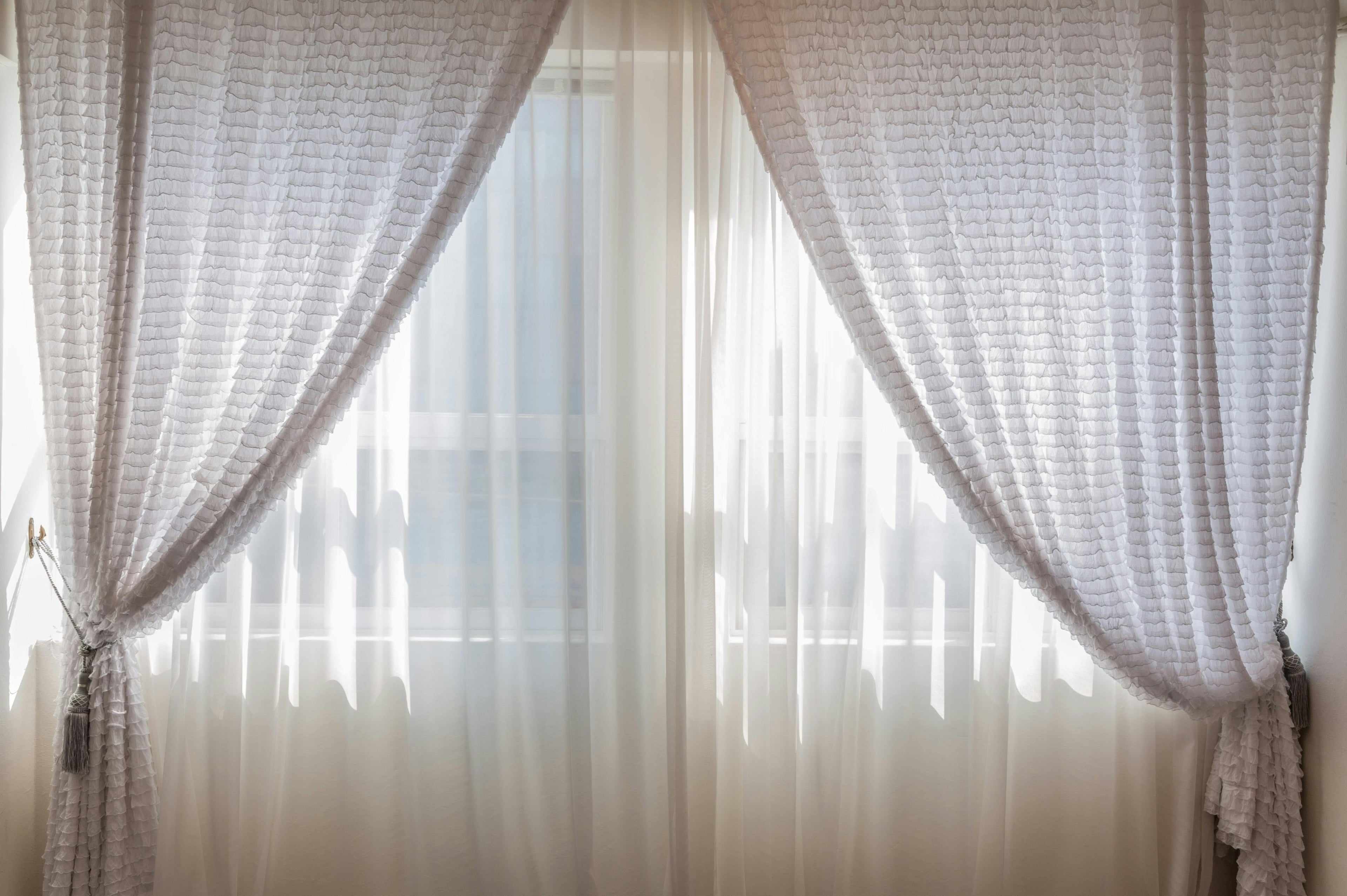
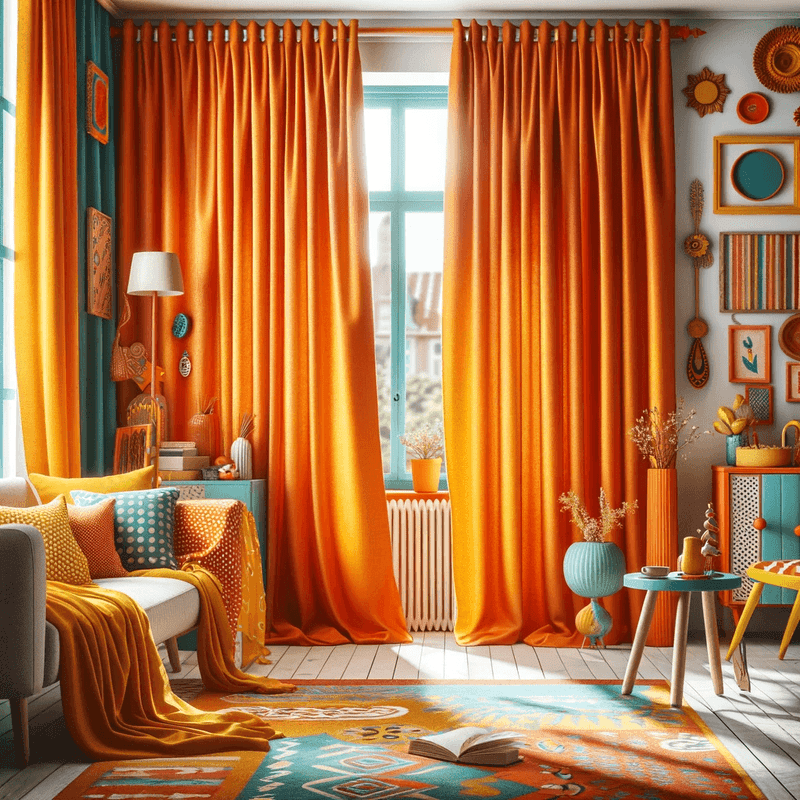
For a bohemian, romantic, or simply very soft ambiance, textiles are a low-cost solution with a high impact. Hanging thick curtains from ceiling to floor creates a vaporous and poetic separation, perfect for delineating a bedroom area. You can also stretch steel cables across the ceiling and slide rings onto them to support a large linen curtain, velvet (for acoustics), or printed fabric.
This method is the most reversible of all. It allows you to change the mood according to the seasons or desires, and to completely reopen the space with a single gesture. Accumulating rugs on the floor can also, through a zoning effect, contribute to this gentle delineation when combined with a curtain.
Original and Upcycled Partitions: Creative Customization
Personalization is at the heart of current decoration. Building a partition can be an opportunity to create a unique element that reflects your personality.
Pallet or Reclaimed Wood Partitions
Wood brings warmth and texture. A partition made from wooden slats (like decking boards), rafters, or even disassembled and sanded pallets creates a very trendy cabin or workshop effect. They can be arranged vertically, horizontally, or in a chevron pattern for more dynamism. The spacing between the slats allows you to play with light and shadow.
Perforated and Functional Partitions
A perforated panel (like a Pegboard), originally designed for workshops, finds its place in interiors for its ultra-functional and industrial look. Fixed to the wall or suspended, it serves both as a partition and a modular hanging system for shelves, pots, tools, or decorative items. Painted in a bright color or left raw, it has a strong visual impact.
Object Collections as Partitions
Why not use what you already own? A series of identical vases aligned on the floor, a collection of hats hanging from a rod, or a row of sculptural coat racks can, through their repetition, create an implicit and very personal boundary in the space.
Mistakes to Absolutely Avoid When Building a Partition
A poorly planned project can lead to disappointment. Here are the most common pitfalls.
- Neglecting Circulation and Flow: A partition should not obstruct the natural movement within the room. Consider doors, the opening of existing furniture, and traffic paths.
- Forgetting Natural Light: A solid, opaque partition placed in front of a window is often a disaster. Prioritize translucent, openwork solutions, or those that only occupy part of the height.
- Overestimating Your DIY Skills: Embarking on a plasterboard partition without mastering leveling and jointing techniques guarantees an amateur result. When in doubt, opt for simpler solutions.
- Neglecting Acoustics: If your goal is to create a quiet space, a simple shelf or curtain will not suffice. You need to incorporate absorbent materials (fiberglass, felt, thick fabrics).
- Not Respecting Condominium Rules: For work affecting the structure (heavy partitions), prior declaration may be necessary. Check with your building management.
Current Trends: Popular Partitions
The world of decoration evolves rapidly. Here is what is increasingly being done to divide a room with style.
- Curved Partitions: Goodbye right angles! Organic shapes and curves soften the space and bring remarkable fluidity. Achievable in plasterboard, staff, or with prefabricated modules.
- "Dual-Function" Partitions: An element no longer serves just one purpose. A partition that incorporates a fireplace, an aquarium, a built-in sound system, or a hydroponic green wall.
- Mixing Materials: Combining wood and glass, metal and fabric, or brick and polycarbonate creates contrast and visual richness.
- Half-Height Colored Partitions: Dare to use color on the partition, but in sophisticated shades: sage green, teal blue, terracotta, which add character without being aggressive.
- Low Partitions: Build the partition only to half-height (1m to 1.20m) to preserve a sense of space and light while clearly delineating zones.
FAQ: Your Questions About Creating a Partition
What is the most economical solution for dividing a room?
Without a doubt, textile solutions (curtains, drapes) and upcycling (pallets, vintage screens) are the most affordable. An Ikea Kallax bookcase used as a partition is also an excellent value for money/functionality. Plasterboard partitions, although inexpensive in materials, see their price increase if you need to hire a professional for installation.
Can a beginner build a partition themselves?
Yes, absolutely, by choosing the right method. A screen, a curtain on a rod, or a modular bookcase are perfectly accessible. On the other hand, a plasterboard partition requires DIY experience for marking, cutting, and especially jointing, which is a delicate step for a smooth finish. Start with simple projects.
How to soundproof a partition without making it massive?
Soundproofing requires mass and absorbent materials. For a lightweight partition, you can opt for expanded cork panels, which are both insulating and decorative, or for thick acoustic curtains in velvet or felt. A shelf filled with books is also an excellent natural sound absorber.
Do I need a building permit to install a partition?
Generally, no. Creating an interior partition wall is considered interior renovation work. However, if you are a tenant, the owner's agreement is mandatory. In a condominium, if the work affects common areas or modifies the facade (for a partition with a new window, for example), authorization is necessary. When in doubt, consult the condominium regulations.
How to fix a lightweight partition to the floor without drilling?
For very lightweight solutions like screens or fabric partitions, the weight is often sufficient. For shelf-bookcases, it is strongly recommended to fix them to the wall for safety reasons, especially if you have children or pets. For a wooden slat partition, you can sometimes use a system of mounting brackets that distribute the load without deep drilling, but this depends on the floor covering. Consult a salesperson at a hardware store for the solution adapted to your case.
Conclusion: Dare to Transform Your Space
Building a partition to divide a room is much more than a simple DIY act; it is an act of interior architecture that redefines the flow, function, and feeling of your home. Whether you opt for the solidity of a plasterboard partition, the flexibility of a bookcase, the poetry of a curtain, or the boldness of a glass structure, the important thing is that this new boundary meets your needs while reflecting your style. Take the time to plan carefully, measure ten times, and don't be afraid to innovate with materials and shapes. Your interior deserves this transformation.
Looking for inspiration to choose the perfect style or detailed tutorials? Explore without delay the numerous resources and ideas available on ombreinterieur.fr, your blog dedicated to decoration and home design in all its facets. From theory to practice, we accompany you to create the interior of your dreams. Fall for Voilage Pour Salon, a real plus for your interior. Before choosing, browse how to choose a poster for a hallway in a chic country style. Visit ombreinterieur.fr to explore the full catalog.
