
















How to dress a window in a shower?
A window inside your shower brings incomparable natural light, yet poses a serious technical and aesthetic challenge. How do you balance privacy, moisture resistance and elegance without compromise? Far from a simple curtain decision, this choice demands waterproof materials and lasting solutions. Special roller blinds, frosted glass or finely arranged tiles: each option turns a constraint into a design asset. Let us guide you in dressing your window with style and serenity, transforming this space into a true haven of light.
Incorporating a window into a shower is a boon for flooding the space with natural light and creating an incomparable sense of openness. However, this architectural opportunity comes with a significant decorative and practical challenge: how to protect privacy, manage humidity, and choose durable materials, all without sacrificing aesthetics? Dressing a window in a shower is not simply a matter of a curtain; it is an exercise in balance between technical functionality, durability, and design. This article guides you through all the solutions, from the most classic to the most innovative, to transform this constraint into a major asset for your bathroom. We will explore waterproof window treatments, glass coatings, tile layouts, and many other tips for a result that is both sublime and perfectly practical.
Why a Window in the Shower is Both an Asset and a Challenge
Before choosing how to dress it, it is crucial to understand the specificities of this opening in a wet area. The window brings precious brightness, reducing the need for artificial lighting and creating a spa-like ambiance. It can also offer a calming view, transforming a daily moment into a true escape.
But this advantage comes with strict requirements. Constant humidity, water splashes, and temperature changes create a hostile environment for many materials. Privacy is a major concern, especially if the window overlooks a public space or nearby neighbors. Finally, maintenance and cleaning must be made easy to prevent mold or limescale buildup.
A poorly dressed window can become a source of problems: warping wood, moldy fabrics, rusting blinds. Careful planning is therefore the key to making this element a successful focal point for your shower.
The Number One Imperative: Waterproofing and Moisture Resistance
The absolute priority when choosing any window covering is its ability to survive in an environment saturated with water vapor. The slightest flaw can lead to leaks, wall damage, and mildew growth.
Choosing Intrinsically Waterproof Materials
Forget standard fabrics, wallpaper, or untreated wood. Turn to materials designed for wet conditions:
- Glass: In all its forms (tempered, frosted, printed), it is the king of materials. It is completely waterproof and easy to clean.
- PVC, Vinyl, and Synthetic Composites: These modern materials perfectly imitate wood or even fabric, but without their weaknesses against water. They are often anti-mold.
- Anodized or Stainless Metals: For frames, rods, or blind mechanisms. Anodized aluminum and stainless steel are reliable choices against rust.
- Waterproof Natural Stone: Certain stones like quartz or polished granite can be used as window frames if properly sealed.
The Importance of Installation and Perimeter Sealing
The material itself is not enough. Its installation must ensure a continuous barrier against water. High-quality silicone sealant (preferably fungicidal) is essential around the frame. For blinds or panels, opt for systems with tracks or fixings that direct water flow towards the shower tray and not the wall.
Classic and Proven Solutions for Dressing Your Shower Window
These options offer an excellent reliability/aesthetic ratio and are widely available.
The Waterproof Roller Blind: The Practical and Modern Solution
Ideal for standard windows, the roller blind designed for the bathroom is a must-have. Choose a specific "bathroom" or "outdoor" model, with an anodized aluminum tube and mechanism and a PVC-coated fiberglass fabric. These fabrics are completely waterproof, UV resistant, and easy to clean with a wipe of a sponge.
For privacy, choose an opaque or semi-opaque fabric. The advantage is its minimal footprint when rolled up, leaving the window completely clear. Ensure the fixing is well sealed to the wall or frame.
Fixed or Sliding Frosted Glass Panels
An elegant and ultra-contemporary solution, this involves installing a tempered glass panel directly onto the window. The glass can be:
- Frosted or Acid-Etched: Uniform opacification for total privacy.
- Printed (Decorative Glass): Patterns (waves, foliage, geometric) are fused into the glass, adding character while blurring the view.
- Ribbed or Textured Glass: Creates plays of light and reflections while protecting from prying eyes.
This panel is permanently fixed with stainless steel brackets and silicone joints. It is the most durable and easiest-to-maintain solution, but also the most permanent and often the most expensive to install.
Adhesive Window Film: The Economical and Reversible DIY Solution
Perfect for tenants or a small-budget project, adhesive films have made enormous progress. They are applied with water to the clean glass and create a frosted, colored, or patterned effect. Choose a quality "vitrophanie" film designed for bathrooms, resistant to steam and washable.
The advantage is immediate customization and reversibility. The downside can be the lifespan and the risk of edges peeling if the application is not perfect or if the window is often opened.
Tile-Integrated Solutions: The Art of Fusion
For a custom and high-end look where the window seems to be an integral part of the shower, tile integration is the royal road.
Tiling the Window Reveal
This technique involves covering the depth of the window recess with the same tiles as the shower walls. The tiles are laid "wrapped around," creating a continuous and fluid frame. For the glass itself, clear glass (if privacy is not an issue) or frosted glass is then chosen, sealed directly into this tiled frame with a color-matched silicone joint.
The effect is ultra-minimalist and elegant. It requires expert installation to ensure perfect waterproofing at the corners and junctions.
The Tiled Niche or Alcove Incorporating the Window
If the window is placed in a recess, transform this space into a practical and aesthetic niche. The sides and top of the niche are tiled, and the window forms the back. You can install shelves in tempered glass or stone to store your shower products. This solution exploits the architecture rather than masking it.
Ensure the slope of the shelves and the window sill allows water to drain towards the inside of the shower.
Textile Options: Yes, But with Extreme Precautions
If you absolutely dream of fabric, know that this is the most perilous path, but not impossible with the right products.
Extended Shower Curtains
A simple trick is to use an extra-long and extra-wide shower curtain that will also cover the window. Attach the rod to the ceiling if possible for better side sealing. Choose a quality polyester or PVC curtain, with an inner liner if necessary. It is economical and coherent, but the aesthetics may lack finesse.
Technical Fabric Roller or Roman Blinds
Some brands now offer blinds with treated fabric, often based on polyester with a polymer coating, specifically designed to resist moderate humidity. They should not be directly in the water spray but can be suitable for a window adjacent to the shower or in a very well-ventilated bathroom. Carefully check the "humidity" or "bathroom" specifications.
In all cases, exceptional ventilation (an efficient extractor fan) after each shower is mandatory to prevent moisture from stagnating in the fabric.
Current Trends and Creative Ideas
Bathroom decor is evolving towards more personality. Here are inspirations to think outside the box.
Lattice Screens and Perforated Panels
For a spa or Mediterranean ambiance, install a decorative panel in rot-resistant exotic wood (like teak) or composite material, in a lattice style, in front of the window. It filters light by creating shadow patterns and protects privacy while allowing air to circulate. It must be installed with an air circulation space behind it to dry.
Fluted Glass or Glass with Inclusions
For a unique artistic touch, order a panel of fluted glass (where metallic pigments are incorporated) or glass with inclusions of leaves, fibers, or fabric. These glass artworks transform light into a changing spectacle. They are, of course, waterproof and clean like a window.
Strategic Use of Plants
If the window is in the recess or on the side, create a waterproof indoor planter with plants that love humidity and low light, such as ferns, spiderworts, or certain orchids. The vegetation becomes a natural and living screen. Choose pots with a water reservoir and a draining substrate.
Crucial Technical Points Not to Overlook
The Opening Direction of the Window
This is a fundamental point often forgotten. A window that opens inward into the shower is very restrictive for dressing. It greatly limits options (an interior blind will hinder it). Ideally, a shower window should open outward or be sliding. If it opens inward, adhesive films, glass treatments, or blinds placed on the outside (if possible) should be prioritized.
Ventilation: Your Best Ally
No material, even the most waterproof, will like stagnant humidity. An efficient humidity-controlled extractor fan is essential. Also consider leaving the window open (if possible) or the bathroom door ajar after a shower for quick drying of the covering and joints.
Waterproofing of Fixings and Drill Holes
Any fixing to the wall or frame (for a rod, a blind) must be perfectly sealed. Use wall plugs suitable for the materials (for tile, for plaster...), and most importantly, apply a waterproof silicone sealant around the screw and the support before and after fixing. This prevents water from seeping into the wall through the drill hole.
FAQ: Answers to the Most Frequent Questions
Can I put an aluminum Venetian blind in a shower?
Not recommended. Even in aluminum, the many components (slats, cords, mechanism) are traps for water and limescale that are very difficult to clean. Fabric cords will mold quickly. Opt for blinds with simpler lines and smooth surfaces.
How to clean and maintain a shower window covering?
The golden rule: a rinse with clean water after each shower limits soap and limescale deposits. For weekly cleaning, use a non-abrasive product (diluted white vinegar, glass cleaner) and a soft sponge. Avoid metal scrapers on films or frosted glass. For silicone joints, scrub with an old toothbrush to prevent black mold.
My window is in the direct spray of the shower. What is the best solution?
In this case, only completely waterproof and seamless solutions are viable: fixed frosted glass sealed in place or tile wrapping with integrated glazing are the safest. A blind, even a waterproof one, could see water seep into its top tube over time.
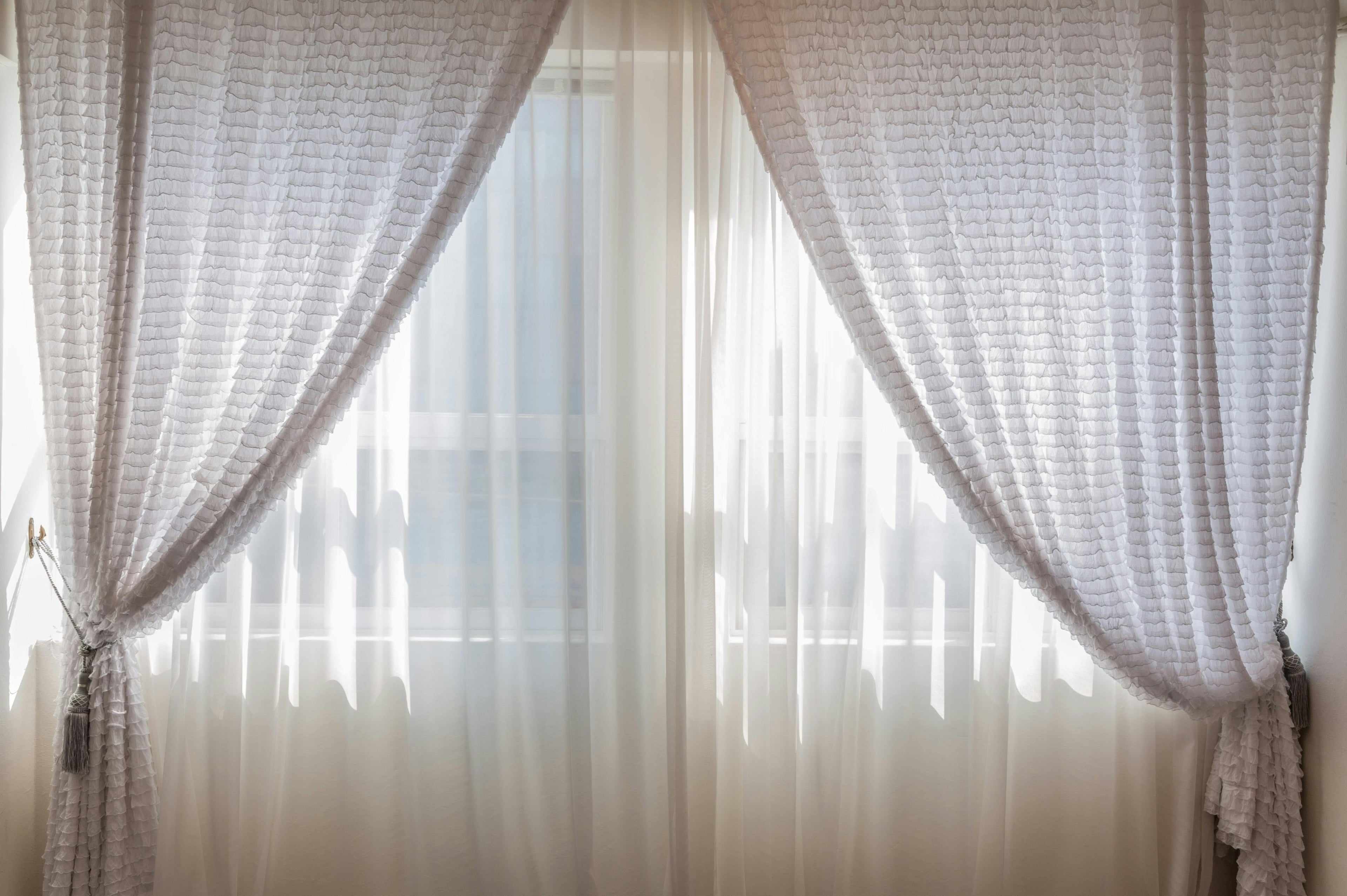
Can I use a sheer curtain or fine voile for a misty effect?
Strongly discouraged inside the shower. Even in synthetic fibers, they will retain moisture like a sponge, dry slowly, and inevitably develop odors and mold. Reserve this effect for a window located far from the water spray zone.
How to ensure privacy without blocking all the light?
Several options allow filtering light while preserving privacy: lightly frosted glass (partial sandblasting), patterned adhesive film (which lets light through but blurs shapes), or a semi-transparent technical fabric roller blind. This way, you maintain brightness without being visible from the outside.
Conclusion: Make Your Shower Window a Design Asset
Dressing a window in a shower is much more than a simple practical matter; it is a unique opportunity to add light, character, and a personal touch to your wellness sanctuary. Starting from the essential technical requirements – waterproofing, durability, and privacy – you can explore a multitude of solutions, from the most minimalist (integrated frosted glass) to the most economical (adhesive film), including architectural integration (wrapped tile).
The key is to choose according to your style, budget, and the exact configuration of your window. Never forget the winning duo: suitable materials and impeccable ventilation. With these keys in hand, your shower window will cease to be a problem and become the element that elevates your entire bathroom.
Looking for more inspiration to optimize space and light in your home? Explore our many guides and articles to discover how to master the interplay of light and shadow in every room of your house. Also explore our Shower Curtain collection to vary styles. Check out our article how to integrate a candle in a small 20 m² bedroom to go further. Get inspired on our decoration website for your upcoming projects.
