















How to Install Curtains: Step-by-Step Pro Guide
Hanging curtains is a defining moment in interior decoration, far more nuanced than it first appears. Beyond mere installation, it is the balance of proportions, the handling of materials and the precision of measurements that truly transform a room. This guide invites you to move beyond a purely functional approach, treating each step as an aesthetic opportunity. You will learn to select a hanging system that suits your style and lay the groundwork for a professional finish. Let yourself be guided towards an installation that elevates your space.
Installing curtains may seem like a simple task, but it is actually a crucial step that can enhance or, on the contrary, ruin the decorative effect of a room. A successful installation goes beyond simply screwing a rod to the wall; it involves careful consideration of height, width, the type of fixture, and adaptation to your interior style. Whether you want to create an illusion of height under low ceilings, optimize natural light, or perfect thermal and acoustic insulation, every detail matters. This article guides you step by step, from essential preparatory measurements to professional finishes, incorporating current trends and decorator tips to turn this chore into a rewarding decorating project.
The Crucial Preparation Phase: Measurements and Material Selection
Before drilling the first hole, meticulous preparation is the key to success. This step determines your entire project. Start by choosing your curtains, as their weight and style will influence the type of rod or track needed.
A lightweight curtain made of sheer fabric or linen can be hung on a thin rod, while thick double curtains in velvet or thermal linings will require a sturdy track system and reinforced brackets.
How to Measure Like a Pro: Width and Height
For curtains that dress the window elegantly, forget the exact measurement of the window opening. The goal is to create volume and generosity.
- Width: Measure the width of your window. For a standard installation, add 20 to 30 cm on each side. This allows the curtains, when open, not to obscure the window and to let in maximum light. For a more theatrical and luxurious effect, plan a track width equal to 1.5 to 2 times the window width. This excess fabric, called "fullness," allows for beautiful draping.
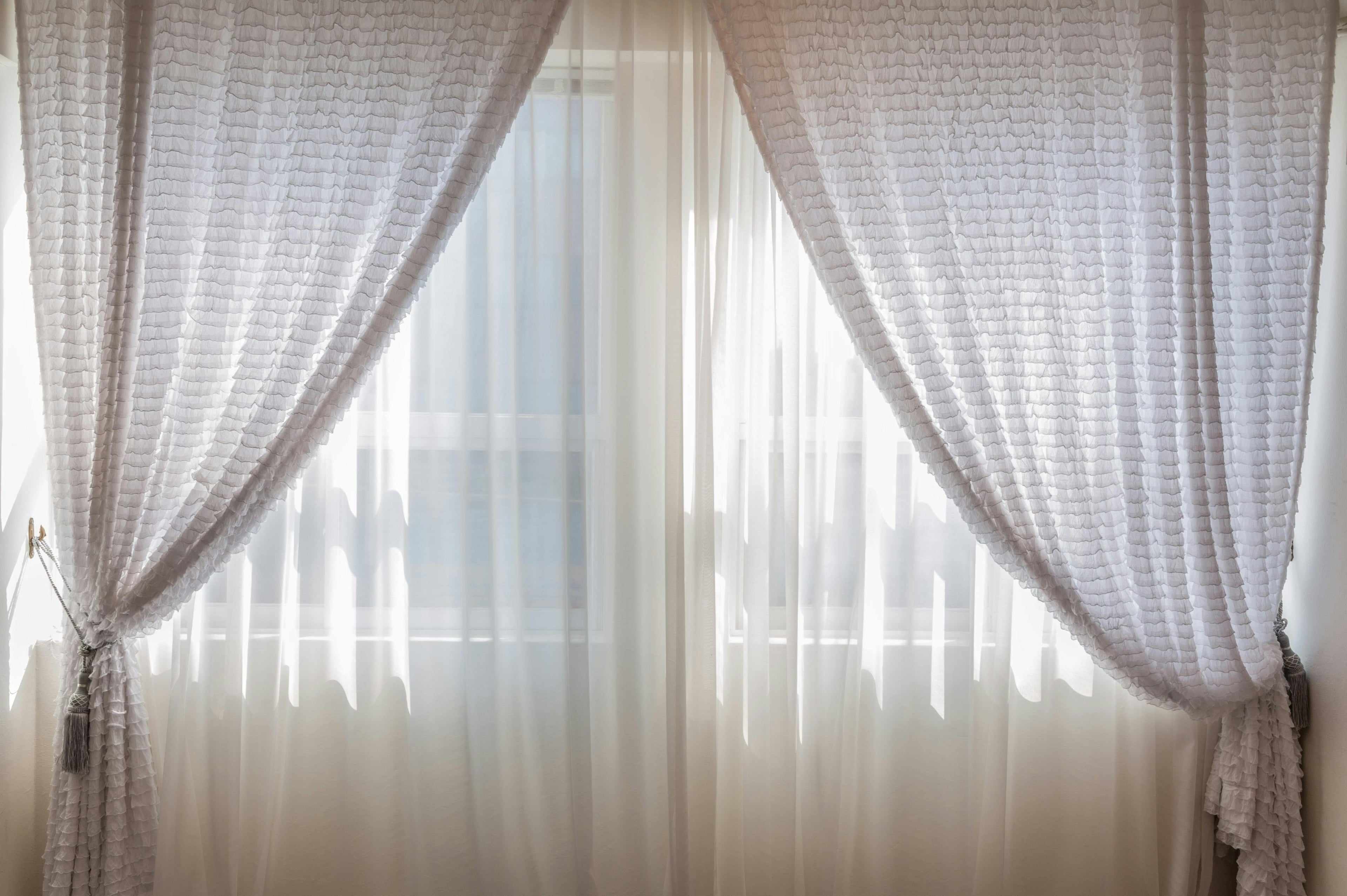
- Height: This is where the magic happens. To give the illusion of higher ceilings, fix the rod well above the window frame, between 15 and 30 cm. The curtain length should then just touch the floor ("touch floor") or form a slight puddle for a bohemian and romantic style. Avoid at all costs curtains that are too short and "float" above the floor.
Choosing the Ideal Suspension System: Rod, Track, or Cable?
The choice of suspension system is both aesthetic and functional. Current trends favor simplicity of lines and materiality.
Metal rods, in brass, black steel, or copper, are very popular. They bring an industrial or modern touch and are often left visible as a decorative element in their own right. Matching glider rings complete this look.
Tracks are more discreet and perfect for heavy curtains or sliding doors. Modern versions are often hidden behind a valance or integrated into a ceiling recess. Cord systems allow curtains to be opened and closed effortlessly.
Tension cables offer a minimalist and airy solution, ideal for contemporary spaces or small windows. They require precise installation and are best suited for lightweight curtains.
Essential Tools for a Solid Installation
Gather your materials before starting. A wobbly installation is often due to unsuitable tools. You will need a tape measure, a spirit level (essential!), a pencil, a drill, and wall plugs suitable for your wall type.
For drywall, always use Molly bolts or specific anchors for heavy loads. On a brick or concrete wall, nylon wall plugs and wood screws will do the job. Don't forget a drill with appropriate bits and, possibly, a stepladder to work safely at height.
Step by Step: The Custom Installation Guide
1. Locating and Marking Fixing Points
With your measurements in mind, mark the rod's position with a pencil. Use the spirit level along the entire length to draw a perfectly horizontal straight line. This is the most important step to avoid a disastrous result. Then mark the position of the brackets, spacing them evenly. As a general rule, place a bracket at each end and one every 50 to 80 cm to prevent sagging in the center.
2. Drilling and Fixing the Brackets
Drill at the marked locations with a drill bit the diameter of your wall plugs. Insert the wall plugs by tapping gently, then firmly screw in the rod or track brackets. Check their solidity by applying slight downward pressure. They must support the weight of the curtains multiplied by a safety factor, especially if you have children or pets who might pull on them.
3. Installing the Rod and Hanging the Curtains
If your rod comes in several parts, assemble them according to the manufacturer's instructions. Then slide the rings or hooks onto the rod before fixing it onto its brackets. This trick avoids a lot of frustration. Finally, hang your curtains. For a professional look, space the rings evenly and ensure the folds are harmonious from the initial installation.
Decorator Tips for a Professional Finish
To go beyond simply "hung curtains" and achieve a magazine-worthy level of finish, a few secrets make all the difference.
- Ironing or steaming: Always install your curtains after carefully ironing or steaming them. Manufacturing creases disappear, and the fabric hangs perfectly.
- The "settling" period: Leave the curtains hanging for a few days before trying to adjust the folds definitively. The fabric needs to get used to its new position under its own weight.
- Creating structured folds: For eyelet or ring curtains, you can gently tie the bottom of the curtain with a ribbon for 24 to 48 hours to help form regular and elegant folds.
- Lining for better structure: Even for decorative curtains, a light lining significantly improves the structure, opacity, and longevity of the main fabric.
Solutions for Unusual Windows and Common Challenges
Not all windows are standard. Fortunately, there are solutions for every configuration.
For a bay window or angled window, a curved or flexible track is the solution. It perfectly follows the shape of the window and allows the curtains to glide along the entire length without obstruction.
In the case of a window with a radiator underneath, opt for short curtains (ending at the window sill) or, if you prefer long curtains, choose a rod sufficiently spaced from the wall and lightweight curtains that do not block the heat.
For French doors, ensure the curtain, when open, does not block the passage. A slightly longer rod on one side can solve this problem. Roller systems or blinds can also be an interesting alternative.
Current Trends: How to Install Curtains in Style Today?
Interior decoration evolves, and so does curtain installation. There is a clear return to visible and sculptural rods, such as raw wood bars or matte black metal, which become a central decorative element.
The "ceiling mount" trend is becoming widespread. By fixing the rod directly to the ceiling rather than the wall, the height effect is further accentuated, and a strong graphic line is brought to the room.
Mix & match is also popular: layering a fine sheer curtain on a thin rod with a double rod supporting opaque curtains in thick linen. This allows total light control and adds depth.
Finally, customization and craftsmanship are valued. Rather than standard curtains, fabrics chosen by the meter and personalized finishes, such as contrasting hems or piping, are preferred.
Maintaining and Adjusting Your Curtains After Installation
Once your curtains are installed, a little maintenance ensures their lasting beauty. Regularly vacuum them with the brush attachment to remove dust. For washing, always refer to the manufacturer's label.
Some natural fabric curtains may shrink slightly on the first wash. This is why it is sometimes advisable to wash and iron them before final installation. Periodically check the sturdiness of the fixings, especially if you handle your curtains often.
FAQ: Answers to the Most Common Questions About Curtain Installation
At what exact height should the rod be installed?
There is no single answer, but a golden rule: the higher the rod, the higher the ceiling appears. A range between 15 and 30 cm above the window frame is standard. For maximum effect, you can even install it halfway between the top of the window and the ceiling, or directly under the cornice.
Should I prefer curtains that touch the floor or shorter ones?
The current trend is clearly towards curtains that touch the floor (barely skimming) or form a slight puddle. This brings elegance and luxury. Short curtains, ending at the window sill, are reserved for very specific contexts (kitchen, bathroom, window over a radiator) or a deliberately retro style.
How to install a rod in a drywall wall without it falling?
The key is to use the right wall plugs. Expansion anchors for plasterboard (like "Molly" bolts), self-drilling anchors for heavy loads, or fixings that screw into the metal stud of the partition (if you locate it with a magnet) are essential. Absolutely avoid standard plastic wall plugs.
Can heavy curtains be installed without drilling?
Solutions exist, such as tension rods (wedged between two walls) or high-strength adhesive bars. However, they are recommended only for light to medium curtains, over small widths, and for temporary installation. For heavy curtains and a permanent installation, drilling with appropriate wall plugs remains the safest solution.
How to calculate the amount of fabric needed for custom curtains?
For a lined curtain with fullness, the calculation is: (Rod width x fullness factor (1.5 to 2)) / fabric roll width = number of fabric widths. Round up to the next full width. For height: Finished height (from top of rod to floor) + hem (20-30 cm) + top hem (depending on the hanging system). A fabric store salesperson or a seamstress can help you precisely.
Conclusion: From Technique to the Decorative Finishing Touch
Installing curtains is much more than a simple DIY operation. It is the final touch that harmonizes a room, controls the lighting ambiance, and expresses your style. By following these meticulous steps—from strategic measuring to choosing an aesthetic and robust suspension system—you guarantee a result that is both beautiful and durable. Don't be afraid to play with heights, fullness, and materials. A well-installed curtain is an investment in your comfort and daily visual pleasure. To discover more inspiration and practical guides to transform every corner of your home, explore the other resources available on ombreinterieur.fr. Need practical advice? Read how to attach curtains with clips. Get inspired on our decoration website for your next projects.
