















How to Dress a Sliding Glass Door: Complete Guide 2026
Installing a French window is much more than simply creating an opening to the outdoors; it is a profound transformation of your living space. This major architectural decision brings abundant natural light, reshapes perspectives, and creates a unique connection between the interior and the garden or landscape. However, the path from idea to completion is filled with crucial questions: what type of French window to choose, how to integrate it into the existing structure, what are the administrative procedures, and how to make it a decorative asset? This article guides you step by step through this ambitious project, exploring current trends, technical requirements, and the countless decoration possibilities to make your French window the luminous heart of your home.
French Window: Much More Than a Window, an Architecture of Light
A French window is fundamentally different from a standard window in its dimensions and spatial impact. It is not a simple opening, but a true architectural composition that can extend from floor to ceiling, sometimes occupying the entire width of a wall. Its primary role is to optimize light intake, thus reducing the need for artificial lighting and creating a feeling of increased space. Beyond the practical aspect, it redefines the ambiance of a room, shifting it into a more open dimension connected to its environment. Whether you wish to contemplate a garden, enjoy an urban view, or simply flood a north-facing living room with light, the French window is the structuring element that will transform your daily life.
The Different Types of French Windows: From Classic to Custom-Made
Choosing the model is the first decisive step. It depends on your budget, the architecture of your home, and the desired effect.
The Sliding French Window
Extremely popular, it consists of large panels that slide on a track. Its main advantage is its space-saving design, as the opening panels do not require any inward or outward swing space. Ideal for creating a wide opening onto a terrace, it offers a perfect transition between spaces. Contemporary models feature almost invisible tracks and very large panels for a maximum panoramic effect.
The Casement or Tilt-and-Turn French Window
More traditional in its mechanism, it opens like a French door. The tilt-and-turn opening, which allows you to turn the handle to unlock only a ventilation slot at the top of the panel, is a must for discreet and secure ventilation. This type of window generally offers better air and water tightness when closed, thanks to stronger pressure of the panel against the seal.
The Fixed French Window (or Structural Glazing)
Here, there is no opening. The glass panel is entirely fixed, sealed into the structure. This solution is often chosen for very large surfaces or for compositions combining a fixed section with opening sections. It allows for impressive dimensions with minimal frames, for a completely unobstructed view. The major drawback is the lack of natural ventilation at that location, which must therefore be provided elsewhere.
Custom-Made Windows: Angles, Curves, and Specific Shapes
Innovation in profiles and glass tempering techniques opens up a world of possibilities. Corner windows, with two glass panes meeting at a very fine angle (thanks to invisible fixing systems), create a spectacular effect by visually removing the corner wall. Curved or arched windows require specific expertise but offer a seamless integration into modern architecture or bold renovations.
Frame Materials: PVC, Aluminum, Wood, or Composite?
The choice of frame material influences aesthetics, durability, insulation, and budget.
- Aluminum: This is the flagship material for contemporary windows. Its exceptional mechanical strength allows for very slim profiles and immense spans, maximizing the glazed surface. It is durable, does not rust, and is available in an infinite range of colors (lacquered, anodized, wood-effect). Aluminum with thermal break (an insulating barrier inside the profile) now offers excellent thermal insulation performance.
- PVC: Renowned for its excellent value for money and inherently high thermal insulation. Profiles are thicker than aluminum, which can slightly reduce the glazed surface. It requires little maintenance and withstands weather well. Its aesthetics have greatly improved, with finishes perfectly imitating wood or modern colors.
- Wood: It brings incomparable warmth and authenticity, ideal for traditional homes or Scandinavian interiors. However, it requires regular maintenance (stains, paints) to protect it from UV rays and humidity. Wood joinery is often the most expensive.
- Composite (Wood-Aluminum): The premium solution par excellence. It combines wood on the inside (for charm and insulation) with an aluminum shell on the outside (for weather protection without maintenance). This is the most durable and aesthetic option, but also the most costly.
Glass: The Key to Performance and Comfort
Glazing is no longer a simple piece of glass. It is a high-tech component with multiple properties. For a French window, double glazing is almost always chosen, or even triple glazing in very cold regions or for passive houses.
- Low-Emissivity (Low-E) Glass: Essential. A microscopic metallic layer deposited on an inner face of the glazing reflects heat back inside in winter and limits its entry in summer. This is the primary factor in energy performance.
- Argon Gas: The space between the panes is filled with this inert gas, a better insulator than air, further improving thermal coefficients (Ug).
- Heated or Solar Control Glass: Advanced technologies allow for the integration of transparent heating filaments or layers that selectively filter infrared rays (heat) while letting visible light pass through. Ideal for avoiding summer overheating while maintaining brightness.
- Safety: Tempered or Laminated Glass: For large surfaces, especially fixed sections or at regulatory heights, tempered glass (stronger) or laminated glass (which cracks but stays in place upon impact) is often mandatory for safety reasons.
The Essential Project Steps: From Idea to Installation
1. Design and Quotation
Start by precisely defining your needs: desired dimensions, type of opening, orientation, view to prioritize. Contact several professionals (joiners, specialized manufacturers) for detailed quotes. A good quote must include the dismantling of the existing window, supply of the new window, installation, finishing (plaster repairs, painting), and waste disposal. Do not hesitate to ask for references and visit completed projects.
2. Administrative Procedures: Building Permit or Prior Declaration?
This is a crucial and often underestimated step. Installing a French window, especially if it modifies the facade (enlarging an existing opening or creating a new one), is almost always subject to authorization.
- In an existing house, if you enlarge an opening or create a new one, a Prior Declaration of Works (DP) is generally required.
- If your house is in a protected area (listed site, ABF - Architect of Buildings of France), constraints are much stricter, and an in-depth study of materials and forms is required.
- For new construction, the French window is integrated into the Building Permit application.
Do not neglect this step, or you risk having to remove everything! Check with your local town hall or an architect.
3. Site Preparation and Installation
Installation is a critical moment that determines the watertightness, insulation, and longevity of your window. It must be entrusted to qualified installers (RGE certification is a guarantee of reliability). The key steps are: careful demolition of existing masonry, leveling and waterproofing of the threshold (soubassement), installation of the frame perfectly square and level, its sealing and anchoring, then installation of the opening panels. Special attention is paid to thermal bridges at the connections with the wall.
Integrating Your French Window into Interior Decoration
Once installed, the window becomes the focal point of the room. The decoration should accompany it, not compete with it.
Managing Light and Privacy
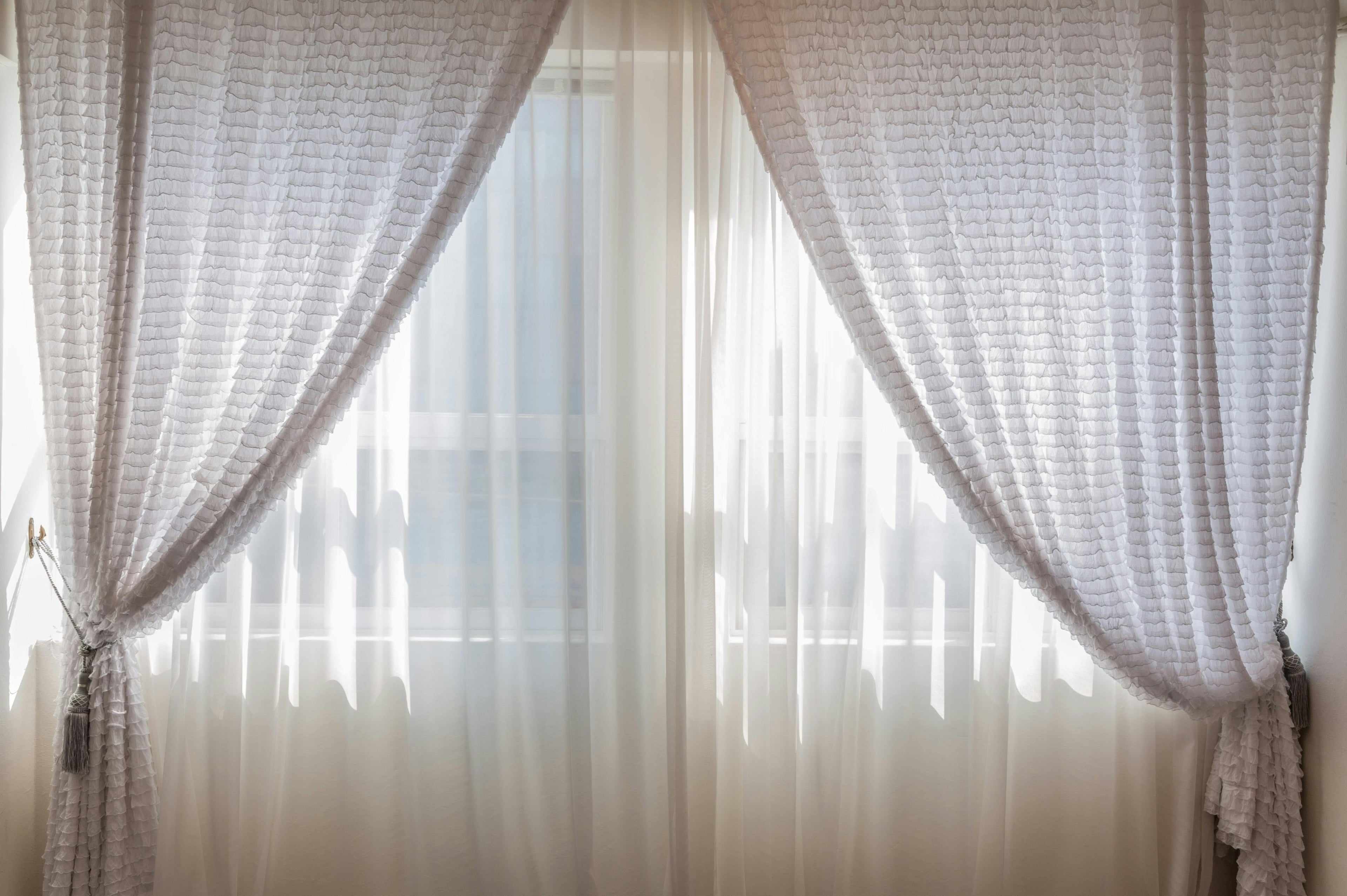
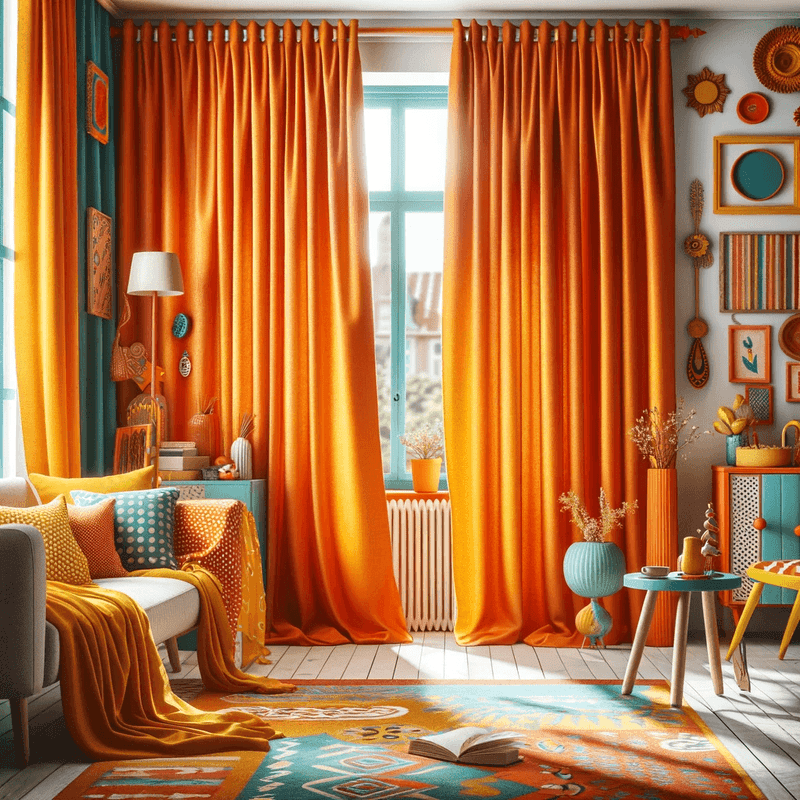
With a large glazed surface, light control is essential. External roller blinds are very effective against overheating. Inside, light sheer curtains (linen, cotton) diffuse light while preserving privacy without obstructing the view. Double curtains allow you to modulate the ambiance: permanent sheers and thick curtains drawn only in the evening. Venetian blinds or Japanese sliding fabric panels offer precise control of brightness.
Arranging the Surroundings: Threshold, Seating, and Greenery
The window threshold is a space to be enhanced. Creating a winter garden with light-loving plants (orchids, ficus, succulents) is a wonderful idea. A low banquette integrated under the window creates a reading nook or resting area bathed in light. If the window opens onto a terrace, consider a continuity of materials (e.g., stone tile flooring inside extending outside) to blur the boundary.
Choosing Colors and Materials
To highlight the opening, favor light and neutral colors on adjacent walls (off-white, very pale gray, taupe) which will reflect light. Natural materials like light wood (parquet, furniture), linen, rattan, or raw wool harmonize perfectly with natural light and strengthen the connection with the outdoors. Avoid overly massive furniture that could obstruct the view.
Current Trends for a Modern French Window
- Windows with No Visible Mullions (Frameless): Thanks to large tempered glass and invisible fixing systems, you get a perfectly clear panorama with no visual interruption.
- Folding or Bi-Fold Doors: For even more spectacular openings, these systems allow you to fold several panels against each other, thus opening an entire wall to the garden. Perfect for large terraces.
- Integration of Sliding Doors within the Window: The fixed window becomes the frame containing one or more sliding doors, offering great opening flexibility.
- Ultra-Slim and Black Profiles: Black (or anthracite) for aluminum is a strong trend. It draws a graphic and contemporary line around the glazing, almost making the frame disappear in favor of the view.
- "Smart" Windows: Connected to home automation, they can integrate motorized blinds controllable via smartphone, or even variable opacity glazing (electrochromic glass).
FAQ: Your Questions on Installing a French Window
What is the average cost to have a French window installed?
The cost varies greatly. For a standard PVC sliding window 3m wide by 2m high, expect between €2,500 and €4,000 including installation. For an equivalent model in aluminum with a slim profile, the price can rise to between €4,000 and €7,000. A custom-made, corner window, or one with very high thermal performance (triple glazing, wood-aluminum composite) can easily exceed €10,000. Obtaining multiple quotes is essential.
Can I install a large French window in an old house?
Yes, but this requires a serious structural study. Opening a large void in a load-bearing wall involves installing a load-bearing beam (lintel) above the window. This beam, made of steel, reinforced concrete, or laminated wood, must be calculated by a professional (architect, engineering firm) to support the weight of the masonry above. This is a delicate operation that increases the cost and complexity of the project.
How can I avoid overheating in summer with a large south-facing window?
Several combinable solutions exist: choose solar control glazing (specific Low-E), install external solar protection (blinds, adjustable brise-soleil, overhang) which is much more effective than internal blinds, and plan for cross-ventilation (opposite openings in the house) to create fresh air currents at night. External vegetation (a deciduous tree) also provides natural shade in summer and lets sunlight through in winter.
Does a French window cause significant heat loss in winter?
Not at all, if it is well chosen. Modern joinery with thermal break and double or triple low-emissivity (Low-E) glazing have thermal insulation performance (measured by the Uw coefficient) that rivals that of a well-insulated wall. A high-performance window can even be a source of free heat thanks to the greenhouse effect of solar rays in winter (passive solar gains).
What is the lifespan of a French window?
With quality installation and regular maintenance, a French window can last for decades. Aluminum or PVC joinery has an estimated lifespan of 30 to 50 years. Opening mechanisms (hinges, espagnolettes) may require adjustment or replacement after 15-20 years. Maintenance is limited to cleaning the glass, lubricating the mechanisms, and cleaning the seals and water tables (drainage grooves).
Conclusion: Dare the Luminous Transformation
Installing a French window is a significant investment, but it is also one of those that most radically and sustainably transforms the comfort and pleasure of living. By combining in-depth aesthetic reflection, a rigorous choice of high-performance materials, and the use of qualified craftsmen, you give yourself much more than a window: you create a living picture, a source of daily well-being, and a definite added value for your home. From the first sketch to the last decorative touch, this project requires time and attention, but the result—a space flooded with natural light and open to the world—is undeniably worth it.
Are you considering taking the plunge and transforming your interior with the magic of a French window? To deepen your inspirations and discover concrete projects, explore without delay the numerous resources and guides available on ombreinterieur.fr. Our blog is dedicated to helping you design the bright and harmonious home you dream of. Our guide how to integrate a candle in a small 20 m bedroom helps you make the right choice. Visit ombreinterieur.fr to explore the entire catalog.
