
















How to Install Day and Night Curtains: Complete Guide
In the world of interior decoration, windows are much more than simple openings to the outside. They are the eyes of your home, and how you dress them largely defines the atmosphere of a room. Among the most elegant and functional solutions for managing light and privacy, the curtain day and night system stands out as a must-have. This winning duo, consisting of a lightweight sheer curtain and a blackout curtain, offers unparalleled versatility. But knowing how to install day and night curtains correctly is a crucial step in transforming this setup into a major aesthetic asset. This article is your comprehensive guide, from understanding the concept to perfect finishes, including fabric selection, rods, and the most current installation techniques.
Understanding the principle of the day and night curtain duo
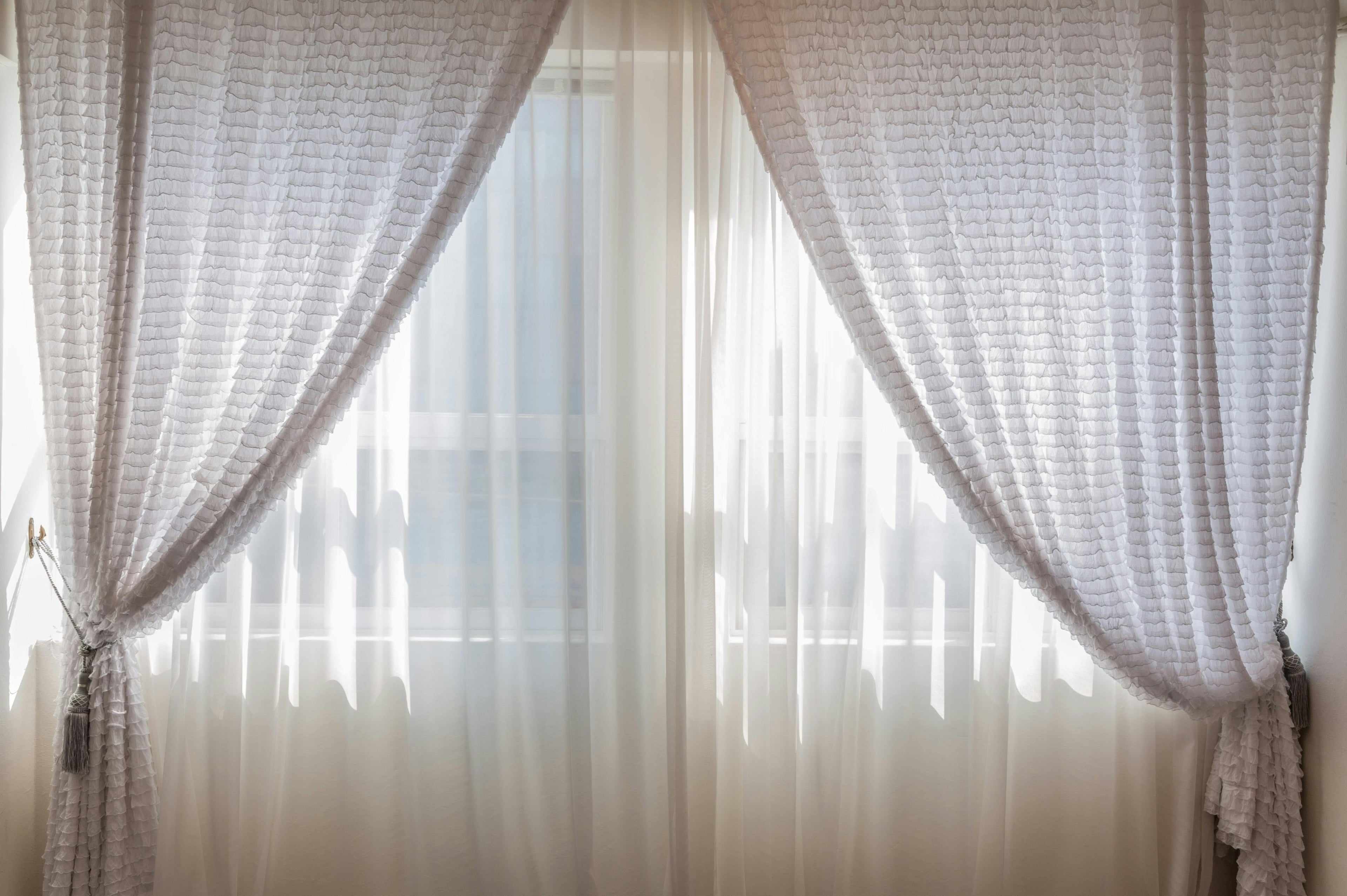
Before starting the installation, it is essential to grasp the philosophy behind this double-layer system. It is not simply about layering two fabrics, but creating a synergy between two distinct and complementary functions. The day curtain, often a sheer, muslin, or lightweight linen, filters natural light without blocking it, preserves privacy while letting in brightness, and softens the room's contours.
The night curtain, on the other hand, is the functional element par excellence. Generally made of thick fabric, lined, or with blackout properties, its mission is to block outside light (ideal for bedrooms or home cinemas), provide thermal and acoustic insulation, and create a total visual barrier. Together, they allow for fine management of the light ambiance throughout the day, transitioning from a soft diffused dimness to complete darkness.
Choosing fabrics: the foundation of a successful installation
Selecting textiles is the most creative and one of the most important steps. Current trends favor natural materials and textures.
For the day curtain (the sheer)
Opt for fabrics that let light through while blurring details from outside. Lightweight linen, with its natural irregularities, brings a touch of authenticity and warmth. Cotton or polyester muslin offers a vaporous, romantic drape. Embroidered sheers or those with subtle patterns add an extra decorative dimension. A strong trend is the use of colored sheers (pale blue, salmon pink, water green) to project a soft colored tint into the room during sunny hours.
For the night curtain (the blackout)
Here, priority goes to performance. Fabrics lined with thermal backing are excellent for insulation. Velvets, very much in vogue, bring luxury, depth, and excellent blackout. Cotton sateen or opaque jacquards offer a more structured look. For a contemporary effect, technical fabrics with integrated blackout treatment are unbeatable for creating total darkness. Also consider the weight of the fabric: it must be heavy enough to hang well and not float at the slightest draft.
Measuring your window: the crucial step not to overlook
A measurement error is the number one enemy of a harmonious installation. To install day and night curtains like a pro, you need a tape measure, a pencil, and a notepad.
- Width: The golden rule is to plan a rod or pole whose length extends well beyond the window frame. For a generous effect and to be able to fully open the curtains without covering the glass, allow 20 to 30 cm of overhang on each side. The total fabric width of the curtains (for both panels combined) should be 1.5 to 2.5 times the rod width for rich, elegant pleating.
- Height: This is where the dramatic or clean effect is determined. Several options are available: floor-length installation (the curtain just brushes the floor, modern and fluid effect), pooling on the floor (the curtain spreads 2 to 5 cm on the floor, luxurious and traditional effect), or sill-length installation (between the window sill and the floor, for radiators below). Always measure from the planned fixing point for the rod to the desired endpoint.
- Rod height: To visually enlarge the window and the room, fix the rod high, halfway between the top of the window and the ceiling, or even just a few centimeters from the latter. This trick is a decorator's secret to creating ceiling height.
Selecting the fixing system: rods, tracks, and cables
The support for your curtains is both technical and aesthetic. There are three main families.
Classic rods
They are robust and visible, forming an integral part of the decoration. Models in brass, black iron, or raw wood are very trendy. To install day and night curtains, you have two options: install two parallel rods (one in front for the day, one behind for the night) or a double rod, specially designed with two superimposed tracks, more discreet and easier to install. Ensure the wall or ceiling fixing is strong, especially for heavy night curtains.
Ceiling tracks
They are the ideal solution for a minimalist and contemporary look. Concealed by a valance or left visible in a slim aluminum profile, they allow very smooth opening and closing, often on a pulley system. Double-track rails are perfect for our day/night duo, allowing both layers to slide independently on the same axis.
Tension cables
They bring a very current industrial or Scandinavian touch. A steel cable is tensioned between two wall fixings. Curtains are hung via hooks or sliding rings. It is aesthetic and lightweight, but less suitable for very heavy curtains. For a day/night system, two parallel cables will need to be tensioned.
Hanging techniques: rings, grommets, or pleats
The way the curtain is suspended radically influences its drape and style.
- Sliding rings: Practical and universal, they slide on the rod. They are chosen to match the rod finish (brass, nickel, etc.). They allow easy opening.
- Grommets (metal eyelets): Very modern, this system involves making reinforced holes in the top edge of the curtain. The rod passes directly through the grommets. The effect is graphic, with regular, structured pleats. It requires a thin, suitable rod.
- Pleating tape: A tape with drawstrings is sewn to the back of the curtain. By pulling the cords, regular pleats are formed (flat pleats, pencil pleats, French pleats). This is the most traditional and elegant solution, offering a rich and customizable fall. It is often used for more formal night curtains.
- Clips: Decorative clips allow the fabric to be hung directly on the rod, creating a romantic, unstructured draped effect, more suitable for sheers.
Step-by-step installation: how to install your day and night curtains
Now let's move to practice. Here is the methodology for installation on a double wall rod, the most common type.
Step 1: Preparation and marking
Using a spirit level and a tape measure, pencil-mark the location for the night curtain rod (the back one) then the day curtain rod (the front one), respecting the necessary gap so the curtains do not touch (about 5 to 8 cm). Mark the location for the wall plugs. Use a drill/driver suitable for your wall (expansion plugs for brick, Molly plugs for drywall, etc.).
Step 2: Fixing the brackets
Screw the night curtain rod brackets firmly in place first. Check for perfect horizontality. Repeat the operation for the day curtain rod brackets, aligned with the back ones.
Step 3: Installing the rods and curtains
Thread the rings or grommets onto the rods before fixing them, if your system requires it. First, place the night curtain rod on its brackets and secure it. Hang or thread the night curtains. Repeat the operation with the day curtain rod and curtains. For a ceiling track system, the principle is similar, but fixing is done directly into the ceiling, ideally into a joist or with suitable plugs.
Step 4: Adjustment and finishing
Leave the curtains hanging for 24 to 48 hours. Natural fibers like linen or cotton will stretch under their own weight. After this time, adjust the final height if necessary (easier with adjustable pleating tape). Spray a little water and use a steam iron to remove storage creases and perfect the drape.
Current trends in day and night curtains
Decor evolves, and with it, the ways to use them. We observe a movement towards more naturalness and mixing.
The "Japandi" style, a fusion of Japanese and Scandinavian, advocates clean lines, natural materials (linen, raw cotton), and neutral tones. Here, the day curtain could be a fine paper shoji or a beige linen, while the night curtain is a natural fiber blackout panel sliding on a hidden track.
The use of color is also making a comeback. Dare a tinted sheer in a pastel color that diffuses colored light, contrasting with a night curtain in a deep, matte tone, like midnight blue or forest green.
Finally, asymmetry and texture mixing are all the rage. Why not pair a lightweight, transparent linen sheer with a corduroy velvet blackout curtain? Or leave one side of the duo open for a dynamic, less conventional effect.
Common mistakes to absolutely avoid
Even with the best intentions, certain faults can ruin the result.
- Curtains that are too short: A curtain that stops abruptly at the window sill edge has an "undressed" effect. Always prefer too long over too short.
- Poorly placed rod: A rod fixed just above the window visually shrinks the opening. Mount it high!
- Fabric that is too narrow: Stretched curtains, without generous pleats, appear stingy and un-luxurious. Respect the width multiplier coefficient.
- Neglecting the lining: For night curtains, a thermal or blackout lining is not an accessory; it is a necessity for performance and protecting the main fabric from the sun.
- Fragile fixings: Under the weight of a lined velvet, an unsuitable plug in drywall can give way. Invest in solid fixings.
FAQ: Answers to your questions about day and night curtains
Can day and night curtains be installed on a sliding glass door?
Absolutely, and it is even an excellent solution. For a sliding glass door, a curved ceiling track (following the angle) or a flexible track is ideal. It allows the curtains to slide along the entire length of the door. Plan for significant fabric lengths and a very robust ceiling fixing system. Using parallel tension cables can also create a spectacular, airy effect on a large opening.
Are two different rods mandatory?
No, there are more discreet integrated solutions. The double rod, with two integrated tracks in a single profile, is perfect for a clean look. Double-track (or even triple-track if adding a blind) ceiling rails are also designed for this. These systems greatly simplify installation and alignment.
How to maintain day and night curtains?
Maintenance depends on the fabrics. Synthetic sheers can often be machine washed at low temperature. Natural fabrics like linen or cotton may shrink; dry cleaning is sometimes recommended, especially if lined or treated. Regularly vacuum with the brush attachment to prevent dust buildup. For stains, always act locally and test the product on a hidden hem first.
What budget to plan for installing day and night curtains?
The budget is highly variable. It depends on window size, fabric quality (natural linen costs more than polyester), the fixing system (an artisan brass rod is an investment), and installation (done by yourself or a professional). For a standard window, doing the work yourself, expect between 150 and 500 euros for a quality set. For custom fabrics and professional installation, the budget can easily exceed 1000 euros per window.
Are day and night curtains suitable for all decoration styles?
Yes, thanks to their extreme versatility. In a modern interior, opt for straight lines, solid fabrics, hidden tracks, and neutral tones. In a bohemian decor, mix a lightweight embroidered sheer with a colored velvet night curtain with fringes. For a Scandinavian style, white linen and thick natural cotton on a white wooden rod will work perfectly. It is the choice of materials, colors, and hanging systems that adapts them to your style.
Conclusion: Mastering light and style
Learning how to install day and night curtains is much more than a simple DIY skill. It is giving yourself the keys to sculpt light, modulate privacy, and assert your decorative style with strength and elegance. From the meticulous selection of textiles to the precise height adjustment, each step contributes to creating a custom ambiance. Whether you seek the total darkness of a peaceful bedroom or the soft filtered brightness of a living room, this dual system offers you absolute control. Do not be afraid to play with textures, lengths, and fixing systems to create a unique installation that tells your story. To discover more inspirations and practical guides to transform every room in your home, explore without delay the numerous resources available on ombreinterieur.fr. For more tips, discover how to attach 2 curtains together on the blog. Get inspired on our decoration website for your upcoming projects.
