

















Complete guide: how to hang a curtain track
Installing a curtain on a track is as much an aesthetic decision as a practical one: it shapes the light and mood of your room. Before you drill, take time to understand the nuances of available systems, from classic rails to motorised models, and tailor your installation to both your support and your desired style. This guide invites you to approach each step with care, for a result that is both sturdy and refined. Let us lead you through a confident installation that unlocks the full potential of your windows.
Hanging a curtain track may seem like a simple technical step in arranging a room, but it is actually a decision that profoundly influences the ambiance, functionality, and aesthetics of your interior. Whether you want to dress a majestic bay window, delineate a space in a loft, or simply add a touch of elegance to your bedroom, the choice and installation of the track are crucial. With the rise of trends like large openings, modular spaces, and minimalist interiors, the curtain track has once again become a central element of decoration, offering a discreet, robust, and modern solution. This article guides you step by step, from the fundamentals of choosing the right hardware to expert installation techniques, to turn this project into a success that will enhance your windows for years to come.
Understanding the Different Types of Curtain Tracks
Before getting out the drill, it is crucial to select the system suited to your needs. The market offers a diversity of solutions, each with its specific advantages. The classic track, often made of aluminum or steel, is the most versatile. It can be fixed to the ceiling or wall and can be curved to fit angled windows or rounded bays, a strong trend in contemporary architecture.
Tracks with integrated gliders, where the hooks slide in a discreet slot, offer an ultra-thin and aesthetic profile, perfect for a clean style. For tight spaces or temporary installation, professional-quality adhesive tracks, using VHB (Very High Bond) tape, constitute a serious no-drill alternative, provided the surface is perfectly smooth and clean.
Finally, motorized systems are gaining enormous popularity, integrating home automation into decoration. Controllable via a remote, a smartphone app, or even voice, they offer unmatched comfort and an elegant high-tech touch, particularly appreciated for large bay windows or heavy curtains.
The Essential Hardware for a Successful Installation
A solid and durable installation relies on choosing the right accessories. Don't skimp on quality, as a poorly supported track can eventually give way, damaging your wall and your curtain. The fixing brackets, or brackets, are the key element. Their spacing is crucial: for a standard track, plan for a bracket every 50 to 60 cm, and systematically at each end.
For longer tracks (over 2 meters) or to support heavy curtains in velvet or lined ones, reduce this spacing to 40 cm. Wall plugs suitable for the support (drywall, concrete, brick, wood) are non-negotiable. In drywall, use expansion anchors like Molly anchors or genuine heavy-duty fixings. For hooks and gliders, check their compatibility with the groove of your track and the type of rings on your curtain.
Don't forget the finishing touches: the track end caps, which hide the cut ends, and the connectors, which allow you to join several track sections in a straight line or at an angle. A miter box and a hacksaw will be needed for a clean and precise cut.
Project Preparation: Measurements and Marking
This step is the most important to avoid unpleasant surprises. Take the time to measure carefully and visualize the final result. First, determine the hanging height. For a ceiling fix, the track will be positioned about 5-10 cm from the window. For a wall fix, place it 10-15 cm above the window frame.
This allows the curtain to properly cover the window when closed and let in maximum light when open. Regarding the width, the track should extend beyond each side of the window by at least 15 to 20 cm. This trick allows the glass to be completely uncovered when the curtains are open, flooding the room with natural light and creating an impression of more space.
Use a good-quality spirit level to draw a perfectly straight guide line. On a long wall, a laser level can be a valuable investment. Then mark the precise location of each bracket on this line, respecting the calculated spacing. Remember to check for the absence of electrical cables or pipes behind the drilling area using a detector.
Fixing Techniques According to Your Wall Type
The fixing method varies radically depending on the nature of your wall. For a solid wall made of concrete or brick, a hammer drill and chemical or nylon wall plugs suitable for the diameter of your screws will ensure an unshakeable hold. Drill to the correct depth, insert the plug, and firmly screw in the bracket.
For drywall, caution is advised. It is imperative to locate the metal studs using a magnet or a stud detector. Fixing directly into a stud is the strongest solution. If your track must be installed between two studs, you must use specific drywall anchors, designed to distribute the load over a wide area behind the board.
Self-drilling expansion anchors are an excellent option. For wooden walls, installation is simpler with wood screws directly into the joists or plank. In all cases, ensure the bracket is perfectly vertical and does not wobble before proceeding.
Ceiling Fixing: Precautions to Take
Hanging a curtain track from the ceiling is often the most aesthetic solution, creating a fluid and modern line. However, it requires particular attention. It is imperative to drill into the ceiling joists or beams for a secure hold. Use a metal or wood detector to locate them precisely.
If the configuration does not allow it, you will need to install a wooden batten securely fixed into several beams, then screw the track onto this batten. This method ensures perfect weight distribution. Also check the ceiling height to ensure the curtains will not drag on the floor once hung.
Step-by-Step Installation of the Track and Curtains
Once the brackets are securely fixed, you can proceed with installing the track. Start by cutting the track to the desired length using a hacksaw, protecting the cut area with adhesive tape to prevent splintering. File the edges slightly to make them perfectly smooth.
Thread the gliders and hooks onto the track before fixing it, if they are not pre-installed. Position the track on the brackets and screw it firmly in place. Check the level one last time with your spirit level. Now it's time to hang the curtains. Depending on the system (rings, pinch-pleat hooks, eyelets), the method differs.
For curtains with eyelets, simply slide the track through the rings. For curtains with a heading tape, insert the pinch-pleat hooks into the tape's pleats at regular intervals, then hook them onto the gliders. Gently pull and close the curtain to check the smoothness of the glide.
Personalization and Current Decorative Trends
The track is no longer a purely functional element to hide; it can become a decorative asset. Exposed metal tracks, in brushed brass, matte black, or brushed steel, are a major trend. They add an industrial or refined touch and structure the space with elegance.
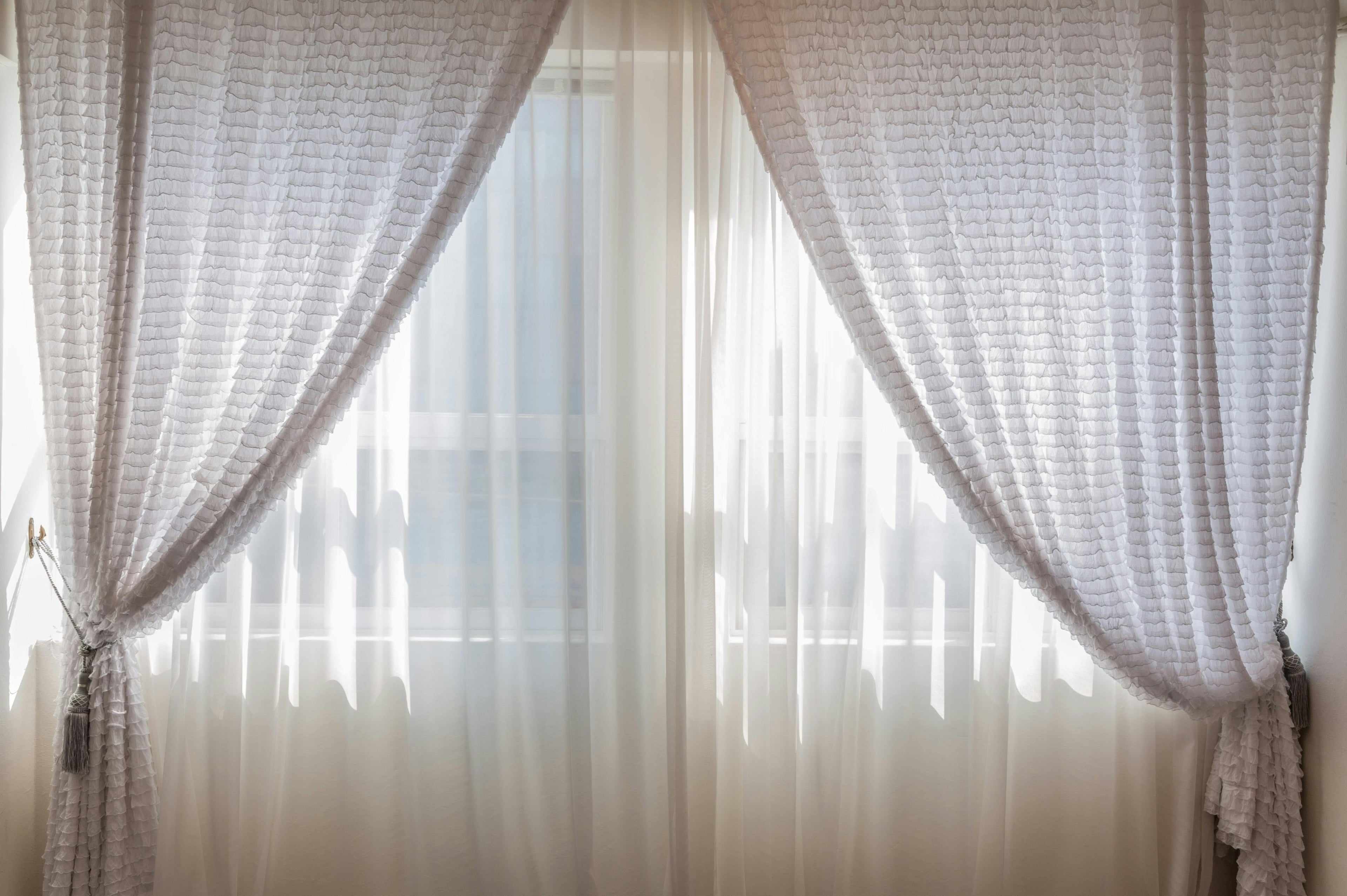
For a spectacular visual effect, play with length and texture. Curtains falling in a generous cascade just skimming the floor (or even forming a slight "pooling") create an impression of luxury and ceiling height. Pair a fine sheer curtain with a thicker curtain on the same double track to control light and privacy throughout the day.
Tensioned steel cables, almost invisible, are perfect for a minimalist and airy style. Finally, don't hesitate to use the track as a tool for structuring space in an open-plan room, to delineate a home office corner or a relaxation area in a fluid and modular way.
Troubleshooting and Solutions to Common Problems
Even with meticulous preparation, a few minor issues can arise. A track that sticks or squeaks when opening is often due to a lack of lubrication or deformed gliders. Cleaning the track and a light application of silicone spray or candle wax on the runner usually solves the problem.
If the track seems to sag in the center, the brackets are too far apart for the weight. Add one or more intermediate brackets. Curtains that don't meet perfectly in the center may indicate a track that is too short or poorly positioned end stops. Check and adjust their placement.
Finally, for an adhesive track that starts to peel, carefully clean the surface with isopropyl alcohol and reapply it, exerting firm and prolonged pressure. For a permanent hold on drywall, transitioning to a mechanical fix is often recommended.
FAQ: Answers to Your Questions on Hanging Curtain Tracks
What is the difference between a curtain rod and a track?
The rod, often made of wood or metal, is usually visible and the curtains slide via rings that go around the rod. It has a definite decorative value. The track is a more discreet system, fixed to the ceiling or high on the wall, in which the hooks slide in a groove. It is more suitable for heavy curtains, large widths, and curves, and often offers quieter and smoother operation.
Can you install a curtain track alone without DIY skills?
Absolutely. With the right tools, clear instructions, and a bit of method, installing a standard track is a perfectly accessible DIY project. The key lies in preparation: precise measurements, careful marking, and choosing the right wall plugs for your wall. For more complex installations (curved track, motorization, fixing into a ceiling without reference points), calling a professional can be a guarantee of peace of mind and perfect finish.
How to choose the curtain length in relation to the track?
The width of the curtain(s) should be generous for a beautiful effect when closed. A common rule is to plan for a fabric width equal to 1.5 to 2 times the width of the track. For a very full and luxurious style, you can even go up to 2.5 times. For the height, measure from the base of the hooks (on the track) down to the desired length (above the floor, skimming the floor, or with pooling).
Are adhesive tracks a reliable and durable solution?
Today's high-performance adhesive tracks, using VHB adhesive technology, offer impressive strength on perfectly smooth, non-porous, and clean surfaces (tiles, glass, painted metal). They are an excellent solution for rentals, surfaces that cannot be drilled, or light to medium-weight curtains. However, for heavy curtains, large widths, or fixings on plaster or textured paint, mechanical fixing (drilling) remains unquestionably the most reliable and durable over time.
How to integrate a curtain track into a modern decoration?
For a modern integration, prioritize discretion or graphic statement. A slim, white profile track, fixed to the ceiling, blends into the decor and highlights only the curtain. Conversely, an exposed black or brass metal track becomes an architectural element in its own right. Play with contrasts: a black track on a white wall with linen curtains in beige. Opt for cordless systems, which are more streamlined and safer, and don't hesitate to use the track to create fluid room dividers in open-plan living spaces.
Conclusion: Towards a Perfectly Dressed Interior
Hanging a curtain track is much more than a technical task; it is the opportunity to finalize the luminous and stylistic ambiance of a room. By mastering the steps of choosing the system, meticulous preparation, and installation adapted to your support, you guarantee not only the longevity of your installation but also its aesthetic impact. Whether you are drawn to the discretion of an integrated track, the character of an exposed metal, or the high-tech of silent motorization, this solution offers unmatched versatility. Let your creativity run free to play with lengths, textures, and materials. To discover more inspiration and practical guides to transform every detail of your home, explore without delay the many resources available on ombreinterieur.fr. For more tips, discover how to separate two rooms with a curtain on the blog. Browse our online store to see all our collections.
