















Hanging curtains without drilling: solutions and tips
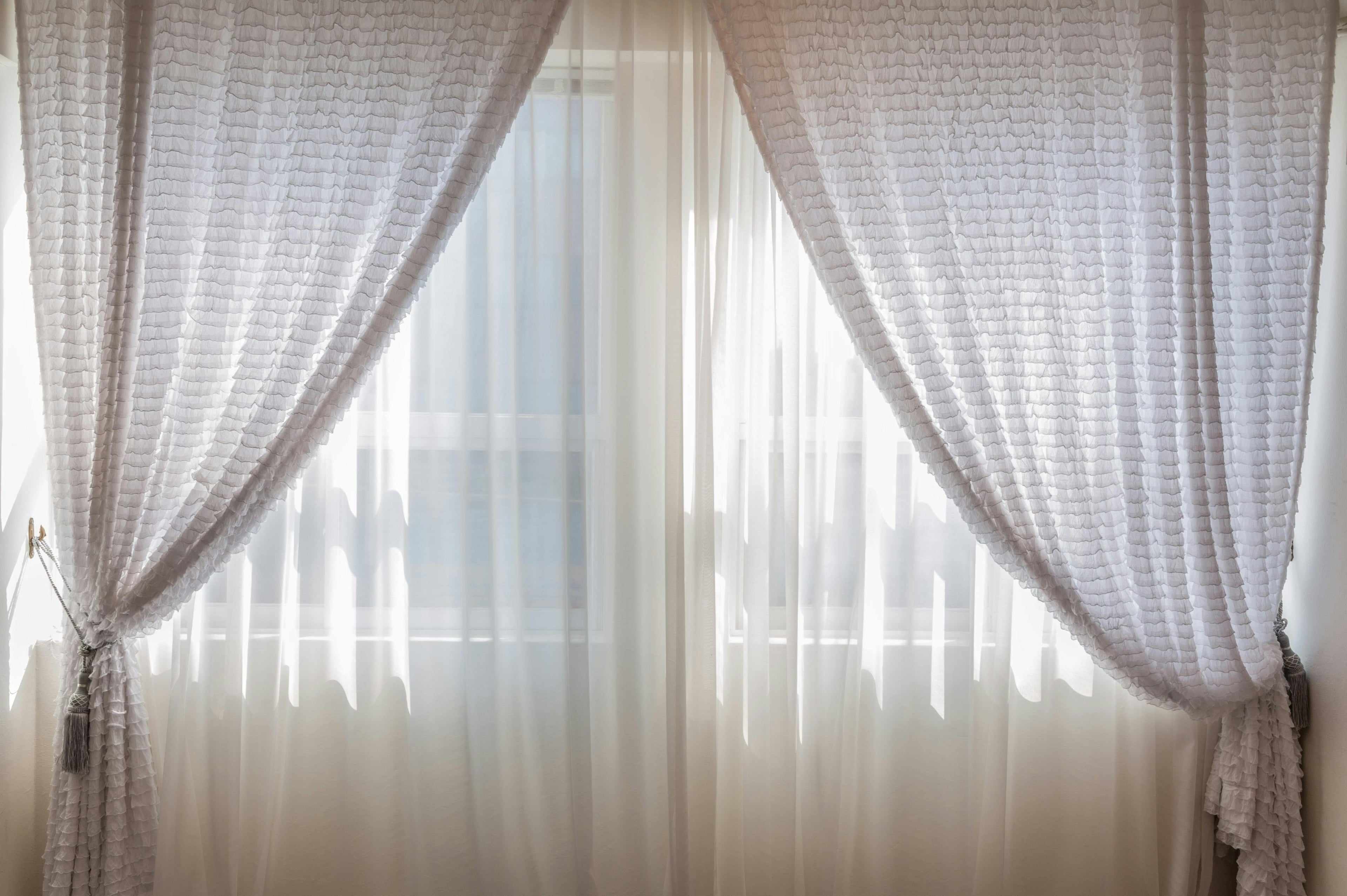
Personalising your home should never mean invasive work or the fear of damaging your walls. For tenants, fans of reversible décor, or those with delicate surfaces, the question of hanging curtains without drilling is a pressing one. Far from being a compromise, these clever alternatives combine elegance with practicality, giving you total creative freedom. Tension rods, high-performance adhesives or magnetic solutions: let us guide you to the method that will transform your windows with style, without leaving a trace.
Hanging curtains without drilling into the wall is a quest that resonates with a multitude of contemporary life situations. Whether you're a tenant concerned about your security deposit, a resident in a shared apartment, a fan of frequent decor changes, or simply faced with a fragile or tiled wall, the search for non-invasive solutions has become a priority. Fortunately, innovation in the field of decoration and DIY has given rise to a range of clever, effective, and aesthetic alternatives. This article is your comprehensive guide to dressing your windows with elegance and lightness, without leaving unwanted marks. We will explore in detail all available methods, from tension rods to creative hanging tricks, including high-performance adhesives, so you can choose the solution perfectly suited to your interior, your type of curtain, and your lifestyle.
Why Avoid Drilling? The Reasons Behind the "No-Drill" Trend
The desire not to drill into one's walls goes far beyond the simple rental constraint. It's a philosophy that fits into modern and flexible lifestyles. For mobile generations, often required to move, reversible decor is a valuable asset. It allows you to take your solutions with you and personalize a temporary home without commitment.
From a practical point of view, avoiding holes also means avoiding dust, plaster chips, and sometimes bulky drilling equipment. It's a cleaner and faster approach. Aesthetically, certain alternative solutions, like tension rods, bring a clean and contemporary line highly sought after in minimalist or Scandinavian interiors. Finally, for delicate surfaces like bathroom tiles, glass walls, or poor-quality drywall, no-drill methods are often safer and more respectful of the surface.
The Essential Tension Rod: Simplicity and Efficiency
The tension rod is arguably the most iconic and reliable solution for hanging curtains without drilling. Its principle is ingenious: a telescopic rod held in place by the pressure it exerts between two walls or in a window recess. Its success is undeniable, as it combines express installation and professional results.
Choosing a tension rod must be done carefully. Precisely measure the width of your recess or the space between the walls where you want to position it. The rod should be able to be extended about 5 to 10 cm more than this measurement to ensure sufficient pressure. For standard windows, diameters of 16 to 28 mm are common. For heavy curtains (velvet, lined) or very large windows, opt for robust steel models with a solid locking system, often a screw that locks the extension.
Step-by-Step Installation and Stability Tips
First, clean the contact surfaces (walls or frames) with a little alcohol to remove any grease. Position the rod at the desired height, usually 10-15 cm above the top of the window. Gently twist or stretch it until it is firmly wedged. A good test: the rod should not fall if you let go of one end, but it should not warp the wall either. For optimal hold on smooth walls (painted, tiled), adding small felt or rubber pads (often provided) to the ends significantly increases grip and prevents marks.
High-Strength Hooks and Adhesive Tapes: The Bonding Revolution
The advent of adhesives like command strips or VHB (Very High Bond) double-sided tape has changed the game. These systems combine extremely powerful bonding with clean, residue-free removal, provided the instructions are scrupulously followed. They are perfect for fixing light rod brackets or very light curtains like sheer curtains.
It is crucial to distinguish uses. To fix a rod bracket (a metal or plastic hook), use adhesive pads designed for the weight. Leading brands clearly indicate the maximum load per pair (for example, 2 kg). For a light curtain, one can consider double-sided tape for textiles, but this remains limited to very light sheers. Wall preparation is essential: perfectly smooth, dry, non-porous, and dust-free surface. Avoid textures like stucco or vintage wallpaper which reduce adhesion.
Limitations and Precautions You Absolutely Must Know
These adhesive solutions have their weaknesses. They are sensitive to heat and humidity. Fixing them in a very humid bathroom or behind a radiator is risky. Application time is also key: you must press firmly for 30 seconds and often wait an hour before hanging anything. Finally, removal must be done by gently pulling the tab parallel to the wall, not pulling down, to activate the residue-free detachment mechanism.
Magnetic Rods: The Ally of Metal Windows
If you are lucky enough to have windows or French doors with a steel or aluminum frame, magnetic rods are an elegant and ultra-easy solution. They look like classic rods, but with a magnetized side that attaches directly to the metal of the frame. Installation is literally instant and offers remarkably strong hold, capable of supporting medium-weight curtains.
Again, check compatibility. The magnet must adhere to the structure of the frame itself, not just a thin trim. Test beforehand with a refrigerator magnet. These systems are discreet and allow you to place the curtain very close to the glass, a sought-after effect for a modern look. Some models even offer reinforced neodymium magnets for maximum adhesive power on double curtains.
Creative and Alternative Solutions for Hanging Your Curtains
Beyond dedicated products, decor invites creativity. Several everyday objects can be repurposed into original curtain supports, adding a personal and stylish touch to your interior.
Over-the-door hooks (or door hangers) are an ingenious option for bedrooms or dressing rooms. Hung on the top of a door, they allow you to hang a light curtain to separate a space. Choose robust models in wood or metal to avoid deformation. Roller doors, on the other hand, use the principle of a rolling wheel in a track. Fixed with powerful adhesives at the top of the recess, it allows a roll-up curtain or a light textile panel to slide with great fluidity.
Using Balcony Rods or Natural Branches
For a bohemian or rustic spirit, why not use a long, strong, straight branch, carefully cleaned and possibly sanded? Held by sturdy ropes tied at each end and fixed to the wall with screw hooks (or even to beams if you have them), it creates a unique support. Similarly, a steel balcony rod, available at hardware stores, can be hung by chains for a chic industrial look. These solutions require a bit more DIY but offer a completely personalized result.
Hanging Heavy Curtains Without Drilling: The Challenge Met
Many think that heavy curtains and no drilling are incompatible. It's a challenge, but not an impossibility. The key lies in weight distribution and choosing oversized systems. A large diameter (28-32 mm) steel tension rod, perfectly adjusted and locked between two load-bearing walls, can support considerable weight. Ensure the ends are wide for good pressure distribution.
Another strategy is to use several light anchor points rather than one heavy point. Instead of a central rod, consider two shorter tension rods placed side by side, or use several ultra-resistant adhesive hooks distributed on a lightweight aluminum track. For grommet-top curtains, which concentrate weight on a few points, prefer slide rings distributed along the entire length of the rod, which balances the load.
Choosing Curtains Suitable for No-Drill Installations
Not all curtains are equal for this type of installation. To maximize your chances of success and the longevity of your installation, lean towards certain models. Light curtains in linen, fine cotton, voile, or polyester are ideal candidates. Styles with rod pockets (tunnels) through which the rod passes directly are perfect for tension rods, as the weight is evenly distributed.
Ring-top curtains are also excellent, especially if the rings have silent gliders for easy handling. Conversely, avoid very thick double curtains with heavy thermal linings, or grommet-top curtains with metal grommets over long widths, which create significant tension points. If you absolutely want a heavy fabric, consider having it cut to a narrower width or opt for a "drapery" style that is tied rather than drawn.
FAQ: Your Questions About No-Drill Curtains
Do Tension Rods Really Damage Walls?
No, if they are well chosen and installed correctly. The main risk is marks from the ends on the paint. To avoid this, always use the provided felt or rubber protectors. On walls with fragile paint or vintage wallpaper, test first in a discreet corner. An overly tight rod can, in rare cases, cause micro-cracks on plaster corners, so adjust with moderation.
Can These Methods Be Used on Tiles or Concrete?
Yes, and it's often even easier! Smooth, non-porous, and hard surfaces like tiles or painted concrete are ideal for high-performance adhesives and quality suction cups. Adhesion is excellent there. For tension rods, ensure the ends have a non-slip coating suitable for hard surfaces.
How Long Do Powerful Adhesives Hold?
Quality products, correctly applied on a suitable surface, are designed to last for years. However, it is recommended to periodically check the strength of the adhesion, especially if the curtains are frequently handled. Manufacturers often guarantee residue-free removal for several years after installation.
How to Hide or Dress a Tension Rod for a More Decorative Look?
Several tricks exist. You can choose a colored tension rod (brass, copper, matte black) that becomes a decorative element. Otherwise, conceal it with a valance or cornice fixed with adhesives. A plant or light garland wrapped around the rod can also create a charming effect and divert attention.
What is the Strongest Method for a Shower Curtain?
For a shower curtain, the tension rod remains the undisputed champion. Opt for a stainless steel model or one with a specific anti-rust coating for humidity. Special bathroom suction cups (with a lever) can also work for smooth glass shower walls, but their long-term hold is less reliable than that of a well-tensioned rod.
Conclusion: Towards Free and Reversible Decor
Hanging curtains without drilling is no longer a constraint, but an opportunity to be creative and adopt flexible decoration. Whether you opt for the proven efficiency of the tension rod, the discretion of new-generation adhesives, or the charm of a repurposed solution, you now have all the keys to make an informed decision. The important thing is to honestly assess the weight of your curtains, the nature of your walls, and how you will use them. Don't hesitate to mix techniques for large windows or complex configurations. Your interior deserves to be dressed in light and textiles, without compromising on the freedom to change your mind tomorrow. To discover more ideas and clever solutions for personalizing your space with lightness, explore without delay the other comprehensive guides available on ombreinterieur.fr. Check out our article how to attach curtains with clips to go further. Get inspired on our decoration site for your next projects.
