













Hanging Curtains Without a Rod: Creative No-Drill Methods
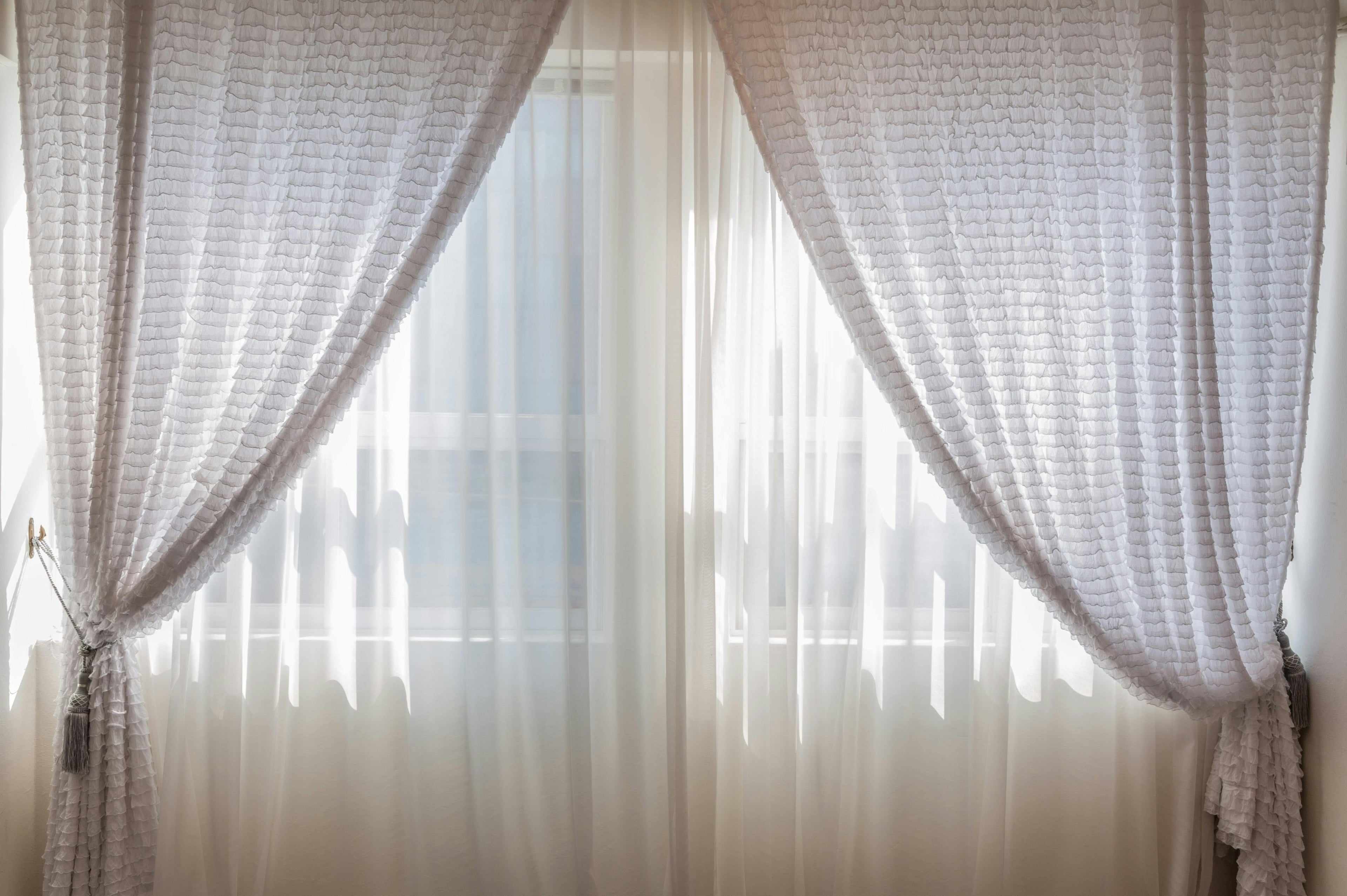
Looking to dress your windows with elegance without drilling holes? The no-rod curtain suspension has become a true decorative trend, offering unprecedented freedom of expression and flexibility. Tensioned cords, pressure rods, repurposed objects: these creative solutions transform your window into an aesthetic asset, where soft fabrics drape effortlessly and light filters through with new intention. This subject opens the door to a world where style meets practicality, allowing your interior to reinvent itself without constraint. Let yourself be guided towards inspiring alternatives that feel as good as they look.
You dream of elegant curtains to dress your windows, but the idea of drilling walls, mounting a heavy rod, or dealing with a complex rail system puts you off? You're in the right place. Hanging curtains without a traditional rod is not just a makeshift solution; it has become a genuine decorative trend, offering flexibility, lightness, and a decidedly modern aesthetic. Whether you're a renter, someone who likes frequent changes, or simply seeking creative alternatives, there are a multitude of methods to hang your favorite fabrics. This article is your ultimate guide to discovering how to dress your windows with style, without a drill or a classic rod.
Why Give Up the Traditional Curtain Rod?
Before diving into the alternatives, let's understand why more and more people are turning to other solutions. The classic rod or pole, while effective, has certain drawbacks. Its installation is often permanent and invasive, requiring holes in the wall or ceiling. For renters, this constraint can be a deal-breaker. Furthermore, the aesthetic of metal rings and brackets can seem heavy or dated in some contemporary interiors.
Rod-free alternatives offer unparalleled freedom. They allow you to easily change the decor, experiment with variable heights and widths, and integrate decorative elements like branches, ropes, or hangers in a poetic way. It's also an opportunity to use lightweight curtains, sheer curtains, or atypical fabrics that don't require a robust support system. In short, saying goodbye to the rod opens the door to limitless creativity for your window.
Current Trends in Curtain Hanging
The world of interior decoration is evolving towards more flexibility and personalization. Current trends favor lightweight solutions, natural materials, and installations that are an integral part of the decor. There is a strong enthusiasm for rope or cable systems, which bring a touch of industrial or nautical simplicity.
The use of reclaimed or repurposed elements, like tree branches or copper pipes, is also very popular for creating a unique, artisanal look. At the same time, minimalism pushes towards almost invisible solutions, like adhesive tapes or suction cup hooks, for a "floating curtain" effect. Finally, the "hygge" trend and cozy atmospheres are bringing large shawls and draped fabrics back into fashion, hung informally for maximum visual comfort.
The Top Method: The Tension Rod, Ideal for Renters
Among all the solutions, the tension rod is undoubtedly the most popular and reliable for a result close to traditional, without drilling. This ingenious system consists of a rod (often telescopic) and two pressure ends. By turning a mechanism, the rod locks firmly between the two walls or the window frame, by simple pressure.
Its installation is child's play: simply adjust the length, position it at the desired height, and tighten. It generally supports medium to heavy-weight curtains, depending on the model and diameter. For optimal stability, ensure the rod is straight and the pressure is even. It's the perfect solution for standard windows, bay windows, and a quick renovation. Choose finishes in brass, matte black, or white so it integrates perfectly with your style.
How to Choose and Install Your Tension Rod
For an impeccable result, measure precisely the width of the opening where the rod will be placed. The telescopic rod should be adjusted to be slightly longer than this measurement, so that pressure can be applied. Prefer a model with rubber or silicone ends to avoid damaging the paint or wall.
During installation, position the rod about 15 to 20 cm above the top of the window to give height to the room. Thread your curtains before locking the rod in place. A tip: for very heavy curtains, check the maximum load supported indicated by the manufacturer. This method is so effective you almost forget it's non-permanent!
Creating a Suspension with a Rope or Metal Cable
For a loft, Scandinavian, or maritime ambiance, nothing beats a rope or cable suspension system. This minimalist and graphic alternative highlights the texture of the curtain and lets in maximum light. The principle is simple: a strong rope or steel cable is stretched between two fixed points, and the curtains are hung via rings or slid directly onto it.
For a no-drill fixation, you can use sturdy adhesive or suction cup hooks designed for heavy loads, fixed at the ends of the window or on the wall. Ensure the anchor point is perfectly clean and dry before installation. Use a linen rope, braided cotton, or a steel cable with turnbuckles for perfect tension. This method is ideal for sheers, lightweight linen curtains, or cut fabric panels.
Using Repurposed Hangers and a Clothing Rail
One of the most creative and economical tricks is to repurpose hangers and a clothing rail. Choose a sturdy clothing rail, often in wood, and hang it from two strong adhesive hooks fixed to the wall or ceiling. Then, use clip hangers (preferably in wood or black metal for aesthetics) to hang your curtains.
This method works particularly well with thick fabrics like wool, burlap, or blankets, creating a very textured and warm draped effect. It's perfect for separating a space in a studio or dressing a large bay window in an original way. The advantage is that you can easily change curtains like you change clothes in a wardrobe!
Adhesive and Suction Cup Hooks: Discretion and Simplicity
For lightweight curtains, sheers, or decorative drapes, adhesive or suction cup hooks are allies of choice. Technologies have greatly evolved: you can now find plastic or metal hooks with double-action suction cups or VHB (Very High Bond) adhesives that offer remarkable hold on smooth surfaces like tiles, glass, or smooth paint.
The trick for long-lasting hold is impeccable surface preparation. Clean it with 90% alcohol, let it dry, and press the hook firmly for 30 seconds. It is recommended to let it sit for 24 hours before hanging the maximum weight. Use several hooks distributed along the window to support a lightweight wooden or metal rod, or hang the curtains directly on rings fixed to these hooks. It's the ideal solution for a kitchen, bathroom, or skylight.
The Boho and Natural Option: Branches and Poles
If you're looking to bring an organic and unique touch to your interior, hang your curtains from a beautiful, sturdy tree branch or a bamboo pole. This boho-chic or Japanese trend brings incomparable warmth. The branch, chosen for its interesting shape and sturdiness, is simply placed on two sturdy supports fixed to the wall.
For a no-drill version, you can use large "floating" style wall shelves placed on strong adhesive supports, and lay the branch between them. The curtains are then hung with ribbons, cords, or leather rings slid onto the branch. The effect is spectacular, natural, and perfect for a bedroom or living room with an ethnic decor. Remember to treat the wood if necessary and check its load-bearing capacity.
Grommet Curtains and Magnetic Rings: The Innovative Trick
New technologies offer ingenious solutions like magnetic rings. Originally designed for shower curtains, they can be repurposed for lightweight indoor curtains. If your window has a metal frame (as is often the case for French doors or sliding bay windows), these powerful rings attach to it as if by magic.
Paired with grommet curtains (the reinforced holes at the top of the curtain), they allow you to slide and open the fabric with disconcerting ease. It's an ultra-discreet, modern solution perfect for minimalist spaces where you want the curtain to seem to float. Be sure to check the magnetic strength and prefer lightweight fabrics to avoid the risk of falling.
Draping and Direct Wall Fixation with Pins or Decorative Nails
For a romantic, dramatic, or artistic look, forget the straight line. The technique of draping directly fixed to the wall involves pinning or nailing the fabric at strategic points to create waves and cascades of textile. Use large decorative pins, wide-headed ornamental nails, or even concealed staples.
This method is more of an artistic installation than a functional system for daily opening/closing. It's perfect for fixing a large shawl, a piece of silk, or a sheer curtain above a headboard, in a reading nook, or on a bare wall you want to soften. Play with lengths, fabric layering, and the light filtering through to create a dreamy ambiance.
Adhesive Rails and Rods: The Classic Rod's Fake Twin
The industry has developed complete rails or rods whose support fixes with ultra-powerful double-sided adhesive. These systems, often in lightweight aluminum, mimic the appearance and functionality of a classic rail. The adhesive support is applied to the wall or ceiling, and the rod clips onto it.
The key to success lies in surface preparation and choosing a quality product designed to support a specific weight. These rails allow the use of silent gliders for perfect sliding. It's an excellent alternative for closets, alcoves, or windows where a very straight and discreet line is desired, without tools.
FAQ: Your Questions on Hanging Curtains Without a Rod
What is the strongest method without drilling?
The tension rod is generally the strongest for medium to heavy-weight curtains, because the force is distributed along the entire length of the rod against the walls. For very heavy loads, a stretched metal cable system fixed with industrial VHB adhesive hooks can also be extremely resistant, provided the surface is perfectly smooth and clean.
Can these methods be used on plaster or drywall?
Yes, but with caution. Surfaces like plaster or drywall are fragile. Very high-adhesion (VHB) adhesive hooks are often recommended, but it is crucial not to exceed the indicated maximum weight. Avoid systems that exert too much downward pull. The tension rod is often a good option because it exerts lateral pressure, which is less risky for these walls.
How to make heavy blackout curtains hold without a rod?
For heavy blackout curtains, combine two methods to distribute the weight. Use a large-diameter, high-quality tension rod, and reinforce it with a few strong adhesive hooks placed under the rod to support the middle and prevent it from sagging. Also choose curtains with many rings for better distribution.
Do suction cup systems really hold in the long term?
Quality suction cups, with double action or a vacuum pump, can hold very well on perfectly smooth, non-porous surfaces like glass or ceramic. However, they can loosen with temperature and humidity variations. Their long-term hold is not as reliable as adhesives or mechanical systems. They are ideal for temporary solutions or very lightweight curtains.
What is the most aesthetic alternative for a modern style?
For a modern and clean style, the stretched metal cable system is unbeatable. Its thin, graphic aspect integrates into contemporary and industrial interiors. It lets light through and gives an impression of space. Very thin adhesive rails, almost invisible once the curtains are closed, are also an excellent choice for a minimalist, neat look.
Conclusion: Unleash Your Fenestral Creativity
Hanging curtains without a traditional rod is much more than a simple technical workaround; it's an invitation to rethink the window as a decorative element in its own right. From practical tension rods to graphic stretched ropes, natural branches, or magnetic tricks, each method opens a field of possibilities to personalize your interior. Whether you're looking for a renter-friendly solution, a temporary installation, or a textile work of art, there is an option suited to your needs and your style.
The essential thing is to properly assess the weight of your fabric, the nature of your wall, and the use you intend for it. Don't hesitate to combine ideas for a unique result. Your window deserves to be dressed with as much care as the rest of your living space. To discover more inspirations, detailed tutorials, and expert advice to transform every corner of your home, explore without delay the other resources available on ombreinterieur.fr. Your next decor project awaits you there! Check out our article how to attach 2 curtains together to go further. Discover our entire decor universe on Ombre Interieur.
