















How to hang curtains on a sloped ceiling: solutions and tips
In a home with generous proportions, a skylight or sloping window brings unique light and undeniable architectural character. Dressing such an opening without compromising its aesthetic or function, however, often proves a challenge. The question of how to hang a curtain on a slope becomes pressing. This subject invites you to explore elegant, practical solutions—from custom curved tracks to clever DIY tricks—so your interior gains harmony. Let yourself be guided toward the perfect balance between constraint and style.
Hanging a curtain in a room with a sloped ceiling can seem like a real decorative puzzle. Skylights, converted attics, contemporary homes with bold volumes... These atypical openings, although sources of beautiful light and character, pose a significant practical challenge: how to dress these bays without sacrificing aesthetics or functionality? The question of how to hang a curtain on a slope is crucial for transforming an architectural constraint into a design asset. This article is your comprehensive guide to mastering the art of installing curtains on a slope, exploring all solutions, from DIY tricks to custom systems, for a perfectly fitted and stylish result.
Understanding the Specific Challenges of Sloped Windows
Before choosing a solution, it is essential to analyze the specific features of your window. One slope is not like another, and its angle, ceiling height, and immediate environment will dictate your options.
The main challenge lies in light blocking and privacy. A classic curtain, hung vertically, will inevitably leave gaps on the high side of the slope. Then, ease of use comes into play: how to open and close the curtain easily without having to climb on a stool? Finally, the aesthetic aspect is paramount. The installation must follow the line of the slope harmoniously, without giving an impression of DIY or incompleteness.
The Different Types of Slopes and Their Implications
We generally distinguish gentle slopes (like in unused attics) from steep slopes (like in a veranda or modern house). A gentle slope may sometimes accommodate a slightly curved rail system, while a steep slope will often require a rigid rail fixed at the exact angle of the wall or ceiling.
Technical Solutions for Hanging Your Curtains on a Slope
Several systems exist, each with its advantages, cost, and level of installation complexity. The choice will depend on your budget, your DIY skills, and the desired visual effect.
The Angled Rail or Curtain Rod: The Ultimate Custom Solution
This is the most professional and aesthetic method for hanging a curtain on a slope. A metal rail (often aluminum) is custom-made to perfectly follow the angle of your window. It is fixed directly to the ceiling or wall along the slope.
The advantages are numerous: perfect sliding of hooks or gliders, impeccable finish without unsightly gaps, and great sturdiness. This is the preferred option for heavy curtains or high-traffic rooms. Many specialized stores offer this measuring and manufacturing service.
Flexible Rods and Telescopic Rails: The DIY Trick
For gentle slopes or tighter budgets, adaptable solutions exist. Some flexible metal rods or reinforced plastic telescopic rails can be slightly bent to follow a moderate incline.
Be careful, their bending capacity is limited. They are ideal for lightweight curtains (sheer curtains, fine fabrics) and over small widths. The trick is to fix them with adjustable brackets to maintain the curve. This method requires a bit of patience and precision during installation.
Double Wall/Ceiling Fixing with Two Separate Rods
This creative approach consists of separating the vertical and sloped parts of the curtain. You fix a standard rod on the vertical part of the wall (inside the room), and a second shorter rod on the sloped part of the ceiling.
You then make two separate curtains or a single curtain with a special angled cut. This method is very effective for completely blocking light and allows the use of classic opening systems (cord, wand) on the vertical part. It also offers a very graphic design look.
The Crucial Choice of Brackets and Fixings
The fixing is the element that guarantees the safety and durability of your installation. On a slope, the forces exerted are different from a classic wall fixing.
For fixing to a sloped ceiling, prioritize rail brackets with long screws, anchored deep into the structure (joist, rafter). Using wall plugs suitable for the material (drywall, wood, concrete) is imperative. For wall fixing on the lower part of the slope, reinforced fixing brackets are recommended, especially for heavy curtains.
In converted attics where the partition may be simple drywall, it is often necessary to reinforce the structure with a wooden board (a batten) fixed between the studs of the frame, behind the board, to provide a solid anchor.
Decor Inspiration: Transforming the Constraint into a Design Asset
A sloped window is not a limit, but an opportunity to create a unique focal point. The secret to hanging a curtain on a slope with style lies in the choice of fabric and the staging.
Fabrics and Lengths That Enhance the Slope
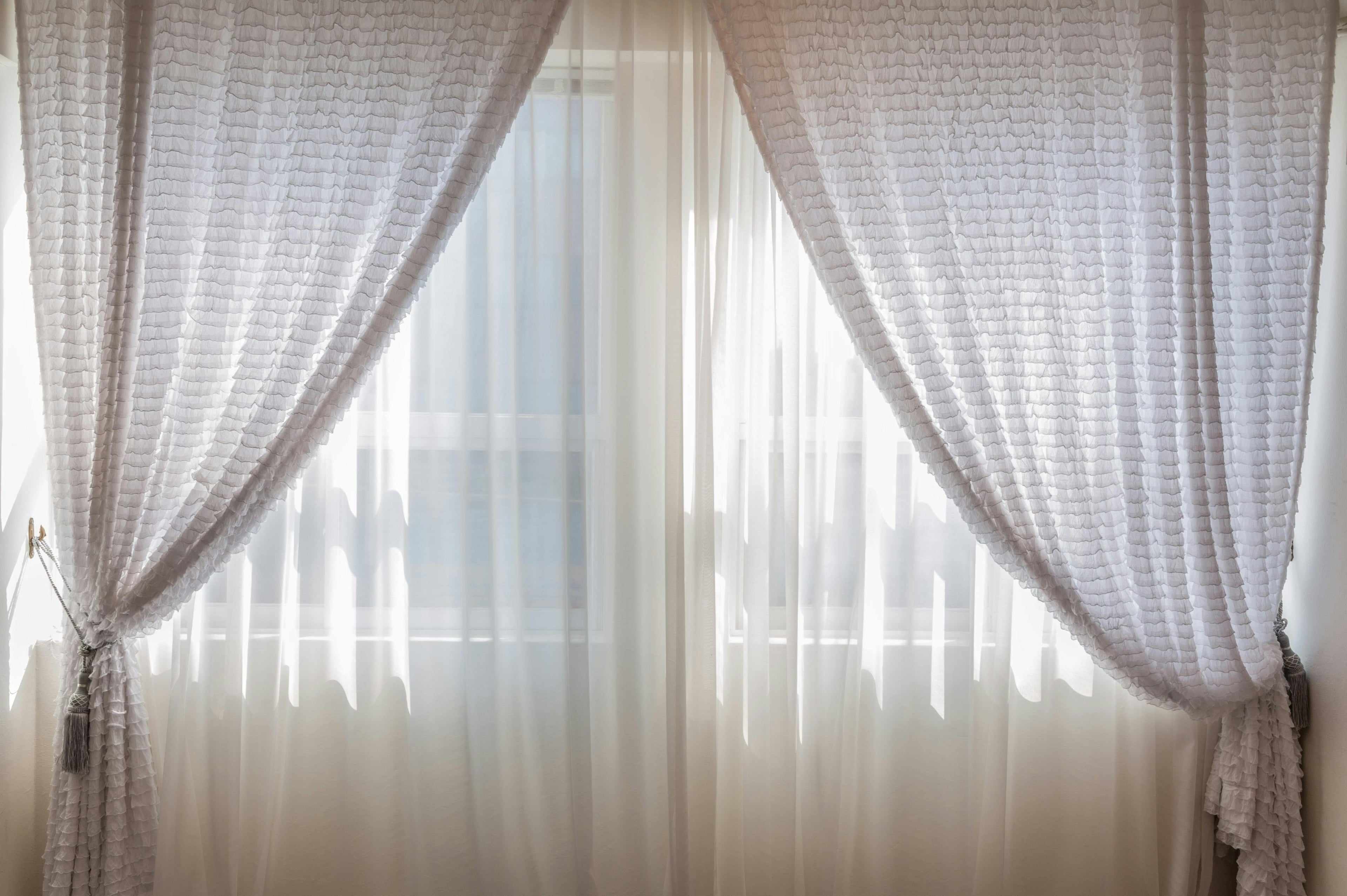
For a fluid and elegant effect that follows the line of the slope, prioritize soft, draping fabrics like linen, natural silk, lightweight cotton, or sheers. Curtains that graze the floor or have a "French length" (slightly pooling on the floor) accentuate the ceiling height.
Conversely, for a more structured and contemporary look, opt for thicker fabrics like burlap, velvet, or thick linen blends. Cut them to the exact length of the bottom of the window for a "tailor-made" effect.
Current Trends: Integrated Blinds and Layering Textures
The current trend in attics and rooms under the roof is layering. Combine a blackout blind or a roller sheer fixed directly to the window frame (for technical light management) with a large decorative curtain fixed on the slope. This offers total flexibility and great visual richness.
Window panels, sort of fabric-stretched frames, are also seeing renewed interest for skylights, offering a very sleek look. For bohemian or Scandinavian styles, curtains in raw linen, slightly too wide, slid onto a black rod following the slope, create a soft and natural ambiance.
Step-by-Step Guide for Installing a Custom Angled Rail
Here are the key steps for a professional installation of a curtain on a slope with an angled rail.
- Ultra-Precise Measurement: Measure the slope angle using a digital angle finder. Record the total length the rail needs to cover, noting the start and end points of the angle. Always plan for the rail to extend 15 to 20 cm on each side of the window to allow the curtain to completely cover the opening when open.
- Ordering the Custom Rail: Transmit these measurements to a manufacturer or specialized store. Choose the type of rail (with gliders, with hooks) and the finish (white, black, brushed aluminum, color).
- Preparation and Marking: Upon receipt, position the rail in place to check the fit. Mark the fixing locations with a pencil. Use a laser level to ensure the rail is straight in its alignment, even on the slope.
- Solid Fixing: Drill at the marked locations and insert suitable wall plugs. Securely screw the rail brackets. On drywall parts, systematically use expansion anchors like Molly anchors or locate the joists for direct fixing into the wood.
- Hanging the Curtain: Hook or slide the curtain hooks/gliders onto the rail. Test the opening and closing mechanism for smooth sliding.
Creative Alternatives to Classic Curtains
If installing a traditional curtain seems too complex, other equally effective and decorative solutions exist for dressing a sloped window.
Custom blinds are excellent. A roller blind or Venetian blind can be installed directly in the recess of the skylight (checking compatibility with the manufacturer). For slopes, projection blinds or Roman blinds with custom side guides offer perfect blackout.
Japanese sliding panels on a ceiling rail are a design and modern option. Their rigidity and sliding system on a rail make them perfect for covering large slanted bays. They bring a touch of simplicity and zen.
Finally, don't forget the adhesive or magnetic solution for temporary situations or rentals. Lightweight sheers can be held with high-adhesion Velcro strips fixed around the window frame, or with powerful magnetic bars for metal skylights.
FAQ: Answers to the Most Frequent Questions About Hanging Curtains on a Slope
Can you use a classic curtain rod on a sloped ceiling?
It is strongly advised against using a straight rigid rod on a slope, unless you fix it horizontally below the sloped part, which will create an empty space at the top. A classic rod will not be able to follow the angle and the curtain will not hang straight. For a very gentle slope, a flexible rod can be an alternative, but it has its limits in terms of sturdiness and length.
How to take measurements for a curtain on a sloped skylight?
You must distinguish between the measurement of the support (the rail) and that of the fabric. For the rail, measure the total length along the slope where it will be fixed. For the curtain itself, the height is measured perpendicularly from the highest point of the rail to the desired endpoint (floor, windowsill). The width of the fabric should be at least 1.5 to 2 times the length of the rail for beautiful pleating. Always note the three dimensions: rail length, drop height, and total fabric width.
What is the average cost of a custom installation for a curtain on a slope?
The cost varies enormously depending on the solution. A custom angled rail can cost between 150 and 400 euros, installation not included, depending on the length, gliding system, and finish. Purchasing a custom blind for a skylight (like VELUX) can range from 200 to 600 euros. DIY solutions with flexible rods and standard curtains remain the most economical, often below 100 euros. It is wise to get several quotes for a professional installation.
How to guarantee total light blocking on the sides?
For perfect blackout, two techniques are effective. Either you opt for a rail with side guides (small vertical rails at the ends) into which the edges of the curtain slide. Or you add side blackout strips (in black fabric or flexible PVC) fixed to the wall or window frame, against which the curtain presses. Layering with a blind integrated into the window remains the most effective solution.
What are the most common mistakes to avoid?
The first mistake is underestimating the weight of the curtain and choosing fixings that are too light for the sloped ceiling. The second is miscalculating the angle, resulting in a curtain that hangs crookedly or a rail that doesn't follow the wall line. Finally, neglecting the practical aspect of opening/closing is common: always plan for a cord, wand, or motorization system accessible from the floor for high windows.
Conclusion: Dare to Personalize Your Sloped Space
Hanging a curtain on a slope is no longer an impossible equation thanks to the diversity of available technical and creative solutions. Whether you opt for the excellence of a custom angled rail, the trick of a double rod, or the charm of a Roman blind, the essential thing is to choose a method suited to your configuration, your budget, and your style. A well-dressed sloped window becomes a major asset, sculpting light, bringing warmth, and affirming the unique character of your interior. Do not hesitate to consult professionals for the most complex projects and explore other decor ideas on ombreinterieur.fr to transform every detail of your home into a source of inspiration. Our guide how to separate two rooms with a curtain helps you make the right choice. Get inspired on our decoration website for your next projects.
