














How to hang pergola curtains: methods and tips
Your pergola is far more than a simple shelter: it promises an open-air living space where privacy and comfort come together. Yet to turn it into a true haven, installing curtains remains a technical step that raises many questions. From no-drill solutions for maximum flexibility to durable fixings for a flawless finish, the choice depends on your structure and your desires. Follow these leads to transform your outdoor space into a peaceful retreat, without compromising on aesthetics or sturdiness.
Transforming your pergola into a true outdoor sanctuary often involves adding curtains. These light sheers or opaque panels are not just a simple decorative accessory; they are the key to mastering the ambiance, protecting you from the sun, wind, or prying eyes. But the question that stumps many homeowners is technical: how to hang pergola curtains in a way that is aesthetic, sturdy, and practical? The answer is not unique, as it depends on your pergola's structure, the type of curtains chosen, and the use you intend for them. This article is your comprehensive guide to a successful installation, exploring all methods, from the most classic to the most innovative, so your outdoor space becomes the perfect extension of your interior.
Understanding Your Pergola: The Essential Preliminary Diagnosis
Before buying the first hanging system you come across, it is crucial to analyze your pergola's structure. This step will determine the safest and most suitable method. Pergolas come in several materials, each with its own specifics.
Wooden Pergolas: Charm and Rusticity
Wood, a noble and warm material, is very common. For hanging curtains on a wooden pergola, you have the advantage of being able to screw directly into the structure, provided you choose suitable screws (stainless steel to avoid rust and black marks). Check the sturdiness of the beams and the wood thickness before drilling. A tip is to pre-drill a hole slightly smaller than the screw to prevent the wood from splitting.
Aluminum or Steel Pergolas: Modernity and Lightness
Metal structures, often thinner and lighter, require particular attention. It is generally not recommended to drill into thin aluminum or steel without knowing if it affects the anti-corrosion treatment. No-drill solutions, like clamping collars or clip systems, are often preferred. For robust steel structures, drilling is possible with drill bits suitable for metal.
Kit Pergolas with Fabric or Polycarbonate Roofs
These increasingly popular models often have specific profiles. Check with the manufacturer for compatible accessories. Some brands offer dedicated fixing kits that fit perfectly into existing rails, offering seamless integration and simplified installation.
Choosing the Right Type of Pergola Curtain
The material of your curtains influences not only the ambiance but also the hanging system. Current trends favor technical fabrics resistant to the elements.
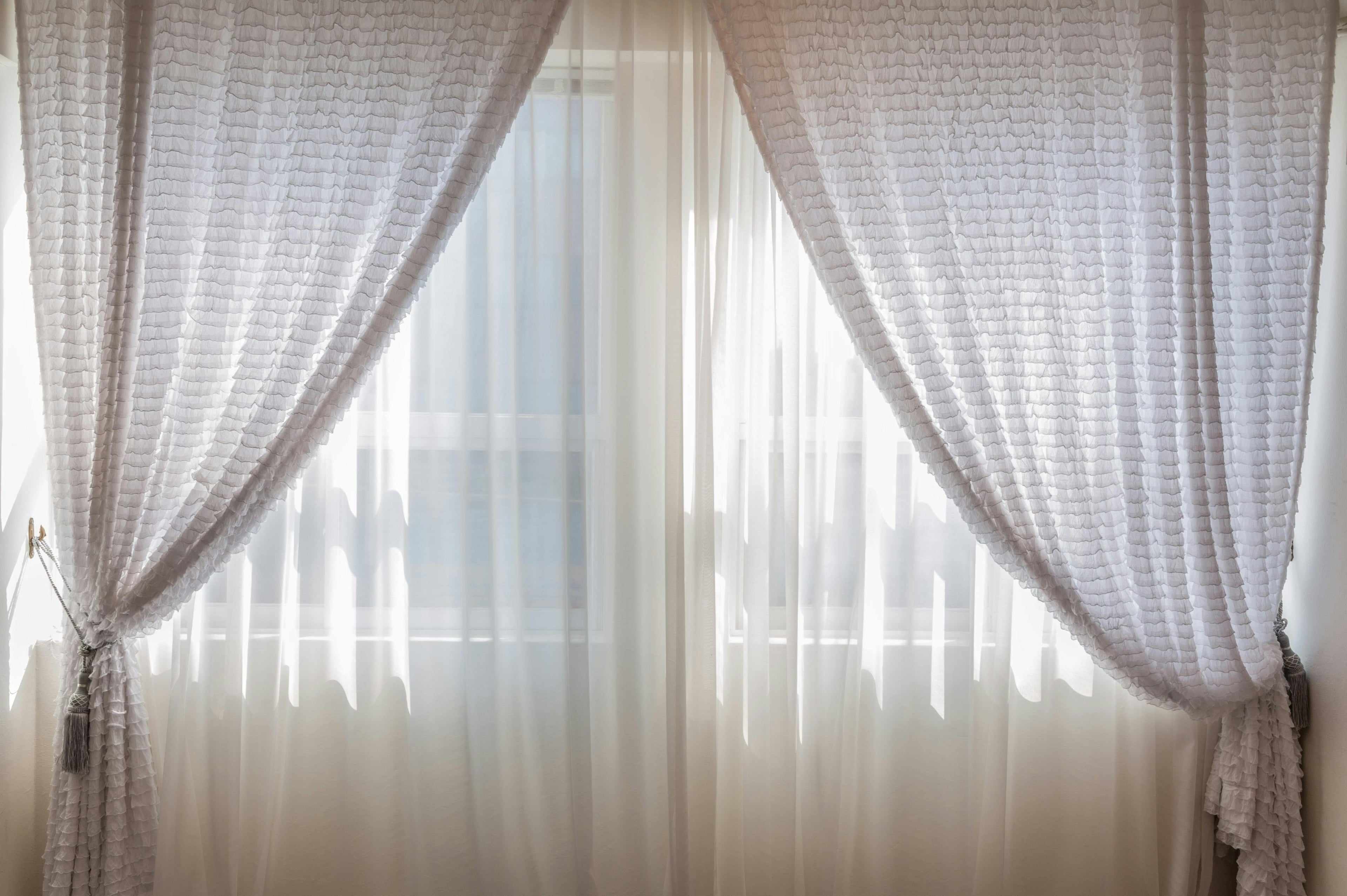
Outdoor sheers in polyester or acrylic are light, let light through, and float in the wind. They require a simple system (rings, rope) as they are not heavy. Blackout or privacy curtains in coated fabric, thick sailcloth, or PVC mesh are heavier and require robust fixings (sturdy rail, reinforced gliders). Finally, reed or bamboo panels add a natural and ethnic touch, but their rigidity requires fixing with ties or by slotting into a specific rail.
No-Drill Hanging Methods: Flexibility and Reversibility
If you are a tenant or do not wish to alter your pergola's structure, no-drill solutions are ideal. They offer great flexibility and are often simpler to install.
The Rope or Tensioned Cable: The Bohemian and Economical Option
This method is perfect for creating a relaxed, maritime ambiance. Simply stretch a sheathed nylon rope, a stainless steel cable, or a robust strap between two pergola posts. The curtains are then hung via clip rings or grommets directly onto the rope. Ensure the cable is well-tensioned with a turnbuckle to prevent it from sagging under weight or wind. This is an excellent solution for hanging light curtains on a pergola temporarily or seasonally.
Clamping Collars and Adjustable Clips
These accessories in metal or reinforced plastic attach around the pergola beams or posts by simple screw tightening. They serve as attachment points for hanging a rod, a bar, or even the curtain rings directly. Choose models with a rubber or felt lining to avoid scratching or damaging your pergola's surface, especially if it is treated wood or powder-coated aluminum.
Magnetic Systems for Metal Structures
A practical innovation for steel or aluminum pergolas: ultra-powerful neodymium magnets. Attached to a rod or rail, they clip instantly onto the metal structure, without any tools. Check the adhesive force (expressed in kg) to ensure it is sufficient to support the weight of your curtains, especially in strong winds.
Fixed Mounting Methods: Stability and Longevity
For a permanent and more robust installation, especially for heavy curtains or in windy areas, mechanical fixings are recommended.
The Classic Rod or Bar: Effective Simplicity
The principle is identical to that of an interior. Rod supports (hooks, brackets) are screwed into the pergola beams. You can then slide a wooden, metal, or PVC rod onto which the curtains will slide via rings. For an industrial look, galvanized steel tubes look very modern. This method is perfect for curtains you open and close regularly.
The Outdoor Rail or Glider: Functional Elegance
This is the high-end solution for ultra-smooth operation and a perfect finish. An aluminum rail with an integrated roller system is fixed to the ceiling or the underside of the pergola beams. The curtains, fitted with specific hooks, glide effortlessly. Some rails are even curved, allowing them to perfectly follow the angles of a wall-mounted pergola. This is the most suitable system for hanging pergola curtains of great height or width.
Grommets and Tensioners: The Nautical and Contemporary Style
If your curtains have reinforced metal grommets at the top, you can hang them directly on hooks or grommet screws fixed into the beam. For a taut, graphic look, complement with bottom tensioners (elastic cords or chains fixed to the ground or the base of the posts). This very trendy style gives a structured and contemporary look to the space.
Creative and Trendy Solutions
Beyond traditional methods, some ideas allow you to completely personalize your installation.
Freestanding structures, like arches or metal frames, can be placed under the pergola to hang the curtains, without touching the main structure. This is ideal for rental pergolas or those with a glass roof. Using polished natural branches fixed horizontally brings an organic and unique touch. Pulley systems allow easy raising or lowering of heavy curtains, an asset for modulating privacy or sunlight throughout the day.
Crucial Practical Considerations for a Successful Installation
A beautiful installation is also one that lasts. Several technical parameters need to be anticipated.
Wind Resistance: Safety First
Wind is the number one enemy of pergola curtains. To secure them, several options exist: choose open-weave fabrics that let air through, plan ties or fasteners to tie them up when not in use, install weighting bars in the bottom hem of the curtains, or opt for a rail system with stops and end caps to prevent curtains from sliding and flying away.
Protection from the Elements: Choosing Suitable Materials
All elements of your installation must be designed for outdoors. Prioritize outdoor fabrics resistant to UV (to avoid fading), water, and mold. For fixings, stainless steel, anodized aluminum, or UV-resistant PVC are to be preferred to avoid rust and degradation. Absolutely avoid raw iron, which will rust at the first rain.
The Question of Height and Drape
For an elegant look, curtains should generally touch the ground or have a slight "puddle" (a surplus of 5 to 10 cm resting on the ground). Measure precisely the height between your hanging point and the ground. If your pergola is on a sloped surface, plan for an asymmetrical hem. Also consider ease of opening and closing: leave enough space between the curtain and the post to handle it comfortably.
Decor Inspiration: What Style for Your Dressed Pergola?
The hanging method influences the style. A discreet rail gives a clean, modern look. A hemp rope and wooden rings create a boho-chic ambiance. Copper patinated rods bring an industrial and vintage touch. Don't hesitate to play with layering light sheers and thicker curtains to create depth and modulate privacy. Current trends also see the emergence of curtains with geometric patterns or vertical strips of different materials, which require a precise hanging system to showcase the pattern well.
FAQ: Answers to the Most Frequent Questions
What is the sturdiest system for hanging heavy curtains on a pergola?
For heavy curtains (like thick sailcloth, blackout PVC), the sturdiest and most durable system is undoubtedly a mechanically fixed (by screws) outdoor aluminum rail on the pergola's load-bearing structure. Rails designed for outdoors have reinforced gliders and robust rollers. Ensure you screw into a solid wooden beam or use suitable anchors if fixing onto aluminum. Avoid rope or collar systems for this type of weight.
Can you leave the curtains on the pergola all year round?
This depends entirely on the materials. If you have invested in curtains designed for outdoors (solution-dyed acrylic fabrics, high-performance polyester) and stainless steel or aluminum fixings, they can withstand the seasons. However, in winter or during severe weather (storms, hail), it is highly recommended to take them down and store them away to extend their lifespan. Fabrics, even technical ones, will age less quickly if protected from continuous exposure.
How to make curtains slide easily over a large length?
For a large pergola, manually opening and closing each curtain can become tedious. Two solutions are available. The first is to opt for a rail with a continuous draw cord system: a single cord allows you to move all coupled curtains at the same time, with one gesture. The second, more high-tech, is installing a motorized system for an outdoor rail. Although more costly, this option offers incomparable comfort and precise control, sometimes even via a remote or smartphone app.
How to protect the hanging system from rust?
Rust is the enemy of any outdoor installation. To avoid it, follow these rules: use exclusively fixings in A2 or A4 stainless steel (the latter, "marine grade," is even more resistant to salt spray), rings and rods in anodized aluminum or brass. Avoid assemblies of different metals (e.g., steel screws in aluminum) which can cause galvanic corrosion. Once a year, inspect the fixings and lightly wipe an oiled cloth over the metal parts to form a protective film.
What distance to respect between hanging points?
The ideal spacing depends on the weight and flexibility of the fabric. For standard curtains, a hanging point every 40 to 50 cm is a good compromise between aesthetics (for a regular drape) and sturdiness. For very light sheers, you can space up to 60-70 cm. For heavy, rigid fabrics, bring the fixings closer to a maximum of 30-40 cm to avoid unsightly sagging between points. On a rail, this question does not arise, as the support is continuous.
Conclusion: Your Personal Oasis Awaits
Hanging curtains on a pergola is much more than a simple DIY task. It is the gesture that transforms an architectural space into a place of living, intimacy, and relaxation. Whether you opt for the bohemian simplicity of a tensioned rope, the elegant functionalism of a rail, or the innovation of magnets, the essential thing is to choose a method adapted to your structure, your curtains, and your lifestyle. By anticipating technical constraints like wind and weather, your installation will gracefully weather the seasons. So, let yourself be guided by your decor desires, take precise measurements, and get started. Your dressed pergola will become the most prized corner of your garden, a true outdoor living room where every moment will be savored. To discover more inspiration and advice for arranging your outdoor spaces, explore without delay the other comprehensive guides available on ombreinterieur.fr. Before choosing, browse how to hem a curtain. Visit ombreinterieur.fr to explore the entire catalog.
