














How to hang curtains: complete guide and pro tips
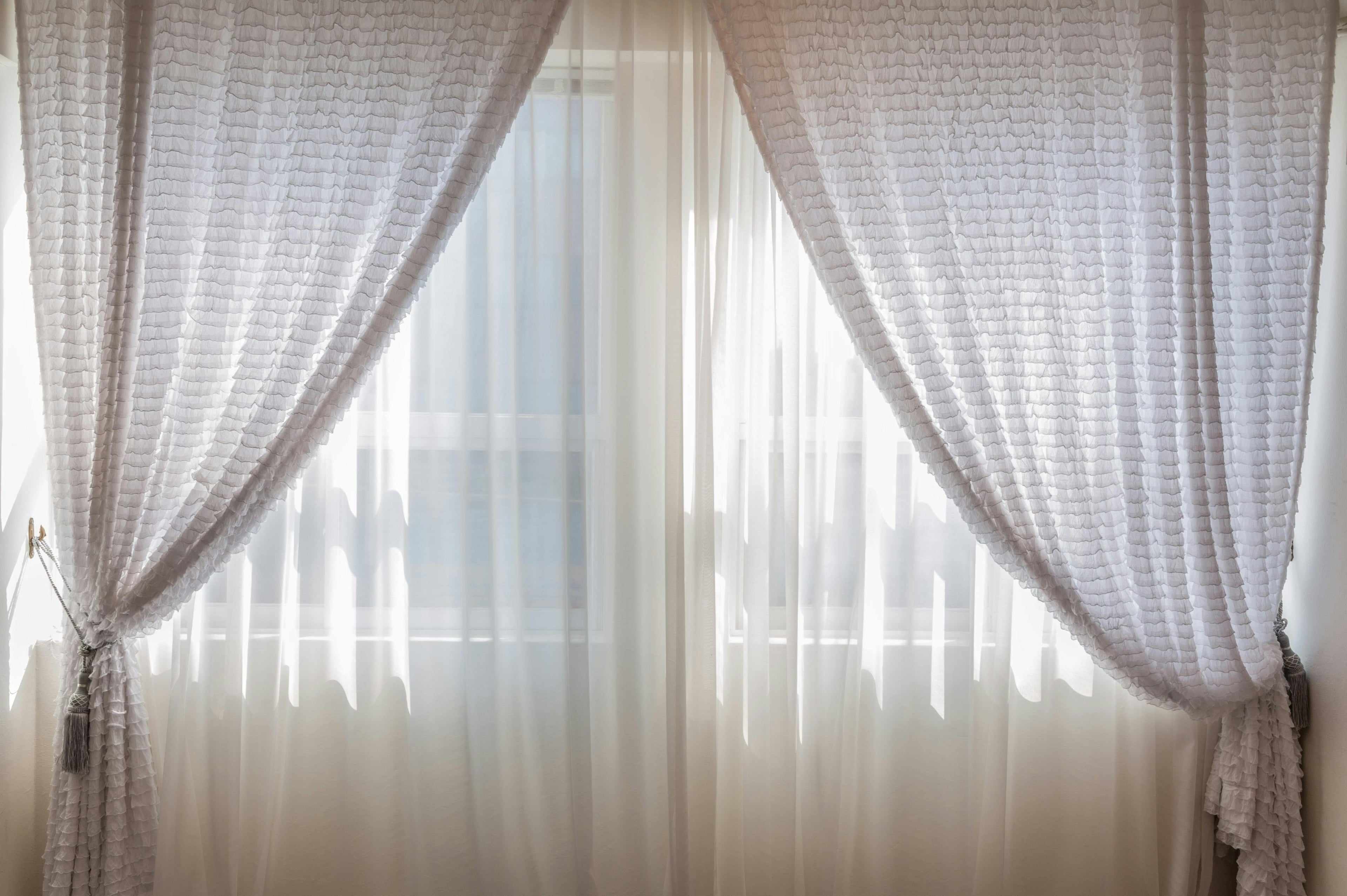
Hanging curtains is a far more decisive act than it first appears: it sculpts the light, redefines the space, and sets the tone for your entire interior. Too often overlooked, this step nevertheless determines a room’s balance. Here you will learn the essential principles for choosing the right height, width, and hanging system for your window, avoiding the mistakes that undermine the desired effect. Let yourself be guided towards an installation that elevates your décor with elegance and precision, transforming the way light falls and shadows play across your walls.
Hanging curtains may seem like a simple task, but it is actually a decisive gesture that transforms the atmosphere of a room, influences the perception of space, and seals the decorative identity of an interior. Much more than a practical step, it is a full-fledged decorative act that requires thought and know-how. Choosing the right rod, the right height, or the right type of hanging can make all the difference between an ordinary window and a window staged with elegance. In this article, we will detail each step, from the fundamentals to decorators' tips, so you can perfectly master how to hang curtains like a professional and avoid the common mistakes that ruin the desired effect.
The Fundamentals: Why the Way You Hang Your Curtains is Crucial
Before getting out the drill and spirit level, it is essential to understand the impact of your choices. Hanging curtains correctly is not just a question of aesthetics; it's also a question of optics and functionality. A successful installation can create the illusion of higher ceilings, wider windows, and a more balanced room.
Conversely, poorly positioned curtains can weigh down a room, obstruct natural light, and give an impression of makeshift work. Current interior design trends favor generous and theatrical installations, far from curtains just fitted to the size of the window bay. Understanding these principles is the key to creating bright, welcoming openings that are perfectly integrated into your decor.
Choosing the Suspension System: Rods, Rails, and Cables
The support is the backbone of your installation. Your choice determines the style, the fluidity of movement, and the robustness of the whole. There are three main families.
Classic Rods
They are timeless and offer a great variety of styles: metal finished in gold or matte black, natural or lacquered wood, polished brass. Rods with sliding rings are the most versatile. For a contemporary look, discreet telescopic rods, often in wall color, are very popular. Make sure the rod diameter is suitable for the weight and volume of your curtains.
Rails and Track Systems
Invisible once the curtains are drawn, they are the ideal solution for absolute minimalism or for heavy curtains like thermal-lined ones. Cord or remote control (motorized) systems are generally integrated into this type of support. Perfect for bay windows or corner windows.
Tension Cables
Ultra-modern and airy, steel cables stretched between two fixings create a very graphic effect. They are perfectly suited to light curtains (sheer curtains, fine linen) and minimalist interiors. Installation requires perfect tension to avoid sagging.
The current trend is mix & match: a visible brass rod for a retro style, paired with black rings for a contemporary touch. The important thing is to choose a system capable of supporting the weight of your fabric without bending.
The Perfect Height: The Golden Rule for Elevated Ceilings
This is decorators' best-kept secret, and yet the simplest to apply: hang your curtains as high as possible. Forget the logic that the rod should be placed just above the window frame.
To create a spectacular illusion of height, fix your rod halfway between the top of the window and the ceiling, or even just 10-15 cm from the ceiling. This trick draws the eye upward, visually lengthens the walls, and gives a majestic fullness to your curtains. Even with small windows, this principle works wonders.
The Ideal Width: Creating Fullness and Beautiful Drapery
Another common mistake: choosing a rod just the width of the window. To allow your curtains to open completely without masking the glass and to achieve beautiful folds when closed, the rod must extend well beyond each side.
One rule is to plan an overhang of at least 15 to 20 cm on each side of the opening. This way, when you open the curtains, the fabric dresses the wall and frees all the light. It also allows for better insulation by perfectly covering the sides of the window.
Curtain Length: Grazing the Floor or Puddling?
Length is an aesthetic choice that defines the style. There are three main lengths, each with its own character.
- The "grazing" length: This is the most elegant and practical standard. The curtain ends less than a centimeter from the floor. It gives a neat finish, avoids dust accumulation, and is easy to maintain. It's a safe and refined choice.
- The "puddle" or "floating" length: Very trendy, it involves letting the curtain extend 2 to 5 cm onto the floor. This creates a relaxed, luxurious, and organic effect, like a garment trailing delicately. Ideal for bohemian or soft Scandinavian styles.
- The "French" length: The curtain is cut exactly to the height of the windowsill. This option is often used in kitchens, bathrooms, or for purely decorative curtains. However, it can visually truncate the space.
Avoid at all costs curtains that are too short, which "float" in the air above the floor: it's the worst mistake, giving an unfinished and unbalanced look to the room.
The Different Types of Hanging Methods and Rings
The way the curtain is connected to the rod radically influences its drape and style. Here are the main options.
Clip Rings
They allow you to hang the curtain directly without a header tape. Practical and modern, they create a straight drop. Perfect for thick fabrics or improvised curtains.
Grommet Headers (Eyelets)
Metal or plastic grommets are punched directly into the fabric. They slide on the rod for very smooth sliding and a structured, contemporary look. They require a small diameter rod.
Lined Header with Sew-On Tape
This is the most traditional and versatile solution. A sew-on tape, with its drawstrings, is sewn to the back of the curtain. By pulling the cords, you create regular pleats (flat pleats, pencil pleats, French pleats). This is the choice for a classic and generous drape.
Hooks and Gliders
They are inserted into the pleats of the sew-on tape and attach to rings or slide directly into a track. They allow for fine adjustment of the curtain height after installation.
The choice depends on the desired style: grommets for an industrial or Scandinavian look, pleated tape for a classic or romantic interior.
Step-by-Step Technical Installation Steps
Let's move on to practice. A solid and level installation is paramount.
- Necessary materials: Rod, mounting brackets, wall plugs suitable for your wall (drywall, brick, concrete), drill, long spirit level, tape measure, pencil.
- Marking and Measuring: Determine the desired height and width following the rules outlined above. Mark the bracket locations on the wall with a pencil. Always use a level to perfectly align your marks.
- Drilling and Fixing: Drill at the marked locations with a drill bit suitable for your wall. Insert the wall plugs. Securely screw in the rod brackets. Place the rod and check its level one last time.
- Hanging the Curtains: Thread the rings onto the rod (if using a ring system) before fixing it to the wall for easier installation. Then hang the curtains using the clips, hooks, or by sliding the grommets.
- Final Adjustment: Once hung, let the curtains hang for 24 to 48 hours for the natural folds to form. You can then lightly steam them to refine the drape.
Special Cases and Clever Solutions
Certain configurations require specific adaptations.
Bay Windows and French Doors
Prefer a curved rail or a system with two rods that meet at a right angle to follow the shape. For a very wide opening, plan an intermediate central support to prevent sagging in the middle of the rod.
Sloped Windows (Velux, Mansard)
Special rods, often fixed to the ceiling and following the slope angle, exist. An alternative is to use tension rods placed directly in the window recess.
Rooms without Wall Space (Elevator Shafts)
When the curtain cannot extend onto the wall, fix the rod to the ceiling. This creates a very graphic colonnade effect and allows you to gain visual height.
Current Trends in Curtains
Decoration evolves, and with it, the ways of hanging curtains. Current trends advocate authenticity and personalization.
- Natural and Textured Fabrics: Linen in all its forms (undyed, greige, striped), bouclé cotton, light wool. We seek the irregularity of the fabric, the beauty of natural fibers.
- Patterns and Prints: A strong comeback of stripes, discreet geometric patterns, or large-scale florals to turn the window into a painting.
- Layering: Pairing a fine, airy sheer curtain with a thicker opaque curtain. This allows you to play with light throughout the day and add depth.
- Motorized Systems: Increasingly accessible, they offer ultimate comfort and discreet high-tech, controllable by smartphone or voice assistant.
FAQ: Answers to the Most Frequent Questions
What is the standard height for hanging curtains?
There is no "standard height," but a golden rule: always hang higher than the top of the window. For an optimal effect, place the rod halfway between the top of the window and the ceiling, or 10-15 cm from the latter.
Should curtains be wider than the window?
Absolutely. For a beautiful draped effect and to not obstruct light when the curtains are open, the rod should extend 15 to 30 cm beyond each side of the opening. The total width of the curtain should be at least 1.5 to 2 times the width of the rod for beautiful folds.
How to choose between a rod and a rail?
The choice is primarily aesthetic and practical. The visible rod is a decorative element. The rail is invisible and often more functional for heavy curtains or motorized systems. Tension cables are decidedly modern and light.
Can heavy curtains be hung on a drywall partition?
Yes, provided you use wall plugs suitable for drywall, such as expansion anchors (Molly type) or self-drilling anchors. Distribute the weight over several solid fixings and, if possible, try to fix into the metal studs of the partition for maximum hold.
How to wash curtains without having to take everything down?
For regular maintenance, a vacuum with a soft brush is ideal. For washing, it is recommended to take them down. However, for sheer curtains or light curtains fixed with clip rings, you can sometimes simply detach them from the clips without having to dismantle the rod.
Conclusion: The Art of the Perfect Window
Knowing how to hang curtains is a skill that combines technique and aesthetic sense. By respecting the principles of height, width, and length, and by choosing the hanging system suited to your style, you transform a simple window into a central element of your decoration. Don't be afraid to dare generous heights and ample widths: it's the secret of interiors that appear larger, brighter, and well-kept. Take the time to measure well, fix securely, and choose fabrics that reflect you. Your windows deserve this bespoke treatment to reveal their full potential.
To discover more inspiration, detailed tutorials, and expert advice on arranging every room in your home, explore the other articles on our blog at ombreinterieur.fr without delay. From fabric selection to the art of drapery, we accompany you to create an interior that perfectly suits you. Check out our article how to attach 2 curtains together to go further. Get inspired on our decoration site for your next projects.
