














How to hang curtains on a pergola: complete guide
Your pergola is far more than a simple structure: it is waiting to become an open-air sitting room, a refuge shaped by light and breeze. Hanging curtains on your pergola transforms this space entirely, yet installation requires a thoughtful approach to balance beauty with strength. From choosing the right fixing system and fabric type to considering the constraints of your material, every detail matters. Here, you will find the keys to creating an outdoor haven that is both elegant and functional, with no compromise on durability.
Transforming a pergola into a true outdoor cocoon, an additional living space that is both elegant and functional, often involves adding curtains. These fabric veils are not just simple decoration; they are the creators of ambiance, the guardians of privacy, and the regulators of light and wind. But hanging curtains on a pergola raises practical questions that need to be answered for a result that is both aesthetic and durable. This article is your comprehensive guide to successfully completing this installation, from technical fundamentals to the latest decor trends, including the crucial choice of hanging systems and textiles.
Why Dress Your Pergola with Curtains? The Multiple Advantages
Before diving into the "how," it's essential to understand the "why." Hanging curtains on a pergola is not an aesthetic whim; it's a strategic decision that radically transforms the use of your outdoor space. First, curtains offer immediate privacy, protecting your relaxing moments from neighbors' views. They become a shield against the elements, softening the sun's rays during the hottest hours and slowing down gusts of wind for increased comfort.
On the decorative front, they add a dimension of softness and texture, softening the often rigid lines of the wood or metal structure. They allow you to define zones within a large terrace, creating, for example, a more intimate dining nook or a separate lounge area. Finally, they are a fantastic tool for playing with light, filtering daylight to create plays of shadow and chiaroscuro of great poetry.
Preliminary Analysis: Know Your Pergola Inside Out
The first step, too often overlooked, is the meticulous analysis of your structure. Not all pergolas are equal, and their design will dictate the hanging possibilities.
The Material of the Structure: Wood, Metal, or Aluminum
The composition of your pergola is the starting point. A pergola made of solid wood (oak, treated pine, red cedar) offers great flexibility because it is generally easy to screw fixings directly into it. However, you must pre-drill to avoid splitting and think about treating the drill holes for lasting protection. A pergola made of metal (steel, wrought iron) is very robust but often requires suitable drill bits and can be more delicate to drill. Pergolas made of aluminum, increasingly common, are lightweight and weather-resistant, but their hollow profile requires particular attention to choose wall plugs or fixings suitable for a solid attachment in a thin material.
The Configuration of Beams and Rafters
Observe the spacing between the main beams and the rafters. This spacing will determine the length of your rod or cable. A very open configuration may require adding intermediate supports to prevent the curtain from sagging. Also note the height under the beam to calculate the ideal length of your curtains.
Choosing the Hanging System: The Foundation of Your Installation
This is the most technical and important decision. The chosen system must be aesthetic, sturdy, and suited to your use (curtains often open, often closed, to be moved frequently...).
The Classic Rod: Robustness and Tradition
The rod, in wood or metal, is the most traditional and often the most robust solution. It allows rings or hooks to slide with great fluidity. For hanging curtains on a pergola, prioritize outdoor rods made of galvanized steel or anodized aluminum, resistant to rust. Installation requires fixing brackets (bases) onto the pergola beams, between which the rod will be slid. This is ideal for heavy curtains or for daily opening and closing.
The Tensioned Cable: Minimalism and Contemporary Lightness
Very trendy, the stainless steel cable system adds a touch of purity and modernity. It is perfect for lightweight fabrics like sheer curtains or fine linens. The cable is tensioned between two fixings (tensioners or eyelets) and the curtains are hung via hooks or sliding rings. The advantage is its discreet and airy appearance. The drawback can be less stability in the wind if the cable is not perfectly tensioned or if the curtains are too heavy.
The Glide or Sliding Rail: For Optimal Functionality
Inspired by verandas and sliding bay windows, the outdoor rail is the high-end solution for perfect operation. Aluminum rails with ball bearings allow heavy fabric panels to slide, even over long lengths, with one hand. This is the most suitable system if you plan to completely close your pergola regularly. It can be motorized for ultimate comfort, a trend that is becoming more common.
Creative Alternative Solutions
For a bohemian or rustic ambiance, you can repurpose elements. Polished tree branches fixed as a rod, natural fiber ropes (hemp, jute) stretched, or even patinated metal chains on which curtains are hung with large rings. These solutions require more DIY but offer a unique character.
The Step-by-Step Guide for a Solid and Durable Fixing
Now, let's move on to practice. Follow these steps for an installation that will withstand the seasons.
Step 1: Measurements and Planning. Precisely measure the length where you want to install the curtains. Decide if you are fixing them outside the posts (for a wrapping effect) or between the posts (for an interior frame). Plan for the curtains to overhang on each side for complete closure.
Step 2: Choice and Installation of Fixings. Depending on your system and material, choose stainless steel screws, metal wall plugs, or bolts. For wood, use galvanized wood screws or stainless steel screws. For metal or aluminum, self-tapping screws or bolts with nuts and washers are essential. Always drill a pilot hole smaller than the screw.
Step 3: Installation of the Support System. Securely fix the rod brackets, cable tensioners, or rail supports. Use a spirit level for perfect horizontality. For a cable, tension it gradually, avoiding excessive tension that could deform the structure.
Step 4: Hanging the Curtains. Thread the rod or cable through the rings or eyelets of the curtains before fixing it definitively, or hang them once the system is in place. For rails, slide the sliding hooks into the rail before closing them.
The Heart of the Project: Choosing the Perfect Fabric for Outdoors
The choice of textile is crucial for longevity and ambiance. Forget indoor fabrics; they wouldn't last long.
The Champion Materials for Resistance
Prefer specific outdoor fabrics. Coated or tightly woven polyester is the most common: rot-resistant, UV and mildew resistant, it dries quickly. Outdoor linen (mixed with synthetic fibers) offers a natural look and beautiful drape. Solution-dyed acrylic (like Sunbrella®) is the high-end choice: its colors are fade-resistant to UV, it is water and stain resistant. Treated heavy cotton canvas can be suitable for drier climates.
Colors, Patterns, and Opacity: Creating the Ambiance
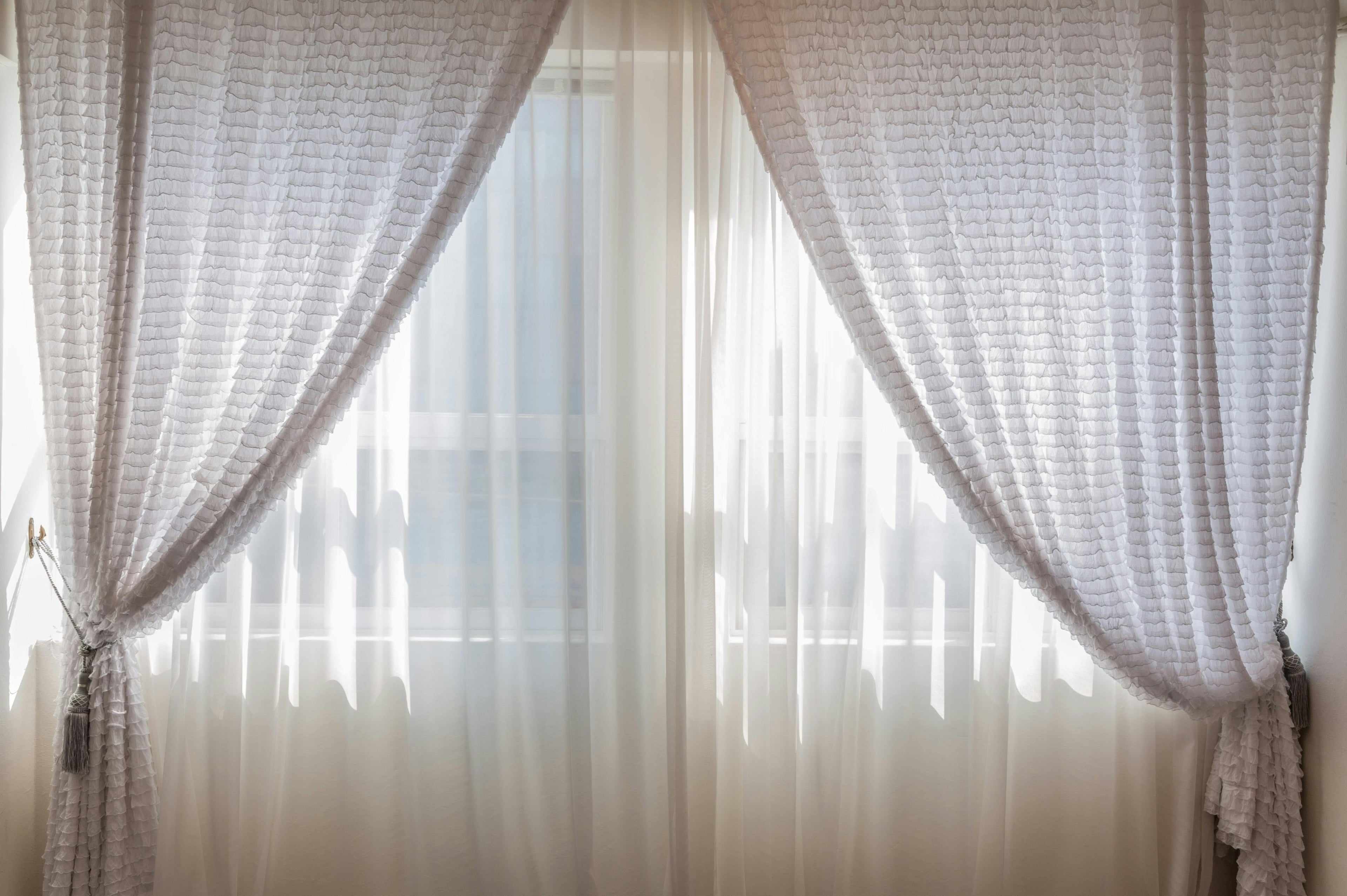
For a fresh and light effect, white, ecru, and pale gray tones are unbeatable. Ocean blues and sage greens are very trendy, bringing a soothing note. Patterns like thick stripes, botanical motifs, or ethnic geometrics animate the space. Regarding opacity, it's all about need: a white sheer curtain will let in soft light, while an opaque fabric will completely isolate you from views and sun.
Current Trends in Pergola Decoration
Outdoor decor is evolving rapidly. Here's what is increasingly being done to hang curtains on a pergola with style.
The trend is towards mixing & matching textiles. Layering a fine sheer curtain with more opaque curtains allows you to adapt privacy and light throughout the day. Matching with cushions and furniture is taken to the extreme for a very polished indoor-outdoor look.
We also see the emergence of fringed or pom-pom curtains for a boho-chic touch, and the use of natural dyes on linens for unique and soft colors. Finally, discreet motorization is gaining ground, controllable via a remote or even a smartphone, for absolute comfort and modernity.
Maintenance and Protection: Making the Dream Last
Your curtains, although outdoor, require minimal attention. Most technical fabrics are cleaned simply with a water jet and a soft brush and mild soap. For winter, in regions with harsh weather, it is advisable to detach and store them dry. If your system allows it, simply unhook them. Otherwise, consider protective covers made of breathable fabric. Regularly inspect the fixings to check that they are not rusting and remain tight.
Inspirations and Decor Ideas by Style
Mediterranean Style: Opt for thick white linen curtains, slightly wrinkled, hung on a raw wood rod. Let them float freely in the wind for a Greek villa spirit.
Contemporary Style: Straight panels in anthracite gray acrylic fabric, sliding on a discreet aluminum rail. A perfectly straight cut and a clean drape are essential.
Bohemian Style: Mix sheer curtains printed with ethnic patterns with fringed drapes. Use ropes or branches as rods and vary the lengths for an unstructured and warm effect.
Urban Jungle Style: Choose a forest green fabric or one with a tropical leaf pattern. Hang them with black metal rings on a tensioned cable, and surround yourself with climbing plants for a maximum canopy effect.
FAQ: Answers to the Most Frequent Questions
Which System is Most Wind-Resistant?
The most wind-resistant system is undoubtedly the robust rod fixed on solid brackets, combined with curtains whose lower part can be slightly weighted (weighted hem or discreet lead bar). The sliding rail is also excellent because it holds the fabric along its entire length. Tensioned cables are more sensitive to sail effects in strong winds.
Can You Hang Curtains on a Kit Pergola?
Absolutely. Most kit pergolas (aluminum, composite wood) are designed to support additional loads like reed screens or adjustable slats. Consult the manufacturer's manual to know the maximum load allowed on the beams. Use the recommended fixings (often provided or available as accessories) to avoid damaging the structure and to keep the warranty.
Should You Plan a Tie-Back System for Opening the Curtains?
It is highly recommended, both for aesthetics and practicality. Durable fabric ties, cords with snap buttons, or wall hooks allow you to tie or attach the curtains when they are open, in an orderly manner. This prevents them from flying around chaotically and protects the fabric from rubbing against the structure.
How to Estimate the Amount of Fabric Needed?
For a full and generous effect, plan for a fabric volume equal to 1.5 to 2 times the width of the area to be covered. For example, for a 4-meter wide facade, you will need between 6 and 8 linear meters of fabric. Don't forget to add the height (from the hanging point to the ground or desired length) plus about 10-15 cm for the top and bottom hem.
Do Curtains Really Protect from Rain?
Standard curtains, even in outdoor fabric, are not waterproof and do not constitute effective protection against driving rain. They can soften a fine drizzle or spray. If protection against rain is an essential criterion, you need to look towards specific panels in transparent PVC or very tightly coated canvas, designed for this use, and install them on a sliding system allowing perfectly jointed closure.
Conclusion: Your Pergola, a New Jewel Box for Living
Hanging curtains on a pergola is much more than a simple DIY task. It's a full-fledged decoration project that requires thought, care, and the choice of suitable materials. By following this comprehensive guide, you now have all the keys in hand to assess your structure, choose the hanging system best suited to your needs and style, and select textiles that combine beauty and resistance. From the most robust fixing to the most current trend, every detail counts to transform this architectural space into a warm, intimate, and resolutely personal living area. Don't hesitate to let your creativity speak and personalize your installation. To continue your inspiration and discover other ideas for arranging your interior and exterior, explore without delay the many resources available on ombreinterieur.fr. Our guide how to un-wrinkle blackout curtains helps you make the right choice. Visit ombreinterieur.fr to explore the entire catalog.
