














How to Hang Curtains on a Wardrobe: The Complete Guide
Turning a dressing room into a space that is both functional and decorative often comes down to a textile detail that makes all the difference. Choosing curtains to dress your storage means opting for softness, personality and a freedom of style that doors simply cannot offer. From airy to opulent fabrics, suitable hanging systems and fitting advice, this subject invites you to rethink how you dress your wardrobe with elegance and simplicity. Let yourself be guided in turning this practical gesture into a true decorative asset.
Hanging curtains on a wardrobe is much more than a simple, practical finishing step. It's an opportunity to transform a functional storage space into a full-fledged element of your interior decor, to add a touch of elegance, softness, and personality to your bedroom or dressing room. Whether you want to conceal messy shelves, create a harmonious visual separation, or simply add a warm, textile note, the choice and installation of wardrobe curtains are decisive. This article guides you through all the steps, from aesthetic considerations to the most concrete technical aspects, to brilliantly succeed in this installation and make your wardrobe a space as beautiful as it is organized.
Why choose curtains rather than doors for a wardrobe?
Before diving into the "how," it's essential to understand the "why." Sliding or hinged doors have long been the norm for built-in wardrobes. Yet, curtains are gaining considerable ground, and for many convincing reasons. First, their flexibility of use is incomparable: a simple gesture allows access to the entire storage space, without having to maneuver doors that can obstruct the space.
From an aesthetic standpoint, curtains offer much greater creative freedom. They allow you to introduce texture, movement, and color in a way that a flat door cannot match. It's also an ideal solution for spaces with complex or reduced dimensions, where installing doors would be costly, difficult, or even impossible. Finally, from a budgetary point of view, dressing a wardrobe with curtains is often much more economical than buying and installing custom doors, especially for large openings.
Choosing the perfect style and fabric for your wardrobe curtains
The choice of textile is the cornerstone of your project. It influences not only the final appearance but also the functionality and durability.
Light and airy fabrics: linen, voile, lightweight cotton
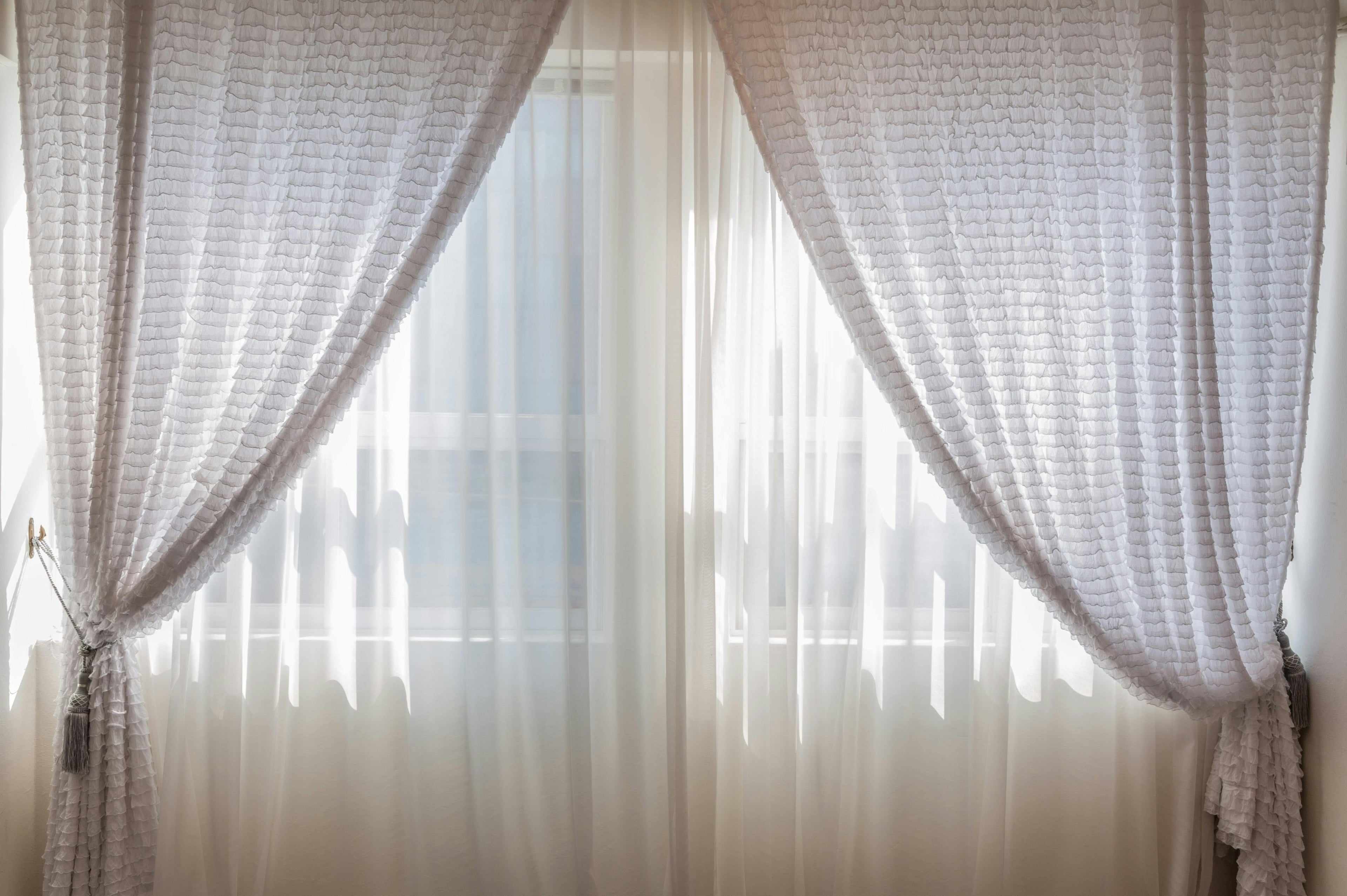
Fabrics like linen, lightweight cotton, or voile bring a soft, airy, and bohemian atmosphere. They filter light delicately and create a very soothing visual effect. Perfect for a wardrobe integrated into a bedroom, they mask the contents without creating a too-opaque visual barrier. Linen, with its natural folds and lively look, is particularly trendy for a chic, relaxed look.
More structured and opaque fabrics: velvet, jacquard, heavy canvas
If your priority is to completely conceal the wardrobe's contents, opt for denser fabrics. Velvet, very fashionable, adds a touch of luxury, sound insulation, and total opacity. Heavy cotton canvases or jacquards also offer good light blocking and superb drape. These fabrics are ideal for walk-through wardrobes in a hallway or when you want to create a strong contrast with the rest of the room.
Current trends: vertical stripes, botanical prints, and natural fabrics
Current decoration favors natural materials and authentic patterns. Curtains with fine vertical stripes can enhance the ceiling height. Subtle botanical prints or stripes add character without overloading the space. Hemp and raw linen, in natural tones, fit perfectly into "slow deco" and eco-friendly trends.
The hanging system: the key to a successful and durable installation
This is the most important technical element. A poor choice can ruin the aesthetic effect and make daily use difficult.
The classic curtain rod: simple and effective
The straight rod, fixed above the wardrobe opening, is the most common solution. For a modern look, favor thin metal rods (brass, matte black, steel) rather than overly imposing solid wood models. Make sure it extends sufficiently on each side of the opening (about 15 to 20 cm) so the curtains can open completely and don't block access to the side shelves.
The ceiling track: the discreet and modern option
Fixing a track directly to the ceiling is an excellent alternative, especially for very wide openings or those without a frame. This creates a very clean visual line and allows the curtains to fall perfectly straight from ceiling to floor, for a theatrical and elegant effect. Silent gliding systems are perfect for frequent use.
The tension wire: minimalism and lightness
For an industrial style, Scandinavian, or ultra-minimalist look, the tensioned steel cable is an ideal option. Almost invisible once the curtains are drawn, it highlights the beauty of the fabric. Its installation requires solid fixing at both ends (walls or ceiling) and a tensioner to maintain the tension. It is better suited for light to medium-weight curtains.
The ring and the clip: details that make the difference
The choice of rings or clips completes the style. Metal rings matching the rod (brass with brass, black with black) create perfect coherence. Clips are perfect for lightweight fabrics and allow hanging without piercing the fabric, making changing or washing easier. For a bohemian look, rattan or wooden rings add a natural touch.
Taking the right measurements: avoiding common mistakes
A measurement error is the main cause of failure. Take your time and double-check each dimension.
Width: Measure the total width of the opening to be covered. For a full and generous effect when the curtains are closed, multiply this width by 1.5 to 2.5. A coefficient of 2 is a good standard for rich and elegant pleating. If you use two panels, divide this total width by two to know the necessary fabric width per curtain.
Height: This is where style comes into play. First determine where your system will be fixed (on the ceiling or on the wall above the opening). Then, decide on the desired length.
- Floor length: Very trendy and luxurious. The curtain grazes the floor or trails slightly (1 to 2 cm). Measure from the hanging point (the bottom of the ring on the rod) to the floor.
- Mid-length: Stops just below the wardrobe opening. Less formal, but practical and airy.
- French length: The curtain stops just above the floor (at 1 cm). Elegant and avoids dust accumulation.
Don't forget to add the necessary height for the hem (usually 10-15 cm) and, depending on the hanging system, the height between the top of the curtain and the ring.
Fixing techniques: wall, ceiling, or cabinet?
The strength of the fixing is crucial, especially for heavy velvet curtains or wide openings.
Fixing on a plasterboard wall: This is the most delicate case. Never use simple plastic plugs. Turn to expansion anchors for plasterboard (Molly type) or, better, self-drilling metal anchors. Ideally, locate and screw directly into the metal studs of the partition for maximum hold.
Fixing on a solid wall (concrete, brick): Use appropriate plugs (nylon or metal expansion plugs) and strong screws. A percussion drill will be your best ally.
Fixing to the ceiling: Follow the same principles as for walls. If the ceiling is plasterboard, finding the joists is imperative for a secure fixing. A material detector is a wise investment.
Fixing on the wardrobe itself: If your wardrobe is a solid wooden structure (cabinet or built-in unit), you can often fix the rod directly onto the front face of the unit, above the opening. Make sure the wood is thick enough to support the load.
Deco tips for integrating wardrobe curtains into your interior
Wardrobe curtains should not "stick out" but harmonize or create a stylistic punctuation.
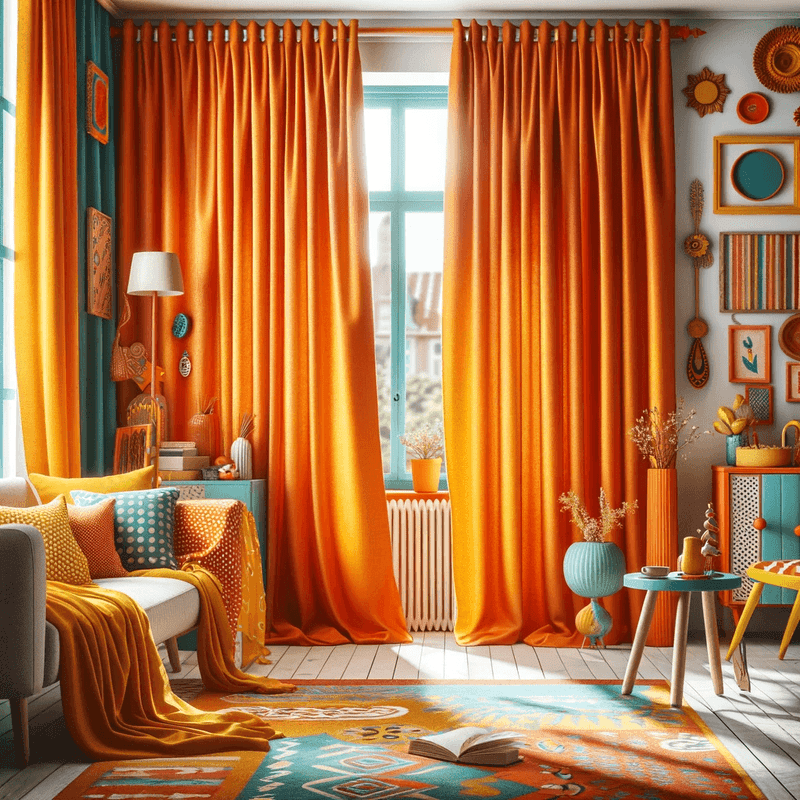
Color harmony: The safest color is to choose a tone identical or very close to that of the walls. The wardrobe then seems to disappear, creating a unified wall. For an alcove wardrobe, this is often the best option.
Mastered contrast: Conversely, you can make the curtains a strong element. Deep green velvet in a sand-toned bedroom, or raw linen in a white minimalist interior, create an elegant focal point.
Texture play: Even with a neutral color, texture can change everything. Pair a linen curtain with a smooth wall, or a ribbed velvet with a raw wood floor. This adds depth and tactility.
Lining and leading edge: For a high-end finish, consider a contrasting lining that appears when the curtain is drawn. A leading edge (a band of different fabric on the visible sides when the curtain is open) is a very sophisticated tailor's touch.
Care and maintenance: keeping your wardrobe curtains like new
Wardrobe curtains, especially if they are light, collect dust. Regular maintenance is necessary.
For washable fabrics (cotton, linen, voile), check the instructions on the label. A cold machine wash on a delicate cycle is often possible. Air dry to avoid shrinkage and iron if necessary while the fabric is still slightly damp.
For delicate or non-washable fabrics (velvet, some treated fabrics), regular vacuuming with a soft brush attachment is essential. For deep cleaning, call a professional upholstery textile cleaner.
Don't hesitate to remove the curtains once or twice a year to air them outside; this will eliminate odors and restore freshness to the fabric.
FAQ: Answers to the most frequent questions about wardrobe curtains
What is the ideal height to fix the rod above the opening?
There is no absolute rule, but a good practice is to fix the rod between 10 and 20 cm above the top of the wardrobe opening. This allows you to completely conceal the interior even when the curtains are slightly parted and visually lengthens the overall height. For an even more spectacular effect, fix the rod halfway between the top of the opening and the ceiling, or directly on the ceiling.
Can curtains be used for a sliding wardrobe?
Absolutely. It's even an excellent solution to soften the often cold and industrial appearance of sliding doors. You can fix a rod or track to the ceiling, in front of the existing sliding doors. Then choose a lightweight fabric so as not to hinder the door mechanism if you need to access it. The effect is very successful, combining the practicality of doors and the warmth of curtains.
How to prevent curtains from bowing or gaping in the middle?
This problem, called the "bayonet effect," is common with lightweight curtains over large widths. Several solutions exist: using a heavier, more structured fabric, increasing the fullness ratio (going to 2.5 times the width), or adding weights in the bottom hem to improve the drape. A ceiling track with regularly spaced gliders will also help keep the curtains well aligned.
Are curtains hygienic for a wardrobe?
Yes, provided they are properly maintained. Contrary to a common belief, curtains, especially if made of natural fibers like linen or cotton, allow air to circulate better than solid doors, thus limiting stagnant moisture. Regular vacuuming and airing out the clothes and the curtain itself are the keys to a healthy wardrobe. Avoid very thick, non-breathable synthetic fabrics in a poorly ventilated space.
How to create a wardrobe with curtains without heavy fixing work?
Several "no drill" solutions exist for renters or those reluctant to drill. You can opt for a tension rod, adjustable between two walls, provided the opening is perfectly framed. High-performance adhesive rods also exist, but they are generally reserved for very lightweight curtains. Finally, a freestanding metal or wooden structure, like a "portico," placed in front of the opening, can support curtains and be easily dismantled.
Conclusion: Dare to personalize for a unique wardrobe
Hanging curtains on a wardrobe is much more than an alternative to doors. It is a full-fledged act of decoration that allows you to express your style, play with volumes and materials, and provide a solution that is both practical and aesthetic. By following these tips, from the strategic choice of fabric to the precision of measurements and the strength of the fixing, you will transform a simple opening into a space dressed with character. Don't be afraid to mix textures, dare a color, or play with lengths for a custom result. Your wardrobe deserves to be showcased. To discover other inspirations and tips for elegantly arranging every corner of your interior, explore without delay the many resources available on ombreinterieur.fr. Our Wardrobe Curtains integrate perfectly with this style. Need practical advice? Read how to hang curtains. Discover our entire decor universe on Ombre Interieur.
