

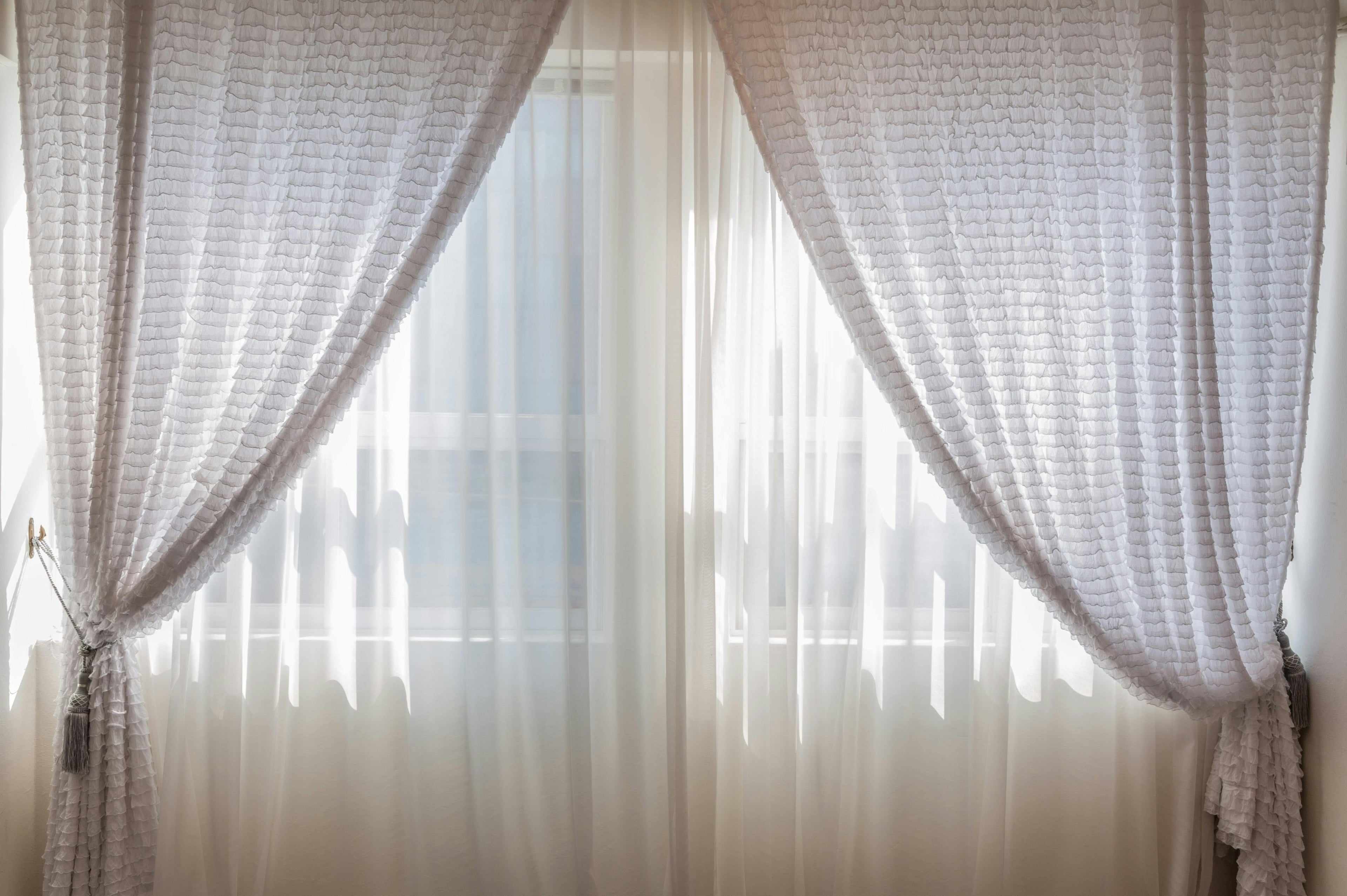















How to Hang Curtains on a Wall: A Complete Guide
Hanging curtains may seem straightforward, yet the success of your interior hinges on this often-overlooked technical step. A poorly positioned rod or an unsuitable fitting can disrupt a room’s harmony and shorten the lifespan of your fabrics. By mastering the preparations, selecting the right system, and taking precise measurements, you transform an ordinary window into a commanding architectural feature. Follow professional techniques to achieve a result that is both visually refined and structurally sound, one that will quietly elevate your home for years to come, lending depth and texture to every glance.
Hanging curtains on the wall may seem like a simple task, but it is actually a crucial step that defines the aesthetic and functional balance of your window. A successful installation elevates the room, optimizes light, and ensures the longevity of your fabrics, while a sloppy installation can ruin the overall effect, damage your walls, or create opening problems. Whether you want to create the illusion of ceiling height, conceal an architectural flaw, or simply dress a bay window with elegance, the hanging method is key. This article guides you step by step, from essential preparations to choosing the most suitable systems, including pro tips for a perfect and long-lasting result.
Essential Preparations Before Drilling the First Hole
Rushing is the enemy of a good installation. Taking the time to prepare your project will save you many disappointments, such as off-center curtains or failing fixtures.
Start by gathering all the necessary equipment: drill/driver, wall plugs suitable for your wall type, spirit level (a laser level is a plus), tape measure, carpenter's pencil, and of course, your curtain rod or track system. Check that you have all the fixing elements provided with your kit.
Identifying Your Wall Type: The Key to Stability
This diagnosis is essential. A wall made of plasterboard (drywall), brick, concrete block, or concrete does not accept the same wall plugs and cannot support the same loads.
For hollow walls (drywall), you will use toggle bolts (Molly type) or self-drilling anchors. For solid walls (brick, concrete), nylon or metal expansion plugs will be perfect. Tap lightly on the wall: a hollow sound often indicates drywall, a solid sound indicates a solid wall. If in doubt, test in a discreet corner.
Measuring and Marking with Surgical Precision
The hanging height and width determine everything. For height, the classic rule is to place the rod 15 to 20 cm above the top of the window. For a dramatic effect and to raise the ceilings, mount it halfway between the top of the window and the ceiling, or even just below the cornice.
For width, extend 15 to 30 cm beyond each side of the opening. This allows the curtains, when open, to not obstruct the light and to completely clear the view. Use a spirit level to draw a perfectly horizontal line that will serve as a guide for all your fixtures.
Choosing the Perfect Hanging System for Your Needs
The market offers a multitude of options, each with its advantages and style. Your choice will depend on the weight of your curtains, the desired aesthetic, and the desired functionality.
The Classic Curtain Rod: Versatile and Timeless
Available in metal, wood, or plastic, the rod is the most common solution. Metal glide rods, often painted, are sturdy and discreet. Exposed wooden rods, with their decorative rings, add a warm and rustic touch or, on the contrary, a very design look depending on the finish.
For heavy curtains (velvet, lined), opt for a thick metal rod and closely spaced brackets (every 50-60 cm) to prevent sagging. Systems with a cord or integrated roller (remote-controlled rods) represent the high-end trend for absolute comfort.
The Curtain Track: The Discreet and Modern Ally
The track, usually made of aluminum, is fixed to the ceiling or wall. It is perfect for sliding bays, corner windows, or integrated curtain projects. Extremely discreet once the curtains are hung, it allows for curves and turns to fit any window configuration.
High-end track systems offer ultra-silent gliders and great movement fluidity. This is the preferred choice for a contemporary and minimalist style.
Tension Cables and Thin Bars: Refined Elegance
Very trendy, the stainless steel cable stretched between two points creates an impression of lightness and modernity. Ideal for light curtains (sheer curtains, linen), it gives the impression that the fabric is floating in the air.
Thin bars in brass, black steel, or copper, often of small diameter, offer a refined alternative to traditional rods. They beautifully showcase decorative rings or design hooks.
The Step-by-Step Fixing Technique: Hollow Wall vs. Solid Wall
Now that everything is prepared and chosen, let's take action. Follow these steps meticulously for a solid and long-lasting installation.
Fixing on Plasterboard Walls (Drywall)
After locating and marking the position of your brackets, drill a pilot hole of the exact diameter indicated on the toggle bolt. Insert the bolt into the hole and screw it in. You will feel the bolt deploy and anchor behind the board.
A pro tip: for heavy loads, try to fix your brackets directly onto the metal studs of the partition. Use a stud finder to locate them accurately. The stability will be incomparable.
Fixing on Solid Walls (Brick, Concrete, Concrete Block)
Use a drill with a masonry bit. Drill to the depth of the wall plug plus 5 mm. Thoroughly clean the hole of dust with a blower or a small vacuum so the plug can grip properly.
Insert the nylon plug by hand or with a hammer, then screw in the bracket. Tighten firmly, but without excess to avoid splitting the nylon. For very heavy curtains in old concrete, chemical anchors (resin) offer the most robust fixing possible.
Common Mistakes to Absolutely Avoid
Even experienced DIYers can make these blunders. Knowing them is already avoiding them.
- Neglecting the level: Crooked curtains are immediately visible and give a sloppy look. Always use a level, even on small lengths.
- Underestimating the weight of the curtains: A thick velvet or a thermally lined curtain weighs very heavily. Brackets spaced too far apart or unsuitable wall plugs will eventually give way, damaging the wall and the curtain.
- Placing the rod too close to the window: This prevents the curtains from fully folding back to the sides, unnecessarily obstructing light and view.
- Forgetting to pre-wash the curtains: Some fabrics, like linen, shrink on the first wash. If you are cutting and sewing your curtains to measure, wash and iron the fabric before any sewing to avoid a bad surprise after installation.
Creative Solutions and Decorator Tips
Hanging curtains is not limited to dressing a window. It is a powerful decorative tool.
Creating the Illusion of a Larger Window
To visually enlarge a narrow window, install the rod well beyond the sides of the opening and mount it high, near the ceiling. Choose long curtains that graze the floor, or even create a slight "pooling" effect for a luxurious and dramatic look.
Concealing an Unsightly Wall or Area
A long rod and floor-to-ceiling curtains can hide a poorly finished wall, a messy bookshelf, or simply divide a space in an elegant and non-permanent way. Use thick fabrics for a more pronounced separation effect.
Playing with Double Curtains and Layers
The trend is towards layering textures and functions. First hang a track for a sheer or a blackout curtain, then a decorative rod further forward for dress curtains in linen or velvet. This layering allows perfect control of light and privacy throughout the day.
Maintaining and Adjusting Your Installation Over Time
Once your curtains are beautifully installed, a little maintenance ensures their beauty in the long term.
Regularly dust the rod or track to prevent dust from soiling the curtains during opening/closing. Check the tightness of the screws once a year, especially on drywall walls which can "settle".
If your curtains seem to sag or no longer slide properly, check the hooks or rings. Some may be deformed or worn. Cord systems may sometimes require an internal tension adjustment; refer to the manufacturer's manual.
FAQ: Answers to Your Questions About Hanging Curtains
Which wall plug should I use for heavy curtains on a drywall wall?
For heavy curtains on drywall, metal toggle bolts (Molly type) are the most reliable. For maximum security, the ideal is to locate the metal studs of the partition using a stud finder and screw directly into them with long screws. You can also opt for a wooden board securely fixed to several studs, then screw your rod onto this board, an aesthetic solution if you choose a beautiful wood species.
At what exact height should the rod be placed?
There is no absolute rule, but aesthetic guidelines. For a standard height, place the rod 15-20 cm above the window frame. To elevate the space and create an impression of height, mount it halfway between the top of the window and the ceiling, or only 5-10 cm from the ceiling. The "floor-to-ceiling" effect is always elegant and makes the room appear larger.
Can a rod be installed without drilling?
Yes, there are no-drill solutions, such as tension rods (which wedge between the floor and ceiling) or high-performance adhesive fixing systems. These solutions are ideal for rentals or walls that cannot be drilled (tile, stone). However, be careful: they generally support less weight than mechanical fixings and may leave marks on walls or ceilings. Read the load limits indicated by the manufacturer carefully.
What to do if my window is recessed (in a recess)?
For a recessed window, you have two main options. The first is to install a track or a thin rod directly inside the recess, at the top. This is the most discreet solution. The second, more decorative, is to ignore the recess and fix the rod on the wall, above and well beyond the sides of the opening, as for a classic window. This visually enlarges the window.
How to choose between rings and hooks?
The choice is both aesthetic and functional. Hooks (pin hooks) are discreet and allow smooth sliding on tracks or in the eyelets of rod systems. Rings, especially if they are decorative (in brass, wood, patterned), are an integral part of the decor. They are perfect for exposed rods. Rings with clips are practical for easily hanging and unhooking curtains without having to remove the entire rod.
Current Trends in Hanging and Style
Interior decoration is evolving, and with it, the ways we present our curtains.
Mixing & matching metals is very trendy: an aged brass rod with black iron rings, or the opposite. The important thing is to repeat these finishes elsewhere in the room (door handles, lamp bases).
Curved rods, which gently follow the angle of a bay window or a bow window, offer a custom-made and spectacular solution, often achieved with flexible tracks.
Finally, the return of cottage and bohemian style is manifested by the use of natural tree branch rods, sisal ropes, or metal chains as hanging systems, for an authentic and personal look.
Hanging curtains on the wall is much more than a simple DIY operation. It is the final gesture that brings your decorative project to life, frames the light, and dresses your privacy. By following the preparation steps, choosing a system adapted to your needs, and daring a few pro tips, you will transform every window into a style element in its own right. Remember that perfection lies in the details: a perfectly horizontal rod, curtains that graze the floor with elegance, harmonious finishes. To discover more inspiration and practical guides for transforming every corner of your home, explore the many resources available on ombreinterieur.fr. Check out our article how to hang curtains to go further. Browse our online store to see all our collections.
