















How to Black Out a Window for the Night: Effective Solutions
At night, a poorly covered window can transform your sanctuary of rest into a source of nuisance. Whether it's the intrusive light from a streetlamp, the first rays of dawn, or simply the need to plunge into total darkness for restorative sleep, knowing how to cover a window for the night is an essential skill for any lover of interior comfort. It's not just a matter of decor, but a true well-being issue, directly influencing the quality of your sleep and your privacy. In this article, we will explore in detail all the solutions, from the most classic to the most innovative, to transform your windows into perfect shields against nighttime light. We will cover crucial selection criteria, current trends in window covering, and installation tips for an optimal and aesthetic result.
Why is total blackout so important for the night?
Beyond the obvious comfort, complete darkness in the bedroom is a pillar of sleep hygiene. Science is clear: our body, and particularly the production of melatonin (the sleep hormone), is extremely sensitive to light. Even low light, like that filtering through a poorly covered window, can disrupt our circadian rhythm and alter the depth and restorative quality of our sleep.
The consequences go far beyond a simple restless night. In the long term, poor quality sleep can impact mood, cognitive functions, and the immune system. Perfectly covering your window at night is therefore not a luxury, but an investment in your health. Moreover, in urban areas or housing developments, total blackout guarantees preserved privacy, offering you a bubble of serenity away from outside eyes.
The timeless classic: the blackout roller shutter
A popular solution for its raw effectiveness, the roller shutter is often the first equipment that comes to mind. But not all shutters are created equal. For a truly dark night, you must opt for a blackout model, not simply an opaque one. The difference lies in the design of the slats.
Blackout slats are designed with a specific "S" profile or with side seals that, when closed, fit together perfectly to let no light through, even at the gaps. This is the most radical solution. Modern materials like cellular PVC or aluminum also offer excellent thermal and acoustic insulation, a significant advantage for peaceful sleep.
Advantages and disadvantages of the blackout roller shutter
Its main asset is its near-absolute effectiveness. Once lowered, the room is plunged into complete darkness. It is also robust and secure. On the other hand, its installation can be complex (often requiring construction work) and its aesthetics, although improved, remain quite technical. It completely hides the window and the view during the day when closed.
Decorative versatility: double curtains, the perfect alliance
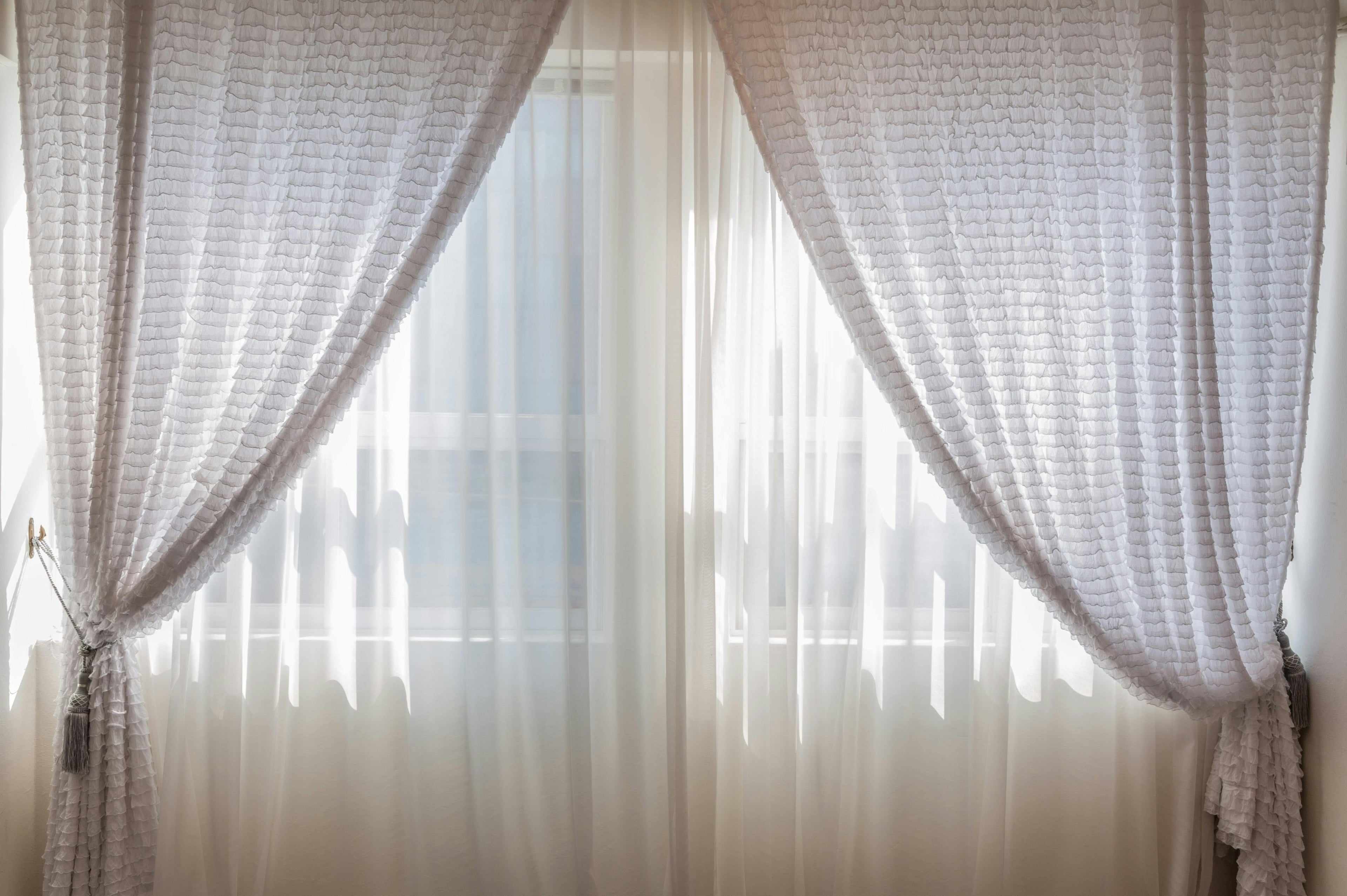
For those who don't want to sacrifice daytime decor on the altar of nighttime darkness, the double curtain technique is an elegant and ultra-effective response. This system combines two types of fabric on the same rail or rod.
The first curtain, on the room side, is aesthetic: linen, cotton, velvet, technical fabric. It defines the room's atmosphere. The second, placed between the first curtain and the window, is a technical blackout curtain. These fabrics, often made of dense, treated polyester, are designed to block up to 99% of light. Some high-end models even incorporate a thermal layer for insulation.
The advantage is immense: during the day, you only draw the decorative curtain, letting in light and enjoying your decor. At night, you draw the blackout panel behind it, creating an impenetrable barrier. This is the ideal solution for covering a window without compromising on style.
Blackout blinds: a modern and practical solution
Blinds offer a lighter and often more design-oriented alternative to roller shutters. Several technologies exist to achieve total darkness.
The blackout roller blind is the most direct. Similar in principle to the roller shutter but in a textile version, it consists of a perfectly opaque PVC-coated fabric or multi-layer fabric. It coils into a discreet cassette above the window. Its installation is generally simpler than a shutter.
The Venetian blind can also be blackout if its slats are wide enough and equipped with pull cords that press them tightly together. Finally, the Japanese panel blind, with its large sliding fabric panels, can be made in opaque fabric for a very clean, contemporary effect.
The magic of the blackout panel or window cover: the custom solution
Sometimes, the window configuration (unusual shape, skylight, sliding glass door with tracks) makes installing traditional solutions complex. This is where the blackout panel, also called a window cover or blackout mask, comes in.
This is a rigid or semi-rigid panel, often made of cellular foam board, foam, or fabric stretched over a frame, which is precisely wedged into the window recess. Its effectiveness is formidable because it perfectly conforms to the shape of the opening, eliminating any light leakage at the edges. It is a popular solution for guest rooms, studios, or roof windows.
You can make it yourself with basic materials (cardboard, insulation foam covered with fabric) for a modest cost, or order it custom-made from professionals for a perfect finish. This is probably the most economical and effective method for "à la carte" blackout.
Current trends: smart home and innovative materials
Nighttime blackout is not immune to the home automation revolution. Connected solutions are becoming more common. It is now possible to control your roller shutters, blinds, or even double curtains via a smartphone app, voice assistant (Google Home, Alexa), or program them into scenarios.
Imagine a "Bedtime" routine that automatically lowers the shutters, turns off the lights, and adjusts the thermostat. These systems, in addition to comfort, optimize blackout. Materials are also evolving. We are seeing the emergence of "smart" blackout fabrics that also regulate temperature, or adhesive films for windows with variable opacity (liquid crystal), although this latter technology is still marginal in homes.
Another strong trend is the search for eco-friendly solutions. Blinds made from natural materials like bamboo or rattan, although less blackout, are combined with thick organic linen or cotton linings for an aesthetic and ecological compromise.
Essential selection criteria for effectively covering your window
Faced with this multitude of options, here are the points to analyze to make the right choice and know how to cover a window effectively.
- The required level of darkness: Are you a very light-sensitive sleeper or simply looking to reduce light? Products are often rated (class 1 to 3 for blackout).
- Thermal and acoustic insulation: In the city or in a poorly insulated house, prioritize solutions with an integrated insulating layer (PVC/aluminum shutters, double curtains with thermal lining).
- Frequency of use: A roller blind will be perfect for daily use, while a window panel may suffice for an occasional room.
- Aesthetics and decoration: The solution must integrate into your interior. Double curtains offer the most decorative freedom.
- Budget and installation: DIY window panels are very economical, while connected electric roller shutters represent a significant investment.
Focus on atypical windows: Skylights, sliding glass doors, French doors
Standard windows are easy to equip, but what about particular configurations?
For roof windows (Velux), specific blinds exist, often with telescopic controls. The custom blackout panel is also an excellent alternative, highly prized for its total effectiveness and insulating power. For sliding glass doors and French doors, sliding solutions are preferred. Double curtains on a sliding track, extra-wide roller blinds, or custom roller shutters are perfect. Think about practicality: a roller blind with a remote control will be simpler to manage than a long curtain to pull manually over several meters.
Tips and DIY solutions for perfect blackout
Even with standard equipment, light leaks can persist on the sides, top, or bottom of the window. Here are some tips to perfect the blackout:
- Magnetic or hook-and-loop strips: Attach to the window frame and the edges of the curtain/blind to seal them hermetically.
- Double-curve rod or track: Allows the curtain to follow the wall and press against the window recess, limiting side light entry.
- The valance or curtain box: A casing at the top of the window that hides the blind mechanism and blocks light that might filter through the top.
- The weighted curtain hem or "stop-light": A weighted bar integrated into the curtain hem or a profile fixed to the floor to press the fabric down and prevent light from passing underneath.
A DIY window panel can be made from foam board covered with black fabric or aluminum adhesive paper, cut to the exact dimensions of the window recess.
FAQ: Your questions about covering windows at night
What is the most effective solution for sleeping in total darkness?
Without a doubt, the combination of a blackout roller shutter (or a quality blackout roller blind) with thick curtains. The shutter blocks light closest to the glass, and the curtain catches any residual leaks at the edges and improves acoustic insulation. Failing that, a custom window panel is remarkably effective.
Can you cover a window without drilling holes?
Absolutely. Several solutions exist: tension rods (spring-loaded), blinds with adhesive fixings (designed for roof windows or smooth surfaces), wedge-in window panels, or magnetic track curtains. These options are perfect for rentals or if you are reluctant to do construction work.
Do blackout curtains really block 100% of light?
The best technical fabrics, called "total blackout," do indeed achieve 99 to 100% blackout. However, this rating concerns the fabric itself. Light can still filter through gaps at the top, sides, or between the two curtain panels. This is why the quality of the fixings and the use of accessories (side strips) are essential to approach 100% in a real-world situation.
How to cover a large sliding glass door at low cost?
For large surfaces, the cost of custom solutions can skyrocket. An economical alternative is to use an opaque or reflective adhesive film applied directly to the glass. It's effective for light, but sacrifices the view during the day. Another option: buy rolls of wide blackout fabric and make your own large curtains with a simple rod system.
Does blackout also help insulate against cold and noise?
Yes, and this is a major advantage often underestimated. A static air layer is created between the glass and the blackout device (curtain, blind, shutter). This layer acts as an insulating buffer. Dense materials (velvet, PVC-coated fabric, cellular shutters) are particularly effective at reducing heat loss in winter, heat gain in summer, and dampening outside noise, thus contributing to a more peaceful nighttime environment.
Conclusion: Create your ideal night
Perfectly covering your window for the night is achievable for everyone, regardless of budget, window type, or decorative style. Whether you choose the robustness of a roller shutter, the versatile elegance of double curtains, the modernity of a connected blind, or the cleverness of a DIY window panel, the goal remains the same: to create a dark cocoon conducive to regeneration. Remember that small light leaks can greatly harm the effectiveness of your installation; be meticulous with the finishes. Investing in good blackout is investing in restorative nights and daily well-being. To discover more ideas and tips on furnishing your interior, feel free to explore other dedicated articles on ombreinterieur.fr. For a harmonious look, also browse Grey Curtains for Living Room. Fall for Macrame Ring, a real plus for your interior. For more tips, discover how to compare a velvet wall shelf and a wooden one for the living room on the blog. Browse our online store to see all our collections.
```