












Hang curtains in an original way: creative ideas
Hanging your curtains is far more than a matter of rods and rings: it is a decisive gesture that shapes a room and reveals your personality. Too often overlooked, the way you hang them can transform a space by playing with height, light and volume. By daring to use curved forms, unexpected materials or asymmetrical draping, you go beyond the basic function of a curtain to turn it into a true architectural feature. Let these creative ideas inspire you to make your windows the very heart of your decor.
Hanging curtains seems, at first glance, to be a simple technical formality. A straight rod, some rings, and you're done. However, this often overlooked step is actually one of the best-kept secrets of interior decorators. The way you hang your curtains has a colossal visual and functional impact. It defines the height of your room, frames your view, influences the diffusion of light, and, above all, reveals your style. If you aspire to break away from the beaten path and infuse genuine personality into your interior, it's time to rethink how you hang your curtains. Forget the standards and get ready to explore a universe of creative possibilities, from curved rods to plant-based suspensions, and the art of asymmetrical draping.
Why Curtain Hanging is a Major Decorative Element
Before diving into the heart of the matter, it's essential to understand why this question deserves your full attention. Hanging is not just a question of support; it's the starting point for the entire scenography of your window. A poorly hung curtain, too low or on a rod that's too short, can literally flatten a room and give an impression of makeshift work.
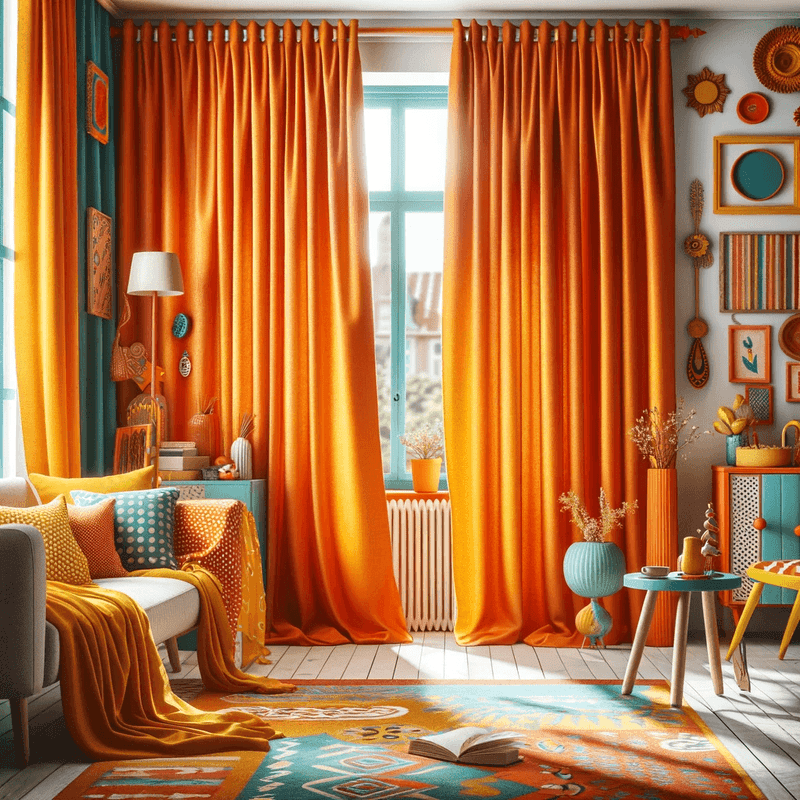
Conversely, a well-thought-out hanging acts like a masterful brushstroke. It creates a verticality that visually elevates ceilings, even in low rooms. It allows you to play with proportions, widen a narrow window, or balance an imposing bay window. It's also the first clue to your style: sober and structured, organic and bohemian, or bold and sculptural.
By mastering the principles of hanging, you no longer just hide a blind or filter light. You create interior architecture, you draw lines in space, and you set the tone for the entire room's decoration. It's an investment in visual impact that often surpasses the simple choice of fabric.
The Golden Rule: Go High, Go Wide
The first and most powerful trick for a hanging that immediately transforms a room is to follow this maxim. No matter which original method you choose later, this fundamental principle remains valid.
Go high means fixing your rod or rail well above the top of the window, ideally halfway between the top of the opening and the ceiling, or even just a few centimeters from the latter. This trick creates a spectacular illusion of height. The curtains, falling from such a high point, draw long, elegant vertical lines that draw the eye upward.
Go wide consists of extending your support well beyond the sides of the window. Typically, you extend 15 to 30 centimeters on each side. This serves two crucial objectives. First, when the curtains are open, they completely clear the window, letting in maximum light and offering an unobstructed view. Second, it gives the impression that the window is much wider than it actually is, adding a sense of space and openness.
Applied together, these two rules transform any standard window into an elegant opening worthy of the pages of a decor magazine. It's the essential foundation on which all original ideas can then be grafted.
Daring with Shapes: Curved Rods and Sculptural Cable Tracks
To definitively break with traditional linearity, curved and organic shapes are emerging as a strong trend. They bring movement, softness, and a decidedly contemporary touch.
The Arc, the Gentle Revolution
The curved rod, or arc-shaped rod, is probably the most striking innovation of recent years. Instead of following the wall's linearity, it follows a graceful curve above the window. The effect is immediate: it softens the architecture, adds fluid dynamism, and creates spectacular volume when the curtains are drawn. Perfect for interiors with a minimalist or Scandinavian style, it brings the organic touch often missing from these clean decors.
It can now be found as a discreet rail for sliding curtains or as an exposed rod, often in metallic finishes like brass or matte black. Installation requires a bit more planning, but the result is well worth the effort.
Cable and Steel Wire Tracks: Aerial Elegance
For a maximum impression of lightness, stretched steel cable systems are unbeatable. Almost invisible, they give the impression that the curtains are floating in the air. This style is ideal for showcasing a particularly beautiful fabric or for rooms where you want to minimize the visual impact of the support.
The originality lies in their path. Instead of a simple straight line, imagine a cable that starts from a fixed point on the ceiling, descends diagonally to follow the angle of a sloping roof, then rises back to another point. Or, a double parallel cable system allowing you to layer two sheer curtains for a cloudy, ethereal effect. These installations, although technical, create unique scenographies.
Playing with Materials and Unexpected Supports
The quest for originality also involves the choice of the support itself. Why limit yourself to chrome metal or white wood? A multitude of materials can be transformed into authentic rods.
The Polished Tree Branch: A robust, straight branch, debarked, sanded, and treated, becomes a rod of incomparable organic beauty. Fixed with rope or leather supports, it brings a natural, bohemian, or Japanese (wabi-sabi) touch. Ideal for curtains in linen, raw cotton, or burlap.
The Industrial Galvanized Steel Pipe: For a loft or industrial interior, a simple plumbing steel pipe, with its visible fittings, is perfectly authentic. Its low cost and raw appearance make it a favorite of DIY enthusiasts. You can leave it gray metal or paint it a bold color.
Braided Rope or Cable: A rope made of natural fibers (hemp, jute, cotton) or a thick marine cable can support light curtains. Tied to large wooden or wrought iron hooks, it creates a seaside cabin or artist's studio ambiance.
Chains: Decorative chains, in brass or black iron, offer a support that is both robust and graphic. The play of links creates interesting texture and reflection. It's a bold choice that works very well in eclectic interiors or with a hint of modern gothic style.
Freeing the Angles: Diagonal and Off-Center Hangings
Why should curtains always fall perfectly vertically? By playing with angles, you create movement and drama.
Diagonal Hanging: Imagine a rod fixed not horizontally, but on a slant, perhaps following the line of a staircase or starting from a high corner of the wall to go to a low point on the other side of the window. The curtains, sliding along this slope, create a dynamic and unexpected effect. This technique is perfect for dressing a window placed in a corner or for dividing a room in an unconventional way.
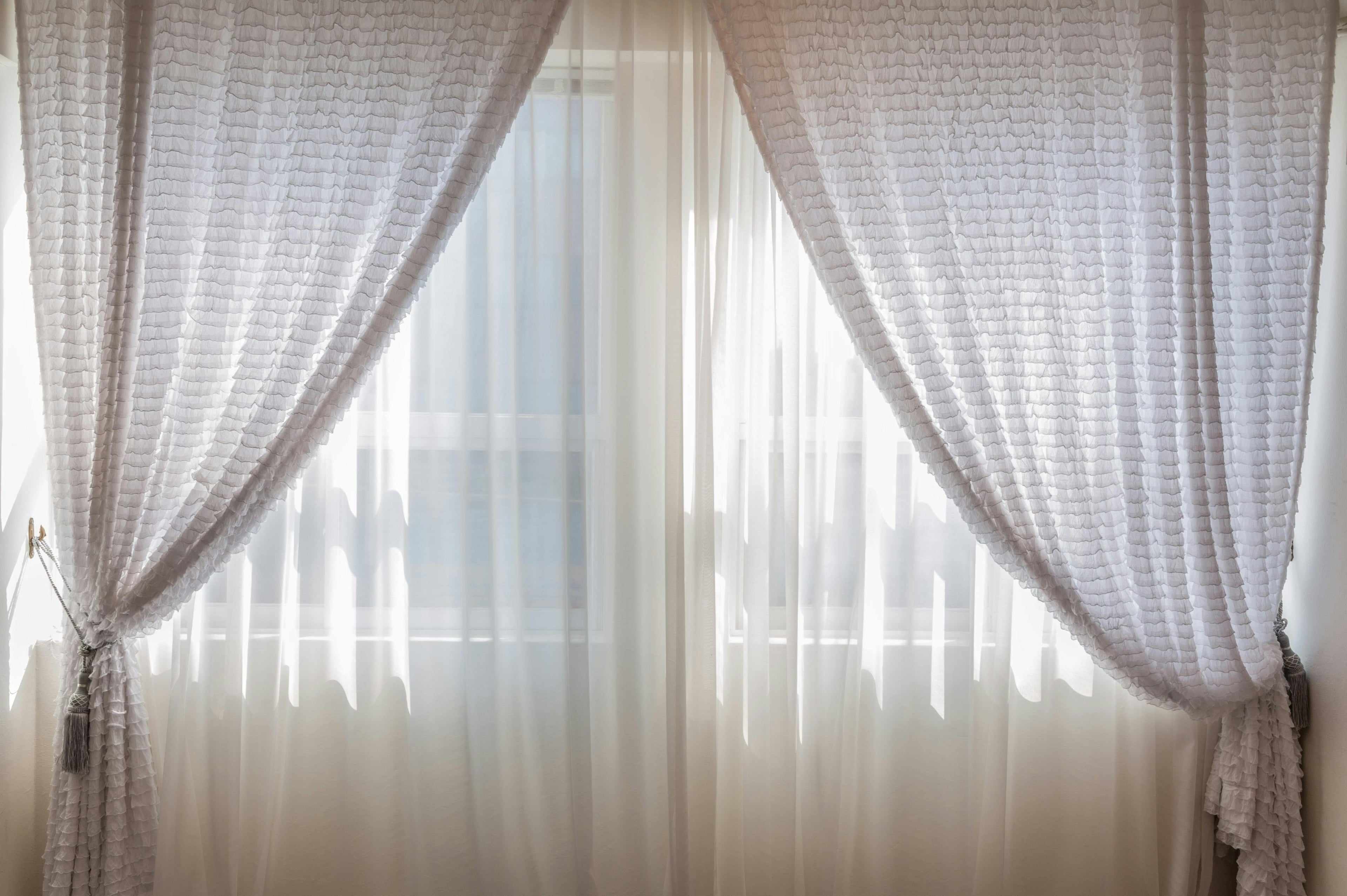
The "Off-Center" or Asymmetrical Curtain: This is a very current trend that involves not hanging the curtain symmetrically on either side of the window. For example, a single large curtain is drawn to one side, leaving the other side of the window completely clear or dressed with a sheer curtain. It can be held back by a tie, a hook, or simply left in a free drape on the floor. This asymmetry brings a studied relaxation, an impression of ease and nonchalance that is very elegant.
Isolated Supports: Instead of a continuous rod, use individual hooks or pegs fixed to the ceiling or wall. You can then hang each curtain at a distinct point, allowing you to move them independently, create volume separations, or tie them at different heights. It's an extremely flexible and sculptural system.
Replacing the Rod: Suspended Alternatives and Wall Mounts
Sometimes, the most original solution is to completely disregard the concept of a rod. Several creative alternatives are available to you.
Bamboo or Thin Metal Rods: For light curtains (sheers, muslin), thin bamboo or metal rods, simply placed on two supports, bring a touch of simplicity and lightness. Think of Japanese screens or Balinese interiors.
Ceiling Systems with Sliding Rings: Fix sliding rings or tracks directly onto the ceiling surface. The curtains then seem to emerge from the ceiling itself, creating a fluid room separation without visual interruption. Ideal for studios or large living rooms.
Direct Wall Mounts: For a very architectural style, some curtains (often thicker, like acoustic panels or heavy canvases) are equipped with "clip" or "grommet" type fasteners that snap directly onto pegs fixed to the wall. This gives a taut, graphic, and very contemporary look, almost like a textile wall art that can be opened.
The Art of Draping: Knots, Ties, and Decorative Holdbacks
The way you hold your curtains open is a decorative opportunity in itself. Abandon the classic matching fabric tiebacks.
Ties in Rope or Leather Ribbon: A large knot in braided cotton rope or a leather strap tied loosely brings natural texture and artisanal charm.
Sculptural Wall Hooks: Fix a beautiful wall hook – shaped like a hand, a branch, a geometric curve in brass – on the wall next to the window. You can hang a curtain ring on it to keep it open permanently and thus sculpt its drape.
Decorative Weights and Clips: Slide weights made of polished stone, wood, or brass into the lining, or use large decorative clips (like old drawing clips) to pinch and shape the fabric at mid-height, creating a dynamic and structured drape.
The "Negligent Drape" Technique: Simply let a curtain trail on the floor by a few centimeters, or even much more for a dramatic and bohemian effect. Tuck it up slightly and tuck it behind a piece of furniture or a low hook. This apparent nonchalance actually requires a keen eye to be successful.
Layering and Levels: Creating Depth
For a window dressed with sophistication, think in layers. Using several rods at different heights or depths allows you to play with transparencies, textures, and functions.
Double Rod, Double Use: The timeless classic. A front rod for opaque curtains (thermal lining, velvet) and a rod against the wall for sheers or blinds. For originality, use two different types of supports: a curved rod for sheers and a tree branch for the curtains, for example.
Layering Sheer Curtains: On the same multi-track rail, layer two or three sheer curtains of different textures and densities (muslin, light linen, lace). By offsetting them slightly, you get a play of transparency and light of great poetry, while preserving privacy.
The Floating Level: Hang a very light and very long curtain on a rod placed very high, and a shorter, more structured curtain on a rod placed within the window frame. This creates a remarkable effect of perspective and depth.
Integrating Nature: Plant Supports and Braids
The biophilic trend, which involves integrating nature indoors, can also apply to your curtains.
The Climbing Plant Rod: Install a thin stretched steel wire very high above your window. Let a light climbing plant like ivy, philodendron scandens, or hoya climb on it. Over time, it will form a living, green rod, perfect for accompanying curtains made of natural fibers. Be careful to plan a system for hanging the curtains without damaging the plant.
Rings in Raw Wood or Rattan: Choose rings not in metal, but in slices of untreated wood, twisted branches, or braided rattan. They bring immediate warmth and texture.
Tiebacks in Vine or Raffia: To hold back your curtains, use ties braided from even more pronounced natural fibers, directly evoking the jungle or the seaside.
FAQ: Answers to Your Questions on Original Curtain Hanging
Are these ideas compatible with all types of curtains?
Compatibility depends mainly on the weight of the fabric. The airy ideas (cables, ropes, thin rods) are reserved for light curtains: sheers, muslins, fine linens. The more robust concepts (industrial pipes, thick branches, ceiling systems) can support heavy fabrics like velvet or double curtains. Always check the load capacity of the system and use fixings suitable for the wall support (wall plugs, screws into a beam).
How do I choose the right idea for my room?
Start from the overall style of your interior. A loft will pair well with industrial pipe or aerial cables. A Scandinavian or Japanese style will call for a tree branch or a clean curved rod. A bohemian or ethnic interior will be perfect with ropes, knots, and negligent drapes. The idea is to reinforce the existing ambiance, not to create dissonance.
Are these installations difficult to do yourself?
Some are very accessible (replacing a straight rod with a branch fixed with ropes). Others, like custom curved rods or stretched cable systems, may require professional intervention or great DIY meticulousness. Start with simple projects and don't hesitate to draw inspiration from detailed tutorials. Preparation (level, precise measurements) is the key to success.
Can I mix several of these ideas?
Absolutely! Creativity has no limits. You could have a curved rod for your double curtains and use sculptural wall hooks in the shape of a leaf to hold them back. Or mix wooden rings on an industrial pipe. The important thing is to maintain coherence in materials and finishes so that the whole doesn't become too cluttered.
How do I maintain these original installations?
Natural supports (wood, rope) require regular dusting and possibly treatment (oil for wood). Metals (brass, steel) are cleaned with a slightly damp microfiber cloth. For complex systems like cables, periodically check the tension and solidity of the fixings. Always think about the ease of taking down the curtains for washing.
Conclusion: Dare to Make Your Windows a Work of Art
Hanging curtains in an original way is much more than a simple technical step in furnishing your interior. It's a decorative act in itself, an opportunity to express your creativity and give soul to your rooms. By stepping outside the literal frame of the window, by playing with heights, shapes, materials, and drapes, you transform a basic functionality into a central design element.
Whether you opt for the sculptural purity of a curved rod, the artisanal charm of a tree branch, or the aerial lightness of a stretched cable, each choice tells a story. Don't be afraid to experiment, mix styles, and personalize. After all, it's these unique touches that make a house a home. To discover more inspiration and practical guides for transforming every detail of your interior, continue your exploration on ombreinterieur.fr. For more tips, discover how to attach 2 curtains together on the blog. Get inspired on our decoration site for your next projects.
