














Decorating a round room: tips and tricks
Your round room defies the conventions of rectilinear interiors, yet this unusual geometry can become your greatest decorative asset. Far from being a constraint, the curve invites you to rethink the layout with fluidity and elegance. The challenge lies in taming this natural movement to create functional zones without clashing with the walls’ rounded form. By playing with contrasts between straight lines and organic shapes, you will transform this singular space into a harmonious and captivating haven. Let yourself be guided to unlock the full potential of this exceptional architecture.
Decorating a round room is an exciting challenge that breaks away from the conventions of rectangular spaces. This unique architectural shape, found in towers, sunrooms, alcoves, or even some contemporary living rooms, offers inherent fluidity and softness. However, its particular geometry can be perplexing when it comes to arranging furniture, defining functional zones, or creating visual harmony. Unlike a room with right angles, a round room does not offer obvious reference walls for anchoring large pieces. This article is your complete guide to turning this peculiarity into a major asset. We will explore zoning strategies, furniture selection, lighting techniques, wall decor, and current trends to create an interior that is both functional, aesthetic, and perfectly balanced.
Understanding the Unique Dynamics of a Round Room
Before placing the first piece of furniture, it is crucial to grasp the psychology of a circular space. A round room naturally creates a feeling of movement, continuity, and inclusion. The absence of sharp angles softens the atmosphere and guides the eye in a continuous flow. This shape is often associated with notions of conviviality and gathering, making it an ideal choice for a living room or dining room. However, this same fluidity can make it difficult to establish focal points and clear structures. The goal is not to fight the curve, but to celebrate it while introducing elements of stability and organization. It's about playing with contrasts: pairing round and straight, curved and linear, to create a dynamic and captivating balance.
Defining the Center and Functional Zones: The Key to Success
In a rectangular space, zones are often defined along the walls. In a round room, the strategy is radically different and revolves around a central point. Identifying and honoring the center of the room is the fundamental step.
Creating a Central Focal Point
The center of the room does not necessarily have to remain empty, but it must be deliberate. It can host a major element that structures the space. A large round or oval coffee table becomes the physical heart of the living room. In a dining room, a round table is an obvious and perfectly suited choice, fostering conversation. For a bedroom, the bed can often be positioned in the center, especially if the room is spacious, creating an impression of a peaceful island. This central focal point acts as an anchor around which all circulation and placement of other furniture will be organized.
Smart Zoning with Furniture and Rugs
Once the center is defined, you need to create functional zones (conversation, reading, relaxation, work). Use the arrangement of seating and rugs to achieve this. A large round rug placed under the coffee table and sofa unifies the living space while respecting the room's geometry. To delineate a reading nook, you can place an armchair and a small ottoman with a smaller crescent-shaped rug against the curve of the wall. Low, curved bookcases or custom-made benches that hug the wall are excellent ways to create zones without breaking the fluidity.
The Strategic Choice of Furniture for a Circular Room
Furniture is the main tool for dialoguing with the round architecture. Pieces with curved lines will be your allies, but straight lines, used sparingly, will bring the necessary structure.
Prioritize Organic and Rounded Shapes
Furniture with rounded corners naturally harmonizes with the space. Opt for sofas with rounded armrests, shell chairs, oval or teardrop-shaped coffee tables, dressers with softened corners. "Pouf"-style seats or rocking chairs reinforce this feeling of softness. Current trends, such as biophilic design, precisely highlight these organic shapes that evoke nature, perfect for a round room.
Introduce Straight Lines with Intention
To prevent the space from becoming too "soft" or indistinct, introducing elements with clean lines is beneficial. A straight sofa (but not too long) placed facing the fireplace or a window creates a strong visual axis. A linear console against a less curved wall section can offer a practical and structuring surface. The idea is to create a controlled contrast, where the rigidity of the furniture dialogues with the curve of the wall, bringing tension and visual interest.
The Importance of Visual Lightness
In a space where the walls are not straight, bulky and heavy furniture can seem cumbersome. Prioritize pieces with visible legs (thin metal or wood legs) that let the floor show through, creating an airy impression. Glass tables, transparent polycarbonate chairs, or airy shelves contribute to this lightness without interrupting the circular visual flow.
Optimizing Lighting in a Room Without Angles
Lighting is a crucial decorative and functional element, especially in a round room where shadows and reflections play differently. You need to think in layers and circles.
Start with the general lighting layer. A magnificent ceiling light or chandelier is often the ideal element to mark the center of the room. A large round chandelier, a cluster of lanterns, or a sculptural model draws the eye upward and reinforces the symmetry of the space. Next, add ambient and accent lighting. Wall sconces spaced at regular intervals around the perimeter of the room create a halo of soft light that highlights the curve of the walls. For functional zones, use arched floor lamps that bring light to the center of the reading space or table lamps on consoles.
Current trends include using concealed LED strips in niches or on the ceiling to create dramatic indirect lighting that highlights the architecture without cluttering the space. Arc lamps, very popular, are perfect for a round room, their elegant curve echoing the shape of the room.
Playing with Colors and Patterns
Color and patterns can either accentuate or soften the roundness of a room. The choice depends on the desired effect.
Solid Colors and Gradients
A solid color on all walls (neutral tones like off-white, pearl gray, or deeper colors like navy blue or sage green) reinforces the unity and continuity of the space, creating a cozy, enveloping feeling. To add depth, you can opt for a circular gradient, with a darker shade on the ceiling or floor that lightens towards the center, or vice versa. This sophisticated technique guides the eye and adds a spectacular dimension.
Strategic Patterns
Subtle vertical stripes can, counter-intuitively, work by bringing a slight structure without breaking the curve, especially if used on a single wall section. However, patterns that follow the shape are often more successful. A wallpaper with a pattern of concentric stripes or nested circles can be a bold and graphic choice. Botanical patterns with swirls or 360° panoramic murals transform the room into an immersive universe. On the floor, a rug with a circular pattern or herringbone parquet converging towards the center can beautifully showcase the architecture.
Wall Decor and Window Treatment
Curved walls and often numerous windows in round rooms require special attention.
For wall decor, forget the rigid alignment of a single large frame. Prioritize galleries of paintings or photographs that follow the curve of the wall, creating an organic and dynamic composition. Mirrors are your best friends. A large round or sun-shaped mirror accentuates the theme and reflects light, visually enlarging the space. Several mirrors of different shapes and sizes, grouped asymmetrically, can also create a captivating effect.
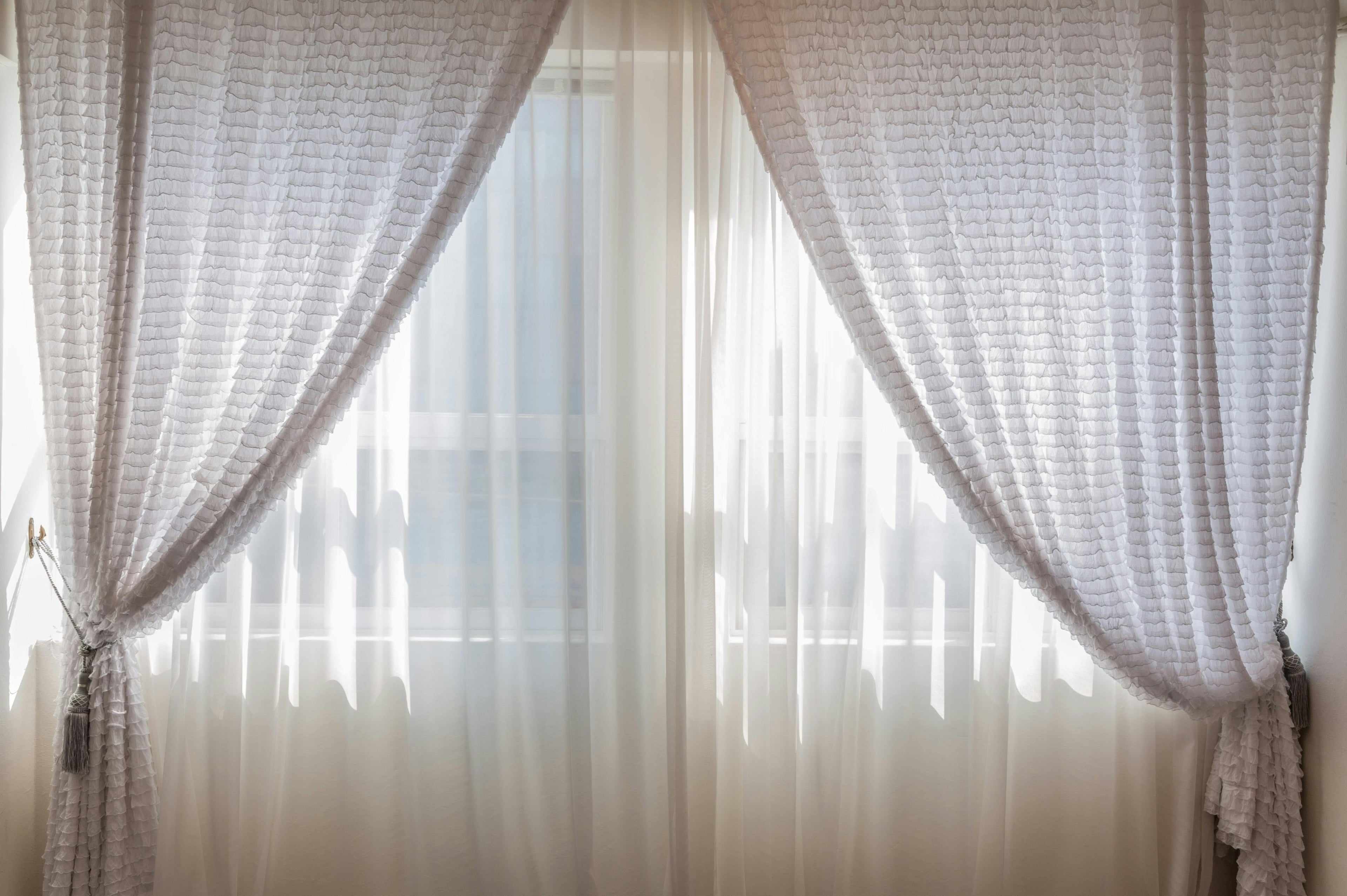
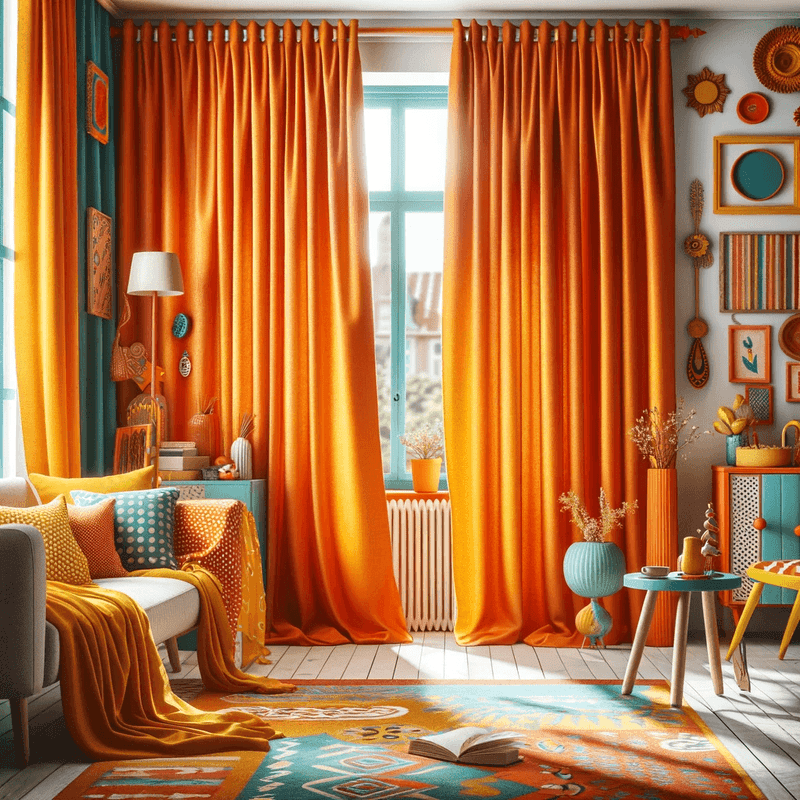
Window treatment must follow their shape. For bay windows or arched windows, curtains mounted on a curved track (technically more complex but with an impeccable effect) are the ideal solution for perfect dressing. Otherwise, opt for roller blinds or shutters whose rigidity will contrast nicely with the curve. Light sheer curtains left to float will soften the light without obstructing the view or the architectural shape.
Pitfalls to Absolutely Avoid
Certain mistakes can unbalance a round room. Avoiding them is essential for a harmonious result.
- Pushing all furniture against the walls: This is the biggest mistake. It creates an unnecessary central void and difficult circulation. Dare to bring seating closer to the center.
- Using furniture that is too large and angular: A huge L-shaped corner sofa will fight against the shape of the room and block circulation. Prefer smaller modules.
- Neglecting circulation: Think about natural circulation paths, in a ring shape around the center. Leave at least 80 cm (about 31.5 inches) of passage.
- Overloading the space: Relative minimalism is often a good approach. Too many small decorative objects will create a cluttered feeling. Prioritize a few strong pieces.
- Ignoring scale: In a round room with high ceilings, furniture that is too low can be overwhelmed. Think about verticality with tall bookcases or a large floor lamp.
Current Trends for Round Rooms
Contemporary decoration offers many avenues for enhancing a round room.
Curved design is more fashionable than ever, with voluptuous and sculptural furniture shapes. "Enveloping" sofas, tables with fluid lines, and cocoon chairs are perfect. Biophilia (integration of nature) finds an ideal ground for expression: a round room flooded with light can host a circular indoor garden or a hanging planter with trailing plants. Natural and textured materials like rattan, jute, raw linen, and plaster walls bring warmth and contrast to the smooth geometry of the curve. Finally, integrated technologies (discreet speakers, connected lighting) allow you to enjoy the often favorable acoustics of round rooms without cluttering the space with visible cables or devices.
FAQ: Your Questions on Decorating a Round Room
What is the best rug shape for a round room?
A round rug is the most intuitive and often most successful choice, as it perfectly matches the shape of the room and reinforces the cohesion of the central space. An oval rug can also work, bringing a slight geometric variation. Square or rectangular rugs can be used more boldly to create a strong contrast, but they must then be placed strategically, often under the main furniture grouping, and be large enough for all the legs of the main seating to rest on them.
How to arrange seating in a round living room?
Avoid rigid alignment. Create a conversation area by placing a sofa (straight or curved) facing a point of interest (fireplace, view), and complete it with two armchairs or a smaller sofa placed at an angle, forming a circle or semi-circle around the central coffee table. Ottomans or light chairs can complement the arrangement flexibly. The idea is to foster interaction and guide looks towards the center of the room.
Can a round room accommodate a bookcase?
Absolutely. Several options are available to you. A low, curved, custom-made bookcase can hug the circumference of a wall. Open, straight shelves of varying heights, arranged asymmetrically on part of the wall, create an interesting rhythm. Finally, a tall, straight bookcase can be placed against a wall, acting as a structuring architectural element. In this case, choose a model with curved doors or softened finishes to ease the transition.
How to choose the size of the dining table in a round dining room?
The table must allow for fluid circulation all around. Measure the diameter of the room. The general rule is to leave a circulation space of at least 90 cm (ideally 1 meter) between the edge of the table and the wall or surrounding furniture once the chairs are pulled out. For a room with a 4-meter diameter, a table about 1.20 meters in diameter is a good choice. Don't forget that a table with a single central pedestal base facilitates chair placement and legroom.
Are round rooms difficult to heat or air condition?
The round shape can indeed present challenges for uniform temperature distribution, as air tends to circulate differently, sometimes creating drafts. For optimal heating, prioritize gentle and distributed solutions, like underfloor heating, which ensures even warmth. For air conditioning, a split system with several strategically placed indoor units or a ducted system with air outlets distributed around the perimeter will be more effective than a single central unit. Consult a heating and air conditioning professional for a solution adapted to your specific space.
Conclusion: Making the Curve Your Signature
Decorating a round room is not a constraint, but a fantastic opportunity to create an extraordinary interior, full of character and softness. By respecting its unique geometry while introducing elements of structure, playing with shapes, lights, and textures, you will transform this atypical space into a remarkable and deeply pleasant living area. The key lies in the balance between respecting the curve and introducing controlled contrasts. Let yourself be guided by the fluidity of the lines, dare to use central groupings, and make this singular architecture the starting point for bold and personal decor. To discover more inspiration for decorating atypical spaces and the latest decor trends, explore without delay the other articles and complete guides available on ombreinterieur.fr. Before choosing, browse how to fix a curtain rod on a wardrobe. Browse our online store to see all our collections.
