













Tips for Making a Room Look Bigger with Decor
You dream of a more spacious interior without knocking down walls. The feeling of space depends not on square footage alone, but on how you orchestrate light, colour and furniture. Each decorative choice can push a room’s visual boundaries, yielding an atmosphere that feels both airy and serene. By playing with cleverly crafted optical illusions, you will transform your everyday surroundings. Let simple principles guide you, freeing your home’s potential without a single renovation. Soft textures, pale hues and mirrored surfaces all conspire to expand the eye, turning constraints into quiet, breathable luxury.
Feeling cramped in your own living room? Does your bedroom seem to be shrinking before your eyes? A sense of space is a luxury in our modern interiors, often constrained by limited square footage. Yet, enlarging a room isn't always a matter of costly demolition work. It's primarily about optical illusion, the psychology of perception, and clever decorative choices. This art of creating space where it seems lacking relies on timeless principles and current trends that enhance light, fluidity, and reflection. Whether you want to visually enlarge a small living room, give an airy feel to a closed-off kitchen, or create a soothing primary suite, the solutions are numerous. In this comprehensive guide, we will explore in depth all the strategies, from the most classic to the most innovative, to transform your interior and unlock its space potential. From the magic of color to the prowess of mirrors, through furniture optimization and the art of lighting, get ready to rediscover your home in a larger, brighter, and infinitely more welcoming light.
The Psychological Power of Light, Uniform Colors
Color is the most powerful and immediate tool for enlarging a room. It acts directly on our perception of volume. Light tones, especially whites, creams, very pale grays, and soft pastels, possess the unique property of reflecting natural and artificial light. Unlike dark colors which absorb light and seem to bring walls closer, light shades visually push them back, creating an impression of expanse.
For maximum effect, favor a monochrome decoration or a very restricted palette. Painting walls, ceilings, and even baseboards in the same light shade removes visual breaks that fragment the space. This chromatic continuity blurs the room's boundaries, making it appear more vast and coherent. Current trends advocate for warm whites (off-white, eggshell) or grays with beige undertones, avoiding coldness while maximizing brightness.
Creating Depth with a Color Accent
If total uniformity seems too radical, a proven technique is to paint the far wall of an oblong room in a slightly darker or more saturated shade than the side walls. This "accent wall" draws the eye to the back, creating an illusion of depth and lengthening the perspective. Choose harmonious colors, like pearl gray on the sides and a deep grayed-blue at the back.
Strategic Lighting Optimization
Light is the indispensable companion of color for visually enlarging a space. A well-lit room always appears more open and airy. The goal is to eliminate shadowy areas that fragment the room and create uniform, soft illumination.
Favor multiple light sources at different heights (ceiling lights, pendants, wall sconces, floor lamps, table lamps) rather than a single central light point, which can create strong contrasts. Directional lighting (recessed or track spots) allows you to highlight corners and nooks, thus "pushing" the walls. Current trends integrate concealed LED strips in ceiling niches or behind furniture, producing indirect, diffuse light that magically enlarges volumes.
The Magic of Natural Light
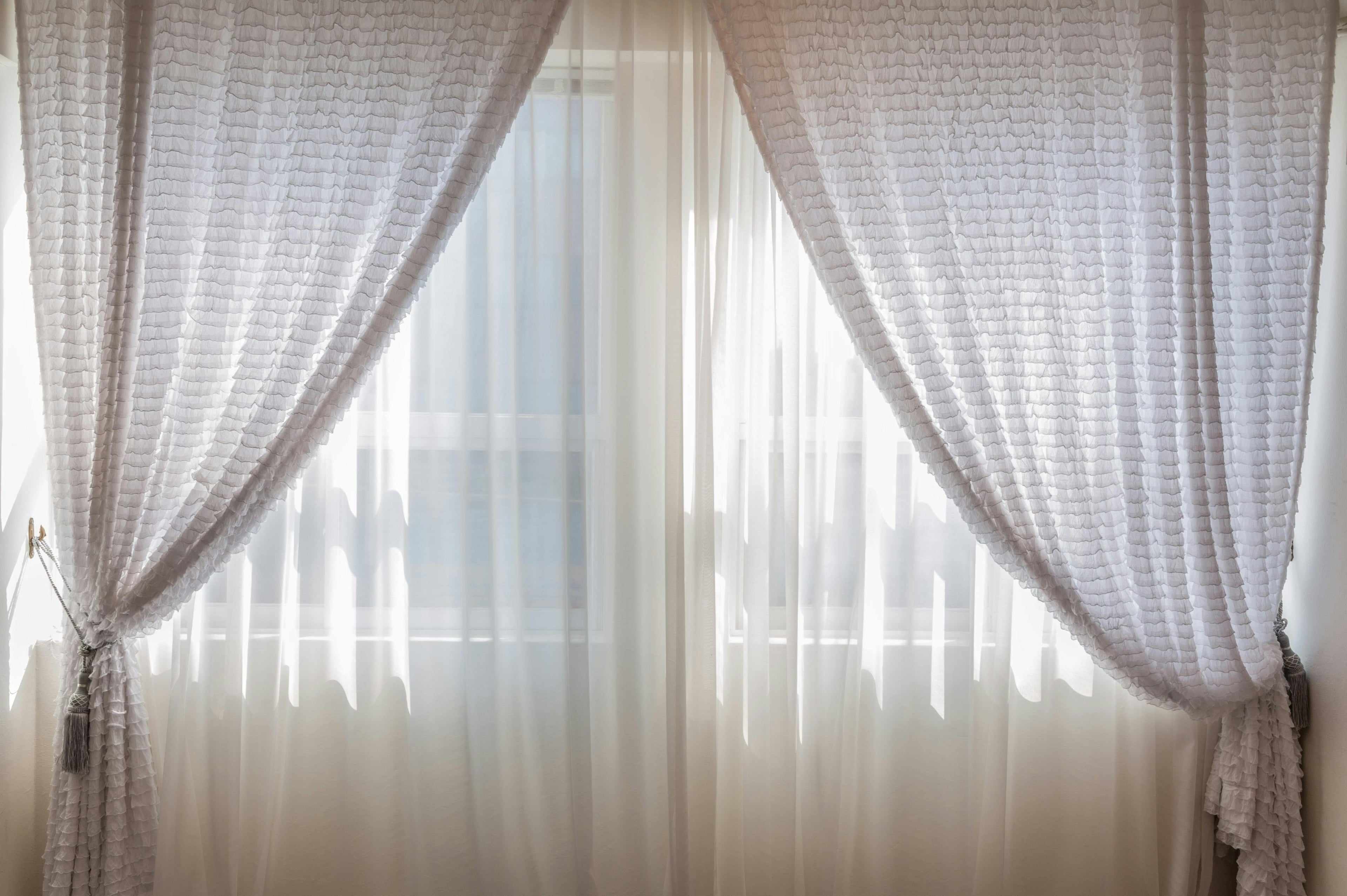
Nothing replaces daylight. To maximize it, keep windows completely clear. Replace heavy opaque curtains with light sheer curtains, Roman shades in fine fabric, or ring-top curtains mounted very high and very wide, well beyond the window frame. This creates the illusion of a larger picture window. Mirrors placed opposite or beside windows also double the effect by reflecting light into the room.
The Mirror: The Essential Ally for Enlarging a Room
The mirror is undoubtedly the most famous accessory for creating an illusion of space. By reflecting the room's image, it visually duplicates it, breaking physical limits. But its effectiveness depends on its placement and shape.
A large wall mirror, preferably placed facing a light source or an interesting perspective (like a hallway), is extremely effective. "Portfolio" format mirrors (tall and narrow) can make ceilings appear higher. Current decorative trends exploit the mirror architecturally: frameless mirror panels that integrate into the wall like a second skin, mirrors with organic shapes (circle, wave) to soften the space, or furniture with mirrored fronts (dressers, cabinet doors) that blend into the decor.
Reflective Surfaces: A Global Strategy
Beyond mirrors, integrate other reflective surfaces to amplify light and space. A floor with glossy tiles, polished concrete, or epoxy resin reflects light upward. A kitchen countertop in glass or glossy quartz, lacquered furniture, metallic accessories (copper, brass, chrome), or even a painting with a gilded frame contribute to this effect of sparkle and depth.
Custom and Scaled Furniture
Nothing shrinks a room more than disproportionate furniture. To enlarge a small living room, the golden rule is to choose furniture scaled to the space. Favor sofas and armchairs with clean lines, with visible legs that let you see the floor and create an impression of lightness. A two-seater sofa can sometimes be more suitable than a massive three-seater.
The ideal is to opt for multifunctional and custom furniture. A bookshelf that goes from floor to ceiling uses verticality without encroaching on floor space. A bed with integrated storage drawers, a coffee table with a lift-top, or storage crates that also serve as stools are smart solutions. Furniture in light colors or with glass finishes (tables, shelves) have the advantage of being visually forgotten.
The Strategy of Elevation and Visual Clearance
Free up floor space. Mount televisions on the wall, use wall shelves rather than low, wide bookcases, and choose pendant lights or sconces to free up surfaces. This elevation of the gaze guides the eye upward, exploiting the full ceiling height and giving a sensation of air and space.
Fluidity of Spaces and Removing Partitions
The perception of space is greatly influenced by its fluidity. Compartmentalized rooms always appear smaller. The current trend of "open-plan living" or "decluttered living spaces" perfectly responds to this desire to enlarge a room.
If major work is possible, knocking down a load-bearing wall (after validation by a professional) between the kitchen and living room can radically transform the perception of space. For less invasive solutions, replace solid partitions with light, visual separations: bookshelves open on both sides, decorative screens, sheer curtains, or frosted glass partitions. These elements delineate zones without obstructing light or view, maintaining spatial continuity.
Unifying Floors for an Expansive Effect
Using the same floor covering in several connecting rooms (for example, wide light oak flooring from the living room to the kitchen) is a masterful trick to visually merge spaces. The gaze glides without interruption, creating an effect of one large room. Avoid breaks in materials or colors that segment the space.
The Art of Minimalist and Streamlined Decoration
Decluttering is the first, often free, step to regain space. Minimalist decoration does not mean a cold, empty room, but a room where every object has its place and reason for being. A streamlined space, with clear surfaces (floor, countertops, tables), allows the eye to rest and perceive the room's real limits without distraction.
Apply the rule of "one object in, one object out." Favor smart storage: decorative boxes, baskets, furniture with integrated storage. On walls, opt for a well-composed gallery wall rather than an accumulation of small frames. A single large-format artwork can have more impact and appear less visually cluttered than a multitude of small elements.
Optical Illusions with Patterns and Lines
Patterns and lines can guide the gaze and manipulate the perception of dimensions. A wallpaper with fine, discreet vertical stripes (tone-on-tone stripes, for example) pulls the ceiling upward. Conversely, floorboards laid lengthwise in a narrow room considerably lengthen it.
Large geometric or botanical patterns should be used sparingly. A single wall adorned with such wallpaper can create a focal point and depth, but using it on all four walls risks crushing the space. Current trends see the emergence of trompe-l'oeil wall murals, representing architectural perspectives or landscapes, which literally open the room onto an imaginary horizon.
Exploiting Verticality and Dead Corners
Lost space is often what we don't look at: the height under the ceiling and the corners. To visually enlarge a space, you must conquer this verticality. Shelves going up to the ceiling, curtains mounted just a few centimeters from the ceiling (even if the window is low), and low-hanging pendant lights draw the gaze upward, exploiting every centimeter.
Corners can be transformed into assets. A small corner desk, a triangular shelf, an accent chair topped with a pendant light, or a climbing green plant (like ivy or pothos) bring life back to these often-neglected spaces, contributing to an impression of fullness and optimization of every nook.
Transparency and Lightweight Materials
Integrating transparency is a designer trick to create lightness and visual continuity. Furniture in acrylic, glass, or transparent resin (like Philippe Starck's Ghost chairs or glass coffee tables) have the magical property of blending into the environment. They occupy physical space without blocking the view, thus preserving perspectives.
Glass partition walls (tempered or frosted) to delineate a home office in the living room, sliding glass doors for the bathroom or kitchen, and even glass guardrails for a mezzanine are modern solutions that preserve light and the sensation of open space while defining functional zones.
Nature as an Ally: Plants and Views to the Outside
A visual connection with the outside instantly enlarges a room's boundaries. If you have a garden, terrace, or even a simple balcony, treat its access as an extension of your interior. Use the same materials or colors indoors and outdoors to create a continuous flow.
Indoors, green plants, with their organic shape and vitality, bring depth and divert attention from the walls. Prefer one large plant (like a fiddle-leaf fig or a dwarf palm) in a nice corner rather than several small ones scattered about. Its foliage creates volume and texture without the cluttering effect of multiple small objects.
FAQ: Your Questions on How to Enlarge a Room
Which color enlarges a room the most?
Light, cool colors (white, pale blue, aqua green, light gray) are the champions for reflecting light and pushing walls back. White remains the safest and most effective choice, especially if used in monochrome (walls, ceiling, baseboards). To avoid coldness, choose a white with warm undertones (beige, very pale yellow).
Can a mirror really enlarge a small, dark room?
Absolutely, provided it's placed strategically. In a dark room, avoid placing a mirror facing a bare wall. Position it perpendicular to a window to capture and redirect lateral light, or facing a light point (a beautiful sconce or floor lamp). A mirror in a narrow hallway can also create a fascinating perspective.
How to enlarge a very cluttered living room without throwing everything away?
Start with a major decluttering. Then, optimize: replace a massive coffee table with a smaller model or one with a glass top. Swap two bulky armchairs for a two-seater sofa and an ottoman. Use vertical storage (wall shelves). Finally, group small objects on trays for a more organized and less scattered effect.
Are patterns to be avoided in a small room?
Not necessarily. Dense small patterns can indeed saturate the space. On the other hand, a single large, airy pattern (like large tropical leaves) on one wall can create incredible depth. Fine vertical stripes, especially tone-on-tone, remain a safe bet for gaining ceiling height.
What is the most common mistake when trying to visually enlarge a room?
The main mistake is trying to do too much, creating the opposite effect. For example, using too many mirrors of different sizes can give a disorienting hall of mirrors sensation. Or, choosing furniture that is too small and too numerous, which fragments the space. The key is coherence, moderation, and the pursuit of fluidity.
Conclusion: A Philosophy of Rediscovered Space
Enlarging a room is much more than a simple decoration trick; it's a philosophy that invites us to rethink our relationship with space, light, and objects. It involves making choices, favoring quality over quantity, and daring simplicity. By judiciously combining light colors, strategic lighting, the power of mirrors, scaled furniture, and streamlined decoration, you will radically transform the perception of your interior. Every room, regardless of its actual dimensions, possesses a potential for grandeur. You just need to free the light, open up perspectives, and guide the gaze. Remember that the ultimate goal is to create a place that breathes, that reflects you, and in which you feel good, comfortable, and… perfectly at home, in a space that finally seems to fit you.
Want to explore more ideas for transforming your home? Browse the many inspirations and practical guides available on Ombre Intérieur. From studio layout to renovating an entire house, our blog is your resource for creating the spacious and bright interior you dream of. Before choosing, read how to integrate a planter in a small 30 m² studio. Visit ombreinterieur.fr to explore the entire catalog.
