













Tips for making a room look bigger without renovations
If your home feels too cramped but you’re not ready to knock down walls or embark on costly renovations, take heart: you can gain space without altering the structure. By playing with colour, light and furniture placement, you can effectively push back the walls. This piece explores the principles of visual perception that reshape your everyday surroundings, offering simple keys to creating the illusion of a larger, brighter interior. Let yourself be guided towards a home that truly breathes.
Do you feel like your walls are closing in, that there's not enough space to breathe, and that your home is suffocating you? This feeling of being cramped is a common problem, but fortunately, there are many clever solutions to enlarge a room without touching the walls. Major, expensive renovation is not the only answer. By mastering the principles of visual perception, light, and layout, it's possible to create the illusion of a more spacious, brighter, and perfectly functional space. This article is your complete guide to outsmarting the limits of your home. We will explore in detail decorating techniques, color choices, furniture tricks, and current trends that can enhance every square meter. Get ready to transform your perception of space.
The Power of Color: An Optical Illusion at Your Brush's Reach
Color is the most powerful and immediate tool for altering the perception of a room. It acts directly on our psyche and our vision of space. A well-chosen palette can literally push back the walls and raise the ceilings.
Light and neutral tones remain the go-to choices for enlarging a room. White, ivory, very pale grays, and beiges reflect up to 80% of light, unlike dark colors which absorb it. This maximum reflection creates an impression of air and volume.
To avoid the coldness of pure white, play with nuances. An off-white with warm undertones, a pearl gray, or a very light taupe will add softness. The trick is to use a single color, or extremely close tonalities, for the walls, ceilings, and woodwork. This uniformity removes visual breakpoints and makes the space flow.
Current Trends: Deep Neutrals and Monochromes
The current trend goes beyond immaculate white. There is a strong enthusiasm for monochromes, where different shades of the same color are used throughout a room. A range of grays, from charcoal to light gray, or very muted blues, creates sophisticated depth while maintaining a visual coherence that enlarges the space.
Very light "earthy" colors, like sand, white clay, or faded sage green, are also popular for their warmth and their ability to open up the space. They connect the interior to the exterior, another visual enlargement technique.
Furniture Strategies: Lightness, Multifunction, and Scale
The choice and arrangement of furniture are decisive. A bulky or poorly placed piece of furniture can undo all the efforts made with color. The key lies in seeking visual lightness and optimized functionality.
Prefer furniture with visible legs. A sofa, bed, or dresser raised off the floor allows the eye to travel underneath, creating an impression of lightness and floor space. Models with thin metal or light wood structures are perfect.
Scale is crucial. In a small living room, a deep and comfortable two-seater sofa is often preferable to an overwhelming three-seater. Measure your room and leave a minimum of 60 cm of circulation space around each piece of furniture.
The Era of Multifunctional and Custom-Made Furniture
To enlarge a room, you must think in terms of usable volume. Multifunctional furniture is a great ally. A bed with integrated storage drawers, a coffee table that lifts to become a desk, bookcases that incorporate a fold-away desk... every element must earn its place.
Custom-made is the ultimate solution for exploiting every centimeter. A shelf that perfectly fits the ceiling height, a corner sofa tailored to the exact dimensions of the living room, or a countertop that stretches the entire length of a wall free up floor space and offer a spectacular gain in room.
The Art of Circulation and Layout
The way you organize your living space directly influences the feeling of spaciousness. A cluttered room or one with obstructed circulation will always seem smaller than it is.
Avoid pushing furniture against the walls at all costs. This misconception often creates a useless central void and dead corners. Bring seating closer together to create a cozy conversation area, leaving a clear circulation space around the periphery.
Use the corners. A corner can accommodate a small desk, a triangular shelf, or an armchair turned towards the room. Freeing up the center of the room is essential to create visual breathing room.
The Magic of Mirrors and Reflective Surfaces
The mirror is the magical accessory for instantly enlarging a room. By reflecting light and space, it virtually doubles the surface area and creates fascinating depth.
For maximum effect, place a large mirror facing a natural light source, like a window. It will capture and redistribute light throughout the room. A mirror placed behind a light fixture (like a wall sconce) will also have a remarkable amplifying effect.
Current trends favor mirrors with organic shapes (ovals, sun-shaped, irregular contours) or compositions of several mirrors of different sizes to create a graphic effect. Don't forget other reflective surfaces: a glass countertop, a coffee table with glossy lacquered finishes, polished metal door handles all contribute to diffusing light.
Optimizing Natural and Artificial Light
A bright room is a room that appears larger. The goal is to maximize and evenly diffuse every ray of light.
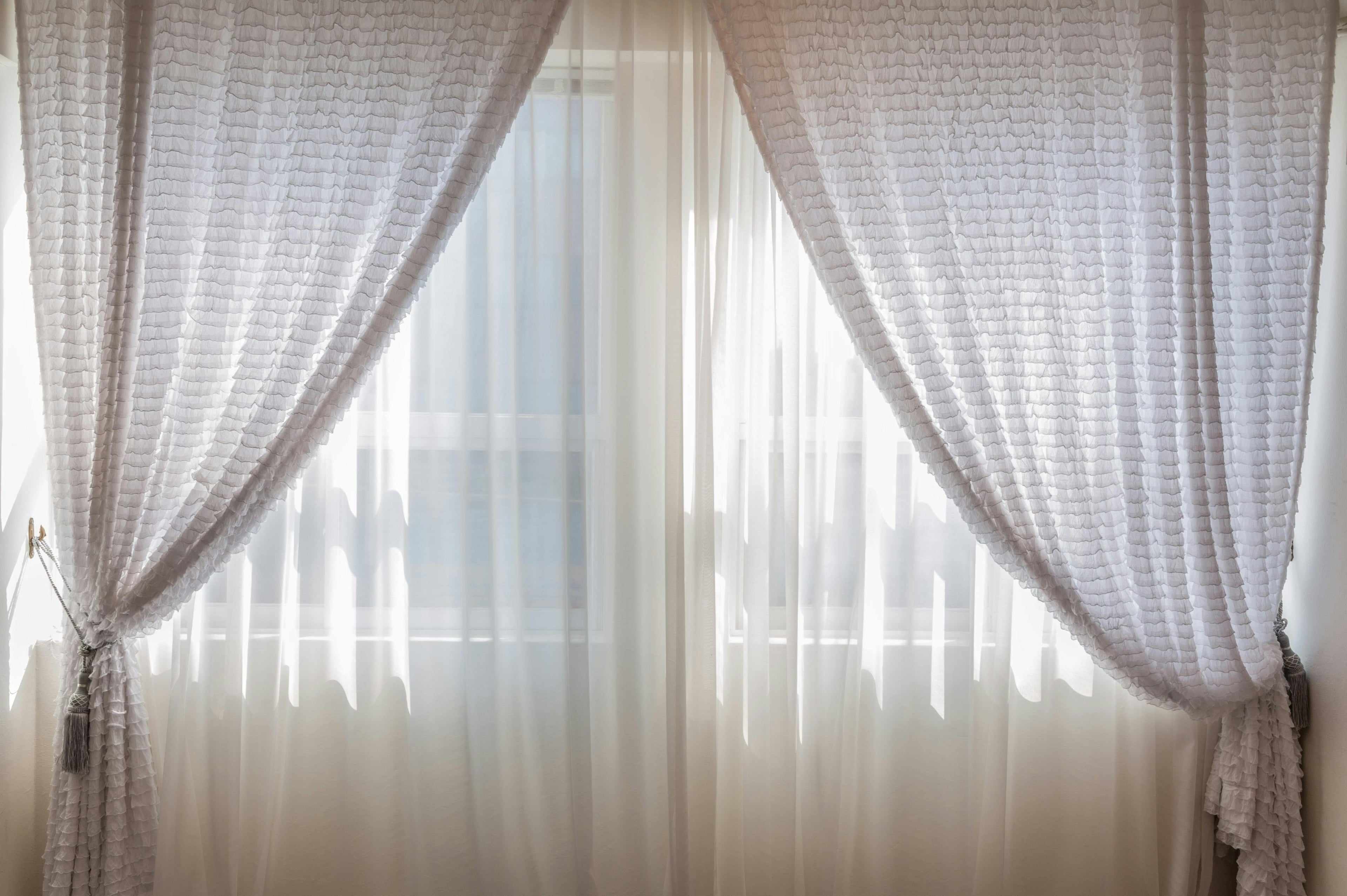
For natural light, simplify the windows as much as possible. Replace heavy curtains with roller blinds, fine sheer curtains, or curtains on rings sliding on a thin rod, placed high and wide. Leave window frames clear and paint them the same color as the wall to make them "disappear".
Artificial lighting should be thought of in layers. A single ceiling light creates harsh shadows. Instead, combine:
- Soft general lighting: recessed spots directed at the walls or a diffuse pendant light.
- Ambient lighting: table lamps, LED strips behind furniture, candles.
- Task lighting: desk lamps, reading floor lamps, under-cabinet kitchen lighting.
This layering removes shadowy areas and gives relief to the space, enlarging it visually.
Smart and Integrated Storage Solutions
Clutter is the number one enemy of space. Effective and discreet storage is the key to a calming and visually larger interior.
Think vertically. Use the ceiling height with tall bookcases or high cabinets. Open shelves should be organized carefully (space out objects, use identical storage boxes) to avoid creating visual clutter.
Integration is queen. Built-in storage in walls, under stairs, or in alcoves frees up floor space. Sliding doors or removable partitions allow hiding a desk or a dressing area without encroaching on circulation. The principle is simple: everything that can be hidden should be to preserve clean lines.
Playing with Patterns, Textures, and Levels
Contrary to popular belief, patterns are not forbidden in small rooms. They simply must be used with great subtlety.
Prefer medium to large-scale patterns, on a single accent (a cushion, a section of wall, a rug). Small, repetitive prints can create a feeling of clutter. Fine vertical stripes on a wall or curtain are a classic for raising ceilings.
Textures add warmth and depth without visual clutter. A cable knit throw, a wool rug with a loop pile, a wall with lime plaster, or velvet cushions create interest and avoid the coldness of an all-smooth decor. Play with levels by raising a living area with a thick rug or creating a storage mezzanine in a room with generous ceiling height.
Visual Opening: Creating Links Between Spaces
Enlarging a room is also about creating visual connections with adjacent spaces to blur the boundaries.
If the structure allows, opening up a partition (by creating a pass-through, a half-wall, or a wide opening) is transformative. Otherwise, use common colors and materials between two rooms (like the same flooring or a similar color palette) to unify the space.
Interior glass doors (like frosted glass) or glass partitions (as in bathrooms) let light through while preserving privacy. Thinking in terms of "flow" and "continuity" is essential to give an impression of a larger whole.
Mistakes to Absolutely Avoid
Some actions have the opposite effect of what is intended. To successfully enlarge a room, avoid these traps:
- Overloading the walls: Too many paintings, posters, or shelves gives a feeling of suffocation. Prefer a single, large piece of art.
- Neglecting the ceiling height: Curtains that are too short, furniture that is too low, or a pendant light hung too low "crush" the room. Pull everything upwards.
- Using rugs that are too small: A rug should at minimum connect the front legs of the main furniture in a conversation area. A small, isolated rug fragments the space.
- Forgetting maintenance: Dust, clutter, and faulty lighting make any space dull and confined. Cleanliness and order are the basics.
FAQ: Your Questions About Enlarging a Room
What color enlarges a room the most?
Light and cool colors (white, very pale blue, aqua green) are the most effective because they reflect light and have an optical "receding" effect. However, pure white can be clinical. Warm nuances like off-white or very light sand, used in monochrome, offer an excellent compromise between warmth and a sense of space.
Can you use wallpaper in a small room?
Absolutely, but with strict rules. Choose a large-scale pattern (wide botanical, large vertical stripes) on a light background. Limit it to a single wall (accent wall) to create focus and depth without overloading. Textured solid-effect wallpapers (linen, plaster) are also an excellent option to add character without reducing space.
How to visually enlarge a narrow, dark hallway?
The hallway is a special case. Use a very light color on the walls and ceiling. Place a mirror at the end to reflect light and create an infinite perspective. Install directional lighting at floor level (LED strips at the bottom of baseboards) or recessed spots directed at the walls to illuminate them evenly. Avoid any bulky furniture; a narrow, tall shelf may suffice.
Are dark furniture forbidden in a small space?
No, they can even create an elegant contrast. The trick is to use them as "sculptures" in a light setting. A black velvet sofa in a white living room, a solid black wood table on a light floor... This draws the eye and gives character. The key is moderation: one dark, imposing piece of furniture is enough, accompanied by lighter pieces.
How to give the impression that the ceiling is higher?
Several combined techniques work: paint the ceiling a lighter color than the walls, even pure white. Install curtain rods 20 to 30 cm below the ceiling and let the curtains touch the floor. Choose low furniture with vertical lines (tall, narrow bookcases). Direct lighting towards the ceiling to illuminate it.
Conclusion: The Art of Enhancing Available Space
Enlarging a room is much more than a simple question of decoration; it's an exercise in optimization and visual psychology. By mastering the alchemy between light, color, shapes, and storage, you can radically transform the perception of your interior. Every detail counts, from the choice of a mirror to the height of a shelf. It's not about living in a white, impersonal box, but about creating a functional and aesthetic setting that reflects your personality while exuding serenity. Start by auditing your space, identify its weak points (lack of light, clutter, circulation) and gradually apply the solutions that speak to you the most. The transformation is within reach, without a jackhammer. To discover more inspirations and practical guides on interior design, explore without delay the many resources available on ombreinterieur.fr. Before choosing, browse how to create a cozy atmosphere by combining curtains and bedding. Discover our entire decor universe on Ombre Interieur.
