















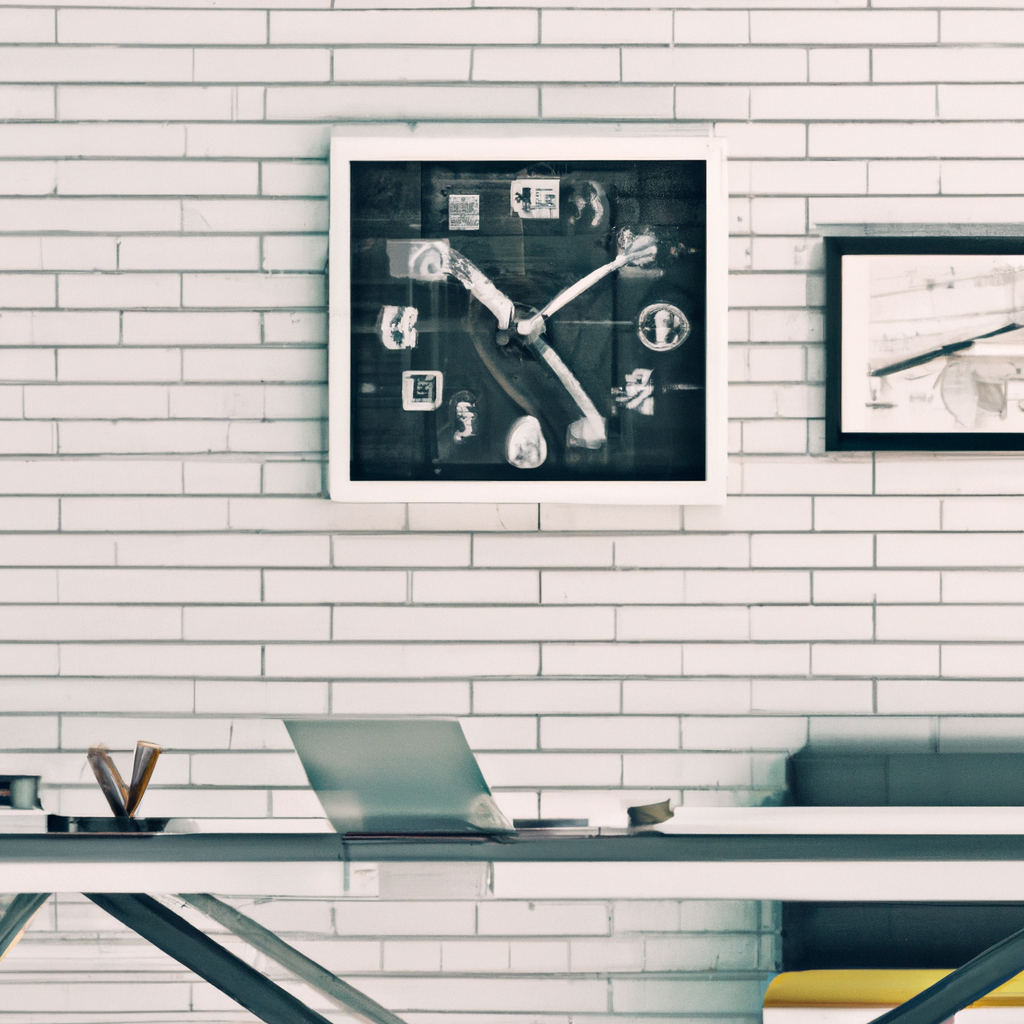
What errors should you avoid with clocks in the office?
A desk clock is far more than a simple timekeeper: it structures your space, sets the rhythm of your day, and makes a clear statement about your style. Yet the wrong material, an ill-considered placement, or an awkward scale can disrupt the harmony of your room. To turn this object into both a decorative asset and a functional tool, you need to sidestep a few common pitfalls. Let us guide you in elevating your clock into a true design element, one that feels perfectly at home within your professional world.
In the subtle art of office decor, clocks play a crucial role that goes beyond simply telling time. The clock is no longer a mere utilitarian object, but a true masterpiece of wall decoration. Here are the main mistakes to avoid to transform your office clock into a harmonious and functional design element.
Major Mistakes to Avoid with Office Clocks
1. Poor Choice of Style and Materials
Your clock is a decorative element in its own right. The choice of style, determined by the materials and design of the object, must therefore be made with care. The main materials include wood, metal, aluminum, and even fabric, which will help you find the most suitable model for your decor.
Selection Tips:
- - If your furniture is wooden, opt for a wooden wall clock - For an industrial style, choose a black metal clock - For an Art Deco look, favor gilded metal - For a vintage ambiance, a salvaged clock can create a beautiful effect
2. Placement Errors
The choice of location is essential for your wall clock to be both aesthetic and functional. The size of your clock depends on both its decorative role and the chosen location. For example: - Medium clocks are about 30 cm - Oversized clocks can reach up to 150 cm - Avoid installing a small round clock in the center of a wall more than two meters long
3. Disproportions and Visual Imbalances
If you opt for an XXL version, make sure you have a large enough wall. This giant clock will generally be intended for the living room, placed in the center of the largest wall. It should be the only element of wall decoration.
4. Neglecting Functionality
Consider additional features: - Digital clocks offer functions like alarm or temperature display - Silent clocks are perfect for quiet spaces like offices
5. Incompatibility with the Work Environment
In an office, opt for soft and neutral tones like beige, white, light gray, or pale blue. You can add touches of bright colors to stimulate your creativity without breaking the balance.
6. Improper Installation
Make sure your clock is securely fastened: - Check the weight before choosing the fixing method - For a lightweight model, a simple nail or adhesive hook may suffice - For a large metal or wooden clock, use wall plugs suitable for your type of wall
Conclusion
For a harmonious interior, choose a clock that matches your furniture (materials, shapes, colors) and avoid clutter if you opt for an XXL model. Don't be afraid to break the rules: you can, for example, combine a contemporary clock with a vintage armchair or a Scandinavian piece of furniture in the same room.
Share
