















How to Install a Marseille Curtain: Complete Guide
The Marseillaise curtain, with its regular pleats and sculpted silhouette, brings timeless elegance to your home. Yet its installation demands a precise method to preserve that perfect drape. This guide walks you through the essential steps, from choosing the right curtain rod to fixing it in place, including the crucial measurements. You will learn to master each gesture for a professional result, without a single misstep. Let yourself be guided towards a successful hanging that will enhance your windows.
The Marseille curtain, with its regular pleats and structured appearance, is a timeless classic in interior decoration. Far more than a simple window covering, it embodies a true touch of elegance and refinement, capable of transforming the atmosphere of a room. However, its installation can seem daunting for anyone who has never handled this type of curtain with eyelets or tie-backs. A poorly executed installation can ruin the aesthetic effect and compromise functionality. This article is your complete guide to achieving a perfect Marseille curtain installation. We will cover each step, from choosing the model and accessories to the final fixing, including professional tips for an impeccable drape. You will also discover how to integrate this curtain into current decor trends.
Understanding the Marseille Curtain: A Decorative Heritage
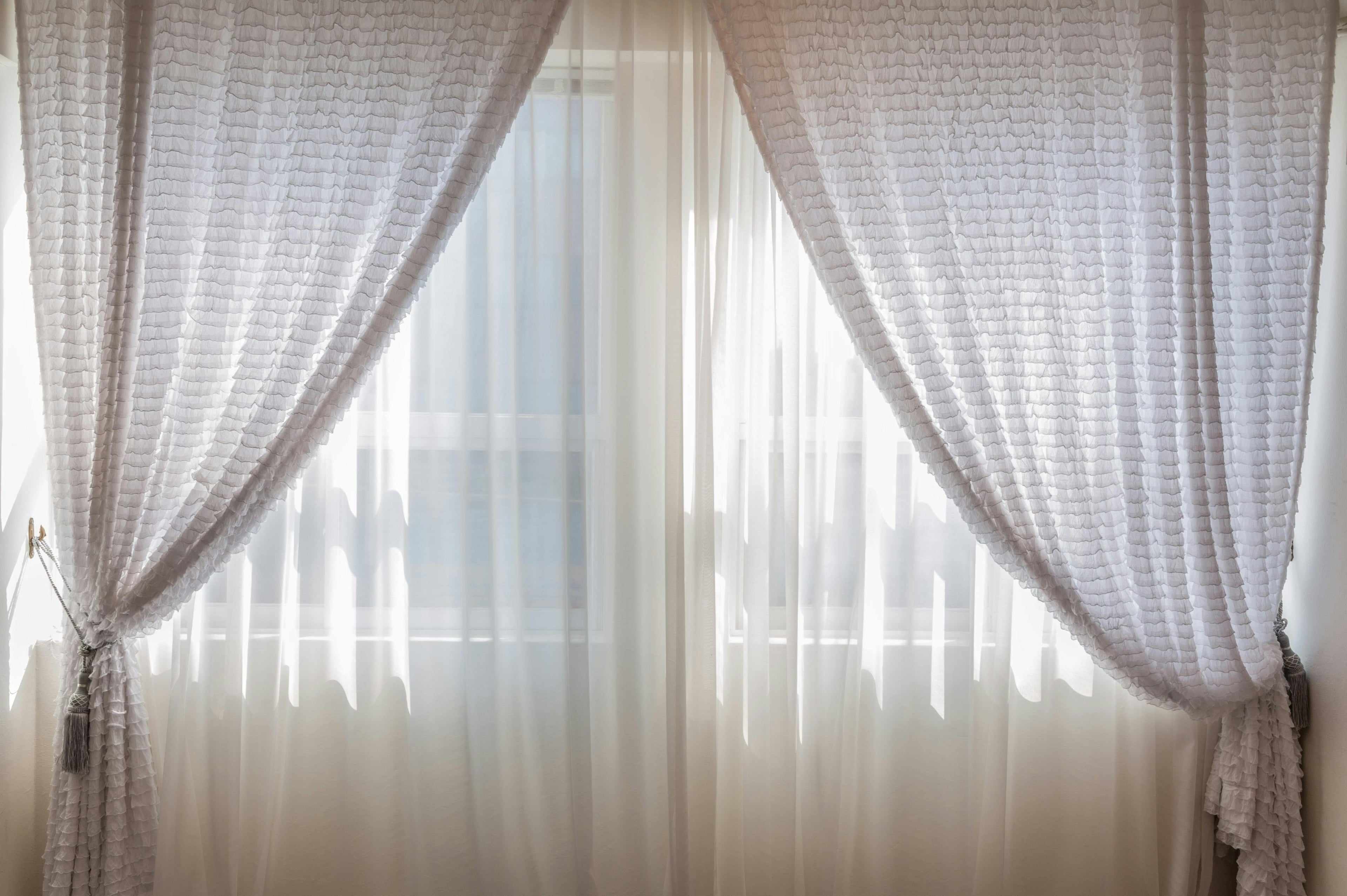
Before embarking on the installation, it is essential to understand what defines a Marseille curtain. Unlike a straight curtain, the Marseille curtain is characterized by its regular, deep pleats, sewn and fixed along the length of the fabric. These pleats, known as hollow pleats or pipe pleats, give it its volume and sculpted appearance. Traditionally, it is attached to a rod using rings or eyelets hidden in the lining, but glide or tie-back systems are also common. Its name is said to come from the city of Marseille, where this type of pleating was renowned in the 19th century. Today, it is prized for its sophisticated look and its effectiveness in beautifully dressing large bay windows, French doors, or classic windows.
Essential Materials for a Successful Installation
The success of your Marseille curtain installation project relies on preparation and choosing the right tools and accessories. Do not neglect this step, or you may have to start over.
Basic Tools
You will need a standard DIY kit: a quality tape measure, a spirit level (essential for straightness), a pencil, a screwdriver, a drill/driver with drill bits suitable for your wall (plasterboard, brick, concrete, etc.), appropriate wall plugs and screws, and possibly fixing brackets. For heavy rods or very large curtains, a metal expansion anchor is recommended.
Choosing the Rod and Accessories
The rod is the support element. For a Marseille curtain, a round, sturdy rod is the most common option. You can choose a rod with integrated gliders (the curtain slides directly onto it) or a simple rod on which you will hang rings. The current trend leans towards discreet, thin metal rods (brass, matte black, rose gold) or, conversely, towards visible rods that become a decorative element. Also consider the finials (washers, balls) and fixing brackets (clips, consoles). The length of the rod must extend at least 20 to 30 cm on each side of the opening to allow the curtain to be drawn completely without blocking the light.
Taking Measurements: The Crucial Step for a Perfect Drape
This is the most important step. A measurement error is irreparable once the curtain is purchased or made. For a Marseille curtain, two main dimensions are measured: width and height.
Measuring the Width
For the width, measure the span you want the curtain to cover. Do you want it to extend beyond the window frame? Generally, the rod is fixed 15 to 20 cm above the top of the opening and 15 to 30 cm on each side. Then measure the required rod length. Regarding the width of the curtain fabric itself, it should be 1.5 to 2.5 times the width of the rod to achieve full, elegant pleats. A ratio of 2 is an ideal standard.
Measuring the Height or Length
For the height, it's all about the desired effect. Determine where you want the curtain to end:
- Floor-length: Measure from the top ring (or the top of the rod) to the floor. This is the most modern and luxurious option.
- Floating effect: The curtain barely touches the floor (1 to 2 cm). Avoids dust accumulation.
- At the windowsill: Measure down to the sill. Practical for rooms like the kitchen.
Preparing the Wall and Installing the Rod Securely
Once the measurements are taken, proceed to fix the rod brackets. This step guarantees the safety and durability of your installation.
Marking and Drilling
Using the pencil and level, draw a horizontal line where the brackets will go. Precisely mark the location of the holes for each bracket (usually at the ends and one in the center for long rods). Use the level at every step. Then drill at the marks with the appropriate drill bit, insert the wall plugs, and screw the brackets firmly. Check their sturdiness by applying slight downward pressure.
The Case of Specific Windows
For a bay window or French door, a curved rod or a corded rod (to go around a corner) may be necessary. For windows under a sloping ceiling (e.g., dormer windows), adjustable telescopic rods or specific fixings are available. In the case of a plasterboard wall, the use of Molly bolts or plasterboard fixings is essential to support the weight.
Hanging the Marseille Curtain: The Different Methods
Here is the core of installing your Marseille curtain. The method depends on the fixing system provided on the curtain.
With Concealed Eyelets or Tie-backs
High-end Marseille curtains often have eyelets integrated into the lining at each pleat. You then simply slide the rod directly through these eyelets. For models with tie-backs (fabric strips sewn on the back), you will slide the rod through each tie-back. This method gives a very structured and neat effect.
With a Glide System or Rings
If your rod is equipped with gliders, the curtain must have a glider tape sewn at the top (a hook system is often integrated). Simply attach the curtain hooks into the rod gliders. The most versatile method uses clip-on or pinch rings. You pinch or clip the ring onto the top of the curtain at each pleat, then hang the ring on the rod. This is ideal for easily removing the curtain for washing.
Finishing Touches and Adjustments for an Impeccable Drape
Once hung, your curtain needs a few adjustments. Don't worry if the pleats seem a bit flattened at first; this is normal.
Forming and Fluffing the Pleats
Let the curtain hang freely for 24 to 48 hours. The pleats will naturally form and relax. You can help by opening and closing the curtain gently several times. For optimal results, some professionals recommend lightly spraying steam (with a steam iron held at a distance) to help the fabric take its final shape, especially for thick fabrics like linen or velvet.
Evenly Distributing the Rings
Check that the rings or eyelets are evenly spaced on the rod. Irregular spacing will create pleats of different sizes. Adjust them if necessary for perfect symmetry.
Integrating the Marseille Curtain into Contemporary Decor
The Marseille curtain is not outdated; it is reinventing itself. Current trends see it in natural materials like raw linen, thick cotton, or wool, adding texture and warmth. Neutral colors (taupe, mouse gray, off-white) dominate, but deep tones (midnight blue, forest green, terracotta) are making a notable entrance to create dramatic accents. For a Scandinavian style, opt for white linen on a thin black rod. For a bohemian spirit, pair an ecru cotton Marseille curtain with a bamboo rod. The idea is to mix styles: a structured Marseille curtain in a living room with contemporary design furniture creates an interesting contrast.
Care and Maintenance of Your Installation
To keep your curtain looking beautiful for a long time, appropriate care is necessary. Regularly vacuum it with the soft brush attachment to remove dust. Depending on the fabric, dry cleaning or a delicate cold machine wash may be possible (always check the label). For the fixing system, check the tightness of the bracket screws annually, especially if you handle the curtains often. Avoid pulling the fabric abruptly to open or close it; force should be applied to the draw cord or directly on the rod/rings.
FAQ: Answers to the Most Common Installation Questions
My Marseille curtain doesn't glide well, what should I do?
This can be due to several factors. First, check that the rod is perfectly horizontal. Next, ensure the rings or gliders are not too tight on the rod (a little silicone spray lubricant can help). Finally, the weight of the curtain may be the cause; for very wide bays, a reinforced rod with a ball bearing system is recommended.
Can I install a Marseille curtain over an awning or roller shutter?
Yes, it is entirely possible and even very aesthetic. You simply need to ensure there is enough space between the shutter/awning box and the wall so the curtain can slide behind without rubbing. Carefully measure the available depth. A protruding rod (with consoles) is often the best solution in this case.
What is the difference between a Marseille curtain and a pinch pleat curtain?
The terms are often used synonymously. Technically, "Marseille" often refers to the finished curtain with its fixed pleats, while "pinch pleat" describes the type of pleating. In common decorating language, they refer to the same thing: a curtain with regular, structured pleats.
How can I camouflage an off-center window with a Marseille curtain?
The Marseille curtain is an excellent tool for visually balancing a room. Install the rod well above the window (up to 30 cm) and extend it generously on each side (beyond the usual 30 cm). By drawing the curtains completely to the sides, you will create a wide band of fabric that draws the eye and gives the impression of a wider, better-centered window.
Can I install a double Marseille curtain (a sheer + an opaque one)?
Absolutely. This is a very elegant and functional solution. You will need a double rod (two parallel tracks). You will install the sheer (possibly also pleated) on the back track, and the opaque Marseille curtain on the front track. Ensure the rod is strong enough to support the weight of both fabrics.
Conclusion: The Art of Mastering Structured Elegance
Installing a Marseille curtain is not just a simple DIY task; it is a full-fledged decorating project that requires precision and a bit of patience. By meticulously following the steps of measuring, secure fixing, and careful hanging, you will achieve a professional result that will enhance your windows for years to come. This timeless classic, reinterpreted with contemporary materials and colors, brings an unmatched touch of order and sophistication to your interior. Remember that the detail makes the difference: a well-chosen rod, a perfectly adjusted height, carefully formed pleats. To discover more inspiration on the art of dressing your windows and transforming your living space, explore the other guides and trends available on ombreinterieur.fr. Our Thick Heavy Curtain integrates perfectly with this style. For more tips, discover how to line a curtain with blackout fabric on the blog. Find our entire decor universe at Ombre Interieur.
